HP and OpenAI’s Frontier Alliance: Redefining AI Hardware Collaboration in Enterprise Markets
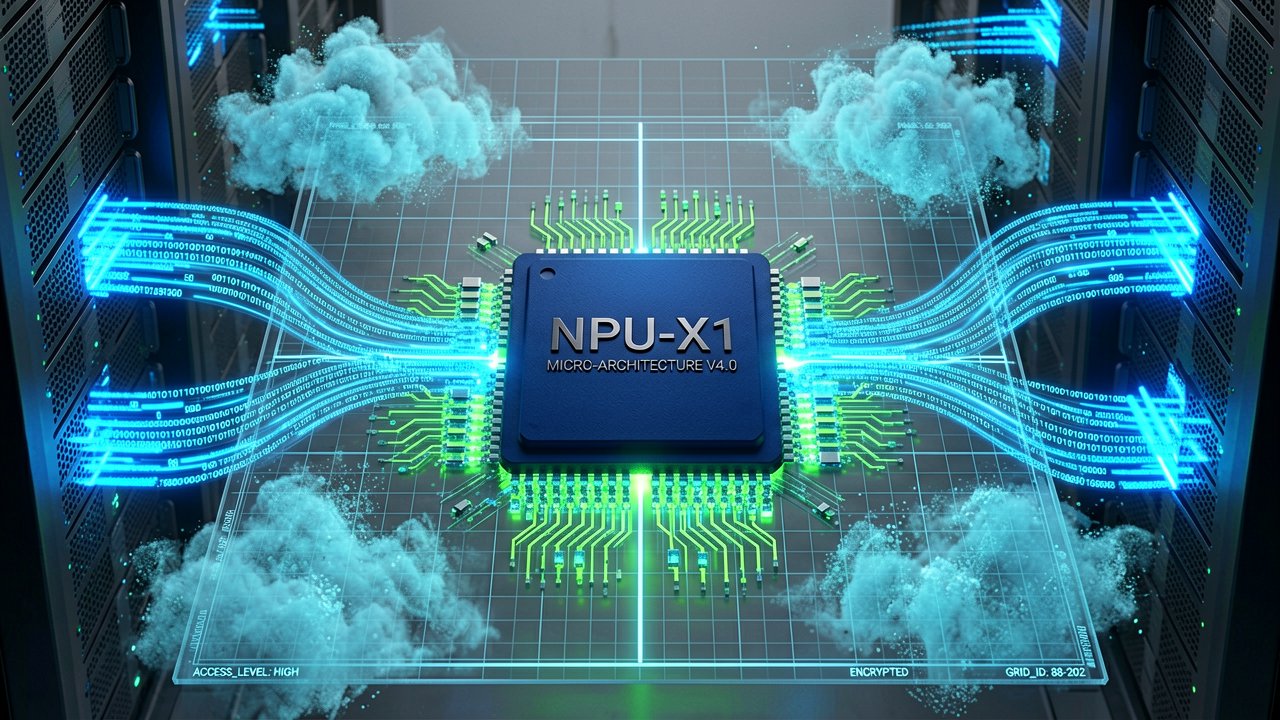
The enterprise artificial intelligence race has entered a mature operational phase, shifting away from superficial chat productivity toward deep, agentic process automation. This strategic evolution is crystallized by HP Inc. launching its formal Frontier strategic partnership with OpenAI. By deploying OpenAI's unified enterprise-level agent platform, HP intends to fundamentally change how silicon-level telemetry, consumer services, and internal operations scale across the corporate landscape. This move bridges the historic gap between software intelligence and localized hardware execution.
The alliance follows an intensive exploratory evaluation period that began in February 2026. During this preliminary window, HP thoroughly tested the platform's security, data governance frameworks, and core cross-application integrations. By committing fully to OpenAI Frontier, HP signals that enterprise AI is transitioning from an isolated, prompt-driven experiment into an interconnected infrastructure layer. This infrastructure relies on "AI coworkers" that share context and hold specialized functional permissions across diverse corporate ecosystems.
Driving the Shift from Chatbots to Agentic Workflows
For several quarters, enterprise IT has struggled with the fragmentation of isolated AI tools. According to analysis on Crypto Briefing, the introduction of OpenAI Frontier shifts the paradigms of corporate computing by allowing enterprises to build, manage, and scale a network of autonomous agents that work across separate siloed platforms. Rather than relying on employees to copy-paste data between applications manually, HP's deployment utilizes Frontier as an orchestration layer. This layer operates with clear access limits and performance criteria to automate entire cross-departmental operations synchronously.
Telemetry, Device Diagnostics, and the Future of AI Silicon
The most significant market implication of this alliance sits at the intersection of client hardware and cloud-based intelligence. HP is leveraging OpenAI Frontier to reinforce its market-leading Workforce Experience Platform (WXP). By embedding agentic intelligence into its device management layers, HP is establishing an advanced telemetry system capable of autonomous health diagnostics and predictive device remediation. This creates a critical feedback loop for the hardware industry. As specialized AI workloads demand continuous, always-on inference, this connected telemetry layer will dictate how upcoming generations of AI PC architectures distribute processing tasks between cloud servers and localized on-device neural processing units (NPUs).

Co-Development and the Enterprise SAS Paradigm Shift
By bringing OpenAI’s Forward Deployed Engineering teams directly into its structural workflow, HP is co-developing tailored use cases that satisfy rigorous compliance mandates. Early pilots have already demonstrated massive reductions in time-to-remediation for software engineering teams handling cybersecurity vulnerability analysis and code reviews. As HP embeds these autonomous coworkers into customer-facing support platforms and product design channels, it sets a direct blueprint for other tech giants. The alliance proves that the long-term winners of the enterprise AI transformation will not be those who simply license foundational APIs, but those who fuse model intelligence natively into hardware infrastructure and proprietary operations platforms.
The Hybrid Paradox and the Costs of Agentic Autonomy
Reading Between the Lines: The corporate narrative surrounding the HP and OpenAI alliance presents a flawless vision of seamless hybrid computing, yet it glosses over a glaring infrastructure contradiction. For years, hardware manufacturers have promised that the AI PC revolution would claw back compute costs from the cloud by processing complex workloads locally on native Neural Processing Units. Instead, by anchoring their ecosystem to OpenAI Frontier, HP is cementing a permanent, symbiotic dependency on hyper-scale cloud models to orchestrate those exact local agents. This creates a complex architectural loop where local silicon requires constant cloud-based permissioning just to function autonomously.
This reliance raises significant financial questions for enterprise procurement teams who are already suffering from software-as-a-service billing fatigue. While predictive hardware remediation and autonomous virtual coworkers sound economically transformative on a spreadsheet, the underlying licensing and token costs of running thousands of background agents could quickly eclipse the traditional IT support savings. If every minor telemetry anomaly or automated security patch triggers an extensive multi-step inference chain across OpenAI’s cloud servers, enterprises may find they have merely traded predictable IT labor costs for highly volatile API bills.
Furthermore, the vision of a self-healing corporate network managed by AI coworkers introduces uncharted data sovereignty risks that challenge traditional enterprise compliance models. HP emphasizes strict data governance boundaries, yet the very nature of agentic AI requires these models to possess deep, cross-application access to sensitive proprietary codebases and internal operational logs. Enterprise risk officers must weigh the efficiency gains of automated vulnerability patching against the systemic vulnerability of allowing a third-party algorithmic orchestration layer to hold administrative access keys across the entire corporate fleet.
"The ultimate irony of the modern AI enterprise is that we are spending billions on cutting-edge local silicon just to turn our computers into highly advanced terminals for someone else’s cloud. In the end, the true benchmark of an automated workplace might not be how many hours of human labor we save, but whether the corporate budget can survive the data center electric bill required to fix a broken laptop printer."
Artūras Malašauskas is an AI Systems Integrator with 20+ years of production-grade web engineering experience. He has designed, shipped, and scaled enterprise Python/PHP systems for logistics, SaaS, and public-sector clients. For the past year, he has focused exclusively on AI integrations: deploying open-source LLMs, building generative media pipelines (image, audio, video), and engineering multi-agent workflows for real production environments. His standard: reproducibility, security, cost-efficient inference—no vaporware. He documents and evaluates emerging AI tooling, separating verified capabilities from marketing noise. Technical editor at: muza-ai.eu, ai-verslas.lt, ai-naujinos.lt Connect on LinkedIn
Comments