The Death of the Chatbot and the Rise of the Agentic Shopper

We have officially passed the point of no return. Remember when artificial intelligence in retail meant a clunky, semi-functional chatbot tucked into the bottom-right corner of your browser window? Those days are gone, replaced by a mid-2026 marketplace where AI has migrated from experimental gimmickry to absolute operational infrastructure. This month, the industry's largest players are learning a harsh lesson: consumers no longer just tolerate digital personalization; they demand it as a baseline corporate obligation.
According to the latest research from Deloitte Insights , retail strategy has undergone a structural pivot toward "agentic commerce"—a paradigm shift where autonomous AI systems manage everything from real-time supply chain resilience to hyper-individualized marketing. We are witnessing an era where your data profile doesn't just suggest a product; it actively predicts a lifestyle necessity before you even realize it exists. The friction of the traditional sales funnel is being aggressively hollowed out by machine intelligence, leaving slow-moving legacy brands stranded in the digital dust.
But this isn't just an internal back-office victory lap. The entire architecture of consumer discovery has fundamentally fractured. Brand loyalty is plummeting as shoppers increasingly utilize their own personal AI assistants to filter out promotional noise, scan for pure economic value, and execute transactions automatically. If a brand cannot communicate fluidly with a consumer's algorithmic gatekeeper, it simply ceases to exist in the modern purchasing ecosystem.
The Hardware Bottleneck and the Value Squeeze
Despite the sophisticated software evolution, the retail landscape is slamming headfirst into physical reality. A sweeping global memory chip shortage, driven by the insatiable computing demands of enterprise AI, has begun triggering a noticeable ripple effect across consumer tech pricing. Major manufacturers like Apple have already started passing these rising hardware costs onto the public, hitting popular product lines like MacBooks and iPads, as reported by CNBC. This creates a fascinating paradox: retailers must deploy increasingly expensive, data-heavy AI stacks to retain customers, even as those very customers face heightened tech inflation.

The New Content Imperative
To survive this transition, leading enterprises are abandoning the traditional, slow-moving creative agency model entirely. The modern consumer expects localized, context-aware visual commerce that adapts instantly across dozens of streaming and social platforms simultaneously. As detailed by industry analysts at Muse AI, the performance gap between AI-native content operations and legacy frameworks has officially translated into measurable market outcomes. Winning the summer market now requires an automated production lifecycle capable of generating thousands of distinct, targeted media assets in seconds. The future didn't arrive with a grand sci-fi flourish; it built itself quietly into the plumbing of global commerce, and it is reshaping our expectations with every single click.
The corporate scramble to build a bigger algorithmic net is missing a vital, deeply human counter-revolution bubbling beneath the surface. As the digital landscape becomes increasingly saturated with synthetic content and automated touchpoints, a profound exhaustion is setting in among everyday shoppers. They are not retreating from technology itself, but rather building highly deliberate filters to protect their time, attention, and sanity. The brands that will dominate the remainder of the decade are realizing that pushing infinite volume through an omnichannel pipeline is a losing game; the real victory lies in manufacturing authentic meaning.
This dynamic has triggered a massive cultural pushback often termed the revolt against online fakeness, where the traditional mechanics of digital influence are completely breaking down. According to analysis on shifting consumer mindsets by Razorfish, today's buyers are actively prioritizing organic visibility and human substance over polished, machine-optimized marketing campaigns. Tired of navigating algorithmic filter bubbles and untrustworthy product endorsements, people are demanding unvarnished transparency. They want to see the real faces behind the production lines and the raw, unedited reality of a product's lifecycle before they even think about clicking the buy button.
The Rise of Sanctuary Spaces and Tactile Commerce
As a direct consequence of this screen fatigue, the brick-and-mortar storefront is undergoing a spectacular renaissance, transforming from a simple distribution point into what retail futurists call a sensory sanctuary. Shoppers are flocking back to physical environments not out of nostalgia, but out of a desperate craving for tactile, real-world engagement that artificial intelligence simply cannot replicate. Data highlighted by Snowflake indicates that this demand for physical touch and sensory-rich interactions is fueling a massive global rise in retail tourism. The brick-and-mortar footprint is no longer just a overhead cost; it is the ultimate branding billboard where consumers go to touch, feel, and validate the corporate values they see advertised online.
Simultaneously, this mindful approach to spending has pushed the circular economy into the absolute mainstream. Recommerce and high-end secondhand marketplaces are no longer niche habits reserved for thrifty Gen Z shoppers; they have become a foundational pillar of conscious consumption across every major demographic. Buyers are aggressively auditing their lives, ruthlessly questioning what products are truly necessary, and gravitating toward brands that bake reverse logistics and sustainable packaging directly into their business models. The modern purchase is no longer just a transaction, but a long-term contract regarding the lifecycle of the object.
The Geopolitical Reality Check
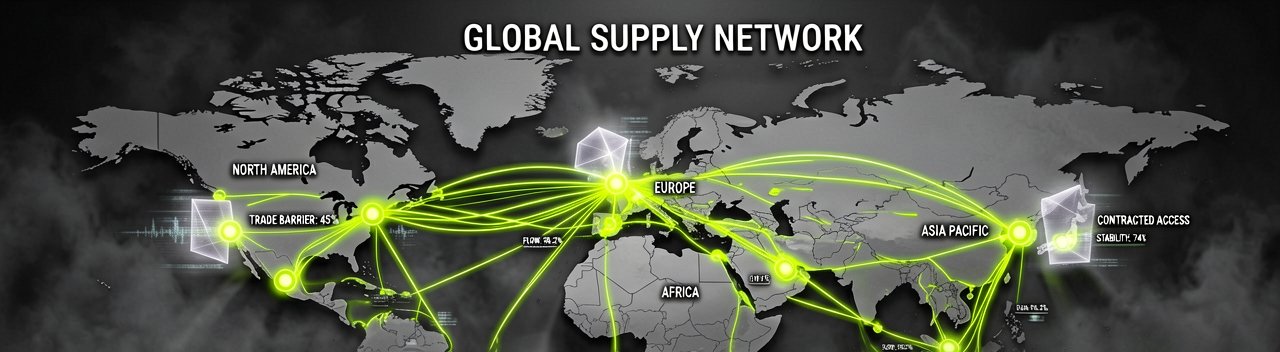
However, running a retail empire in this bifurcated landscape requires navigating a logistical minefield that extends far beyond consumer psychology. While marketing teams attempt to balance synthetic efficiency with human authenticity, operations executives are facing brutal macro-pressures that threaten to destabilize global supply chains entirely. As reported in the latest executive risk briefings by Shoosmiths, modern retail strategy is currently being squeezed by a volatile combination of state-sponsored cyber-attacks, international trade protectionism, and fluctuating tariff structures. A brand's back-end infrastructure must be just as adaptive as its front-end AI, capable of rerouting inventory at a moment's notice when cross-border complexities spark localized shortages.
Ultimately, the mid-2026 marketplace rewards the masters of paradox. To win the wallet of the contemporary consumer, a business must deploy incredibly sophisticated, invisible software layers to keep pricing optimal and shipping seamless, while simultaneously presenting an outward facing persona that feels deeply analog, vulnerable, and human. The future belongs to those who use the absolute limit of machine intelligence to get out of the way of the physical experience, proving that technology is at its best when it serves to reconnect us to the tangible world.
The true battlefield of modern commerce is no longer found in the checkout line, but in the quiet custody of consumer trust. As the dust settles on this mid-2026 structural realignment, it is clear that the tech-driven paradigm shift has accomplished something entirely unexpected. It has stripped away the superficial layers of marketing fluff, exposing the raw foundation of what makes a brand durable. The retailers left standing are not necessarily those with the most computing power, but those who understood that data is a means to intimacy, not an end in itself.
We are entering a period of aggressive stabilization where the novelty of algorithmic convenience has completely worn off. Consumers are no longer impressed by automated logistical gymnastics or hyper-personalized product feeds; they treat them as basic utility, like running water or electricity. In this environment, the competitive advantage shifts entirely to emotional resonance and operational integrity. The brands that fail to deliver genuine, frictionless execution while maintaining an authentic human viewpoint are finding themselves rapidly automated out of existence by a marketplace that has no patience for mediocrity.
The Final Metric of Survival
Survival now dictates a complete rewriting of corporate key performance indicators. The old obsession with customer acquisition cost and short-term conversion rates is giving way to a more holistic measurement of community permanence and supply chain elasticity. Success in the latter half of the decade will be defined by a brand's ability to remain utterly indispensable to its core community during times of geopolitical and economic disruption. It requires balancing the cold, predictive precision of automated systems with the unpredictable, nuanced realities of human cultural shifts.
Ultimately, the great retail transformation of 2026 has proved that the future does not belong to the machines, nor does it belong to a nostalgic retreat into the past. It belongs to the synthesis. The winners are the architects of a new hybrid reality, orchestrating an intricate dance between invisible, hyper-efficient software layers and deeply tactile, unforgettable real-world encounters. They have mastered the art of using unprecedented technological scale to make the individual customer feel uniquely seen, respected, and understood.
The ultimate irony of the algorithmic age is that we spent trillions of dollars building machines that could perfectly mimic human behavior, only to find that the consumer's most valuable asset is the one thing a machine can never replicate: a genuine, unsimulated soul.
Artūras Malašauskas is an AI Systems Integrator with 20+ years of production-grade web engineering experience. He has designed, shipped, and scaled enterprise Python/PHP systems for logistics, SaaS, and public-sector clients. For the past year, he has focused exclusively on AI integrations: deploying open-source LLMs, building generative media pipelines (image, audio, video), and engineering multi-agent workflows for real production environments. His standard: reproducibility, security, cost-efficient inference—no vaporware. He documents and evaluates emerging AI tooling, separating verified capabilities from marketing noise. Technical editor at: muza-ai.eu, ai-verslas.lt, ai-naujinos.lt Connect on LinkedIn
Comments