The RAMpocalypse Is Here: How the AI Land Grab Is Squeezing PC Gamers
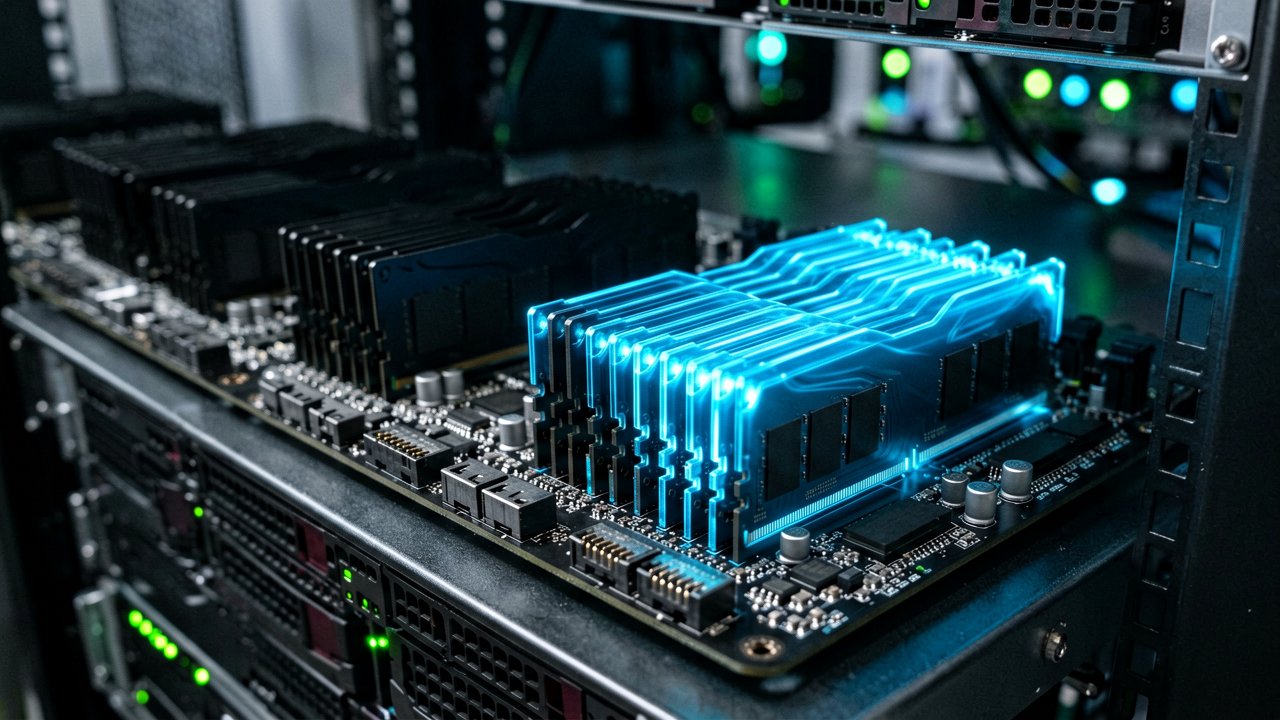
If you've tried putting together a new gaming rig lately, you've likely noticed a brutal reality: the days of cheap, plentiful system memory are officially over. The global tech landscape is currently locked in a massive artificial intelligence land grab, and everyday consumers are the ones footing the bill. Market research from TechTown reveals that consumer DRAM contract prices have skyrocketed by up to 89% in the second quarter of 2026 alone. This staggering surge follows an already aggressive spike earlier in the year when analysts at Reuters highlighted industry projections of a 90% to 95% quarter-over-quarter leap. It's a supply-side vacuum that has turned standard system components into luxury items overnight.
The architects of this pricing crisis aren't greedy retail middlemen, but rather the world’s major semiconductor manufacturers responding to an unprecedented shift in corporate demand. Memory giants like Samsung, SK Hynix, and Micron have aggressively reallocated their finite wafer production capacity away from traditional consumer-grade DDR4 and DDR5 modules. Instead, they're prioritizing high-margin silicon like High-Bandwidth Memory (HBM) and enterprise-grade server DRAM to feed ravenous data centers operated by tech conglomerates building next-generation AI models. This pivot has left the PC gaming sector fighting for scraps, causing standard 16GB DDR4 sticks to jump over 50% in cost while high-end DDR5 kits have fundamentally broken builder budgets.
No Short-Term Relief for Hardware Enthusiasts
Compounding the problem, the collateral damage of this AI-driven shortage is bleeding into the broader component market, directly affecting graphics cards and solid-state storage. Silicon fabs are prioritizing corporate clients, which means the video memory (VRAM) powering mid-range GPUs and the NAND flash utilized in speedy NVMe storage are experiencing parallel inflationary spikes. Industry insiders and hardware developers, including AMD, have quietly cautioned during recent trade showcases that consumer memory pricing won't normalize until 2028. For the foreseeable future, anyone planning an upgrade or a fresh DIY build will simply have to swallow these stiff costs or settle for lower-tier hardware specs.
The Hidden Cost of the High-Bandwidth Hustle
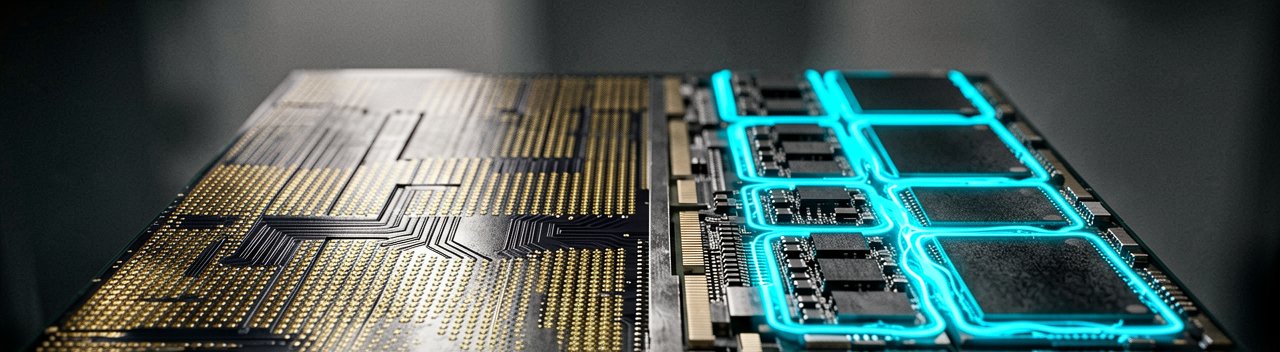
What most reports miss: The current pricing crisis isn’t a simple case of factories failing to print enough silicon; it is a calculated, structural reallocation of the global supply chain. High-Bandwidth Memory (HBM)—the hyper-fast, vertically stacked silicon that feeds data to enterprise AI chips—requires significantly more wafer area and engineering complexity than standard desktop DDR5. Industry insiders point out that producing a single HBM die consumes up to three times the physical wafer real estate of a standard consumer DRAM chip, drastically reducing the total number of memory modules rolling off manufacturing lines each day.
This reality has completely upended the historical leverage that PC hardware enthusiasts held over semiconductor giants. For decades, the massive consumer gaming market acted as the financial bedrock for memory fabrication plants, absorbing excess inventory and funding generational R&D. Today, top-tier silicon suppliers view consumer retail as a low-margin afterthought compared to the lucrative, billion-dollar procurement contracts signed by hyperscale data center operators. When a single corporate client can purchase an entire month of factory output at a premium, the incentive to maintain cheap, readily available dual-channel memory kits for PC builders completely evaporates.
The downstream effects are creating a major headache for system integrators and boutique PC builders, who are forced to reconfigure their entire product portfolios. Margins on pre-built gaming desktops have grown razor-thin, prompting builders to cut corners elsewhere—often downgrading power supplies, opting for cheaper motherboards, or skimping on secondary storage capacities just to keep total system prices palatable for the average consumer. It is a balancing act that directly compromises system longevity and upgradeability, leaving buyers with compromised rigs despite paying historical premiums.
Historically, the memory market has always been notoriously cyclical, defined by wild swings between oversupply crashes and scarcity spikes. However, veteran industry analysts argue that the AI-driven structural shift has fundamentally broken the old boom-and-bust cycle. Because AI infrastructure demands show no signs of plateauing, manufacturers are comfortable sustaining high prices rather than building out speculative, expensive new fabrication facilities that might take years to come online. Consequently, the industry is entering an era of prolonged price plateauing, shifting the baseline cost of computing upward indefinitely.
For the average consumer, this landscape demands a total shift in upgrading philosophy. The old adage of "just buy more RAM because it's cheap" has been replaced by meticulous resource management, forcing players to rely heavily on software optimization, pagefile tweaks, and aggressive background process management to stretch the lifespan of their existing 16GB configurations. Until the silicon giants find a way to significantly boost raw wafer yields, or until corporate AI spending cools down, the PC gaming community will remain trapped in the collateral damage zone of the enterprise gold rush.
The Myth of the Ultimate Tech Pivot
Reading between the lines: The current narrative framing this price hike as an unavoidable consequence of technological evolution ignores a convenient corporate truth. While memory manufacturers point to the complex physics of stacking High-Bandwidth Memory to justify the squeezing of the consumer market, this scarcity functions beautifully as a margin-healing mechanism. Following the brutal post-pandemic oversupply slump—where silicon giants bled billions in cash—the AI boom has provided a perfect cover story to suppress production capacity, artificially inflate prices, and repair damaged balance sheets under the guise of progress.
There is a glaring contradiction in how the tech industry views the longevity of this artificial intelligence gold rush versus how it handles infrastructure investment. Wall Street demand signals suggest that AI is a permanent, foundational shift in global computing, yet manufacturers are acting with immense caution. Instead of breaking ground on massive, dedicated enterprise fabrication plants to meet this supposedly permanent demand, corporations are merely cannibalizing existing consumer manufacturing lines. This hesitation reveals a deeply rooted corporate skepticism, suggesting that memory executives are quietly hedging their bets against an AI hype bubble burst while letting gamers foot the bill for their risk mitigation.
This forced starvation of the consumer market is poised to trigger an unintended cultural stagnation within the gaming ecosystem itself. Game developers have historically pushed graphical and mechanical boundaries based on the assumption that PC memory would grow cheaper and more dense year over year. With 16GB remaining the stubborn, expensive baseline rather than giving way to a universal 32GB standard, software studios are hit with an optimization bottleneck. We are likely looking at a multi-year plateau in world scale, asset variety, and simulation complexity, as developers cannot build games for hardware that players simply cannot afford to install.
Furthermore, the long-term health of the PC ecosystem is being traded for short-term enterprise gains, risking a permanent migration to closed ecosystems. When a basic, mid-tier memory upgrade costs as much as an entire budget console, the historic value proposition of the open PC platform erodes entirely. Casual enthusiasts and younger builders are increasingly priced out of the hobby, pushed instead toward hardware that manages to insulate consumers from component volatility through massive, subsidized bulk manufacturing contracts. By treating the PC builder community as a low-margin afterthought, silicon suppliers are slowly starving the very enthusiast culture that sustained their brand loyalties for decades.
It turns out that the most formidable boss in modern PC gaming isn't a hyper-optimized cyber-demon or an unpatched optimization mess, but rather an enterprise server rack in Virginia silently eating your next hardware upgrade for breakfast.
Artūras Malašauskas is an AI Systems Integrator with 20+ years of production-grade web engineering experience. He has designed, shipped, and scaled enterprise Python/PHP systems for logistics, SaaS, and public-sector clients. For the past year, he has focused exclusively on AI integrations: deploying open-source LLMs, building generative media pipelines (image, audio, video), and engineering multi-agent workflows for real production environments. His standard: reproducibility, security, cost-efficient inference—no vaporware. He documents and evaluates emerging AI tooling, separating verified capabilities from marketing noise. Technical editor at: muza-ai.eu, ai-verslas.lt, ai-naujinos.lt Connect on LinkedIn
Comments