Why Building the Insurance Tech Pipeline Means Moving From Classrooms to Code
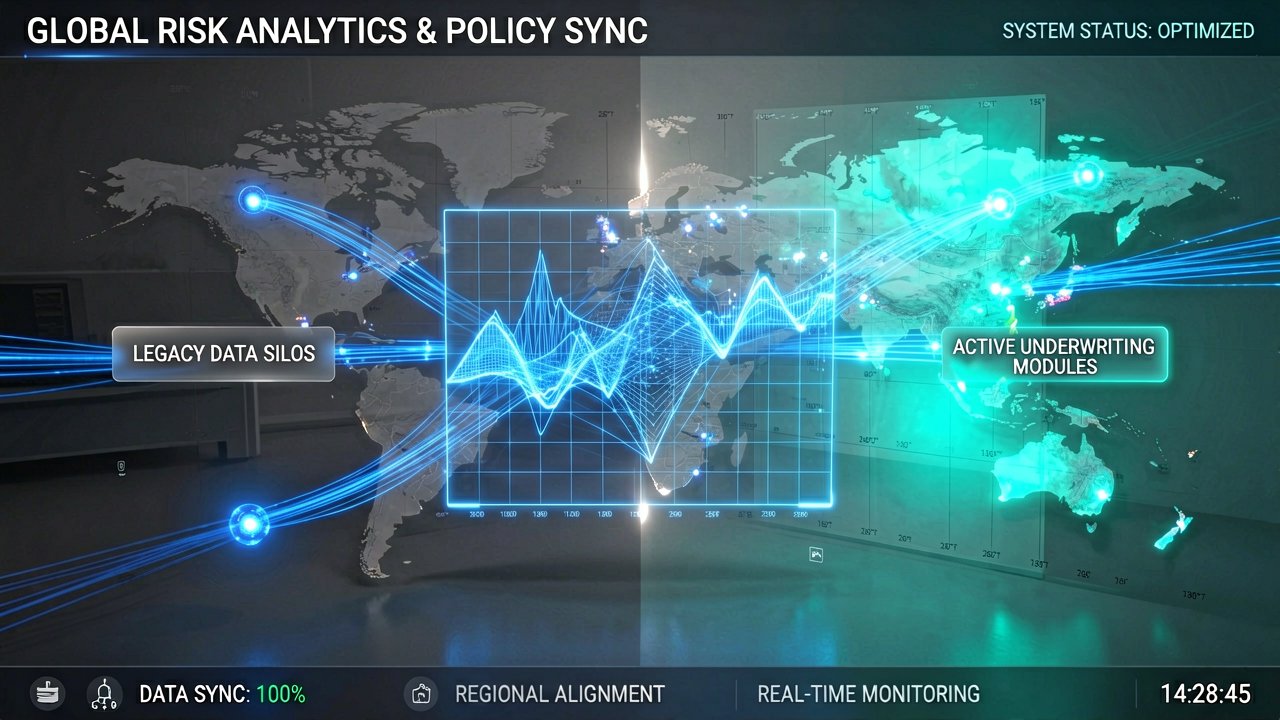
The insurtech sector has run into a familiar, frustrating wall: we have plenty of sophisticated artificial intelligence tools, but not nearly enough people who know how to deploy them effectively. In fact, while a staggering two-thirds of the insurance workforce has adopted basic AI tools, a measly 22% of insurers have successfully scaled AI into true production environments, according to research cited by Insurance Business Magazine. The bottleneck isn't the software; it's the severe deficit of human talent capable of bridging the gap between algorithmic potential and actual risk management.
To tackle this supply-side crunch early, Qatar Insurance Company (QIC) announced on June 18, 2026, the launch of its inaugural QIC AI Summer Internship Program. Designed specifically for university students, this initiative doesn't just hand interns coffee cups and spreadsheets. Instead, the regional heavyweight is throwing undergraduate talent straight into the deep end of agentic AI and practical business deployment, forcing them to build commercially evaluable solutions for risk assessment and policy development from day one.
Closing the Execution Gap in Insurtech
It's a smart tactical play in a region hungry to cement its status as a digital hub. By embedding students directly into QIC’s dedicated internal R&D units, the company is bypassing the traditional, sluggish corporate training pipelines. These interns are being tasked with constructing proprietary, localized AI systems that directly influence real-world turnaround times and underwriting workflows. By giving young developers immediate access to high-stakes operational environments, QIC is gambling that the next generation of risk-tech architects will learn faster by fixing real problems than by reading legacy manuals.
A First-of-Its-Kind Precedent for Regional Risk Tech
This move sets a notable precedent for the Middle Eastern financial ecosystem, marking the first formalized, AI-dedicated pipeline of its scale within the regional insurance market. Driven out of their specialized digital hub, QIC's broader corporate objective is to build out a self-sustaining ecosystem that natively understands how to balance rapid machine automated underwriting with the tight compliance demands of modern policy structures. For an industry that historically moves at a glacial pace, training the next generation to treat AI as a core operational layer rather than a flashy add-on is exactly how you prevent getting left behind.

Behind the Scenes of the Insurtech Talent War
The Reality Behind the Buzzwords: What most surface-level corporate announcements miss is that integrating AI into legacy insurance frameworks is vastly different from deploying a generic chatbot. The insurance sector handles incredibly messy, highly regulated pools of historical data that require meticulous handling. When an intern or a new hire sits down at an insurance firm today, they aren't just writing clean Python code; they are forced to decipher decades of archaic policy wording and fragmented risk matrices. Qatar Insurance Company's proactive talent pipeline acknowledges that university graduates can no longer afford to learn these domain-specific nuances post-graduation if regional firms want to stay competitive.
Historically, the insurance industry has suffered from a branding problem among top-tier engineering talent, who typically flock to big tech firms or flashy algorithmic trading desks. This cultural disconnect has left traditional underwriting departments heavily reliant on external tech consultants who understand the code but completely lack foundational risk management intuition. By embedding students directly into dedicated research units, corporate leaders are attempting to reshape the narrative, framing insurtech as a high-stakes arena where automated decisions directly impact macroeconomic resilience.
From an operational standpoint, the stakes for this specific talent experiment are remarkably high because regional compliance demands leave zero room for algorithmic hallucination. If an AI model miscalculates a risk premium due to a poorly calibrated training set, the financial and regulatory fallout falls squarely on the carrier, not the software provider. Consequently, senior underwriters who have spent decades relying on gut instinct and actuarial tables are watching these initiatives with a mix of skepticism and cautious optimism, knowing that true operational transformation relies entirely on how well these student-built systems handle volatile real-world variables.
Ultimately, this localized incubator approach addresses a glaring geographic mismatch in tech development, where Western-trained AI models often fail to grasp the cultural and regulatory nuances unique to Middle Eastern financial markets. By cultivating a home-grown cohort of developers who understand both agentic AI and regional market dynamics, the broader ecosystem can transition away from imported, ill-fitting software solutions. The success of this strategy will not be measured by the number of students who complete the summer session, but by how many proprietary algorithms actually survive the transition into full-scale commercial production.

Reading Between the Lines of the Insurtech Hype
The Operational Paradox: While the promise of a fresh cohort of AI interns injects some much-needed tech optimism into the sector, the assumption that young talent can easily untangle the knots of legacy insurance architecture deserves healthy skepticism. Corporate press releases love to champion AI as an immediate remedy for operational friction, but they rarely acknowledge that throwing brilliant university students at broken data pipelines is a recipe for expensive frustration. The reality is that an AI model is only as sophisticated as the data feeding it, and legacy underwriting databases are notorious for being siloed, poorly indexed, and resistant to modern automated querying.
Furthermore, an uncomfortable tension exists between the rapid-fire deployment cycle of agentic AI and the intrinsically conservative nature of actuarial science. Actuaries are trained to mitigate risk over decades, relying on proven historical patterns, while modern AI engineering embraces a culture of rapid iteration and breaking things to find a better algorithmic fit. Forcing these two fundamentally opposing mindsets to collaborate inside a compressed summer program will inevitably spark internal friction, as veteran risk officers clash with enthusiastic students over how much decision-making authority should actually be handed to an unproven machine learning model.
The long-term retention problem also looms large over this regional talent push. Cultivating highly specialized AI developers within a niche industry like insurtech is an admirable corporate goal, but keeping that talent from being poached by high-paying sovereign wealth funds or global tech giants is an entirely different battle. Unless traditional insurance carriers are willing to fundamentally restructure their rigid corporate hierarchies, salary bands, and remote-work policies to match the expectations of elite software engineers, they risk acting as a free training academy for other sectors that are far more accustomed to accommodating tech talent.
If this talent strategy backfires, it will likely be because the organization treated the internship as a public relations milestone rather than a gritty, systemic infrastructure overhaul. True digital transformation requires senior leadership to give these young developers the authority to rip out inefficient legacy processes, a prospect that usually terrifies middle management. Without a genuine, top-down willingness to let automated workflows disrupt established internal power dynamics, even the most innovative summer programs run the risk of becoming little more than expensive corporate theater.
"Training the next generation to automate risk assessment is a brilliant strategy right up until the moment a brilliant intern's algorithm accidentally insures a desert oasis against a catastrophic flood—proving that while AI can learn the rules of insurance in a summer, it takes a human career to understand just how weird the real world can get."
Artūras Malašauskas is an AI Systems Integrator with 20+ years of production-grade web engineering experience. He has designed, shipped, and scaled enterprise Python/PHP systems for logistics, SaaS, and public-sector clients. For the past year, he has focused exclusively on AI integrations: deploying open-source LLMs, building generative media pipelines (image, audio, video), and engineering multi-agent workflows for real production environments. His standard: reproducibility, security, cost-efficient inference—no vaporware. He documents and evaluates emerging AI tooling, separating verified capabilities from marketing noise. Technical editor at: muza-ai.eu, ai-verslas.lt, ai-naujinos.lt Connect on LinkedIn
Comments