UN's AI Environmental Mandate Sparks Debate Over Industry's Sustainability Future

The global artificial intelligence sector is facing unprecedented institutional pressure to address its massive ecological footprint. Speaking at London Climate Action Week, United Nations Secretary-General António Guterres officially launched the AI Environmental Transparency Initiative, demanding that major tech firms publicly disclose their data centers' carbon emissions, water consumption, and land use impacts. Highlighting the stark trajectory of AI infrastructure, Guterres warned that by 2030, these computing facilities could consume more electrical power than all but five countries in the world. He forcefully urged tech leaders to eliminate hidden ecological costs and commit to powering all operations with 100% renewable energy by 2030, as detailed by Reuters .
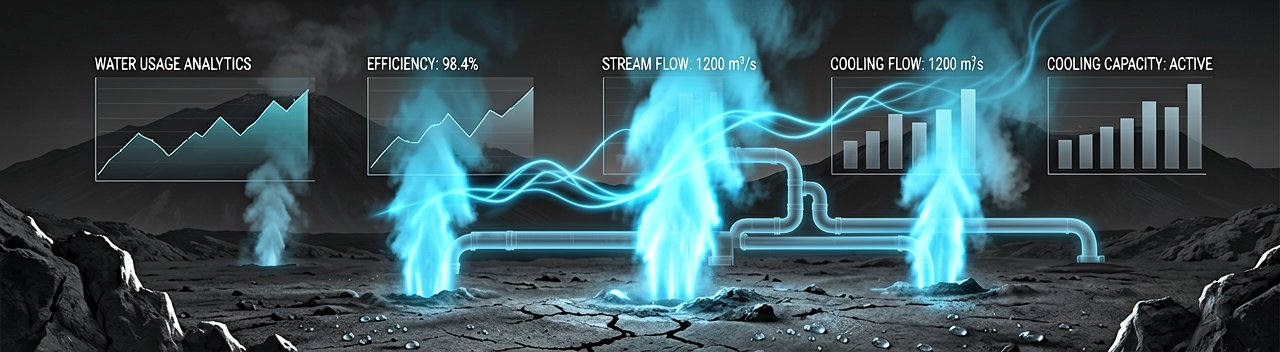
This mandate arrives at a critical juncture for the tech industry, where the rapid deployment of generative AI models has severely complicated corporate net-zero timelines. According to data tracked by the UN News, data centers needed to fuel artificial intelligence accounted for roughly 1.5% of the world's total electricity consumption in 2025, a figure projected to double to nearly 3% by 2030. The scale of this resource extraction extends beyond electricity; the cooling needs of hyper-scale facilities threaten to divert immense water volumes, sparking intense pushback from local communities where these infrastructures are built. The UN mandate aims to formalize a standardized framework, shifting the burden of accountability directly onto the commercial pioneers driving the AI boom.
Market reactions reflect a deepening divide between regulatory ideals and operational realities. While major players have historically relied on voluntary net-zero pledges and virtual power purchase agreements, the physical constraints of local power grids are forcing strategic shifts toward alternative baseload sources. As reported by Euronews , several tech conglomerates are turning back to natural gas or heavily investing in small modular nuclear reactors to secure uninterrupted power, directly clashing with the UN's immediate renewable mandate. Consequently, this international directive sets up a complex geopolitical and corporate standoff over who bears the long-term environmental costs of technological advancement.
The Reality of Grid Capacity and Fossil Fuel Reliance
The core tension in the UN's mandate lies in the current composition of global data center energy grids. Real-world assessments indicate that coal still supplies approximately 30% of the electricity consumed by data centers worldwide, while renewable technologies like wind, solar, and hydro account for only 27%. Industry analysts point out that clean energy infrastructure project deployments are currently lagging, expected to fulfill only half of the sector's surging power demands over the next five years. This deficit forces technology giants to hedge their sustainability targets against the practical necessity of maintaining uninterrupted server uptime.
The Supply Chain Burden and E-Waste Multipliers
Beyond operational emissions, the structural lifecycles of hardware present a massive secondary environmental crisis. Recent reports from the United Nations University project that AI infrastructure could generate up to 2.5 million tonnes of electronic waste annually by 2030 due to the rapid obsolescence of specialized graphics processing units and accelerators. Tech firms are being urged to integrate lifecycle responsibility into their foundational designs, optimizing model selection and software efficiency to lower hardware turnover. However, implementing these changes requires a fundamental overhaul of hardware procurement strategies that currently prioritize computational speed over raw material conservation.
Strategic Imperatives for Tech Leaders
To survive the impending transition from voluntary disclosure to mandatory compliance, enterprise tech firms must pivot from speculative sustainability PR to verifiable metric tracking. Organizations must implement rigorous, localized auditing of their environmental footprints, paying equal attention to carbon output and regional water stress index levels. Forward-looking tech leaders are already moving past traditional carbon offsets to invest directly in grid storage infrastructure and co-located green energy generation. Navigating this landscape requires balancing the immense capital expenditures of artificial intelligence innovation with the strict legal and ethical boundaries of global ecological preservation.
The Hidden Architecture of the Compute Race
Behind the Digital Curtain: The infrastructure powering today’s advanced artificial intelligence models operates on an scale that traditional grid infrastructure was simply never built to sustain. While consumer-facing discussions often focus on the efficiency of algorithmic outputs, the physical reality is dictated by hyper-scale data centers that require continuous, unyielding baseload power. Tech conglomerates have spent the past decade branding themselves as champions of green energy through the use of virtual Power Purchase Agreements, yet these financial instruments frequently fail to account for local grid realities. When the sun sets and the wind dies down, these facilities must rely on whatever municipal power is available, which often means burning coal or natural gas to keep AI clusters online.
This dependency has triggered an aggressive, quiet scramble for energy independence among the world's largest technology firms. Instead of waiting for public utilities to modernize and decarbonize, enterprise players are increasingly taking grid management into their own hands. Strategic pivots toward co-located nuclear power plants, long-term investments in geothermal energy, and the funding of speculative small modular reactors represent a fundamental shift in corporate identity. Tech companies are no longer just software developers or hardware designers; they are transforming into massive, unregulated energy brokers whose operations directly influence regional utility pricing and availability for ordinary citizens.
The strain is felt acutely at the regional level, where local governments find themselves caught between economic development and resource preservation. In data center hubs from Northern Virginia to Ireland, the sheer volume of water required for evaporative cooling systems is competing with agricultural and municipal needs. During peak summer months, a single large-scale data center facility can consume millions of gallons of water per day, often drawing from the same aquifers that supply local townships. This localized environmental degradation creates a sharp contrast with the globalized, borderless promise of artificial intelligence, turning computing infrastructure into a point of intense geopolitical and civic friction.
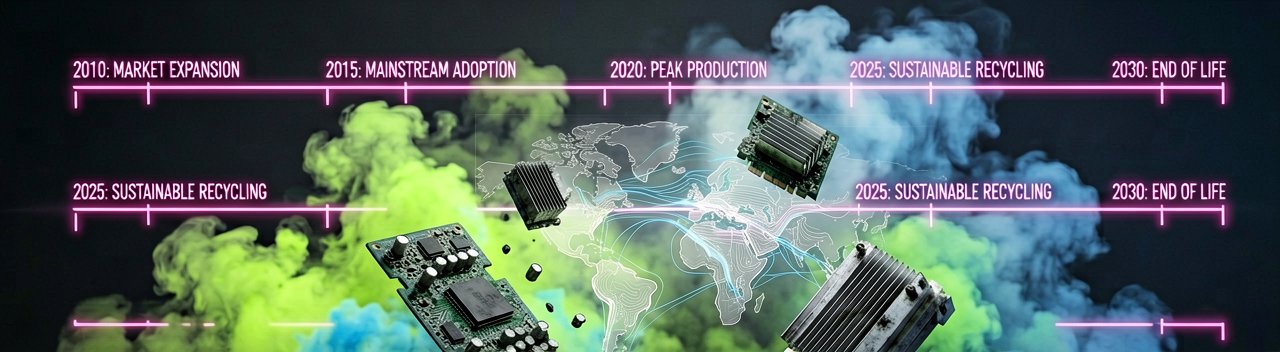
Furthermore, the rapid obsolescence of specialized AI hardware introduces an electronic waste crisis that the industry has yet to adequately address. The lifecycle of a high-performance graphics processing unit optimized for deep learning is remarkably short, often lasting fewer than three years before newer, more efficient architectures render it obsolete. This relentless upgrade cycle generates millions of metric tons of highly complex e-waste containing hazardous materials and rare earth elements that are notoriously difficult to recycle. Without robust circular economy mandates, the physical debris of the AI boom threatens to overwhelm regional waste management systems long before corporate net-zero deadlines are reached.
Navigating this crisis requires a complete overhaul of how software efficiency is valued within the engineering community. Historically, the tech industry has prioritized model accuracy and training speed above all else, treating compute power as an infinite, cheap commodity. Embracing the UN’s transparency directive means establishing new benchmarks that penalize computationally wasteful architectures and reward algorithmic efficiency. Ultimately, the future of sustainable AI will not be decided by empty corporate pledges or creative carbon accounting, but by a fundamental willingness to bind technological expansion to the absolute physical limits of our planet's ecosystems.
The Paradox of Efficiency and Regulatory Inertia
Reading Between the Lines: The prevailing narrative among Silicon Valley executives suggests that artificial intelligence will eventually solve its own environmental crisis by optimizing the very energy grids it is currently straining. This optimistic outlook relies heavily on Jevons’ Paradox, a well-documented economic phenomenon where increases in efficiency ultimately lead to greater overall consumption. As AI models become more computationally efficient and less resource-intensive per query, the cost of deployment drops significantly, which in turn exponentially increases global demand and total aggregate energy usage. Believing that algorithmic breakthroughs alone will naturally shrink the tech sector's carbon footprint ignores decades of industrial history.
A glaring contradiction lies in the contrast between corporate sustainability marketing and actual lobbying practices. While tech conglomerates publicize their multi-billion-dollar investments in renewable energy initiatives, their industry associations quietly lobby regulatory bodies to delay grid-decarbonization deadlines, arguing that premature fossil-fuel phaseouts threaten grid stability. This double standard exposes a harsh corporate reality: when forced to choose between meeting aggressive internal timelines for AI development and honoring public climate pledges, commercial competitiveness invariably overrides ecological stewardship. The race to achieve artificial general intelligence has created a market environment where pausing for environmental due diligence is viewed as corporate suicide.
Furthermore, the United Nations' reliance on voluntary disclosure and international pressure highlights the systemic weakness of global governance in the face of borderless technology. Even if a standardized transparency framework is successfully established, the UN lacks the enforcement mechanisms to penalize non-compliant firms or halt data center expansions in sovereign nations. Tech giants possess the capital and mobility to easily shift their heavy compute infrastructure to jurisdictions with more permissive environmental laws and opaque reporting standards. This regulatory arbitrage threatens to turn the UN’s environmental mandate into a bureaucratic exercise that merely shifts carbon emissions to parts of the world least equipped to monitor them.
The long-term geopolitical implications extend far beyond simple energy consumption figures. As data centers increasingly monopolize localized power and water resources, tech companies are effectively privatizing critical public utilities under the guise of technological progress. This dynamic sets up an inevitable clash between corporate interests and national security, as governments may eventually be forced to ration electricity between public infrastructure and commercial data farms. The true cost of the AI revolution will not be measured solely in metric tons of carbon, but in the structural erosion of public control over essential resources.
"We are told that the supreme intelligence of the future will soon unlock the secrets to saving our planet, provided we first give it enough fossil fuels to boil the oceans just to figure out how to do it efficiently."
Artūras Malašauskas is an AI Systems Integrator with 20+ years of production-grade web engineering experience. He has designed, shipped, and scaled enterprise Python/PHP systems for logistics, SaaS, and public-sector clients. For the past year, he has focused exclusively on AI integrations: deploying open-source LLMs, building generative media pipelines (image, audio, video), and engineering multi-agent workflows for real production environments. His standard: reproducibility, security, cost-efficient inference—no vaporware. He documents and evaluates emerging AI tooling, separating verified capabilities from marketing noise. Technical editor at: muza-ai.eu, ai-verslas.lt, ai-naujinos.lt Connect on LinkedIn
Comments