TrendAI Lands in the UAE: Why the Region’s AI Boom Demands Machine-Speed Defense
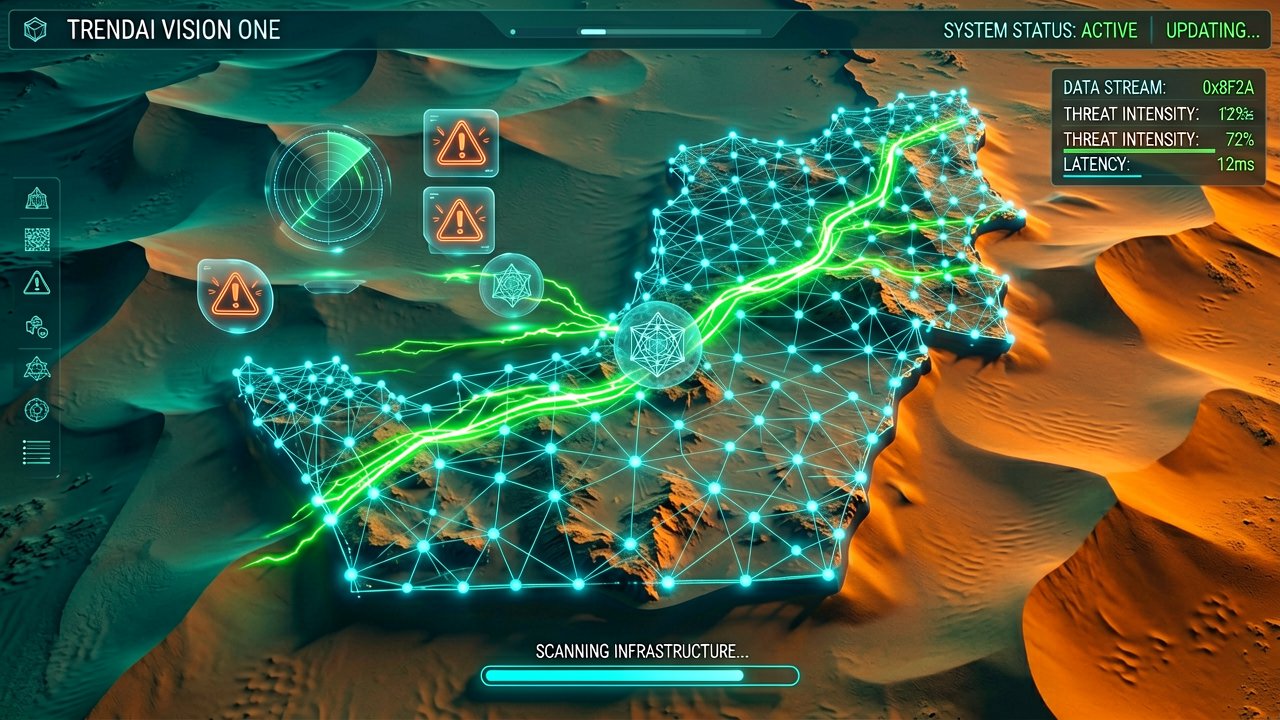
The UAE has officially turned into the ultimate proving ground for the future of business technology, making it the perfect backdrop for Trend Micro’s enterprise business arm, TrendAI, to officially launch its specialized operations in the region on June 22, 2026. This isn't just another corporate expansion; it's a calculated response to a territory growing its digital footprint faster than almost anywhere else on Earth. By planting its flag in the Gulf, the company aims to redefine how large organizations shield themselves against highly complex, automated threat vectors.
Let’s look at the landscape: local enterprises are rushing to integrate agentic AI and autonomous systems to supercharge productivity, but that speed introduces massive blind spots. According to recent global research from TrendAI, an overwhelming 67% of business leaders admit to feeling intense pressure to greenlight AI deployments before they are fully secured. It's a classic case of innovation outpacing governance, and that's precisely the friction point this launch targets.
Securing the New Compute Layer
As corporate infrastructure shifts from traditional software setups to complex neural networks, the digital attack surface expands exponentially. The defensive playbook has to evolve from simply filtering bad files to actively supervising how autonomous AI agents behave and interact with sensitive databases. Under the local leadership of Salah Suleiman, Managing Director for the South Gulf at TrendAI, the firm is deploying its flagship TrendAI Vision One platform to give security teams granular visibility over data lineage, automated policy enforcement, and real-time threat hunting across hybrid environments, as reported by Zawya.
A Network of Frontier Alliances
What makes this rollout particularly compelling is that the company isn't trying to fight this battle in a silo. To match the sheer speed of modern algorithmic attacks, they're leaning heavily into an interconnected ecosystem of frontier tech partnerships. They've teamed up with Anthropic to test advanced models like Claude Opus to help engineering teams flag code vulnerabilities and map complex attack paths before hackers can exploit them.
On the ground, this rollout is reinforced by a robust network of specialized alliances, including cyber risk advisory firm S-RM to streamline incident response workflows, and HackerVerse to conduct continuous, automated adversarial testing. As regional governments double down on comprehensive digital defense strategies, this arrival signals a major shift toward automated, predictive resilience tailored for a fully autonomous marketplace.
What Most Reports Miss: The launch of TrendAI in the UAE isn't just a routine corporate expansion; it represents a fundamental shift in how the geopolitical chess board of cybersecurity is being redrawn. For years, the Gulf region has been a prime target for state-sponsored threat actors and highly sophisticated financial cybercriminals, largely due to its immense wealth and rapid rate of digitization. By introducing a security framework built natively around machine learning, tech providers are moving away from reactive patch management and entering the realm of predictive, autonomous defense.
Industry insiders point out that the UAE's unique regulatory landscape acts as a powerful catalyst for this technology. The country’s stringent data residency laws and national AI strategies demand that enterprise defense systems handle massive data volumes locally without introducing latency. Local chief information security officers find themselves caught in a paradox: they must innovate at breakneck speed to satisfy boardroom demands while adhering to rigid compliance frameworks, making automated guardrails an operational necessity rather than a luxury.
The Realities of Securing Agentic Workflows
As enterprises transition from basic machine learning models to fully autonomous AI agents that can make financial decisions, modify code, or interact directly with customers, the nature of corporate risk shifts entirely. Traditional firewalls and endpoint security tools are fundamentally blind to algorithmic manipulation, such as prompt injection or data poisoning. This reality has forced a pivot toward monitoring the integrity of the data pipelines feeding these models, ensuring that the systems driving corporate automation haven't been quietly compromised at the foundational layer.
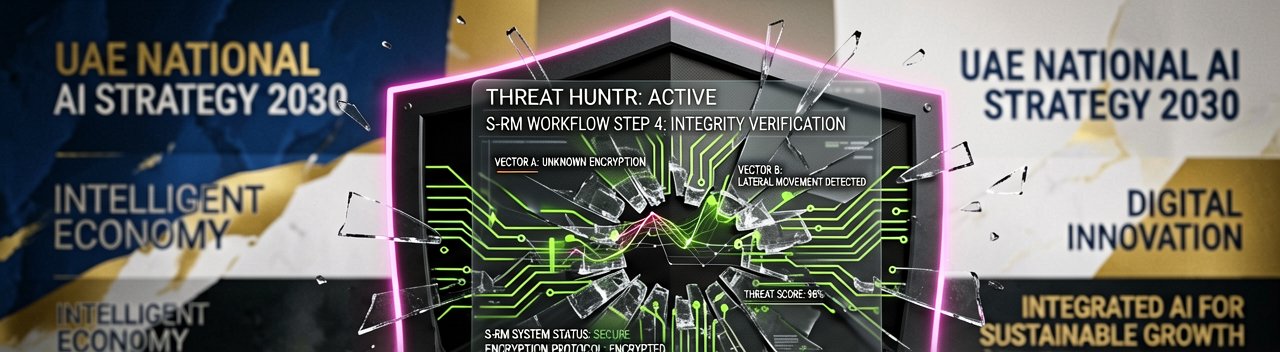
This operational shift also completely changes the day-to-day workflow within regional security operations centers. Instead of drowning in thousands of low-level alerts, analysts are now tasked with supervising AI-driven orchestrators that handle the initial triaging and containment of threats autonomously. The human element is rapidly evolving from a front-line defender into a strategic overseer, managing the policy parameters and ethical boundaries within which these autonomous defensive agents operate.
Ultimately, the arrival of dedicated enterprise AI defense infrastructure in the Gulf highlights a broader global trend: the democratization of cyber weapons means that defense must happen at machine speed to survive. As automated offensive tools become cheaper and more accessible on the dark web, organizations can no longer rely on human intervention to stop a breach in progress. The success of this rollout will likely serve as a blueprint for other hyper-digitized economies facing the inevitable reality of algorithmic warfare.
Artūras Malašauskas is an AI Systems Integrator with 20+ years of production-grade web engineering experience. He has designed, shipped, and scaled enterprise Python/PHP systems for logistics, SaaS, and public-sector clients. For the past year, he has focused exclusively on AI integrations: deploying open-source LLMs, building generative media pipelines (image, audio, video), and engineering multi-agent workflows for real production environments. His standard: reproducibility, security, cost-efficient inference—no vaporware. He documents and evaluates emerging AI tooling, separating verified capabilities from marketing noise. Technical editor at: muza-ai.eu, ai-verslas.lt, ai-naujinos.lt Connect on LinkedIn
Comments