AWS Targets AI Agent Weaknesses with Strategic Security and Contextual Solutions
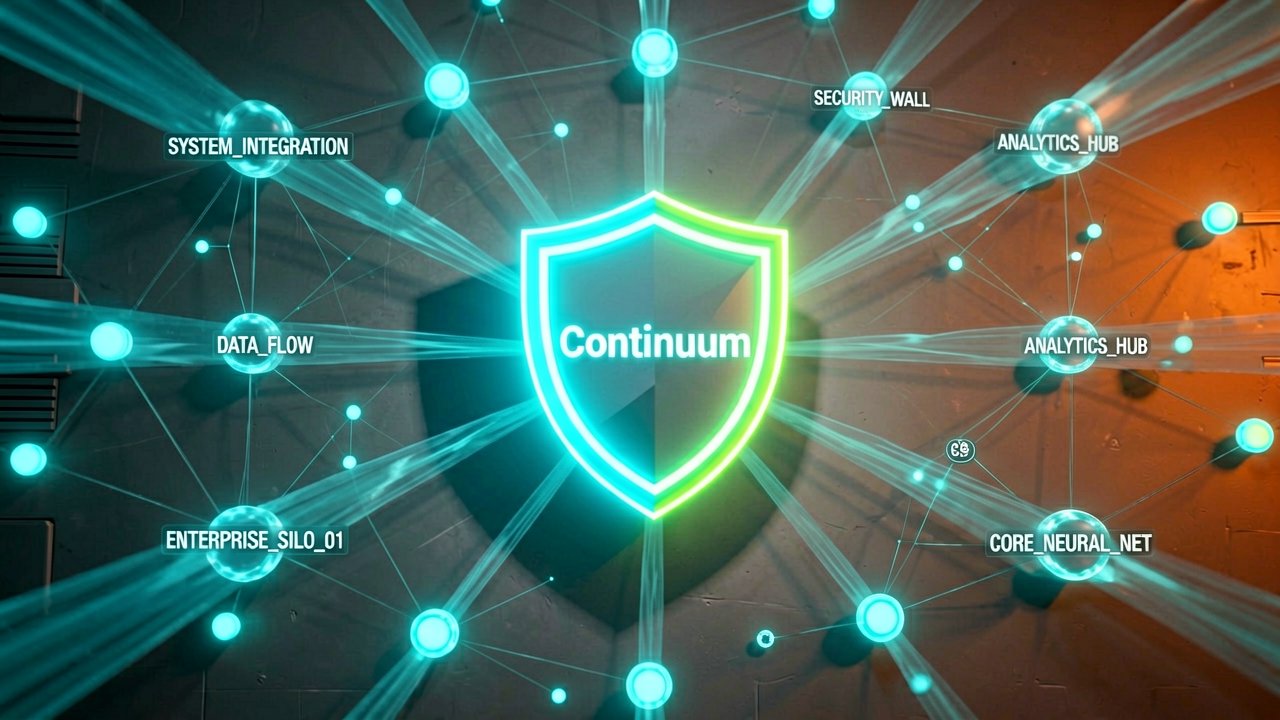
The enterprise adoption of artificial intelligence has transitioned rapidly from isolated chatbots to autonomous AI agents that manipulate code, orchestrate workflows, and execute multi-step tasks. However, this shift has exposed two fundamental vulnerabilities stalling widespread production deployment: a severe lack of internal business context and the absence of robust, agent-centric security frameworks. Without precise contextual data, autonomous agents generate inaccurate results or take wrong actions, while their elevated system privileges turn them into high-risk targets for exploitation by sophisticated adversarial models.
To address these critical shortcomings, Amazon Web Services launched two major services designed to provide deep structural guardrails and domain-specific awareness at its New York City Summit, as detailed by Amazon. The introduction of AWS Continuum and AWS Context signals a broader market pivot by the hyperscaler. Instead of merely offering foundational infrastructure or model access, AWS is building specialized orchestration layers that allow companies to safely transition autonomous systems from experimental sandboxes into core enterprise workflows.
AWS Continuum: Protecting Enterprises from Machine-Speed Exploitation
As advanced large language models become increasingly capable of weaponizing software flaws, the window for human-led security intervention has shrunk. AWS Continuum for code vulnerabilities addresses this threat landscape by delivering an AI-native security service that operates continuously at machine speed. According to executive commentary published by CIO Dive, the platform unifies automated threat modeling, continuous code scanning, and proactive patching into a cohesive defensive pipeline.
Unlike traditional static scanning tools that flood engineering teams with unprioritized alerts, AWS Continuum acts as an autonomous security specialist. It ingests source code or design documents, maps out comprehensive threat models, and validates vulnerabilities by attempting to construct working exploits within secure sandboxed environments. Once a legitimate flaw is identified, the system evaluates the business context to estimate the potential blast radius. It can then draft and test code patches, seamlessly integrating fixes directly into deployment pipelines under strict human-defined parameters.
AWS Context: Breaking Down Silos for Smarter Agentic Reasoning
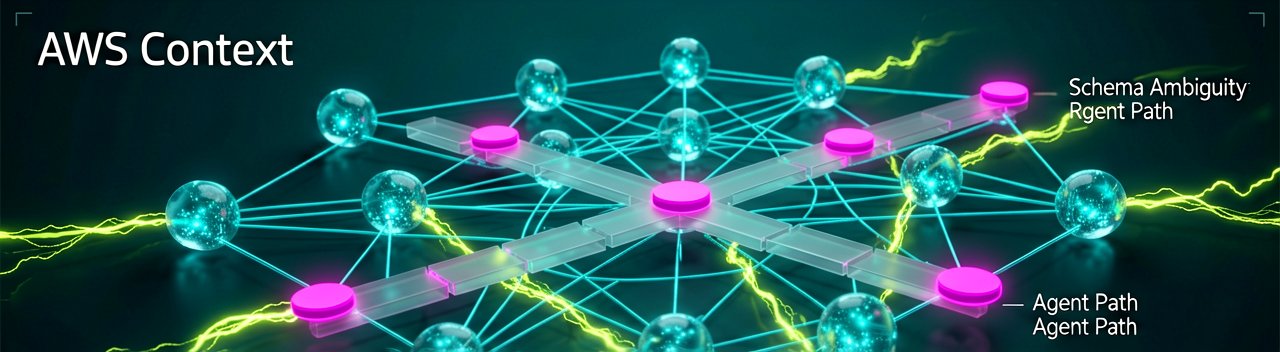
An autonomous agent is only as competent as the information it can access, yet enterprise data remains stubbornly fragmented across disconnected silos. AWS Context solves this isolation problem by providing a comprehensive knowledge graph that maps and organizes a company's internal data. As outlined in technical documentation from AWS Blog, this service serves as an intelligence layer that teaches agents where to retrieve validated information and how to execute the correct next operational step.
A key architectural advantage of AWS Context is its ability to learn dynamically from active agent utilization. The underlying graph continuously monitors agent queries, evaluating which data sources produce accurate outcomes and tracking the exact join paths the systems rely upon. Over time, it ranks sources based on real-world usage and propagates this metadata across the entire organization. When one specialized agent successfully resolves a schema ambiguity or identifies an authoritative data store, the optimization is instantly shared with every other agent in the network without requiring manual curation by human database administrators.
Market Analysis: Shifting from Basic Efficiency to Total Re-engineering
The simultaneous rollout of security and contextual layers marks a distinct phase in the maturity of enterprise generative AI. Early market iterations focused almost exclusively on individual worker productivity through text summarization and code generation assistants. However, as noted in expert coverage by Channel Dive, the cloud ecosystem is moving decisively past simple task automation into an era of structural continuity, where independent software agents maintain deep operational memory and execute complex goals over days or weeks.
By integrating these tools, AWS is tackling the trust deficit that has traditionally held enterprises back from fully unleashing autonomous systems. Continuum mitigates risk by beginning in a restricted "learn mode" with full explainability for every suggested patch before graduating to automated enforcement. Concurrently, Context minimizes hallucinations by ensuring agents are anchored to verified corporate reality. This dual strategy positions the cloud provider to capture an outsized share of enterprise AI spend as companies shift from localized experimentation to building secure, multi-agent swarms capable of re-engineering whole corporate functions.

The Hidden Bottlenecks of Agentic Proliferation
Behind the Scenes: The enterprise rush to deploy autonomous agents has collided with an uncomfortable reality: most corporate infrastructure was built for human eyes, not machine logic. While developers have grown adept at prompting large language models to generate text, connecting those models to legacy enterprise resource planning systems and databases has exposed massive structural friction. Early enterprise pilots frequently stalled because agents spent more compute cycles trying to decipher poorly documented internal APIs and ambiguous data fields than actually executing tasks. By introducing a system that maps corporate relationships and learns from historical query successes, cloud providers are attempting to build a translation layer that turns chaotic corporate data dumps into structured, agent-ready environments.
This challenge is further compounded by the evolving tactics of modern cyber adversaries, who have quickly realized that confusing an AI agent is far easier than traditional network penetration. Security researchers have repeatedly demonstrated that prompt injection attacks, malicious data poisoning, and adversarial data inputs can easily trick unshielded agents into overriding internal controls. In an ecosystem where an agent might possess the credentials to modify cloud configurations, write code, or approve financial transfers, a single hijacked prompt can lead to catastrophic system failure. This reality has forced a profound shift in how chief information security officers view AI safety; moving away from generic model filters toward real-time sandbox validation and automated, machine-speed patch deployment.
The operational burden of managing these systems has also created a quiet crisis among software engineering teams. As agents generate thousands of lines of automated code and continuously propose system modifications, human engineers are increasingly overwhelmed by the sheer volume of code reviews and security alerts. Traditional workflows cannot scale to match the velocity of autonomous software development, leading to reviewer fatigue and a high likelihood that critical vulnerabilities will slip through the cracks. Automation must therefore be met with autonomous defense, establishing self-testing sandboxes that validate patches before they ever reach a human desk, thereby preserving engineering guardrails without sacrificing the speed advantages of generative AI.
Ultimately, the long-term viability of autonomous agent networks hinges on a delicate balance between absolute control and operational autonomy. If enterprises restrict their agents too heavily with rigid, hard-coded rules, they forfeit the creative problem-solving capabilities that make large language models valuable in the first place. Conversely, granting unrestricted access without unified context layers and active threat modeling invites unprecedented operational and security risks. The tech landscape is now entering a stabilization phase where the defining competitive advantage is no longer the underlying raw intelligence of the model, but rather the strength, security, and context of the environment in which that model is allowed to operate.
The Paradox of Autonomous Governance
Reading Between the Lines: The tech industry's sudden pivot toward securing AI agents reveals a glaring contradiction in the current corporate narrative surrounding autonomous systems. For quarters, hyperscalers championed the narrative that generative AI would drastically cut operational costs and flatten corporate complexity. Yet, the rapid introduction of heavy orchestration, security, and context layers proves that autonomy is not a shortcut to simplicity, but rather an entirely new architecture that demands intensive capital and engineering oversight. Enterprises are effectively being asked to invest heavily in secondary AI platforms simply to police and correct the unpredictability of their primary AI investments.
Furthermore, the promise of dynamic, self-optimizing context graphs introduces an unacknowledged loop of structural bias. If autonomous agents rely on a centralized system that ranks information based on past automated query successes, they risk reinforcing their own flawed reasoning patterns over time. This algorithmic echo chamber can quietly deprecate vital but rarely accessed data silos, mistaking underutilization for inaccuracy. Instead of breaking down corporate data silos, these automated indexing systems risk permanently burying institutional knowledge that does not conform to the immediate mathematical preferences of the prevailing large language models.
This dependency shift highlights a deeper strategic tension regarding vendor lock-in. By embedding an enterprise’s continuous threat modeling, code patching, and internal data relationships directly into a specific cloud provider's proprietary orchestration layer, companies are signing up for an unprecedented level of operational dependency. Moving a core business workflow from one cloud ecosystem to another was already notoriously difficult; doing so when that workflow is managed by autonomous agents whose contextual memory and security guardrails are anchored to proprietary cloud services will be nearly impossible. The democratization of model access has inadvertently triggered a centralization of workflow control.
"We are rapidly approaching an era of peak corporate efficiency, where autonomous agents will tirelessly spend millions of dollars in compute power to patch code written by other autonomous agents, all while human executives look on, wondering who left the digital lights on."
Artūras Malašauskas is an AI Systems Integrator with 20+ years of production-grade web engineering experience. He has designed, shipped, and scaled enterprise Python/PHP systems for logistics, SaaS, and public-sector clients. For the past year, he has focused exclusively on AI integrations: deploying open-source LLMs, building generative media pipelines (image, audio, video), and engineering multi-agent workflows for real production environments. His standard: reproducibility, security, cost-efficient inference—no vaporware. He documents and evaluates emerging AI tooling, separating verified capabilities from marketing noise. Technical editor at: muza-ai.eu, ai-verslas.lt, ai-naujinos.lt Connect on LinkedIn
Comments