The Architecture of Reality: How Unreal Engine 5.8 Solidifies Real-Time Supremacy in CG Artistry
The release of Unreal Engine 5.8 marks a defining watershed moment for computer graphics, positioning real-time pipelines not merely as an alternative to traditional Digital Content Creation (DCC) suites, but as the master architecture for modern production. As detailed by GamesBeat, this milestone stands as the final planned major iteration of the Unreal Engine 5 lifecycle, indicating that Epic Games is transitioning its frontline engineering toward Unreal Engine 6. Rather than coasting on iterative refinements, this definitive release forces a strategic convergence, consolidating years of structural experimentation into production-hardened tools that permanently disrupt long-established layout, asset authoring, and environmental workflows.
For CG artists, technical directors, and visual effects supervisors, the implications of this release stretch far beyond standard incremental software upgrades. By bringing historically computational bottlenecks directly into the viewport, Epic Games is systematically eliminating the cross-application round-tripping that has hampered digital worldbuilding for three decades. The structural focus shifts away from standard game-dev asset optimization toward uncompromised cinematographic fidelity, making a direct play for dominance within virtual production volumes, high-end linear animation studios, and top-tier VFX houses.
Breaking the Heightfield Barrier with Native Mesh Terrain
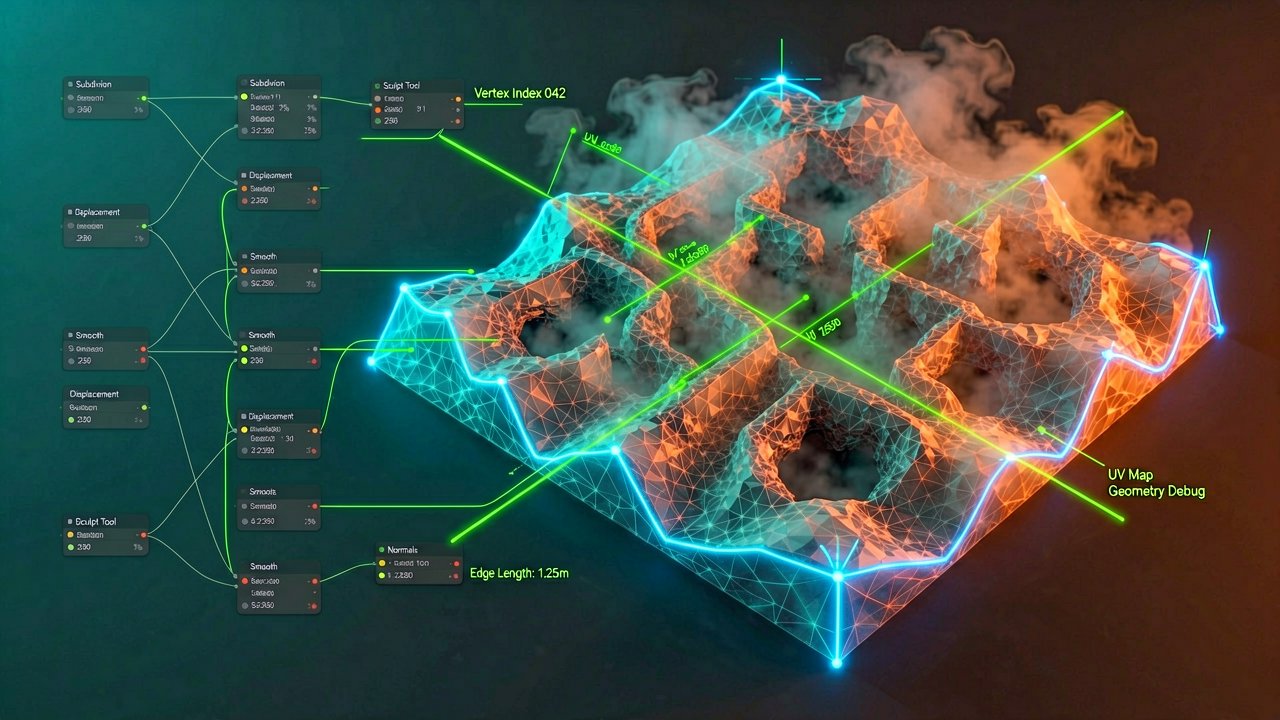
The introduction of the experimental Mesh Terrain system disrupts the foundational logic of environmental layout in computer graphics. According to a detailed breakdown by CG Channel, this new architecture shifts developers away from traditional heightfield-based landscapes, which have historically limited terrain layout due to an inability to natively construct overhangs, vertical cliff faces, or complex subterranean caves without relying on complex static mesh kitbashing. Mesh Terrain resolves these physical limitations through a non-destructive, modifier-based 3D mesh architecture that seamlessly scales its fidelity near the camera while integrating with Nanite geometry streaming and Procedural Content Generation frameworks.
MegaLights Graduation and the Demise of Render Farms
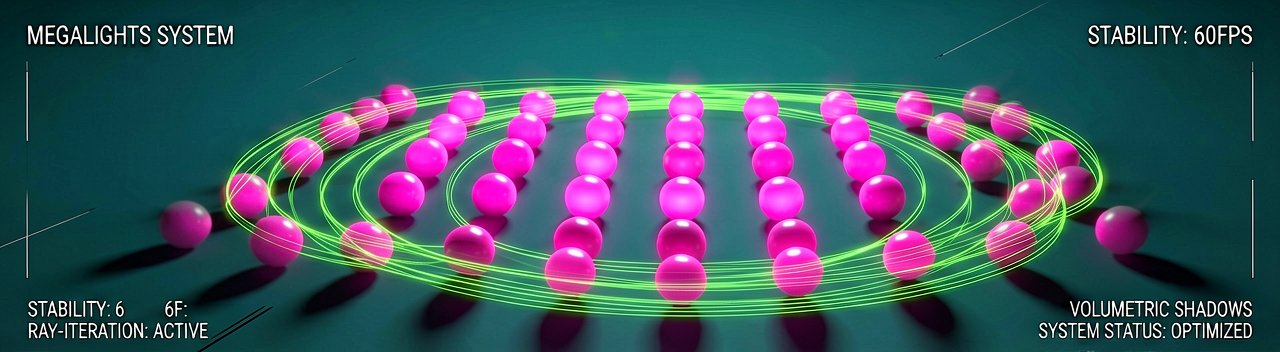
First introduced as a groundbreaking preview, the MegaLights system—widely regarded as the "Nanite of illumination"—has officially transitioned into a fully production-ready state. In-depth roadmap coverage from CG Channel highlights that this engine upgrade delivers dramatically improved performance profiles, unlocking stable 60 frames-per-second capabilities even when managing hundreds of dynamic, shadow-casting light sources simultaneously. Enhanced with advanced support for camera-aligned voxel translucency, subsurface scattering, and robust ray-iteration debugging tools, the technology effectively closes the visual gap with offline path tracers, rendering traditional, energy-intensive render farms increasingly obsolete for linear entertainment.
Scalable Digital Humanity and In-Editor Asset Creation
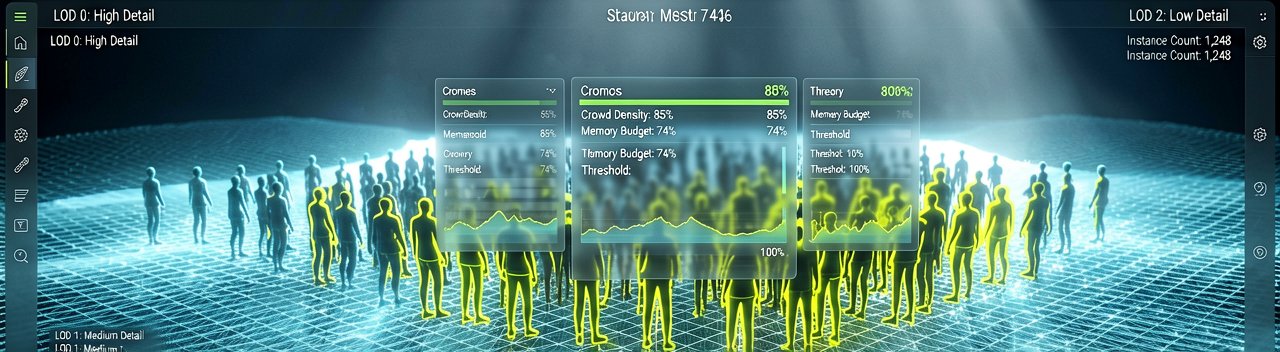
Populating massive digital environments receives a significant architectural upgrade through the MetaHuman Crowd plugin. As documented by GamesBeat, this system allows studios to transition from high-fidelity digital humans to highly optimized, lower-fidelity instanced skeletal meshes across varying distances from the camera, allowing environments to support thousands of characters across all target platforms. Combined with the simultaneous release of core character logic libraries like OpenRigLogic on GitHub under an MIT license, and the introduction of native Procedural Vegetation Editors directly inside the editor, artists are granted unprecedented freedom to sculpt, capture, and simulate organic life entirely in context, ensuring that creative intent remains uncompromised from conception to final frame.
The Hidden Engineering Costs of Real-Time Convergence
What Most Reports Miss: The shift toward an all-in-one real-time pipeline is fundamentally reshaping the physical layout and financial structure of modern visual effects studios. For decades, the industry operated on a strictly linear assembly line where assets moved from modeling to rigging, texturing, lighting, and finally to massive, centralized render farms. By pulling these disparate disciplines directly into the active viewport, studios are experiencing an intense organizational shock. Technical directors are no longer tasked with writing proprietary export scripts for offline renderers; instead, they are forced to reinvent themselves as real-time infrastructure architects capable of managing complex runtime streaming budgets and deep engine logic.
This operational pivot has triggered a contentious debate among industry veterans regarding the democratization of digital asset creation versus the erosion of specialized artistry. While entry-level artists gain unprecedented access to cinematic-grade tools, senior pipeline engineers express growing concern over the loss of granular control. Traditional offline tools allowed artists to manipulate raw data at the vertex and pixel level during render time to fix anomalies. In a real-time framework, these post-production safety nets vanish, demanding a level of foresight and technical discipline during the initial asset setup phase that many traditional art departments are simply not yet equipped to provide.
Furthermore, the infrastructure investment required to transition away from traditional workflows introduces significant hidden capital expenditures. Although the reliance on extensive offline render farms is diminishing, it is being replaced by an immediate requirement for high-end, workstation-class hardware on every single artist's desk to handle localized, real-time computations. Independent studios and boutique agencies find themselves in a precarious position, caught between the need to adopt these modern real-time capabilities to remain competitive and the steep financial reality of upgrading their localized hardware infrastructure during a period of broader macroeconomic tightening within the entertainment tech sector.
Ultimately, the true impact of this release lies in how it redefines the creative psychology of digital worldbuilding. When feedback is instantaneous, the traditional gap between creative iteration and technical execution disappears, allowing directors and artists to make definitive visual choices in real time on the virtual stage. This collapsing of the production timeline fundamentally alters the power dynamics of filmmaking, transferring critical creative decisions out of late-stage post-production and back into pre-production, where the foundational vision of a project can be iterated upon without financial penalty.
The Paradigm Shift and Its Broken Promises
Reading Between the Lines: The widespread industry narrative surrounding real-time production often relies on a deeply flawed premise—that eliminating traditional render farms instantly creates a frictionless creative utopia. While the technical achievements of real-time software are undeniable, the promised reduction in production overhead frequently plays out as a shell game of shifting bottlenecks. By pushing the final rendering process to the front of the production timeline, studios are not actually eliminating complexity, but are instead forcing their art departments to act as technical troubleshooters far earlier in the creative lifecycle than they are accustomed to.
This structural compression reveals a glaring contradiction in the push for absolute graphical realism. The engine's advanced procedural generation and automated environment tools are specifically designed to reduce manual labor, yet they simultaneously produce an unprecedented avalanche of digital assets that must be tracked, organized, and optimized. As a result, the time saved by avoiding traditional offline rendering is quickly consumed by the immense technical overhead of managing real-time data streaming, creating an ironic pipeline loop where artists spend less time painting pixels and far more time optimizing memory budgets.
There is also a palpable corporate risk in allowing a single ecosystem to establish a virtual monopoly over the entire digital content pipeline. As independent toolsets and open-source DCC alternatives find themselves marginalized by the sheer gravity of integrated real-time engines, the industry willingly surrenders its technological independence. This consolidation creates a precarious reliance on proprietary commercial roadmaps, leaving major studios vulnerable to sudden licensing shifts, strategic pivots, or engineering priorities that may prioritize widespread interactive gaming features over the highly niche, bespoke demands of elite cinematic visual effects production.
Looking ahead, this real-time convergence will likely create a deeply bifurcated industry rather than a democratized landscape. Mega-studios with the financial capital to build custom tools on top of commercial engines will unlock unprecedented production speed, while mid-tier and boutique shops risk being crushed by the continuous hardware upgrade cycle required to keep pace. The ultimate irony of modern computer graphics may be that the technology designed to liberate creative vision from technical constraints could ultimately bind it to an unrelenting, hyper-accelerated cycle of software dependencies.
"We were promised that real-time workflows would finally grant artists absolute creative freedom and total liberation from the rendering queue; instead, we simply traded our long, peaceful overnight render breaks for the immediate, high-stakes panic of watching a live viewport crash during a director's review."
Artūras Malašauskas is an AI Systems Integrator with 20+ years of production-grade web engineering experience. He has designed, shipped, and scaled enterprise Python/PHP systems for logistics, SaaS, and public-sector clients. For the past year, he has focused exclusively on AI integrations: deploying open-source LLMs, building generative media pipelines (image, audio, video), and engineering multi-agent workflows for real production environments. His standard: reproducibility, security, cost-efficient inference—no vaporware. He documents and evaluates emerging AI tooling, separating verified capabilities from marketing noise. Technical editor at: muza-ai.eu, ai-verslas.lt, ai-naujinos.lt Connect on LinkedIn
Comments