ETF Showdown: Choosing the Right Vehicle for the AI Era
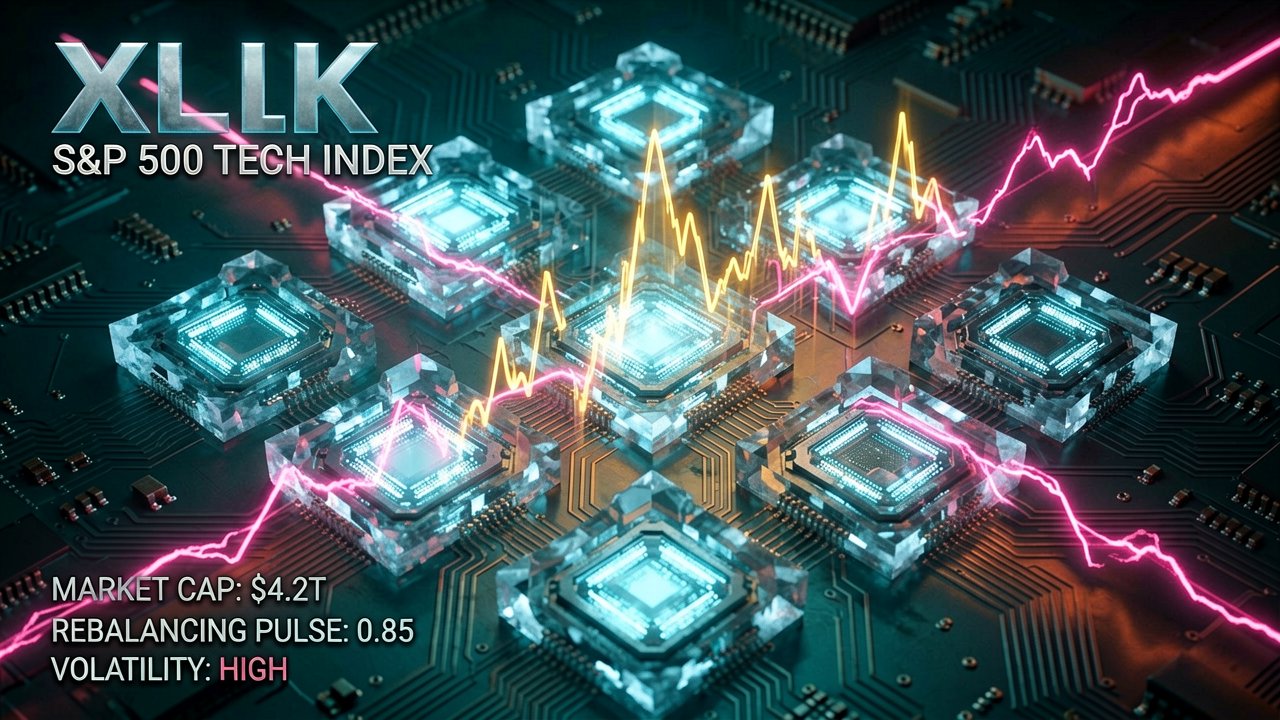
The race for artificial intelligence dominance is rewriting the rules of tech investing, forcing a massive architectural re-evaluation of how Wall Street bundles its most valuable silicon assets. Investors hunting for the ultimate index vehicle to ride the generative AI boom have increasingly converged on two titans: the State Street Technology Select Sector SPDR ETF, known universally by its ticker XLK, and the Vanguard Information Technology ETF, or VGT. While both funds are designed to track the blistering pace of American innovation, their internal mechanics have drifted wildly apart over the last several months, creating distinct paths of risk and reward.
This tracking divergence materialized clearly through significant structural shifts culminating in early 2026, driven by how each fund handles index construction and mega-cap concentration. As tech companies scale to multi-trillion-dollar valuations, the rigid indexing methodologies underpinning these funds have forced aggressive portfolio overhauls. What once looked like a subtle difference in index providers has evolved into a stark philosophical divide over how deep an investor's exposure should be to specific tech pioneers.
The Architecture of Allocation
The baseline difference between these two giants comes down to index design and capitalization limits. XLK utilizes a strict capped index methodology that can trigger dramatic rebalancing acts when specific companies swap positions at the top of the market-cap leaderboard. This rigidity recently led to volatile swings in individual stock weights, transforming the fund into a highly concentrated bet on a select few hardware and software giants. It means that small shifts in the relative market caps of tech royalty can disproportionately shift how XLK deploys billions of dollars of investor capital.
Vanguard's VGT, meanwhile, follows a broader benchmarking strategy that caps individual allocations more smoothly across a much wider net. Tracking over 300 holdings compared to XLK's tightly curated basket of roughly 70, VGT naturally smooths out the edges of sudden mega-cap reshuffling. While both funds charge rock-bottom expense ratios to capture the tech sector, VGT includes small- and mid-cap tech innovators that are completely absent from the large-cap-only architecture of its State Street competitor.

Technical Specifications Matrix
| Specification Factor | XLK Architecture (S&P/State Street) | VGT Architecture (MSCI/Vanguard) |
|---|---|---|
| Speed / Rebalancing Latency | Quarterly rebalancing lagging behind rapid, real-time market cap flips. | Quarterly buffers with multi-tier caps to minimize sudden turnover spikes. |
| Model Size / Parameters Included | Highly concentrated, large-cap focus tracking roughly 65 to 70 mega-scale components. | Broad-spectrum exposure spanning over 300 small, mid, and large-cap tech companies. |
| Hardware / Infrastructure Requirements | Heavy reliance on pure-play compute chips, hyperscalers, and enterprise software suites. | Diversified allocation adding network equipment, electronic components, and IT consultants. |
Hardware Diversification and Compute Infrastructure
The stark difference in hardware requirements between these two funds stems from how their underlying index methodologies define a technology company. XLK sticks strictly to the S&P Select Sector framework, which channels capital directly into pure-play semiconductor giants, cloud providers, and enterprise software ecosystems. This architecture functions as a heavy bet on raw AI processing power, prioritizing firms that design advanced graphics processing units and manage massive data centers. Consequently, investors in this vehicle are tied directly to the quarterly performance of businesses manufacturing the physical silicon substrate of the machine learning boom.
VGT operates on a broader hardware thesis by adopting the MSCI US Investable Market Information Technology Index. This approach captures the entire supply chain, including the peripheral infrastructure required to keep massive data centers running. While it still features the same dominant semiconductor chipmakers found at the top of XLK, it balances that exposure with substantial allocations to electronic component distributors, network equipment providers, and IT consulting corporations. It acknowledges that building an AI-driven economy requires substantial investments in advanced physical cabling, power management components, and system integrators who deploy these solutions in the field.
This structural divergence creates a significant variance in how rebalancing latency impacts investors when market leadership shifts. XLK relies on a rigid, mathematical market-cap calculation that triggers dramatic portfolio adjustments during quarterly updates if two tech giants cross paths in total valuation. When a silicon designer swaps places with a software platform at the top of the index, the fund is forced to execute massive automated trades to maintain its capped allocation limits. This mechanical delay between market movement and fund adjustments can lead to sudden, concentrated shifts in asset distribution right at the rebalancing deadline.
Vanguard mitigates this rebalancing friction by leveraging a multi-tiered capping system across its expansive ecosystem of over 300 holdings. Because the fund incorporates small- and mid-cap technology firms, the broader footprint absorbs the liquidity demands of mega-cap reshuffling with much less internal turbulence. The deep inclusion of smaller hardware innovators means the fund acts less like a volatile momentum tracker and more like an institutional proxy for the entire American digital infrastructure pipeline, softening the blow when individual mega-cap stocks experience sudden adjustments.

Editorial Pros & Cons
| ETF Vehicle | Operational Advantages (Pros) | Operational Disadvantages (Cons) |
|---|---|---|
| XLK (State Street) | Uncompromising, high-octane concentration in elite mega-cap AI leaders; high liquidity for rapid tactical trading. | Severe single-stock bottleneck risks; quarterly rebalancing rules can cause massive, erratic allocation shifts. |
| VGT (Vanguard) | Comprehensive industry coverage including small-cap innovators; smooth, multi-tiered capping mitigates single-stock shocks. | Dilutes pure-play AI momentum with legacy hardware and IT consulting firms; lower intraday trading flexibility. |
The Indexing Illusion
Reading Between the Lines: Passive investing is rarely as passive as marketing brochures suggest, and the structural schism between these two exchange-traded funds proves that index methodology is an active management choice by proxy. When an investor buys into a sector fund, they are trusting a rigid, pre-programmed algorithm to make massive allocation decisions on their behalf. In the hyper-escalated landscape of modern tech valuations, those automated rules can inadvertently create highly speculative portfolios that look far more like concentrated hedge fund bets than diversified safety nets.
The operational reality of XLK reveals a vehicle built for the investor who wants to ride the absolute peak of the momentum wave. By narrowing its scope to the largest players in the S&P 500, it effectively isolates the hyper-scalers driving the current AI computational paradigm. However, this aggressive curation introduces an undeniable structural vulnerability. When a single hardware company represents an outsized double-digit percentage of the entire fund, the ETF ceases to be a broad sector bet and transforms into a proxy instrument for that specific corporate entity's quarterly earnings report.
VGT presents a fundamentally different operational philosophy by leaning into Vanguard's traditional ethos of capturing the entire market ecosystem. By casting a wider net that includes small-cap microchip fabricators and mid-tier software developers, the fund insulates itself from the brutal volatility of a sudden executive shakeup or regulatory hurdle at the top of the food chain. This broader framework protects capital during localized tech corrections, though it inevitably acts as a drag on performance when a handful of mega-cap silicon designers are pulling the rest of the market upward by sheer brute force.
Ultimately, choosing between these two vehicles requires looking past the identical expense ratios and examining the plumbing underneath. Investors seeking tactical, high-conviction exposure to the heavy hitters of the automated frontier find their match in the concentrated architecture of State Street's vehicle. Conversely, those looking to build a long-term core holding that captures the broader commercialization of digital infrastructure are far better served by Vanguard's patient, multi-tiered netting strategy.
"In the grand arena of tech indexing, choosing an ETF based solely on past returns is like buying a sports car because you like the dashboard paint; if you don't look under the hood to see whether you are buying a tightly wound, single-engine rocket or a three-hundred-car freight train, you shouldn't be surprised when the ride gets unexpectedly bumpy."
Artūras Malašauskas is an AI Systems Integrator with 20+ years of production-grade web engineering experience. He has designed, shipped, and scaled enterprise Python/PHP systems for logistics, SaaS, and public-sector clients. For the past year, he has focused exclusively on AI integrations: deploying open-source LLMs, building generative media pipelines (image, audio, video), and engineering multi-agent workflows for real production environments. His standard: reproducibility, security, cost-efficient inference—no vaporware. He documents and evaluates emerging AI tooling, separating verified capabilities from marketing noise. Technical editor at: muza-ai.eu, ai-verslas.lt, ai-naujinos.lt Connect on LinkedIn
Comments