Open-Source Defiance: How GLM-5.2 Recalibrates the Global AI Paradigm for Autonomous Engineering

The global artificial intelligence landscape experienced a massive structural realignment when Knowledge Atlas Technology, known internationally as Z.ai, announced the immediate open-source release of its flagship model, GLM-5.2, under an unrestricted MIT license. Engineered as a 753-billion parameter powerhouse, this new framework is explicitly optimized for repository-scale coding and complex, long-horizon strategic tasks. By shifting the industry paradigm from simple prompt-and-response interactions to fully autonomous, agentic system workflows, Z.ai has directly challenged the established dominance of high-cost proprietary systems, promising a major democratization of advanced developer capabilities.
From a market perspective, this deployment serves as a definitive pivot point for enterprise AI adoption. Companies historically bottlenecked by expensive API paywalls and restrictive vendor lock-ins now possess a fully adaptable, locally deployable alternative. According to early industry coverage by VentureBeat, GLM-5.2 achieves competitive parity with closed-source frontier architectures for roughly one-sixth of the operational cost. This aggressive pricing and access model undercuts standard market economics, establishing a highly disruptive precedent for how multinational organizations integrate machine intelligence into their continuous integration and deployment pipelines.
The strategic implications extend beyond localized cost savings, fundamentally reshaping collaborative open-source developer ecosystems. By incorporating native, deep optimization across several mainstream hardware architectures right from its initial launch, Z.ai has successfully decoupled frontier-grade performance from centralized cloud monopolies. This technological inclusivity allows decentralized global communities to collectively iterate on complex software architectures without encountering regional or fiscal gatekeeping. Consequently, the industry is entering an era where the development of self-correcting agent networks and autonomous multi-platform engineering pipelines will be led by open-source collaboration rather than closed corporate labs.
Architectural Efficiency and Performance Benchmarks
To operate a 753-billion parameter structure at a 1-million-token context length without requiring astronomical hardware budgets, Z.ai introduced an architectural mechanism called IndexShare. In traditional transformers, recalculating attention across massive inputs introduces severe compute penalties. IndexShare mitigates this by reusing a uniform indexer across every four sparse attention layers, decreasing per-token compute by 2.9 times at maximum context capacity. Furthermore, adjustments to the model’s Multi-Token Prediction layer improve the acceptance lengths for speculative decoding by up to 20%, dramatically suppressing inference latency during extended multi-step operations.
These algorithmic breakthroughs translate into formidable performance across standardized engineering evaluations. According to official performance insights published by Z.ai, the model scores 81.0 on Terminal-Bench 2.1 and 62.1 on SWE-bench Pro, marking a drastic generational advancement over its previous iterations. On long-horizon software engineering benchmarks like FrontierSWE, GLM-5.2 trails Anthropic's closed-source Claude Opus by a marginal 1% while simultaneously outperforming OpenAI's GPT-5.5 by a 1% threshold. This brings open-source capabilities within absolute striking distance of the premium, closed-source frontier.
Thinking Modes and Strategic Enterprise Deployment
A core differentiator in GLM-5.2 is its implementation of selectable reasoning effort tiers, allowing developers to manually toggle thinking modes based on the complexity of the task. The "Max" effort level permits the system to allocate extensive, token-heavy reasoning paths to resolve dense mathematical or structural software anomalies. Conversely, lower latency-sensitive settings balance computing budgets against execution speeds for simpler, daily conversational or minor editing workflows. This granularity enables enterprise architectures to optimize token expenditure dynamically, reserving heavy computing power exclusively for nuanced long-horizon logic.
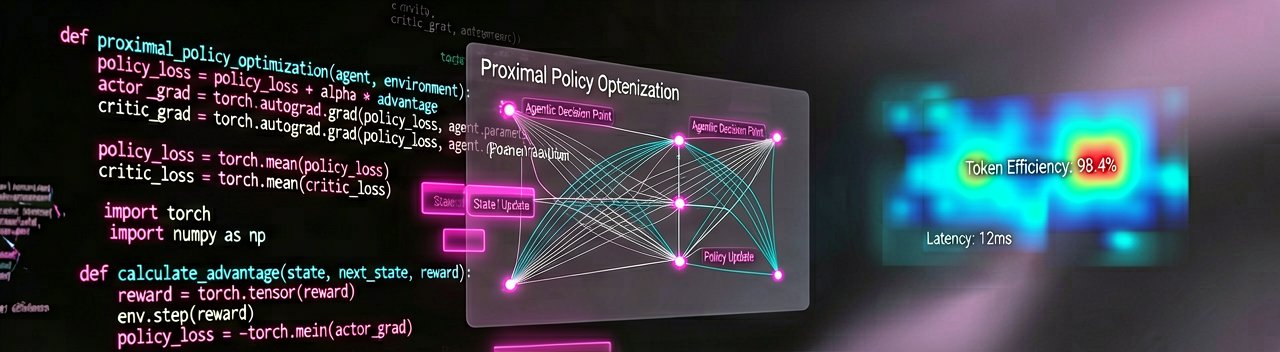
For strategic corporate planning, the model's reliance on a new critic-based Proximal Policy Optimization formulation represents a monumental leap forward. Rather than adhering to basic outcome supervision, GLM-5.2 learns continuously from fragmented execution traces and super-long agentic trajectories. This specific training methodology ensures that when managing real-world software deployments, the model acts less like a simple autocomplete tool and more like an autonomous systems architect. It evaluates full development workflows from initial requirements gathering down to multi-platform delivery, following rigid engineering standards while executing continuous self-correction in real-time.
Sustained Multi-Step Execution and Economic Realities
What Most Reports Miss: The actual operational friction of deploying a 753-billion parameter architecture lies not in raw benchmark scores, but in the grueling mechanics of long-horizon execution traces. While the broader market celebrates high token capacity as a vanity metric, senior systems architects understand that a context window is only as valuable as its retrieval fidelity under heavy engineering stress. In real-world integration pipelines, models frequently succumb to attention fragmentation, losing track of initialization parameters or missing critical syntax requirements across multi-file refactors. According to the original architectural breakdowns published by Z.ai, the transition from older models like GLM-5.1 required a massive expansion of training sequences explicitly modeled on long agentic trajectories, resolving the cascading failures that typically plague autonomous systems when managing hours-long development cycles.

This technical stability alters the underlying financial formulas for enterprise software engineering departments. Running closed-source frontier infrastructure at scale forces CTOs into a compounding financial commitment, dictated by strict vendor API pricing and unpredictable data retention rules. A thorough financial dissection by notes that the open-weights nature of GLM-5.2 shifts this dynamic by enabling organizations to host the entire system within their private cloud infrastructure or local virtual environments. The immediate byproduct is a reduction in operational expenditures down to baseline compute and electricity costs, providing a scalable pathway toward zero data retention that satisfies stringent modern security compliance standards.
However, independent performance monitoring indicates that these massive computational capabilities introduce distinct tradeoffs in runtime optimization. Evaluators from Artificial Analysis discovered that GLM-5.2 consumes roughly 43,000 output tokens per complex intelligence task, with a striking 37,000 of those tokens dedicated entirely to its internal reasoning cycles. This intensive, verbose thinking process positions the model among the less token-efficient options in the open-weights tier, trading raw computing speed and compact outputs for an elevated accuracy ceiling. For enterprise architectures, this means that while the model successfully mitigates hallucinations, developers must carefully balance their local hardware allocation to support its massive, reasoning-heavy generation profiles.
The Hidden Trade-Offs of Open-Source Sophistication
Reading Between the Lines: The triumphalist narrative surrounding GLM-5.2’s open-source release quietly glosses over a gaping economic contradiction: the staggering cost of running a 753-billion parameter reasoning giant locally. While its developer, Z.ai, has legitimately democratized high-tier coding intelligence by bypassing traditional proprietary gatekeepers, the hardware footprint required to deploy a model of this magnitude remains completely out of reach for independent developers. An organization must either invest heavily in a dedicated enterprise server infrastructure or face steep commercial hosting fees, stripping away the idealized premise of free, grassroots AI experimentation and replacing it with an asset-heavy capital investment.
Furthermore, an unsparing audit of the model's structural mechanics reveals a massive operational bottleneck in compute efficiency. According to comprehensive data charts tracking real-world performance on Artificial Analysis, GLM-5.2 ranks near the bottom of its intelligence weight class for token economy, consuming a massive 43,000 output tokens per standard task simply to "think" its way to a conclusion. This means that a staggering 86% of the generated output is comprised of non-actionable, back-end reasoning steps that never reach the final codebase. For enterprise software suites attempting to run continuous integration loops, this high verbosity introduces a hidden runtime penalty that directly threatens to negate the baseline efficiency gains promised by its architectural optimization.
Ultimately, the long-term impact of GLM-5.2 depends on how seamlessly the software community adapts to these massive computing overheads. If organizations rely on third-party cloud providers to handle the model's intense processing bursts, the economic benefits of opting for an open-weights framework will quickly disappear under a flurry of api bills. Conversely, if local quantization strategies fail to preserve the system's exact reasoning pathing, the model’s performance on long-horizon architectures could easily degrade back to the level of standard, non-agentic autocomplete utilities. This dynamic shifts the competitive battlefield entirely, moving it away from pure algorithmic design and placing it squarely on raw, real-world hardware optimization.
"We were promised a future where open-source AI would instantly turn every junior developer with an idea into a master systems architect. Instead, GLM-5.2 has arrived to remind us that while the software may be wonderfully free under an MIT license, the massive electricity bill required to watch an AI overthink a single variable change remains strictly proprietary."
Artūras Malašauskas is an AI Systems Integrator with 20+ years of production-grade web engineering experience. He has designed, shipped, and scaled enterprise Python/PHP systems for logistics, SaaS, and public-sector clients. For the past year, he has focused exclusively on AI integrations: deploying open-source LLMs, building generative media pipelines (image, audio, video), and engineering multi-agent workflows for real production environments. His standard: reproducibility, security, cost-efficient inference—no vaporware. He documents and evaluates emerging AI tooling, separating verified capabilities from marketing noise. Technical editor at: muza-ai.eu, ai-verslas.lt, ai-naujinos.lt Connect on LinkedIn
Comments