The Line in the Sand: Why The Scroll of Taiwu’s Rejection of Generative AI Matters for Global Gaming

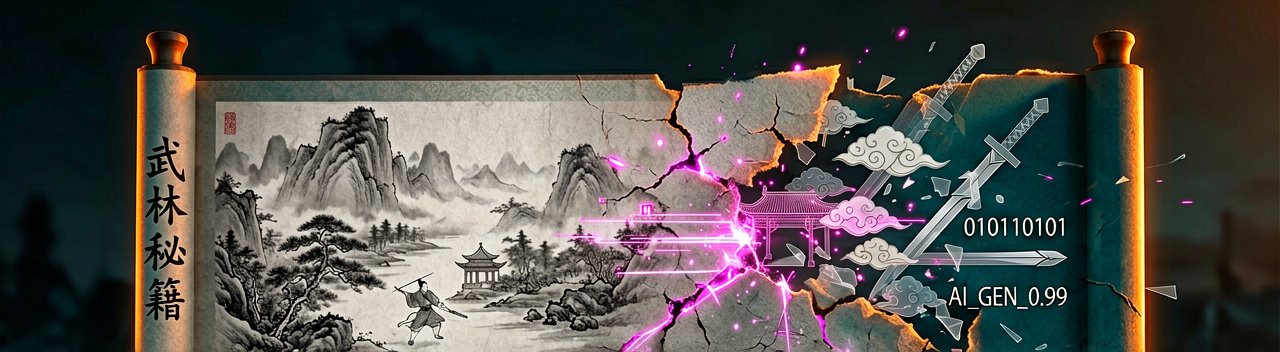
The global video game industry is undergoing a turbulent structural shift as studios balance aggressive automation against creative authenticity. The recent declaration by the developers of the multi-million-selling Chinese wuxia RPG, The Scroll of Taiwu, explicitly rejecting the integration of generative AI artwork has ignited intense controversy. By framing the adoption of machine-generated imagery as a fundamental betrayal of community trust built over nearly eight years in Early Access, the studio has drawn a clear ideological boundary. This stance positions human artisanship as an indispensable asset, contrasting with a broader corporate push toward algorithmic efficiency.
This strategic move highlights a growing divergence in market strategies between independent visionaries and major publishers. While critics argue that a total ban on generative tools compromises technological progress and inflates production budgets, a reporting feature by GamesIndustry.biz emphasizes a deeper commercial reality: the preservation of brand equity. In regional markets where consumer skepticism toward artificial assets is rising, protecting the human element serves as a powerful differentiator. The decision underscores that protecting human talent can outweigh the cost-saving allure of automated production pipelines.
The Economics of Authenticity vs. Automation
The financial pressure on game developers to automate asset creation remains immense, particularly as production timelines lengthen across the industry. Critics of conservative art pipelines suggest that artificial intelligence is essential for scaling development and keeping independent studios globally competitive. However, proponents of the anti-AI stance point to a critical legal and financial liability: the absence of robust intellectual property protections for un-authored machine outputs. Studios relying heavily on automated generators risk losing exclusive rights to their visual identities, creating vulnerabilities that could undermine long-term commercial valuations.
Consumer Backlash and Brand Loyalty
Consumer sentiment has evolved into a formidable market force, with online communities actively penalizing titles suspected of substituting human illustrators with generative models. Gamers increasingly associate unedited algorithmic art with low-quality asset flips and predatory monetization schemes. By capitalizing on this shift, studios that explicitly commit to human creators are transforming ethical production choices into a core marketing advantage. This dynamic shifts generative AI from a straightforward cost-saving utility into a complex public relations variable that can deeply impact community goodwill and launch-week sales figures.
An Industry Divided Over Future Workflows
The debate surrounding automated tools is redefining the creative hierarchy within global game development. A standard compromise is beginning to emerge, where studios restrict machine generation to internal, non-public pre-production phases while retaining human staff for all consumer-facing assets. Nevertheless, absolute rejections from prominent titles demonstrate that a segment of the market view these tools as incompatible with genuine artistic expression. As technical capabilities advance, the gaming landscape will likely split into two distinct ecosystems: one driven by highly optimized, algorithmically assisted pipelines, and another centered on premium, human-centric craftsmanship.
The Hidden Fault Lines of Artisanal Game Development
Inside the Developer Pipeline: The rigid stance adopted by the creators of The Scroll of Taiwu exposes a widening cultural gap between algorithmic productivity and the intricate workflows of culturally specific game design. For an independent studio rooted in the complex lore of wuxia and Chinese mythology, visual assets are not merely decorative elements that can be mass-produced to fill a digital space. Every brushstroke, color palette, and character silhouette carries historical weight and specific thematic subtext that existing foundation models frequently fail to interpret correctly, often flattening unique cultural nuances into generic, westernized, or derivative anime archetypes.
This preservation of cultural authenticity addresses a critical vulnerability that many corporate proponents of automation choose to overlook. When a studio integrates generative tools into its primary creative pipeline, it inadvertently surrenders a degree of stylistic control to the training data of external tech providers. For a community-driven title that spent years cultivating a distinct identity during its developmental phase, substituting hand-drawn assets with machine-generated outputs risks alienating a dedicated player base that views the game's unique imperfections as a hallmark of genuine human devotion and premium craftsmanship.
From a technical management perspective, the decision to reject these automated tools also highlights the hidden overhead costs associated with AI integration. While major publishers champion the technology as a frictionless method to eliminate bottlenecking in asset production, independent technical directors report that the reality involves exhaustive prompt engineering, extensive manual clean-up of visual anomalies, and significant computational expenses. For small to mid-sized teams, the labor hours diverted toward fixing synthetic art errors can quickly match or exceed the time required to simply commission experienced human illustrators from the outset.

The industry debate is further complicated by the shifting legal landscape surrounding copyright and intellectual property ownership in regional markets. Major distribution platforms have begun enforcing stricter disclosure policies, requiring developers to explicitly state their use of automated generation tools and prove ownership of underlying training data. By maintaining a strictly human-curated art pipeline, studios insulate themselves from sudden regulatory shifts, potential delisting from digital storefronts, and the lingering threat of class-action lawsuits brought forth by artists fighting against unauthorized data scraping.
Ultimately, the strategic division highlighted by this controversy reflects two fundamentally different philosophies regarding the future of interactive entertainment. One ecosystem views video games primarily as software products optimized for rapid content iteration, infinite scale, and minimized overhead costs. The opposing ecosystem treats game development as an artisanal discipline, where commercial longevity is directly tied to emotional resonance, community trust, and the irreplaceable intent of human creators working at the peak of their technical abilities.
The Paradox of Technical Purity in a Digital Medium
Reading Between the Lines: The ideological defense of absolute manual craftsmanship in modern game development often ignores the deeply automated nature of the medium itself. Proponents of a total ban on generative imagery frequently champion an idealized version of artisanal creation that has not realistically existed since the dawn of the 3D era. Video games are, by definition, products of systemic automation, relying on procedural generation for vast landscapes, algorithmic behavior tree networks for non-player characters, and mathematical middleware to simulate complex physics. Drawing an immutable moral boundary specifically at the threshold of two-dimensional asset generation exposes a conceptual contradiction that prioritizes visual nostalgia over systemic reality.
This selective resistance highlights a deeper economic anxiety rather than a purely ethical consensus across the global development pipeline. Independent studios frequently utilize pre-made commercial engine assets, automated localization software, and algorithmic code-completion tools to bypass the financial constraints of small-scale production. Labeling generative image synthesis as an existential threat to artistic integrity, while quietly accepting automated optimization pipelines that displace traditional QA engineers and systems programmers, reveals a highly fragmented hierarchy of creative labor protection. The current industry discourse treats the visual artist as uniquely sacred, even as other development disciplines are systematically streamlined out of existence.
Furthermore, the long-term viability of a strict anti-AI marketing strategy remains highly suspect as the underlying technology inevitably matures past its current recognizable flaws. The present consumer backlash relies heavily on the distinct visual tells of first-generation machine models, such as anatomical inconsistencies, nonsensical textures, and a lack of stylistic coherence. As enterprise-level generative tools adapt to utilize tightly controlled, fully licensed, and studio-specific datasets, the aesthetic gap between human and algorithmic output will effectively close. Once the consumer can no longer distinguish between a hand-drawn sprite and a perfectly synthesized asset, maintaining a premium price point based solely on an unseen production process will become an increasingly difficult economic gamble.
The resulting market polarization will likely force independent studios into a restrictive creative corner where they must continually justify their higher production overhead to an indifferent mass market. Major publishers are already quietly normalizing hybrid pipelines that use machine models for rapid iteration, background assets, and tedious variant generation, allowing their human talent to focus exclusively on high-profile hero assets. Studios that completely isolate themselves from these efficiency gains risk pricing themselves out of a highly competitive market, turning their commitment to human-only artistry into a luxury niche that a dwindling segment of the mainstream purchasing public is actually willing to subsidize.
"In the end, the gaming industry will likely achieve its usual compromised equilibrium, where publishers aggressively automate ninety percent of the background texture pipeline while spending millions on marketing campaigns designed to convince players that the remaining ten percent was lovingly hand-crafted by a single, enlightened hermit using traditional ink brushes."
Artūras Malašauskas is an AI Systems Integrator with 20+ years of production-grade web engineering experience. He has designed, shipped, and scaled enterprise Python/PHP systems for logistics, SaaS, and public-sector clients. For the past year, he has focused exclusively on AI integrations: deploying open-source LLMs, building generative media pipelines (image, audio, video), and engineering multi-agent workflows for real production environments. His standard: reproducibility, security, cost-efficient inference—no vaporware. He documents and evaluates emerging AI tooling, separating verified capabilities from marketing noise. Technical editor at: muza-ai.eu, ai-verslas.lt, ai-naujinos.lt Connect on LinkedIn
Comments