Fortnite's AI-Driven Skin Sales Signal Shift in Gaming's Creative Economy
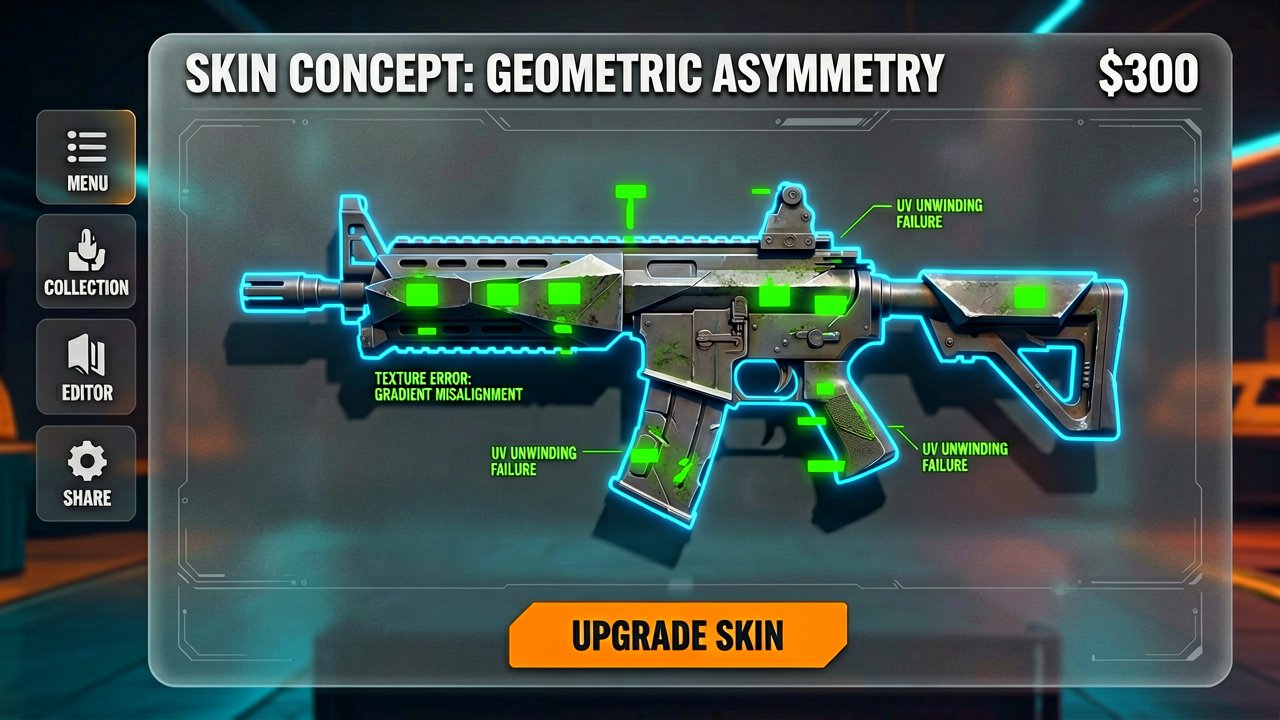
Epic Games has openly confirmed its integration of generative artificial intelligence into the character and environment design pipelines for its flagship title, Fortnite. According to reporting by IGN, a behind-the-scenes video released by the publisher details how internal generative AI tools accelerate early-stage concept art and rendering before human artists step in to correct algorithmic mistakes and repaint the assets. Despite this hybrid workflow, the monetization structure remains firmly premium, with these partially machine-generated cosmetic skins commanding prices up to £15 in the in-game Item Shop, as detailed by Metro.
This development underscores a major strategic shift in live-service gaming economies, transitioning from purely manual digital asset creation to automation-assisted high-velocity output. Epic Games CEO Tim Sweeney has long advocated for the normalization of artificial intelligence in software production, previously predicting that the technology would become so ubiquitous that specialized content disclosures would eventually be rendered redundant. The automated acceleration allows the publisher to continuously refresh its microtransaction storefront, catering to Fortnite's vast global player base while establishing a controversial precedent for asset evaluation and creative overhead in triple-A gaming.
Automating the Creative Pipeline
The operational mechanics behind Fortnite's recent skin releases highlight a fundamental change in how modern intellectual properties are scaled. Rather than displacing human creators entirely, generative models serve as rapid prototyping engines that generate layout, lighting, and costume variations within seconds. However, this production speed introduces unique technical friction; industry watchdogs note that initial AI outputs are frequently riddled with visual anomalies, asymmetric geometry, and rendering bugs that human artists must manually fix. This collaboration model reduces the standard hours required for early-stage conceptualization, shifting the designer's primary responsibility from foundational drawing to asset curation and refinement.
Market Impact and Consumer Feedback
Charging premium consumer prices for cosmetics developed via machine learning has introduced notable tension between live-service publishers and the gaming community. Players have expressed dissatisfaction regarding the perceived devaluation of digital content, with some community circles advocating for mandatory transparency tags on items built using algorithmic assistance. From a corporate finance perspective, reducing creative lead times while maintaining a £15 price point drastically expands profit margins on microtransactions. This economic imbalance signals a broader industry trend where publishers leverage automation to optimize internal operational costs without passing those financial savings down to the consumer marketplace.

The Hidden Architecture of Digital Production
Behind the Digital Storefront: The deployment of machine learning in Fortnite's creative suite reveals a deeper structural reality than mere cost-cutting; it represents an architectural overhaul of the live-service supply chain. For years, the major bottleneck for triple-A game development has been asset velocity—the sheer speed at which a studio can conceptualize, model, and deploy fresh content to satisfy an insatiable player base. By injecting algorithmic generation into the earliest phases of skin development, Epic Games establishes a production pipeline that functions less like a traditional art studio and more like an agile software factory, capable of testing thousands of visual iterations before selecting a single candidate for human refinement.
This hybrid methodology shifts the baseline skillset required of contemporary game industry artists. Internal workflows now demand high-level curation, visual debugging, and structural rectification over foundational draftsmanship. Designers are tasked with identifying geometric anomalies, correcting unnatural texture blending, and ensuring that machine-generated concepts conform to rigid character skeletons and hitbox requirements. Consequently, the creative burden is transforming from the act of pure creation to a process of aggressive quality control, a shift that streamlines operational timelines but creates a highly clinical development environment.
Stakeholder perspectives within the broader development ecosystem remain sharply divided over the long-term viability of this approach. Proponents argue that outsourcing the repetitive, initial brainstorming phases to local neural networks frees human designers to focus on high-fidelity execution and mechanical polish. Conversely, labor advocates point out that optimizing the conceptualization phase historically serves to reduce entry-level junior artist roles, effectively pulling up the career ladder for the next generation of digital illustrators. This corporate optimization strategy risks creating an industry-wide talent vacuum where the foundational skills traditionally learned through early-career drafting are entirely automated away.
Historical context shows that the monetization of automated assets was the predictable evolution of the free-to-play business model. When microtransactions first gained dominance, value was tied directly to the visible human labor and artistry invested into exclusive cosmetic items. By maintaining premium tier pricing at £15 for assets accelerated by automation, the industry is actively decoupling consumer pricing from production costs. This strategic positioning establishes a highly profitable precedent, proving that corporate entities can aggressively minimize the time-to-market overhead while preserving luxury-tier digital pricing structures across global gaming markets.

The Friction Between Automation and Premium Valuation
Reading Between the Lines: The corporate justification for integrating generative AI into premium asset pipelines centers on efficiency, yet this logic introduces a glaring economic contradiction. Publishers frequently argue that automation is necessary to keep pace with global consumer demand and lower internal development barriers. However, if the cost of the initial creative input approaches zero through algorithmic scaling, the justification for maintaining a legacy £15 price tag for a single digital cosmetic begins to collapse. The marketplace is witnessing an aggressive decoupling of price from labor, where consumers are asked to pay a premium for efficiency gains that benefit only the corporate balance sheet.
This economic model relies entirely on maintaining an illusion of digital scarcity that the technology itself is designed to destroy. Generative tools are built to produce variations at infinite scale, yet the live-service framework dictates that these items must be metered out in limited-time store rotations to manipulate consumer purchasing behavior. This operational friction exposes a profound irony; gaming executives are utilizing a technology capable of total abundance to enforce artificial scarcity, keeping digital goods artificially expensive while drastically reducing the human craft that originally justified those exact price points.
Furthermore, the long-term risk of this strategy lies in the inevitable homogenization of the gaming landscape. While neural networks can generate infinite permutations of character concepts, they do so by analyzing and remixing historical data, a process inherently hostile to true aesthetic subversion or avant-garde design. By relying on automated feedback loops to drive the visual identity of their most lucrative products, major publishers run the risk of training their audiences to accept a standardized, algorithmic baseline of creative output. Over time, this reliance could dull consumer sensitivity to artistic novelty, flattening the cultural richness of interactive media into a continuous stream of optimized, predictable commodities.
The regulatory and legal battlegrounds over these workflows remain unresolved, creating a volatile foundation for a multi-billion-dollar economy. As intellectual property courts continue to debate the copyrightability of machine-assisted designs, publishers are betting that scale and market dominance will outrun legal frameworks. If global jurisdictions begin enforcing strict labeling laws or restricting the commercialization of synthetic data outputs, the current gold rush toward automated microtransactions could face severe structural disruption. Until then, the industry appears perfectly content to test the boundaries of consumer tolerance, transforming the digital art department into a highly optimized data-processing pipeline.
The modern gaming economy has achieved the ultimate capitalistic alchemy: converting lines of predictive code into high-margin digital luxury, proving that while players might protest the rise of the machines, they will still gladly pay fifteen pounds to look slightly more unique than the next algorithmic avatar in the lobby.
Artūras Malašauskas is an AI Systems Integrator with 20+ years of production-grade web engineering experience. He has designed, shipped, and scaled enterprise Python/PHP systems for logistics, SaaS, and public-sector clients. For the past year, he has focused exclusively on AI integrations: deploying open-source LLMs, building generative media pipelines (image, audio, video), and engineering multi-agent workflows for real production environments. His standard: reproducibility, security, cost-efficient inference—no vaporware. He documents and evaluates emerging AI tooling, separating verified capabilities from marketing noise. Technical editor at: muza-ai.eu, ai-verslas.lt, ai-naujinos.lt Connect on LinkedIn
Comments