OneXPlayer’s X2 Mini Pro Wants to Be Your Local AI Workstation, If Your Wallet Can Take the Hit
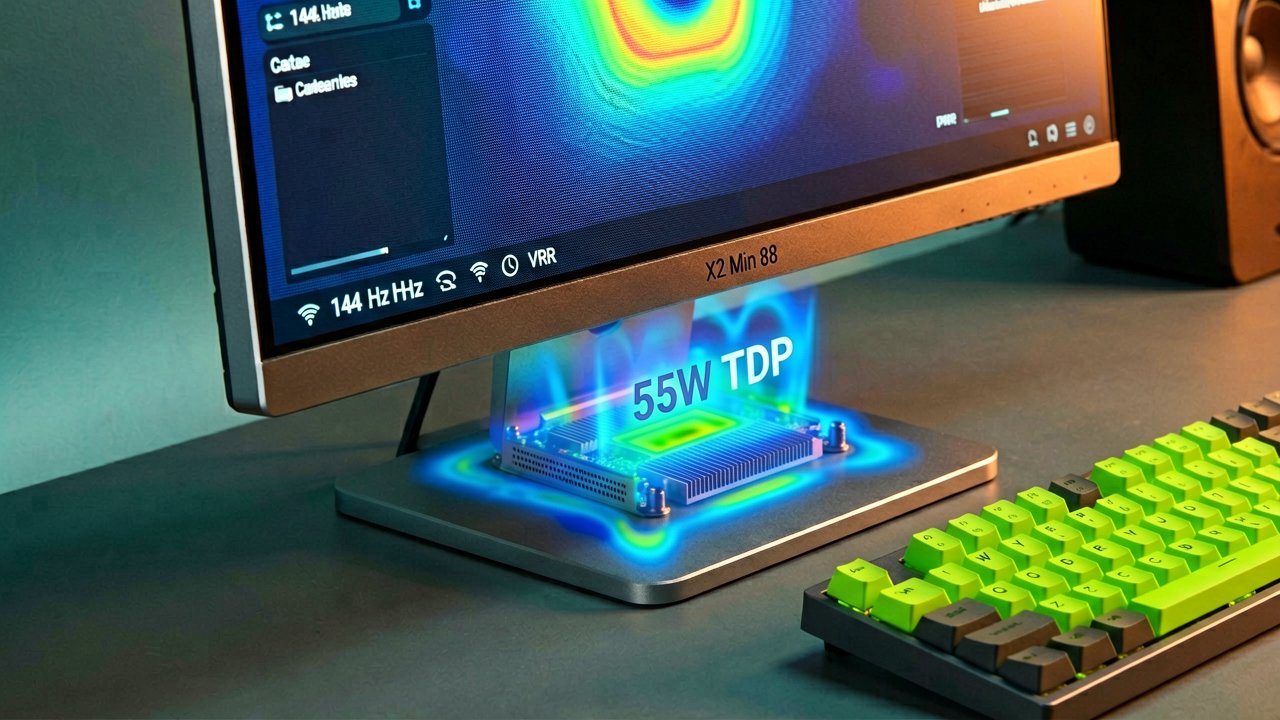
The premium handheld PC market just took a massive leap forward, though your bank account might scream in terror. Hardware manufacturer OneXPlayer officially launched its highly anticipated X2 Mini Pro on June 15, 2026, positioning the new 3-in-1 device as a portable powerhouse meant to dominate both AAA gaming and local artificial intelligence. It blends a flexible tablet form factor with serious silicon, bringing high-end desktop aspirations straight to your backpack. You can explore the campaign directly on the official Indiegogo page.
Beneath the gorgeous 8.8-inch, 144Hz VRR OLED display lies an interesting hardware story. While initial teasers hinted at AMD’s top-tier, 16-core Ryzen AI Max+ 395 processor, early backers quickly noticed a change. The final production unit shipped with the 8-core Ryzen AI Max+ 388 processor instead. According to reports from TweakTown, this unannounced core reduction left a bit of a sour taste for early enthusiasts looking for raw CPU muscle. Thankfully, gaming frames shouldn't suffer, since the powerful Radeon 8060S integrated graphics and the 55W default thermal design power remain exactly the same.
Uncompromised Silicon and a Wild Price Tag
OneXPlayer is heavily leaning into localized AI workloads to justify the luxury positioning. The Ryzen AI Max+ 388 chip boasts a dedicated Neural Processing Unit delivering 50 NPU TOPS, driving a combined system total of 118 TOPS. As noted by HotHardware, this enables the system to effortlessly run local AI chatbots and models right on the device without pinging the cloud. The rest of the hardware reads like an enthusiast wish list: detachable wireless controllers, a magnetic snap-on keyboard, and storage expandable up to a massive 8TB via secondary mini SSDs.
However, getting your hands on this ultimate portable workstation requires serious cash. The base model features 48GB of high-speed unified memory alongside a 1TB SSD, and it starts at a staggering $2,399. If you want the ultra-premium version equipped with a custom liquid-cooling dock to handle extreme 120W power draws, prices scale all the way up to $2,859. It is an incredible piece of engineering, but it firmly targets wealthy tech enthusiasts rather than casual mainstream gamers.
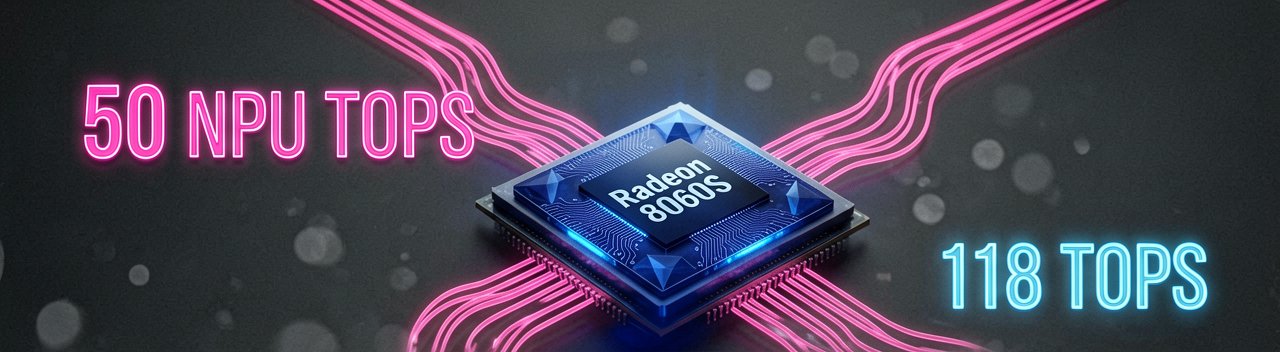
Behind the Engineering Curtain: OneXPlayer’s choice to pivot to the Ryzen AI Max+ 388 represents a calculated gamble on thermal management rather than a simple cost-cutting measure. While early promotional materials leaned heavily on the prestige of a 16-core flagship, managing that much heat inside an 8.8-inch chassis without turning the device into an jet engine is a structural nightmare. By dropping down to eight cores, engineers successfully maintained the massive, 40-compute-unit Radeon 8060S graphics engine without choking the system's thermal overhead. It is a nuanced compromise that shows the company is finally prioritizing real-world handheld usability over purely theoretical benchmark bragging rights.
This hardware shift highlights a growing divide between traditional handheld console gamers and the emerging class of mobile power users. For years, companies like Valve and ASUS built devices aimed squarely at 720p or 1080p gaming with aggressive price-to-performance ratios. OneXPlayer, however, is charting a completely different path by treating the X2 Mini Pro as a modular, pocket-sized AI workstation. Industry insiders note that the inclusion of 48GB of unified memory is not for running high-end video games, but rather to prevent local Large Language Models from running out of system memory during complex, on-the-go data processing.
The Realities of the 120-Watt Handheld Workstation
The true technical marvel, and perhaps the biggest question mark, is the optional liquid-cooling dock that unlocks a massive 120-watt power draw. In the history of portable computing, forcing mobile silicon to behave like a desktop chip usually results in diminished returns and severe hardware degradation over time. Early testing feedback suggests that while the dock successfully morphs the tablet into a legitimate rendering machine, it fundamentally breaks the illusion of seamless portability. Users are essentially buying a high-end mini-PC that happens to have a screen attached, completely shifting the ownership experience away from couch gaming and toward a tethered desk setup.
Ultimately, this device serves as a fascinating bellwether for where the premium hardware market is heading as local AI demands continue to surge. By opting for crowdfunding via Indiegogo, OneXPlayer is shielded from the traditional retail pressures faced by massive tech conglomerates, allowing them to test these experimental, high-margin concepts on a willing audience. The steep price tag will undoubtedly keep it out of the hands of the mainstream public, but the design choices made here will likely influence the next generation of mainstream laptops and consoles for years to come.
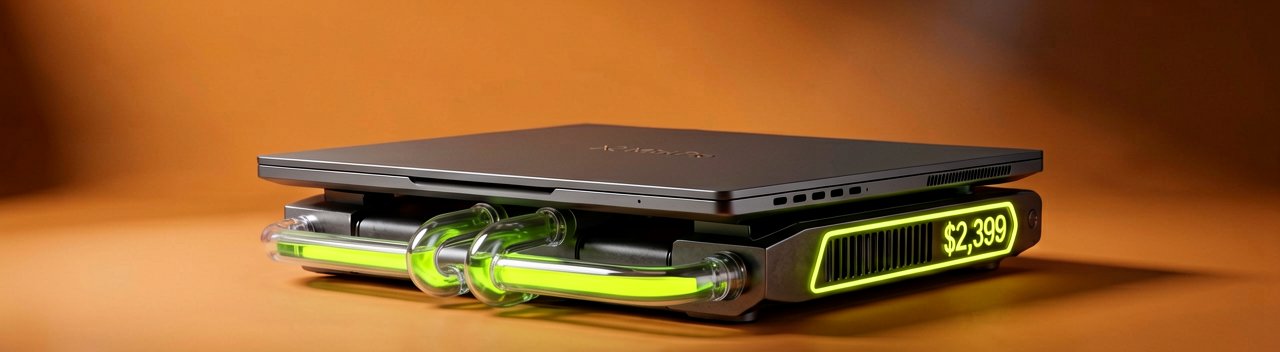
Reading Between the Lines: The industry’s sudden fixation on packing 118 total TOPS of AI processing power into a handheld gaming device smells heavily of a marketing department searching desperately for a narrative. While running local artificial intelligence models on a pocket-sized machine sounds incredibly futuristic, the practical use cases for the average consumer remain frustratingly vague. Most AI tasks today are still handled far more efficiently by massive cloud servers, leaving this expensive local silicon with very little to actually do. OneXPlayer is asking buyers to pay a massive premium for hardware capabilities that currently lack any killer app or meaningful daily utility.
Furthermore, the device's extreme price point creates a glaring contradiction in its identity as a versatile 3-in-1 machine. At nearly twenty-four hundred dollars for the entry-level kit, the X2 Mini Pro is competing directly with top-tier gaming laptops and professional mobile workstations. A buyer could easily purchase both a dedicated Valve Steam Deck for gaming and an Apple MacBook Pro for heavy productivity workloads for the exact same amount of money. By trying to be a master of all trades, OneXPlayer risks creating a device that is too heavy and expensive for comfortable handheld gaming, yet too small and thermally constrained for sustained professional workloads.
A Fragile Future for Premium Crowdfunded Silicon
The reliance on the Indiegogo platform also raises valid concerns about long-term software support and hardware optimization. Silicon giants like AMD design their cutting-edge Strix Halo chips with massive tech enterprises in mind, meaning smaller boutique manufacturers often struggle to get timely driver updates. Without deep, ongoing software optimization from both OneXPlayer and Microsoft, that advanced Radeon 8060S graphics chip could easily suffer from stuttering frame rates and compatibility issues in newer games. History shows that enthusiastic early adopters of boutique hardware are frequently left acting as unpaid beta testers for the first year of a product's lifecycle.
Looking ahead, this device represents a fascinating but volatile pivot point for the entire portable PC ecosystem. If the X2 Mini Pro succeeds, it will prove that a niche market of wealthy enthusiasts is willing to tolerate extreme prices and desktop-level power cables just to have the most powerful silicon available. If it falters under the weight of its own thermal demands and astronomical pricing, it will serve as a stark warning to other manufacturers. The dream of a true do-it-all pocket computer is undeniably alluring, but the laws of thermodynamics and economics continue to be incredibly stubborn obstacles.
It turns out that carrying the future of artificial intelligence in your backpack requires a wallet heavy enough to alter gravity and a cooling dock large enough to double as a boat anchor.
Artūras Malašauskas is an AI Systems Integrator with 20+ years of production-grade web engineering experience. He has designed, shipped, and scaled enterprise Python/PHP systems for logistics, SaaS, and public-sector clients. For the past year, he has focused exclusively on AI integrations: deploying open-source LLMs, building generative media pipelines (image, audio, video), and engineering multi-agent workflows for real production environments. His standard: reproducibility, security, cost-efficient inference—no vaporware. He documents and evaluates emerging AI tooling, separating verified capabilities from marketing noise. Technical editor at: muza-ai.eu, ai-verslas.lt, ai-naujinos.lt Connect on LinkedIn
Comments