Generative AI Transforms Fortnite's Creative Pipeline, Redefining Game Development Standards

Epic Games has fundamentally altered the paradigm of live-service game asset creation by integrating advanced generative AI tools directly into the production pipeline of its flagship title, Fortnite. According to a technical deep dive reported by IGN, the studio leverages proprietary workflows and specialized machine learning models—including its internal GenMedia Bridge and Google's Nano Banana—to rapidly iterate on character skins, points of interest, and environmental lighting variables. This strategic implementation shifts the industry standard away from purely manual ideation toward a hybrid, co-generative model that balances hyper-efficiency with human artistic oversight.
The industrial logic driving this transition centers on scaling content generation to feed Fortnite’s aggressive monetization schedule, where premium cosmetic skins command premium prices. By using AI systems to generate immediate style variations, color passes, and complex environmental lighting effects, Epic Games effectively eliminates the labor-intensive bottleneck of early-stage manual concept iteration. As noted by Metro, this deployment allows developers to streamline the concept art stage before any physical assets are recreated in 3D, maximizing output without expanding standard production timelines.
However, Epic Games' transparent embrace of these tools has triggered significant friction within the broader developer and player communities. While the studio emphasizes that artists retain full creative control—manually fixing artifacts, adjusting anatomy, and modifying unintended details—creative professionals remain highly skeptical. Reports from The Verge highlight that this automation push arrives amidst severe industry scrutiny regarding labor displacement, particularly following recent workforce reductions across major publishers. This creates a paradox where technological efficiency actively threatens the traditional job security of the very illustrators required to refine the AI's imperfect output.
The Economics of Rapid Cosmetics Iteration
In the live-service ecosystem, the velocity of cosmetic drops dictates quarterly player engagement and overall marketplace revenue. Epic's deployment of text-to-image and image-to-image pipelines targets the phase where artists traditionally spend hundreds of hours sketching slight variations of armor, thematic outfits, and weapon wraps. By feeding basic 2D sketches into specialized generators to test palettes and materials, the studio compresses the pre-production phase from weeks into hours, creating an automated factory floor for high-yield monetization assets.

The Artistic Backlash and Visual Standardization
The consumer and community response underscores the reputational risk inherent in automated game design. Players have increasingly flagged visible anomalies across in-game assets, pointing to smeared edges, structural inconsistencies, and anatomical errors as evidence of unrefined automation. This backlash is exacerbated by a broader ideological split among artists; many argue that relying on generative models dilutes unique stylistic identity and normalizes a homogenized aesthetic, reducing the intrinsic value of digital collectibles.
Sweeney’s Storefront Strategy and Future Policy Shifts
The integration of AI within Fortnite aligns seamlessly with Epic Games' macro corporate policy regarding store transparency and automated asset distribution. Epic leadership has openly opposed mandatory storefront labels for software utilizing machine learning, maintaining that automated tools will soon permeate every layer of modern software engineering. By standardizing these tools within their own multi-billion-dollar IP, Epic is actively attempting to desensitize the market, setting a precedent that strips away the distinction between entirely human-made and algorithmically assisted commercial art.
The Hidden Architecture of Epic's Automated Pipeline
Behind the Corporate Blueprint: The technical reality of Epic Games' generative integration reveals a pipeline far more complex than simple prompt engineering. Software engineers have deeply embedded these machine learning nodes within the Unreal Engine infrastructure, allowing concept artists to toggle localized variations on asset geometry natively. Rather than replacing the artistic canvas entirely, the system functions as a high-fidelity mood board that interprets rough, developer-drawn silhouettes and applies complex texture mapping, ambient occlusion layers, and localized lighting values within seconds. This hybrid pipeline shifts the traditional role of the junior concept artist from a manual draftsperson to a data curator, tasked with filtering thousands of algorithmically generated iterations to find optimal aesthetic directions.
This operational shift introduces a profound friction between corporate metrics and the labor force that sustains the studio's creative output. Industry veterans note that while senior art directors benefit from the rapid visualization of high-level concepts, the displacement is felt most acutely at the entry level, where junior artists historically developed their skills by executing production-heavy tasks like color variants and orthographic turnarounds. By automating these foundational steps, Epic risks bottlenecking its own internal talent pipeline, creating a systemic deficit of seasoned human artists capable of directing these very algorithms a decade from now. Furthermore, internal anxieties persist regarding how training data sets are curated, as the boundary between utilizing Epic’s proprietary historical catalog and inadvertently absorbing external intellectual property remains a legal gray area.
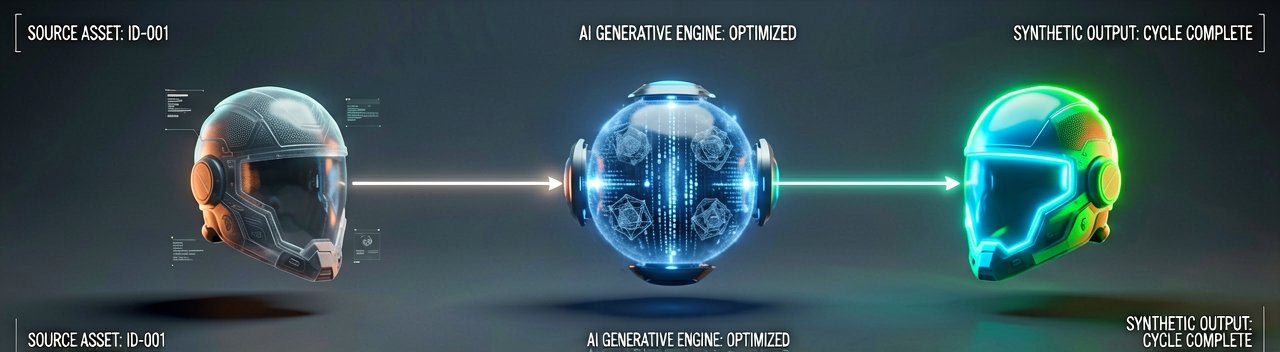
From a market standpoint, Epic’s aggressive implementation serves as a crucial trial balloon for the entire interactive entertainment sector. Competitors across the AAA space are closely monitoring player sentiment and marketplace performance to gauge consumer tolerance for algorithmically assisted monetization. While hardcore communities express ideological resistance to what they perceive as a dilution of craft, the broader, casual demographic continues to purchase seasonal battle passes and collaborative skins based on immediate visual appeal rather than production methodology. Ultimately, this economic reality suggests that as long as the final digital asset aligns with the expected visual fidelity of the franchise, automated production pipelines will transition from a controversial experimentation phase into the baseline corporate standard for global game development.
The Paradox of Automated Authenticity
Reading Between the Lines: Epic Games’ justification for its generative pipeline rests on a fundamental contradiction: celebrating the "democratization" of creativity while using automation to solidify a centralized corporate monopoly on live-service content. The studio markets these machine learning integrations as tools designed to liberate human creators from tedious, repetitive labor. However, the economic reality reveals that this liberated time is immediately reinvested into accelerating the production treadmill, forcing artists to oversee an unceasing torrent of digital cosmetics to sustain an oversaturated marketplace. This cycle redefines the artist not as a visionary, but as a quality-assurance inspector tasked with scrubbing out the structural hallucinations of a proprietary neural network.
Furthermore, the long-term strategic reliance on automated pipelines exposes a looming threat of cultural and aesthetic stagnation within the gaming industry. Machine learning models inherently operate as sophisticated echo chambers, predicting the next visual asset based exclusively on historical training data. By feeding Fortnite’s future design philosophy back into its own past catalog, Epic risks creating an insular feedback loop that actively discourages genuine creative disruption. The organic, unpredictable creative accidents that historically birthed industry-defining genres and art styles are systematically filtered out by algorithms optimized for safe, algorithmic mass appeal.
The ultimate irony lies in the inevitable devaluation of the digital merchandise powering Epic's business model. As consumers become increasingly adept at identifying the smooth, hyper-rendered tells of generative art, the perceived premium status of fifteen-dollar character skins faces a steep decline. Publishers are operating under the assumption that efficiency increases profitability, ignoring the psychological reality that artificial scarcity loses its power when consumers realize the scarcity is controlled by an automated generator. By stripping away the human craftsmanship that players historically respected, major studios may inadvertently commoditize their most lucrative assets into digital landfill.
"We are rapidly approaching a golden era of game development where a single studio can produce infinite content for an infinite audience, provided everyone involved is perfectly content with video games that possess all the distinct, memorable flavor of a lukewarm glass of distilled water."
Artūras Malašauskas is an AI Systems Integrator with 20+ years of production-grade web engineering experience. He has designed, shipped, and scaled enterprise Python/PHP systems for logistics, SaaS, and public-sector clients. For the past year, he has focused exclusively on AI integrations: deploying open-source LLMs, building generative media pipelines (image, audio, video), and engineering multi-agent workflows for real production environments. His standard: reproducibility, security, cost-efficient inference—no vaporware. He documents and evaluates emerging AI tooling, separating verified capabilities from marketing noise. Technical editor at: muza-ai.eu, ai-verslas.lt, ai-naujinos.lt Connect on LinkedIn
Comments