Summer Gaming Downturn Signals Shift in Release Strategies Amid Market Saturation
The summer of 2026 is experiencing an unprecedented shift in the video game landscape, characterized by a visible contraction in traditional blockbuster seasonal releases. Major industry players are moving away from the historically crowded June-to-August window to dodge intense competition and adapt to changing player habits. This trend marks a shift toward spreading releases throughout the entire calendar year to counter market saturation and maximize visibility for premium titles.
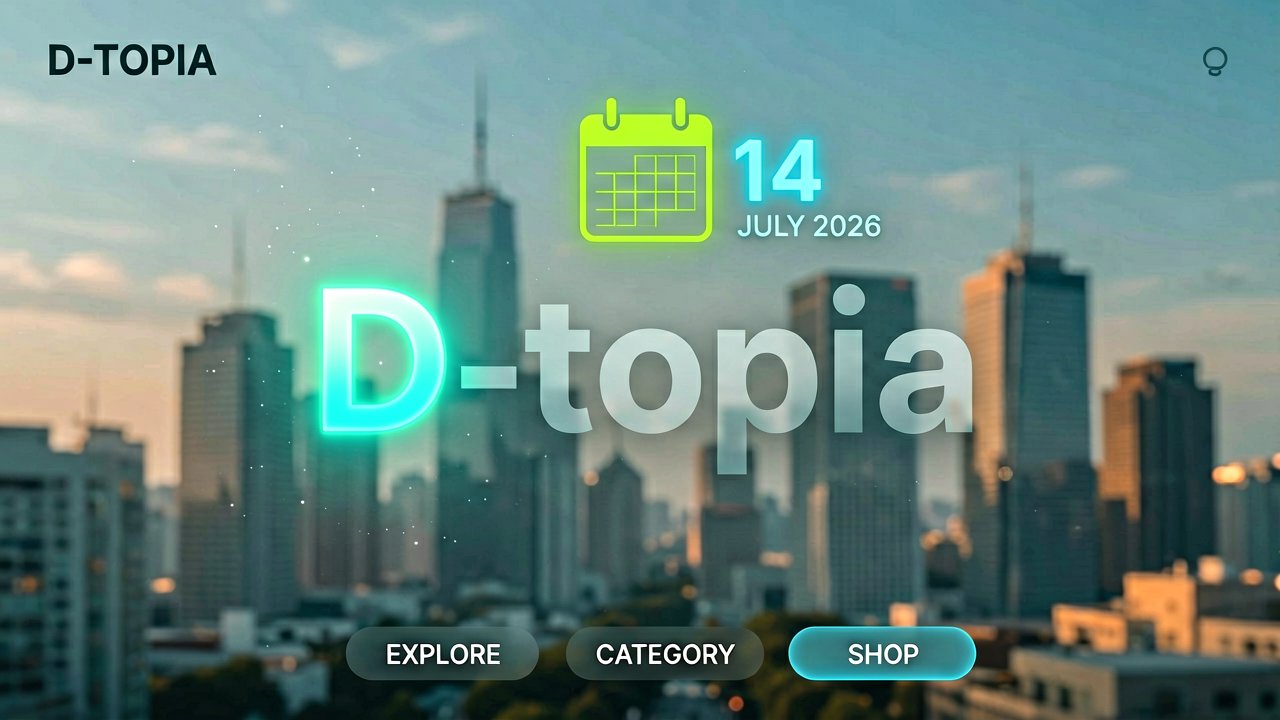
A prime example of this calculated timing is the gentle puzzle adventure D-topia, published by Gematsu on behalf of Annapurna Interactive, which has locked in its debut for July 14, 2026. Rather than dropping amidst a wave of winter blockbusters, the game leverages the mid-summer slowdown to target an audience seeking reflective, lower-stakes gameplay. Meanwhile, high-profile multi-character releases are using strategic staggered marketing models to secure ongoing engagement before their final rollouts.
The highly anticipated 4v4 tag-team fighter MARVEL Tōkon: Fighting Souls from Arc System Works and PlayStation Publishing is scheduled to launch on August 6, 2026. Sony’s strategy relies on keeping players hooked over time by dripping out major reveals, such as the "Knights of Doom" trailer debuted via Marvel Games, instead of counting on standard launch-day hype. By anchoring the tail end of the summer season, the title positions itself to capture the attention of a market no longer flooded with overlapping triple-A releases.
The Live-Service Legacy and Market Saturation
Analysts point out that the summer slowdown is a structural evolution driven by the sheer volume of persistent live-service games. Titles with continuous seasonal content loops occupy vast amounts of consumer time, making it risky to drop premium titles during traditional vacation periods. Publishers are adjusting to this by spreading out their releases over a 12-month calendar, ensuring that niche and major projects alike get breathing room.

Evolving Discovery and Consumer Behavior
Adapting to changing consumer behavior has forced companies to rethink discovery. Offering free public demos months ahead of a game's release has become standard practice for building early player loyalty. By utilizing extended promotional timelines and avoiding summer logjams, publishers hope to protect their upfront development investments from being instantly buried by rival launches.
The Hidden Architecture of the Staggered Release Model
Beneath the Industry Consensus: The mid-year deceleration of 2026 is not merely a passive reaction to market fatigue, but a calculated recalibration of the triple-A financial lifecycle. Historically, publishers treated the summer doldrums as an unavoidable dead zone or an opportunity to dump lower-tier projects. Today, the economics of game development demand continuous revenue generation, pushing financial officers to view an empty summer calendar as a massive logistical vulnerability rather than a natural seasonal break.
Internal publishing roadmaps reveal that the decision to shift titles like MARVEL Tōkon: Fighting Souls and D-topia into these non-traditional windows is heavily influenced by cloud architecture and digital distribution metrics. By launching during periods of lower network congestion, platform holders can optimize server allocation, reduce operational overhead, and secure prolonged feature placement on digital storefronts. For premium titles, surviving the initial launch weekend requires capturing the undivided attention of storefront algorithms, which becomes significantly cheaper and more effective when competing with fewer simultaneous deployments.
Furthermore, stakeholder perspectives indicate a growing tension between traditional creative cycles and corporate quarterly reporting. Developers frequently push for these off-peak windows to escape the brutal "crunch" timelines associated with fixed holiday shopping deadlines. Independent and mid-tier studios, in particular, find that a July or August release offers a precious buffer, allowing them to capture the attention of content creators and streaming platforms whose audiences are actively searching for new material during the school holiday gap.
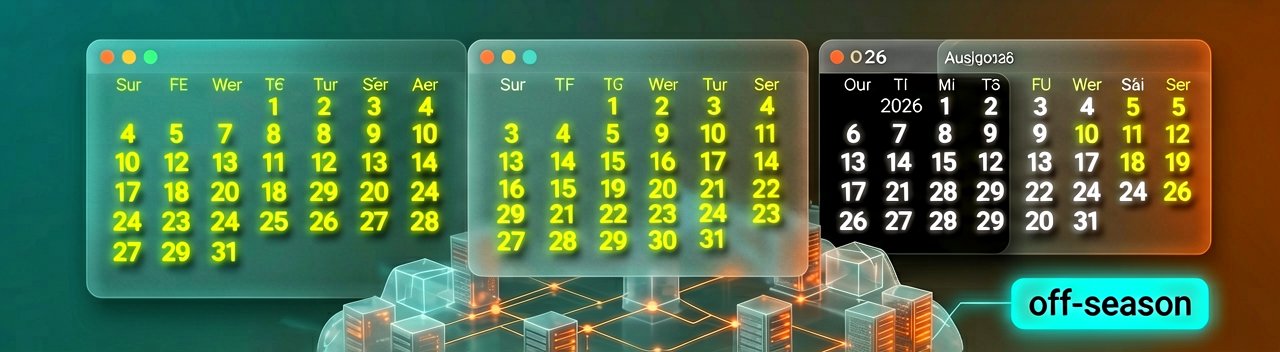
This structural evolution ultimately points toward a permanent dismantling of the classic autumn-centric release calendar. As the cost of player acquisition continues to skyrocket, the industry is transitioning into a hyper-rationalized, year-round deployment schedule. Publishers are realizing that a highly visible summer launch, backed by stable server performance and dedicated community engagement, yields a far higher return on investment than a crowded November release that risks being overshadowed by the industry's largest annual franchises.
The Paradox of Year-Round Saturation
Reading Between the Lines: The industry's shift toward a continuous, twelve-month release calendar rests on the assumption that spreading out launches will automatically alleviate market congestion. However, this strategy assumes the total pool of player attention can expand indefinitely. While avoiding a June-to-August bottleneck gives individual titles like D-topia more breathing room at launch, it simultaneously transforms the entire calendar year into an uninterrupted battlefield, leaving consumers with no natural downtime to catch up on their backlogs.
This structural shift exposes a fundamental contradiction in modern publishing logic. Major studios are fleeing traditional release windows to escape the shadow of massive live-service titles, yet their alternative strategy relies on mimicking the exact continuous-engagement marketing models used by those same competitors. By keeping audiences on a perpetual hook with staggered alpha tests, character reveals, and demo drops, publishers are inadvertently recreating the very fatigue they are trying to avoid, turning what used to be a hype cycle into a grueling marathon of consumer obligation.
Furthermore, relying on off-peak windows to lower player acquisition costs may prove to be a short-lived advantage. As more publishers migrate to the summer months, the financial efficiency of these periods will inevitably degrade. The digital storefront algorithms that currently favor a isolated mid-summer debut will quickly become just as crowded and expensive to navigate as the traditional holiday corridors, effectively shifting the bottleneck rather than solving it.
Ultimately, this constant reshuffling of launch dates fails to address the industry's deeper dilemma, which is a structural oversupply of content relative to finite human time. Moving a game from November to July does nothing to change the reality that it must still compete for the exact same weekend playtime hours. Until publishers reckon with the sheer volume of games entering the ecosystem, altering release strategies will remain an exercise in rearranging deck chairs on a beautifully rendered, highly saturated ship.
"In the end, shifting a game's launch from the crowded holiday rush to a quiet mid-summer window is the industry equivalent of moving your tent to a different part of the festival grounds; you might avoid the immediate stampede at the main stage, but you are still sleeping on the exact same muddy field."
Artūras Malašauskas is an AI Systems Integrator with 20+ years of production-grade web engineering experience. He has designed, shipped, and scaled enterprise Python/PHP systems for logistics, SaaS, and public-sector clients. For the past year, he has focused exclusively on AI integrations: deploying open-source LLMs, building generative media pipelines (image, audio, video), and engineering multi-agent workflows for real production environments. His standard: reproducibility, security, cost-efficient inference—no vaporware. He documents and evaluates emerging AI tooling, separating verified capabilities from marketing noise. Technical editor at: muza-ai.eu, ai-verslas.lt, ai-naujinos.lt Connect on LinkedIn
Comments