Nocera's CampaignPulse.ai Investment Redefines Political Messaging with AI-Driven Testing
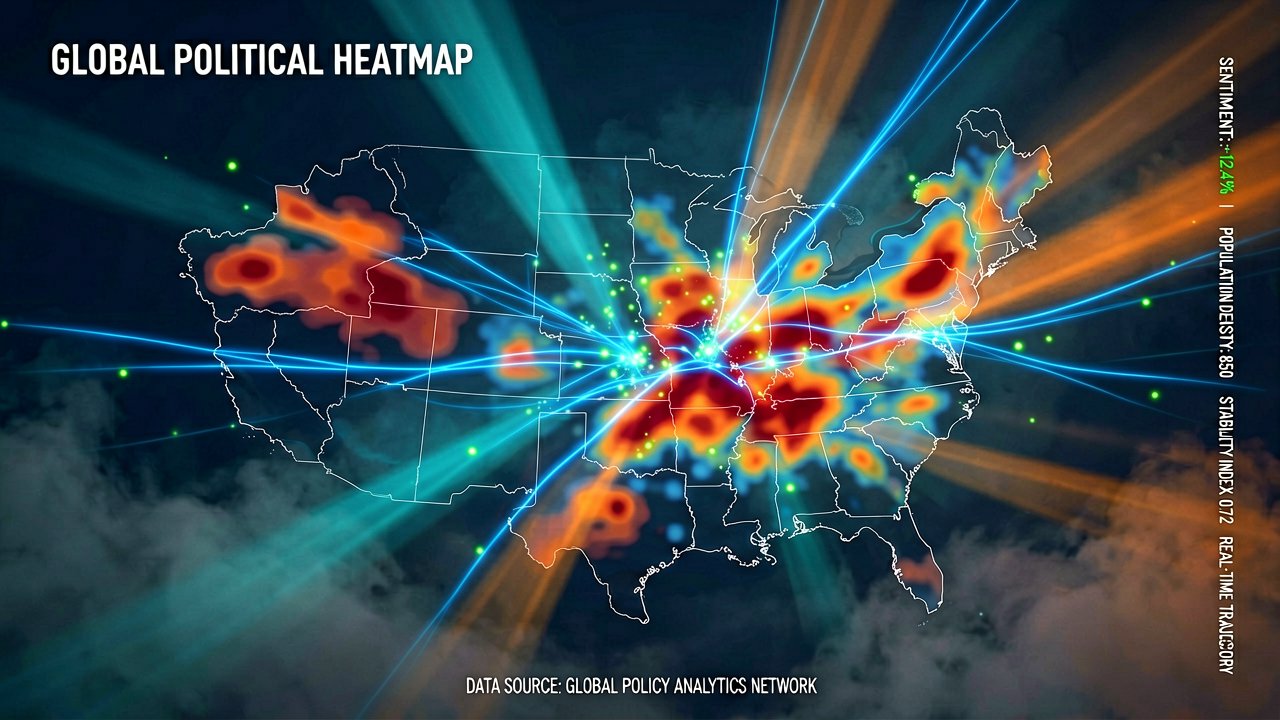
The intersection of political consultancy and generative artificial intelligence has reached a critical milestone as Nocera, Inc. announced a strategic minority equity investment in CampaignPulse.ai. This tactical allocation, reported via FinanceWire, marks an aggressive structural pivot for Nocera as it transitions into Nocera Holdings. The holding entity is actively building a diversified portfolio across high-growth technological frontiers, including digital infrastructure, robotics, and advanced analytics, to offset recent traditional asset volatility and capture emerging enterprise demand.
CampaignPulse.ai is positioning itself as a disruptive infrastructure layer for modern political machines by leveraging large language models to construct advanced simulation environments. Rather than relying on lagging traditional polling mechanisms or expensive focus groups, the platform allows political operations, advocacy groups, and institutions to test speeches, fundraising drives, and policy positions against synthetic audience profiles before deployment. By mimicking localized voter demographics and predicting behavioral sentiment, the software attempts to solve the systemic problem of wasted ad spend and message friction in highly volatile electoral landscapes.
The Economics of Synthetic Focus Groups
Modern political messaging suffers from severe operational inefficiencies, where millions of dollars are routinely deployed on unverified media campaigns. CampaignPulse.ai directly targets this vulnerability by shifting the paradigm from real-world trial-and-error to predictive, simulation-driven campaign intelligence. According to product documentation reviewed by StreetInsider, the platform's planned capabilities span predictive audience intelligence, rapid-response war room simulations, and multi-channel media execution support. This proactive optimization model insulates campaigns from public relations blowback and allows consultants to isolate variables in narrative structure, factual density, and emotional framing to guarantee maximum donor and voter conversion.
Market Implications and Strategic Shifts
From a macroeconomic perspective, Nocera’s investment reflects a broader, accelerating trend of institutional capital flowing into specialized B2B artificial intelligence applications. Financial data published by Investing.com highlights that the micro-cap tech holding firm is executing these investments alongside structured credit adjustments, including an expansion of its financing facility to support rapid technological acquisitions. As political organizations globally face stricter regulatory scrutiny over deepfakes and automated outreach, the market demand is visibly moving away from direct AI content generation and shifting decisively toward backend risk mitigation, sentiment modeling, and predictive decision-support software.

The Synthetic Shift in Campaign Intelligence
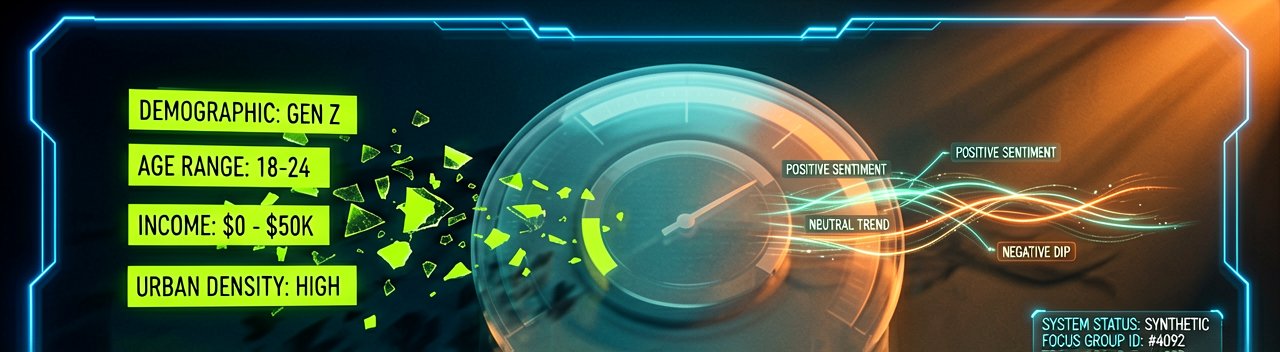
Behind the Digital Curtain: The traditional machinery of political consulting is facing a quiet crisis of confidence, driven by the escalating cost and declining accuracy of human phone polls. For decades, campaigns have treated public opinion as a reactive measure, relying on retrospective data that often expires by the time a television ad spot is booked. Nocera’s investment in CampaignPulse.ai signals a structural leap past this bottleneck, moving the industry into an era of synthetic voter simulation. Instead of waiting for a random sample of citizens to answer their phones, campaign operatives can now run a piece of copy through thousands of simulated voter personas, instantly identifying which phrases trigger alienating responses among swing demographics.
This technological shift changes the internal economics of a modern war room. Rather than liquidating millions of dollars on broad, unverified media buys, media strategists are using predictive modeling to micro-test fundraising emails and digital advertisements prior to deployment. Institutional stakeholders note that this capability acts as an operational shield against sudden shifts in public sentiment. By testing messaging against localized demographic simulations before public release, political organizations can isolate which regional subsets will respond to specific economic or social talking points, eliminating the costly trail of administrative trial and error.
However, the rapid migration toward synthetic focus groups introduces a new layer of friction between traditional pollsters and data-driven algorithmic architects. Veteran campaign managers often argue that machine learning models risk creating an echo chamber, smoothing over the chaotic, unpredictable nature of real human behavior in favor of neat, statistical probabilities. The success of CampaignPulse.ai depends on its ability to continuously update its underlying training sets with real-time electoral data to ensure these digital personas do not decouple from the evolving reality of the electorate.
From a regulatory and ethical standpoint, the rise of predictive messaging software occupies a unique gray area in political tech. While public outcry remains heavily focused on the threats of deepfakes and generative misinformation, the enterprise market is silently consolidating around backend optimization and predictive risk mitigation. Nocera’s strategic positioning highlights an institutional appetite for platforms that do not generate autonomous content, but instead provide the precise analytical feedback loops required to navigate an increasingly polarized and hypersensitive media environment.
The Practical Friction of Algorithmic Politics
Reading Between the Lines: The institutional enthusiasm surrounding Nocera’s pivot into predictive political tech masks a foundational paradox embedded within automated message testing. Platforms like CampaignPulse.ai operate on the assumption that human political behavior can be accurately mapped, categorized, and anticipated through synthetic profiles. Yet, history demonstrates that voters routinely defy rational modeling, often acting on late-breaking emotional impulses, hyper-local controversies, or algorithmic black swan events that no static dataset can foresee. Relying too heavily on a simulated electorate risks creating an insular strategy loop, where campaigns optimize their messaging for idealized digital personas rather than the chaotic reality of the actual voting booth.
Furthermore, this shift toward predictive optimization introduces a glaring strategic contradiction for modern political operations. If competing campaigns inevitably adopt identical large language models and simulation frameworks to refine their language, the competitive edge provided by these platforms will rapidly erode. Political messaging risks devolving into a homogenized corporate vernacular, engineered by matching algorithms to offend the fewest simulated entities possible. This corporate flattening of political rhetoric creates a structural opening for highly erratic, un-optimized candidates whose authentic unpredictability can break through the sterile digital noise precisely because it hasn't been pre-tested for safety.
There is also a deeper operational risk regarding data decay within these synthetic ecosystems. A predictive model is only as viable as the real-world polling, census data, and behavioral tracking that feeds it. If traditional polling response rates continue their downward trajectory, the foundational data used to build synthetic voters will become increasingly corrupted and unrepresentative. Without a continuous, costly stream of accurate real-world inputs, these sophisticated war room simulators may ultimately end up calculating highly precise answers to entirely inaccurate assumptions, leaving campaigns blind to shifting ground truths.
"Ultimately, the greatest irony of modern political engineering is the millions spent trying to replace human intuition with perfect digital simulations, only for candidates to discover that a simulated voter never actually shows up at the polls to cast a ballot."
Artūras Malašauskas is an AI Systems Integrator with 20+ years of production-grade web engineering experience. He has designed, shipped, and scaled enterprise Python/PHP systems for logistics, SaaS, and public-sector clients. For the past year, he has focused exclusively on AI integrations: deploying open-source LLMs, building generative media pipelines (image, audio, video), and engineering multi-agent workflows for real production environments. His standard: reproducibility, security, cost-efficient inference—no vaporware. He documents and evaluates emerging AI tooling, separating verified capabilities from marketing noise. Technical editor at: muza-ai.eu, ai-verslas.lt, ai-naujinos.lt Connect on LinkedIn
Comments