Databricks Unveils Genie One: The Agentic Coworker Arrives to Fix the Enterprise Context Gap

We've all seen AI assistants that talk a big game but crumble the moment you ask them about real, messy business data. They hallucinate, they lose track of context, and frankly, a confident wrong answer from a bot is the last thing a finance or sales team needs. Databricks is trying to permanently end that headache. Today at its Data & AI Summit, the data intelligence heavyweight officially launched Genie One, an all-new agentic coworker designed to automate and orchestrate work across an entire corporate data estate.
This isn't just another chatbot wrapper. What makes Genie One intriguing is its ability to break out of isolated data siloes and span both structured data and unstructured internal systems. According to the official press release from Databricks, the system handles everything from analytical databases to operational tools like Slack, Jira, Sharepoint, and Google Drive. It can draft documents, schedule multi-step tasks, and actively troubleshoot complex business anomalies instead of just vomiting raw SQL queries back at you.
Solving the Context Problem with Genie Ontology
The secret sauce under the hood is what the company calls Genie Ontology. It's a context layer that continuously extracts and refreshes organizational metadata, ensuring the underlying AI models treat governed company data as the absolute ground truth. Rather than guessing based on scattered text files, Genie One translates natural language into precise analytical operations backed by the robust governance of Unity Catalog. This means a frontline manager can pull mobile alerts or ask deep operational questions right from iOS or Android apps, confident that the numbers actually match reality.
By offering the tool without traditional seat-based pricing, Databricks is aggressively pushing for enterprise-wide adoption. The rollout effectively expands their AI ecosystem alongside Genie Agents and the Genie App Builder, signaling a clear shift away from static dashboards and toward fully autonomous, data-smart workplace companions.

What Most Reports Miss: The launch of Genie One isn't just a product update; it's Databricks' direct answer to the enterprise AI stabilization crisis. Over the last few years, corporate tech buyers have grown deeply fatigued by flashy LLM demos that fall apart when exposed to real-world data chaos. Siloed information, changing data schemas, and the persistent threat of AI hallucinations have kept generative tools confined to safe, experimental sandboxes. By embedding Genie One deep into the data fabric layer, Databricks is attempting to shift the paradigm from risky experimentation to hardened, operationally stable autonomy.
Industry insiders note that the real battlefield here is the traditional text-to-SQL interface, a technology notorious for losing context on complex business logic. Analysts have long complained that standard AI assistants might know how to write a basic join, but they don't understand specific institutional knowledge—like how a company defines an active user or calculates quarterly churn. Databricks bypassed this limitation by integrating the tool directly with its Unity Catalog governance framework. This structural backbone ensures that the agent utilizes verified metric definitions and historical data lineage rather than guessing on the fly.
The Real-World Shift from Dashboards to Agents
For data teams, this architecture changes how everyday workflows operate. Instead of spending hours building and maintaining static BI dashboards that business stakeholders rarely look at, engineers can now curate domain-specific environments called Genie Spaces. In these spaces, data stewards bake in tailored guidelines, verified metrics, and sample queries to act as absolute guardrails for the AI. Once these rules are set, business users can confidently query the data using natural language, drastically lowering the burden on central IT and analytics departments.
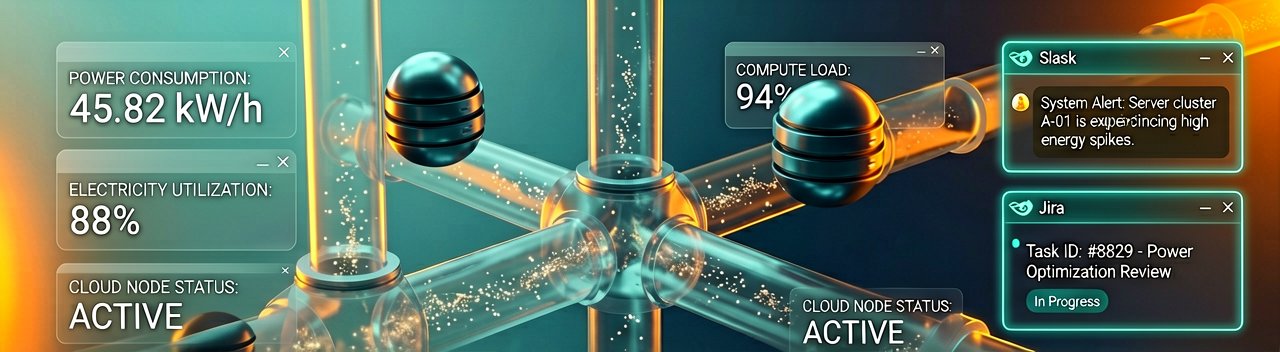
The operational implications stretch beyond simple question-and-answer interactions. Because Genie One works as a cross-functional agentic coworker, it bridges the gap between insight and execution by plugging into everyday operational tools like Slack and Jira. Instead of just outputting a chart, the system can dynamically flag operational anomalies, update task boards, and draft reports. This aggressive pushes the platform from a reactive intelligence dashboard to a proactive workforce multiplier that handles multi-step enterprise workflows autonomously.
Reading Between the Lines: The promise of an AI-driven "coworker" that handles everything from data analysis to scheduling tasks sounds remarkably efficient, but it masks the staggering amount of human engineering required to make it work. Databricks presents Genie One as an out-of-the-box solution to enterprise productivity, yet its success relies entirely on the quality of a company’s underlying data architecture. If an organization's Unity Catalog is a poorly organized mess of stale tables and conflicting definitions, Genie One won't solve the problem—it will simply automate and accelerate the distribution of bad insights at an unprecedented scale.
There is also a palpable tension between the tech industry’s push for autonomous agents and the strict regulatory realities of enterprise compliance. Databricks is banking heavily on the idea that business teams will happily delegate multi-step workflows, like updating Jira boards or drafting compliance documents, to an AI. However, enterprise risk officers are notoriously terrified of automated actions that lack a human-in-the-loop sign-off. While Genie One is designed to operate within secure guardrails, the actual friction of getting conservative legal and security teams to greenlight autonomous data agents across systems like Google Drive and Slack will likely slow down real-world adoption far more than Databricks admits.
The Total Cost of "Free" Enterprise AI
Furthermore, the decision to ditch traditional seat-based pricing in favor of consumption-based models is a clever tactical move that warrants a healthy dose of skepticism. On the surface, eliminating per-user licensing feels like a generous invitation for widespread corporate adoption. In reality, it shifts the financial risk entirely to the customer, as unchecked natural language queries running against massive enterprise databases can quietly balloon a company's cloud compute bill overnight. Chief Information Officers may find that replacing human data analysts with a fleet of tireless, round-the-clock digital coworkers simply trades predictable headcount costs for unpredictable infrastructure invoices.
Ultimately, the rollout of Genie One highlights a broader industry contradiction: the absolute democratization of data vs. the absolute control over data. Databricks wants to give every frontline manager the power of a data scientist, but doing so requires data engineers to spend even more time babysitting the AI's "Genie Spaces" and refining metadata ontologies. We are not entering an era where data teams can suddenly relax; rather, their jobs are shifting from answering business questions to constantly auditing the AI that answers those questions, creating a whole new layer of corporate bureaucracy.
The corporate dream has always been to replace endless meetings with autonomous efficiency, but the tech industry's current fix for messy data is simply adding an incredibly polite, endlessly patient AI coworker who will confidently help you misinterpret your financial charts at the speed of light.
Artūras Malašauskas is an AI Systems Integrator with 20+ years of production-grade web engineering experience. He has designed, shipped, and scaled enterprise Python/PHP systems for logistics, SaaS, and public-sector clients. For the past year, he has focused exclusively on AI integrations: deploying open-source LLMs, building generative media pipelines (image, audio, video), and engineering multi-agent workflows for real production environments. His standard: reproducibility, security, cost-efficient inference—no vaporware. He documents and evaluates emerging AI tooling, separating verified capabilities from marketing noise. Technical editor at: muza-ai.eu, ai-verslas.lt, ai-naujinos.lt Connect on LinkedIn
Comments