EU AI Act Compliance: How Raptoric's Security Testing Redefines High-Risk AI Safety
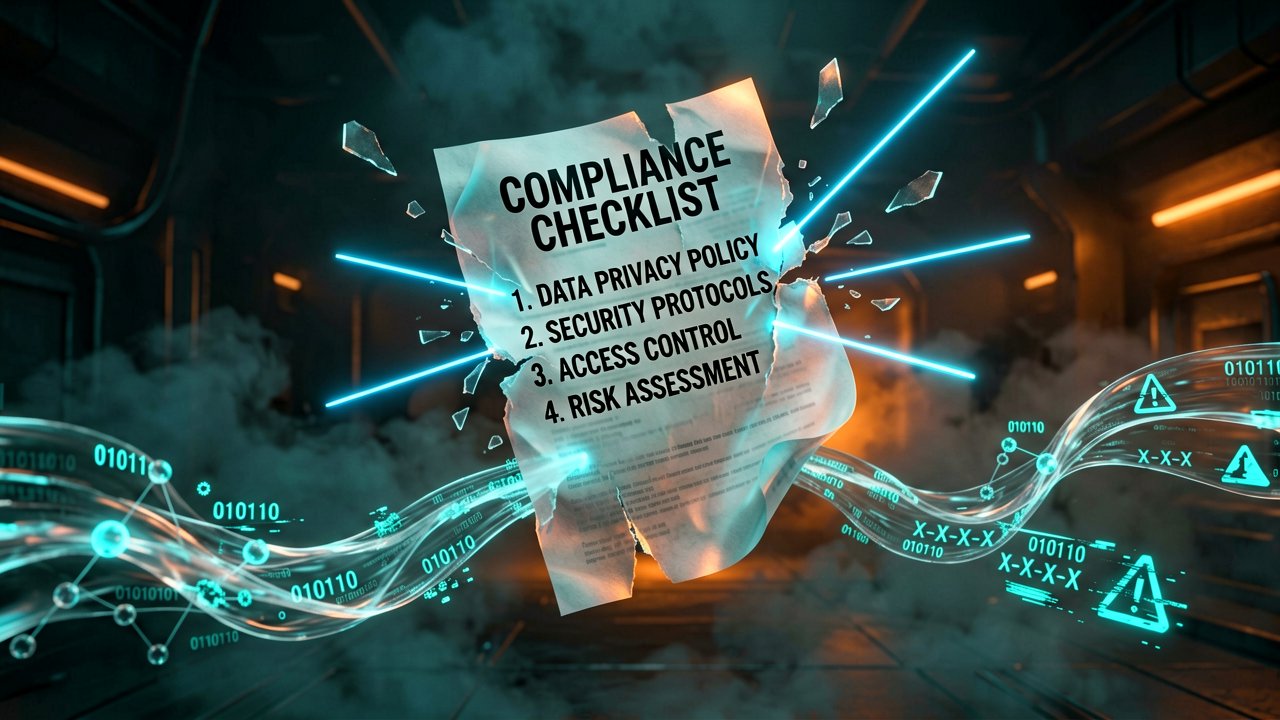
The global cybersecurity sector is undergoing a profound structural pivot as enterprise software ecosystems transition from traditional deterministic codebases to probabilistic machine learning environments. Global cybersecurity firm Raptoric has introduced a specialized security testing framework explicitly tailored for high-risk artificial intelligence systems to address this shift. This launch occurs amid heightened regulatory scrutiny, highlighted by The National Law Review, signaling a vital operational turning point for organizations seeking to harmonize advanced AI deployments with emergent European legal mandates.
The introduction of these specialized diagnostics coincides with critical legislative milestones under the European Union’s milestone framework, specifically Article 15 of the EU AI Act. This statute explicitly demands that high-risk deployments sustain rigorous benchmarks of systemic accuracy, resilience, and cybersecurity throughout their operational lifecycles. By moving the compliance target past static compliance checkboxes toward active dynamic defense, Raptoric’s technical methodology represents an industry-wide realignment where algorithmic safety must be validated via continuous empirical verification rather than mere corporate policy design.
Enterprise risk management is evolving rapidly as a result of recent legislative modifications. While the European Commission's updated timeline has adjusted the final implementation deadline for specific Annex III high-risk use cases to December 2027, the underlying engineering hurdles remain formidable. Organizations attempting to navigate this extended runway are discovering that building auditable, mathematically resilient defenses against complex attack vectors requires immediate infrastructure adjustments rather than delayed compliance strategies.
The Architecture of High-Risk Algorithmic Vulnerabilities
Traditional penetration testing mechanisms are fundamentally unequipped to secure modern neural networks, which suffer from structural attack vectors entirely distinct from classical software exploits. Raptoric’s engineering framework addresses these vulnerabilities by deploying specialized adversarial testing methodologies that stress-test a model's latent space. This process involves exposing high-risk systems to advanced prompt injection vectors, automated data poisoning attempts, and model evasion techniques that skew machine reasoning without triggering typical network security alerts.

Securing the extensive logistical pipelines that supply training datasets and foundational architectures represents another critical operational focus. Modern machine learning models depend on vast, multi-sourced data lakes, exposing the enterprise to structural manipulation if upstream data integrity is compromised. Comprehensive validation now requires rigorous audits of training data pipelines, continuous model supply chain scanning, and dedicated infrastructure assessments designed to protect deployed weights from external telemetry extraction or unauthorized gradient reverse-engineering.
Strategic Alignment and Long-Term Market Conformity
Enterprise technology leaders must view rigorous technical validation as a foundational asset for establishing regulatory conformity rather than an isolated security protocol. To facilitate this transition, Raptoric has structured its evaluation frameworks to feed directly into official AI Act conformity assessments. This systematic method converts complex offensive security telemetry into structured, reproducible documentation that fulfills the stringent evidence requirements demanded by regional market surveillance authorities and third-party notified bodies.
Beyond meeting external legal mandates, proactive vulnerability validation provides substantial competitive advantages in an increasingly risk-averse commercial landscape. Businesses that build validated, auditable security postures early minimize the long-term operational risks of post-deployment failures, system degradation, or malicious runtime manipulation. Embracing these advanced validation methodologies allows forward-thinking enterprises to establish significant marketplace trust, ensuring their high-risk AI assets remain safe, legal, and operational throughout the coming decade.
Advanced Adversarial Testing and Technical Validation
Behind the Scenes: The technical execution of high-risk AI security testing requires a complete departure from traditional IT vulnerability scanning. While legacy penetration tools search for known software bugs or unpatched open-source libraries, validating a deep learning architecture demands an adversarial approach that targets the mathematical logic of the model itself. Security researchers simulate specialized attacks to discover how an artificial intelligence model responds to carefully manipulated inputs designed to bypass traditional system boundaries. These advanced testing techniques reveal hidden flaws in neural network layers that standard automated scans fail to detect, providing organizations with concrete telemetry regarding their system’s true resilience.

A primary technical focus within this testing methodology is evaluating a model's resistance to prompt injection, data poisoning, and membership inference attacks. During prompt injection assessments, testers attempt to hijack the model's runtime instructions, forcing it to ignore its original safety guardrails and generate unauthorized or hazardous outputs. Data poisoning evaluations analyze how vulnerable the system's underlying training pipeline is to malicious manipulation, ensuring that corrupted training data cannot silently degrade model accuracy over time. Additionally, membership inference testing verifies that malicious actors cannot reverse-engineer the model's outputs to extract sensitive proprietary data or personal information used during the initial training phase.
The engineering telemetry gathered from these adversarial simulations is structured to map directly onto the technical documentation mandates specified in the EU AI Act. This structured approach bridges the gap between deep technical risk analysis and corporate legal conformity by converting raw security data into clear, auditable compliance artifacts. These comprehensive reports give risk officers and external regulators verifiable proof that a high-risk system features adequate technical safeguards, significantly lowering the regulatory friction and legal liabilities associated with deploying advanced artificial intelligence systems in commercial markets.
Market Impact and Strategic Corporate Readiness
From a broader industry perspective, the rise of specialized safety testing reflects a maturing enterprise market that is moving past initial experimentation toward long-term operational stability. Early corporate adopters are discovering that independent technical validation is a powerful business differentiator rather than a mere regulatory hurdle. As corporate clients become increasingly risk-averse, technology providers who can present verified security certifications for their AI systems can drastically accelerate sales cycles and close enterprise contracts faster than competitors who view safety validation as an afterthought.
This industry transition is forcing a fundamental reorganization of traditional corporate compliance structures and software development workflows. Legal departments, cybersecurity personnel, and data science teams are abandoning isolated operations to build integrated governance frameworks capable of monitoring machine learning models throughout their entire lifecycles. This collaborative approach ensures that software security is evaluated continuously from the initial training data collection phase through deployment, preventing costly post-launch system modifications and keeping corporate applications compliant with evolving global standards.
Ultimately, investing in advanced validation frameworks positions forward-thinking organizations to navigate a rapidly shifting global regulatory environment that extends far beyond the borders of the European continent. As other international jurisdictions develop localized versions of risk-based AI governance, companies that implement rigorous, auditable testing processes early establish a resilient foundation for global market expansion. This proactive security focus protects vital intellectual property from emerging cyber threats while building the institutional trust required to operate advanced algorithmic systems safely and profitably in a highly competitive global marketplace.
The Compliance Illusion and Algorithmic Realities
Reading Between the Lines: The corporate rush to adopt specialized security testing frameworks highlights a fundamental contradiction within the burgeoning AI compliance industry. Organizations frequently treat regulatory checkmarks as absolute proof of systemic safety, yet complex neural networks remain inherently non-deterministic and prone to unpredictable runtime failures. Passing a point-in-time adversarial evaluation does not guarantee long-term operational resilience, as subtle shifts in user behavior or upstream data pipelines can instantly degrade a model's security posture. This reality creates a dangerous disparity between legal compliance and true technical security, where a fully certified high-risk system can remain highly vulnerable to sophisticated, novel exploitation vectors.
This structural friction is further intensified by the technical limitations of current automated scanning tools, which often market themselves as complete safety solutions. True adversarial testing requires deep, resource-intensive manual analysis by specialized security engineers, a reality that clashes with the corporate demand for rapid, low-cost compliance automation. When enterprises prioritize speed and budget over rigorous technical depth, they often end up relying on superficial testing protocols that fail to challenge the model's core logic. Consequently, these superficial validation exercises serve more as legal shields for executive leadership than as effective security measures to protect end users from algorithmic harms.
Furthermore, the long-term efficacy of these compliance frameworks relies on the technical literacy of regional market surveillance authorities and third-party notified bodies. Regulatory agencies are struggling to recruit and retain the top-tier machine learning engineers required to audit complex corporate models, leading to a widening knowledge gap between regulators and the enterprises they oversee. Without robust, technically sophisticated regulatory oversight, the enforcement of high-risk AI safety mandates risks degenerating into a bureaucratic paper-shuffling exercise, where corporate legal teams successfully litigate compliance while leaving foundational engineering flaws completely unaddressed.
Compliance officers will comfortably spend millions of dollars to prove an artificial intelligence model is legally safe, only for a bored teenager with an internet connection to completely bypass the system's multi-million dollar guardrails using a paragraph of cleverly worded sarcasm.
Artūras Malašauskas is an AI Systems Integrator with 20+ years of production-grade web engineering experience. He has designed, shipped, and scaled enterprise Python/PHP systems for logistics, SaaS, and public-sector clients. For the past year, he has focused exclusively on AI integrations: deploying open-source LLMs, building generative media pipelines (image, audio, video), and engineering multi-agent workflows for real production environments. His standard: reproducibility, security, cost-efficient inference—no vaporware. He documents and evaluates emerging AI tooling, separating verified capabilities from marketing noise. Technical editor at: muza-ai.eu, ai-verslas.lt, ai-naujinos.lt Connect on LinkedIn
Comments