UKIE Backs Distinct Video Game Classification Amid Imminent Under-16 Social Media Ban

The UK Interactive Entertainment Association (Ukie) has formally endorsed the UK Government's policy to classify video games separately from social media platforms within its upcoming legislative restrictions. Following Prime Minister Keir Starmer's announcement of a sweeping prohibition on social media access for children under the age of 16, the trade body expressed relief that core gaming environments will remain distinct from algorithm-driven platforms. Industry representatives argue that video games serve fundamentally different interactive functions compared to the doomscrolling loops common to traditional social networks.
According to Ukie CEO Nick Poole via GamesIndustry.biz , the interactive sector has actively demonstrated a commitment to digital safety through established frameworks like the PEGI age-rating system for over two decades. Major console makers and online ecosystems already leverage built-in safety features, ensuring child accounts face strict restrictions on default configurations. By working as a technical partner with the Department for Science, Innovation and Technology, Ukie aims to help co-create regulatory models tailored specifically to digital play rather than social networking.
Regulatory Intersection and Operational Implication
Despite the official classification relief, interactive entertainment studios face complex engineering challenges before the law takes full effect in spring 2027. Legal analysts at Harbottle & Lewis indicate that mixed-service environments—including online multiplayer titles utilizing public text or voice channels—are highly likely to fall partially within regulatory scope. The government intends to impose strict curbs on high-risk features like stranger communication and open livestreaming across broader online services, requiring extensive integration of Highly Effective Age Assurance technologies.
Market Impact on Studio Architecture
As the UK steps beyond global regulatory baselines, small and mid-sized multiplayer studios are exposed to notable compliance friction. If localized communication boundaries are interpreted too broadly by regulators, studios may be forced to redesign live-ops functions, engineer in-game text filters, or disable core social mechanics for British minors. Maintaining separate operational compliance pipelines for the UK market represents a significant development burden, potentially shifting how global publishers approach community infrastructure and user interaction model design.
Reading Between the Lines: The Illusion of Gaming's Blanket Immunity
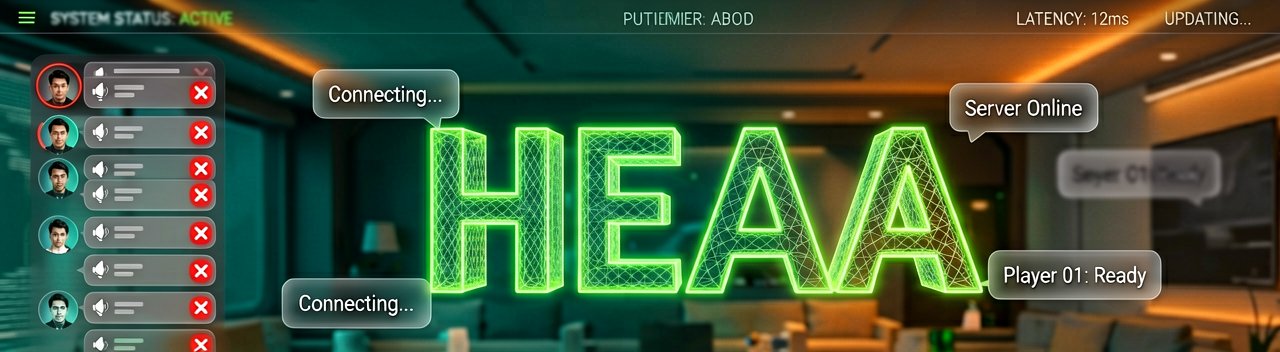
Reading Between the Lines: The games industry's public celebration regarding its exemption from the strict under-16 social media ban overlooks a critical, inconvenient reality embedded within the legislative text. While trade bodies praise the recognition of gaming as a separate digital ecosystem, the UK Government has explicitly stated that targeted restrictions will still apply to "gaming sites." Specifically, the ban on secondary high-risk features like livestreaming and stranger communication is designed to extend directly into multiplayer lobbies. Consequently, the celebrated boundary separating games from social networks is fundamentally porous, threatening to drag online multiplayer infrastructure into the exact regulatory net studios fought to avoid.
This overlapping jurisdiction creates an immediate functional contradiction for mass-scale virtual platforms like Roblox and Fortnite. Although legal analysts at Harbottle & Lewis confirm that these titles will escape a total operational block for children under 16, their entire commercial model relies on the exact social interaction mechanics that ministers intend to disable by default. Stripping out active text chats, public voice channels, and unmoderated community hub features effectively deconstructs the meta-layer of modern live-service games. If a platform is stripped of its capability to build active community spaces, its classification as a "game" rather than a "social network" becomes a distinction without a meaningful financial difference.
Furthermore, the government’s reliance on Highly Effective Age Assurance (HEAA) frameworks introduces immense technical skepticism regarding actual market execution. Data gathered by the Australian eSafety Commissioner following their own regional child restrictions revealed that approximately seven in ten children easily bypassed algorithmic age walls to maintain active accounts. By attempting to police complex, deeply integrated multiplayer communications via the same flawed verification checkpoints, the UK risks imposing severe engineering burdens on legitimate domestic studios while failing to deter tech-savvy minors. Instead of establishing a clear digital perimeter, the policy threatens to incentivize an underground ecosystem of unverified child player profiles using spoofed virtual private networks.
Ultimately, the long-term strategic consequence for global publishing in Britain will likely lean toward operational fragmentation. Confronted with strict compliance deadlines by spring 2027, mid-tier developers may simply opt to completely geofence or disable multiplayer communication features for the entire UK territory rather than invest in localized, heavily audited moderation pipelines. In trying to protect digital childhoods from predatory strangers and harmful algorithms, regulators may inadvertently turn the vibrant, collaborative landscape of British online multiplayer gaming into a solitary, mute experience.
By successfully convincing lawmakers that swinging a virtual sword is fundamentally safer than scrolling a social media feed, the video games industry has won a brief regulatory reprieve—only to discover they must now re-engineer their entire multiplayer architecture to ensure children can play together, provided they never actually speak to one another.
Artūras Malašauskas is an AI Systems Integrator with 20+ years of production-grade web engineering experience. He has designed, shipped, and scaled enterprise Python/PHP systems for logistics, SaaS, and public-sector clients. For the past year, he has focused exclusively on AI integrations: deploying open-source LLMs, building generative media pipelines (image, audio, video), and engineering multi-agent workflows for real production environments. His standard: reproducibility, security, cost-efficient inference—no vaporware. He documents and evaluates emerging AI tooling, separating verified capabilities from marketing noise. Technical editor at: muza-ai.eu, ai-verslas.lt, ai-naujinos.lt Connect on LinkedIn
Comments