The Algorithm’s Illusion: Steam Next Fest’s Flood of AI Slop Proves Quantity is Killing Creativity

There was a time when strolling through Steam Next Fest felt like exploring a neon-lit bazaar of untamed human imagination. You would stumble upon passion projects built by lone developers in drafty bedrooms, raw ideas that wore their rough edges like badges of honor. Fast forward to the June 2026 edition, and that digital bazaar has been thoroughly strip-mined by automated opportunism. The latest showcase has sparked fierce industry backlash, with a damning critique from Kotaku laying bare a depressing reality: the platform is utterly drowning in generative AI asset flips that prioritize sheer volume over genuine artistic soul.
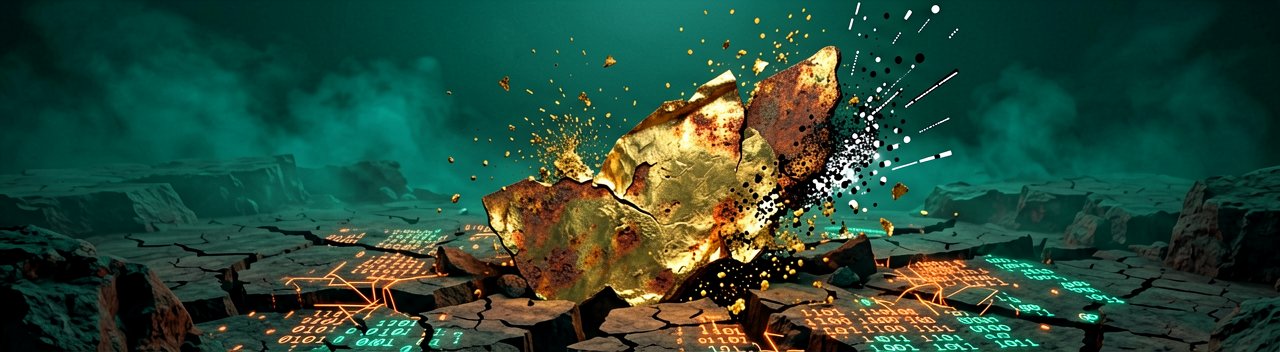
It is a gold rush where the gold is fake and the shovels are automated scripts. Booting up the festival lineup today requires wading through an endless sea of non-disclosure and algorithmic mimicry. Gamers trying to navigate this landscape are finding that the "next big thing" is frequently just the "last big thing" fed through a prompt generator. For anyone who treasures video games as a medium of human expression, the current state of Steam's tri-yearly demo parade is nothing short of a wake-up call regarding the unchecked curation crisis facing PC gaming.
The Disheartening Reality of the Automated Feed
Unpacking the mechanics of these offerings reveals a deeply repetitive, assembly-line design philosophy. The technical flaws are glaringly obvious within the first five minutes of play. Environmental textures blend into soulless, unreadable smears, and voice acting carries the uncanny, flat cadence of a text-to-speech engine running on low voltage. Developers are bypassing the painstaking labor of world-building by letting algorithms stitch together disparate, stolen concepts, resulting in disjointed sandboxes that feel entirely hollow. The gameplay loops are equally derivative, recycling established survival or rogue-like templates without a single shred of mechanical innovation.
A Broken Promise of Curation
Valve’s hands-off approach to its storefront policy is exacerbating the problem exponentially. While guidelines theoretically dictate proper disclosure of generative tools, the actual marketplace tells a wildly different story. Unlisted and un-tagged AI games regularly slip through the cracks, burying legitimate, handcrafted indie titles under an avalanche of synthetic noise. When human developers spend years molding a specific art style or tuning an intricate combat system, they are now forced to compete for visibility against machines that can output a functionally playable demo in an afternoon. This dynamic creates a hostile environment for the exact community Next Fest was originally built to celebrate.
The soul of independent game development has always relied on the deliberate choices of its creators. Every pixel placement, musical swell, and narrative misstep tells a story of human trial and error. When you strip that away in favor of algorithmic optimization, you lose the friction that makes interactive art so uniquely compelling. If the corporate gatekeepers continue to treat video games as a mere game of metrics and filler content, the industry risks choking out the very creativity that kept it alive in the first place.
The digital assembly line has finally broken the unspoken contract between creator and player.The Silent Rebellion of the Handmade
The ultimate irony of the algorithmic gold rush is that it manufactures everything except a reason to care.Reclaiming the Narrative Edge
"The machine can copy the brushstroke perfectly, but it will never understand the ache in the artist's hand that made them pick up the brush in the first place."
Artūras Malašauskas is an AI Systems Integrator with 20+ years of production-grade web engineering experience. He has designed, shipped, and scaled enterprise Python/PHP systems for logistics, SaaS, and public-sector clients. For the past year, he has focused exclusively on AI integrations: deploying open-source LLMs, building generative media pipelines (image, audio, video), and engineering multi-agent workflows for real production environments. His standard: reproducibility, security, cost-efficient inference—no vaporware. He documents and evaluates emerging AI tooling, separating verified capabilities from marketing noise. Technical editor at: muza-ai.eu, ai-verslas.lt, ai-naujinos.lt Connect on LinkedIn
Comments