The Rise of the Algorithmic Artisan: AI Agentic Orchestration and the Dismantling of Traditional Game Studio Economics

The traditional video game industry business model, long anchored to massive human labor pools and sequential production pipelines, is facing a structural crisis. High-intelligence multimodal systems and agentic AI pipelines are enabling highly experienced solo operators to execute complex, end-to-end workflows that historically required multi-department synchronization. By compressing asset pipeline execution and backend engineering from weeks into minutes, autonomous machine intelligences are equalizing the competitive playing field, forcing legacy publishers to pivot toward modular, hybrid workflows or risk operational irrelevance.
This shift from simple generative autocomplete tools to fully realized task-driven architectures has transformed solo development into an enterprise-grade threat to conventional organizations. Independent creators no longer struggle against the brutal trade-offs of time and scale; instead, they operate as software architects directing specialized clusters of autonomous tools simultaneously. As production friction disappears, the foundational economic justification for corporate game studios—specifically, the aggregation of costly specialized labor to mitigate execution risk—is being rapidly dismantled.
The Disruption of Production Metrics and Capital Flow
The democratization of production tools has upended the financial fundamentals of interactive entertainment. Historically, scaling a game meant linearly expanding payroll across art, engineering, and audio departments. Today, specialized systems drastically compress these budget lines. For texture and asset generation, tools like Leonardo.ai automatically output engine-optimized, real-time renderable normal and metallic maps, eliminating hundreds of manual hours in traditional editing suites. Similarly, independent studios are increasingly relying on synthesis platforms like ElevenLabs to deploy shippable vocal assets directly into live projects, as noted in recent workflow analyses by Althera Games . Rather than building sequentially through endless revision cycles, a single developer can utilize parallel agentic architectures to research, construct databases, write system logic, and test features concurrently, moving up to 50 times faster than a siloed agency, according to comparative market insights by LinkedIn Corporate Insights .
Publisher Strategic Pivots and Contractual Transformations
Faced with an influx of hyper-efficient solo developers, traditional publishers are aggressively shifting away from predatory investment terms to retain access to high-value intellectual property. Innovative funding structures are emerging as creators realize they can easily self-publish using specialized automation pipelines. Industry-leading indie publishers are vocally abandoning historical recoup terms, where an investor absorbs all initial project revenues before the creator receives a meaningful share. According to executive commentary from , forward-thinking publishers must prioritize developer cash flow and transparent marketing frameworks over aggressive capital extraction, functioning as infrastructure and distribution partners rather than rigid gatekeepers. Concurrently, industry giants are heavily investing in proprietary tech stacks to preserve market dominance. Major publishers like Krafton have committed over $70 million toward dedicated GPU superclusters to power agentic AI tools that reason and execute complex game design behaviors, as documented by Creative Bloq, ensuring their multi-tiered internal studios can match the rapid iteration cycles of agile solo creators.

Intellectual Property Guardrails and System Limitations
Despite massive productivity gains, the transition to entirely automated pipelines is constrained by severe regulatory and structural liabilities. The most pressing bottleneck is legal; global regulatory frameworks deny intellectual property and copyright protections to works lacking substantive human authorship. Legal experts writing for Starr Law warn that over-reliance on generative algorithms prevents developers from securing trademarks or protecting codebases, exposing projects to unchecked cloning and asset piracy. Furthermore, veteran developers highlight that while machine models excel at generating non-architectural elements, human oversight remains non-negotiable for core systemic integrity. According to technical analysis by , relying blindly on automated engineering leads to massive technical debt and unscalable architecture; human engineers must actively audit codebases to maintain stability. Consequently, the emerging gaming ecosystem is consolidating around a hybrid framework, where solo developers act as highly skilled directors leveraging automated sub-systems while retaining strict, intentional control over core creative decisions, narrative architecture, and systemic design.
Inside the Machine: The Silent Shift from Middleware to Autopilot
Behind the Scenes: The true inflection point in solo game development is not the ability to spit out beautiful concept art with a prompt; it is the integration of autonomous agents into the underlying codebase. For decades, independent developers were limited by "the wall"—the point where a project’s complexity outgrew a single person's capacity to debug memory leaks, optimize render pipelines, and manage state machines simultaneously. Historically, middleware like Unity and Unreal Engine lowered the barrier to entry by handling physics and rendering, but they still required thousands of hours of manual logic plumbing. Today, agentic AI pipelines act as an invisible, tireless engineering department, allowing a single architect to offload systemic execution entirely.
This operational shift has completely inverted how veteran developers allocate their cognitive energy. Instead of spending weeks tracing a corrupt pointer or writing boilerplate inventory systems, creators act as high-level systems directors. They describe architectural goals to specialized local models, review the generated code blocks, and instruct automated testing suites to stress-test the systems in parallel simulation loops. This allows indie creators to focus almost exclusively on high-concept design, game feel, and mechanical nuance—areas where human taste and experiential understanding remain entirely irreplaceable.
However, the industry's rapid transition to automated workflows has sparked intense friction between veteran purists and the new wave of algorithmic developers. Traditionalists argue that deep mechanical harmony relies on the friction of manual creation, where serendipitous bugs often evolve into iconic gameplay features. There is a growing concern that an over-reliance on pattern-matching models will lead to a homogenization of game design, resulting in highly polished but soulless titles that perfectly replicate existing genres without pushing the medium forward. Conversely, proponents point out that removing tedious technical bottlenecks democratizes storytelling, allowing marginalized voices without formal computer science backgrounds to bring highly complex, narrative-driven worlds to life.
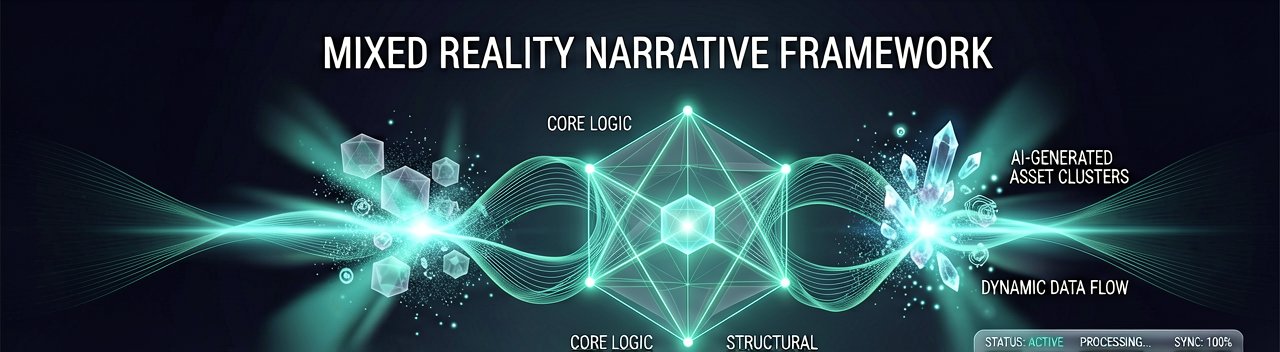
From a capital perspective, publishers are adjusting to a reality where traditional milestones no longer accurately measure project health. In the legacy model, a vertical slice required a significant upfront investment to prove that an art team and an engineering team could cooperate effectively. Now, a solo developer can present a fully functional, visually striking prototype within weeks of ideation. This hyper-acceleration forces venture capitalists and independent publishers to evaluate pitches based on the uniqueness of the intellectual property and the creator's community-building strategy, rather than their raw technical capacity to deliver a functional product.
Ultimately, the democratization of these systems is reshaping the labor politics of the industry. As major studios continue to suffer from massive layoff cycles and project cancellations driven by unsustainable budgets, highly skilled developers are choosing to exit the corporate treadmill entirely. Equipped with agentic toolchains, these industry refugees are discovering that they can maintain their creative autonomy, retain 100% of their intellectual property, and match the output of their former employers. The future of interactive entertainment is shifting away from massive corporate hierarchies and consolidating around agile, hyper-efficient solo artisans who command unprecedented leverage over distribution and capital markets.
The Mirage of Frictionless Production: Scale, Saturation, and the Capitalist Paradox
Reading Between the Lines: The prevailing narrative paints a utopian picture of the solo developer unshackled by corporate overhead, yet this techno-optimism ignores a fundamental law of digital economics: when production costs collapse to zero, distribution costs exponentially explode. The assumption that AI-empowered solo developers will dismantle traditional studio models overlooks the terrifying realities of market saturation. If every aspiring creator can launch a highly polished, mechanically complex title over a weekend, the digital storefronts will face an unprecedented deluge of content. In this hyper-congested landscape, the bottleneck shifts entirely from the capability to build a game to the financial muscle required to make anyone notice it exists.
This dynamic introduces a glaring contradiction into the democratization argument. Independent creators celebrate their newfound autonomy from legacy publishers, yet they are simultaneously drifting into absolute dependence on algorithmic discovery engines and massive ad-tech platforms. When raw production value ceases to be a competitive differentiator, discoverability becomes the ultimate weapon. Solo developers will quickly find that the capital they saved by automating engineering pipelines must be funneled directly into aggressive, platform-beholding marketing campaigns, effectively trading the tyranny of the studio executive for the tyranny of the advertising auction.
Furthermore, the structural durability of entirely automated game architectures remains highly suspect over long production cycles. While models excel at generating immediate, isolated modules of logic, they lack the holistic foresight required to manage the compounding systemic fragility of an evolving game. A solo developer can easily piece together a striking initial release, but maintaining that project through post-launch patches, platform migrations, and complex live-service infrastructure introduces a chaotic labyrinth of technical debt. When an automated codebase breaks under the weight of an unexpected operating system update, the solo creator lacks the specialized multi-disciplinary team needed to perform deep architectural triage, threatening to turn overnight successes into unmaintainable software nightmares.
Legacy publishers are already weaponizing these vulnerabilities to solidify their position at the top of the food chain. Instead of competing with the agile output of individual creators, large corporate entities are transforming into massive IP consolidation factories. They realize that while a machine can perfectly replicate genre mechanics, it cannot manufacture cultural relevance or nostalgic loyalty. By aggressively hoarding established franchises and leveraging their immense capital to secure exclusive ecosystem distribution deals, the industry giants are building defensive moats that no solo developer, regardless of their algorithmic efficiency, can hope to breach.
"We were promised that automation would kill the corporate studio and birth a golden age of liberated digital artisans; instead, it appears we are simply automating the shovelware assembly line while handing the keys of the entire kingdom directly over to the marketing budget."
Artūras Malašauskas is an AI Systems Integrator with 20+ years of production-grade web engineering experience. He has designed, shipped, and scaled enterprise Python/PHP systems for logistics, SaaS, and public-sector clients. For the past year, he has focused exclusively on AI integrations: deploying open-source LLMs, building generative media pipelines (image, audio, video), and engineering multi-agent workflows for real production environments. His standard: reproducibility, security, cost-efficient inference—no vaporware. He documents and evaluates emerging AI tooling, separating verified capabilities from marketing noise. Technical editor at: muza-ai.eu, ai-verslas.lt, ai-naujinos.lt Connect on LinkedIn
Comments