The Illusion of Automation: Why Over-Reliance on AI Threatens Game Development Pipelines

The global gaming industry is facing a critical bottleneck as studios aggressively implement generative artificial intelligence to cut ballooning production budgets. While automation is frequently marketed as a panacea for grueling development cycles, veteran industry professionals are raising alarms about the real-world maturity of these tools. Original Halo artist Eddie Smith recently voiced sharp criticism, warning that studios expecting artificial intelligence to magically solve production hurdles face a "rude awakening," as reported by Windows Central. Smith argued that current systems lack the precision required for tight gameplay loops, comparing generative tools to a toddler that requires constant oversight and human calibration.
This reality check arrives amidst systemic strategic shifts across major interactive entertainment firms. For months, reports have circulated that major entities have integrated generative automation into multiple layers of world-building and asset generation, according to reporting from TweakTown. However, the initial euphoria surrounding immediate cost reductions is clashing directly with the mechanical reality of game design, where a lack of strong, human-driven creative direction frequently results in incoherent assets that fail to align with the core user experience.
The Disconnection Between Automation and Creative Intent
The primary flaw in the current automation paradigm is the lack of intentional design inherent to machine-generated content. In an interview highlighted by GamesRadar+, Smith noted that if an art director does not already possess a clear vision, introducing algorithmic generation only compounds the ambiguity. AI tools excel at iteration but struggle fundamentally with precision, often producing visually complex but structurally useless elements that must be heavily reworked by human hands before they can function within a live game engine.
Escalating Technical Debt and Production Bottlenecks
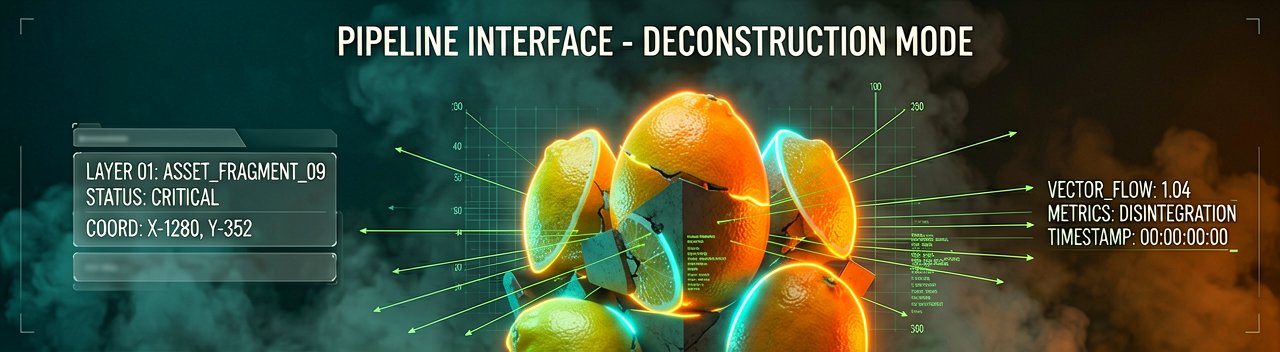
Instead of accelerating shipping windows, unguided reliance on machine generation risks creating a secondary wave of technical debt. When studios dump uncalibrated assets into their production pipelines, the burden of debugging and refining falls onto depleted development teams, causing games to languish even longer in pre-production. This bottleneck disproves the corporate assumption that automation can entirely substitute for mid-level technical staff, revealing that early-stage tools are currently expanding the cleanup phase rather than shortening the creation phase.
Intellectual Property Hazards and Market Rejection
Beyond the structural constraints of development, serious legal and commercial hurdles remain unaddressed. Because current legal frameworks deny copyright protections to entirely machine-generated works, major publishers face massive compliance risks regarding intellectual property ownership. Furthermore, player sentiment remains highly volatile, with audiences frequently rejecting titles that rely noticeably on synthetic assets, making human-driven artistic expression a vital differentiator in a saturated market.
What Most Reports Miss: The Hidden Architectural Cost of Unearned Automation
Behind the Creative Curtain: The superficial narrative surrounding algorithmic game generation focuses almost entirely on immediate cost savings, yet it entirely ignores the invisible explosion of technical debt. When a studio introduces automated generation into a codebase or asset pipeline, it bypasses the foundational human step of structural intent. In a traditional environment, a technical artist constructs an asset with an innate understanding of optimization constraints, texture streaming budgets, and collision metrics. Algorithmic engines do not possess this holistic context. They generate files that look visually complete to executive stakeholders during milestones, but lack the underlying structural geometry needed to run efficiently within a live renderer.
This technical disconnect forces studios into an expensive, retroactive cleanup cycle that negates any initial time savings. Senior developers are increasingly shifted away from creating core gameplay innovations to serve as structural sanitizers, manually rebuilding broken topology and unoptimized assets generated by automated tools. This shift creates a severe talent bottleneck. By treating early-stage automation as a direct replacement for human staff rather than a highly supervised drafting tool, management inadvertently extends the pre-production phase. The resulting pipeline is fragile, as changes to one automated asset can trigger unpredictable cascading failures across linked game subsystems.
Historically, the gaming industry has weathered major technological paradigm shifts, from the transition to 3D rendering to the adoption of sophisticated physics engines. In every previous iteration, success relied on the tool adapting to the artist’s explicit control, not the artist adapting to the unpredictable whims of the tool. Current generative systems flip this dynamic on its head, demanding that human designers work backward from a random output to find something salvageable. This inverted workflow strips away the deliberate, micro-level decision-making that gives iconic game worlds their distinct identity and mechanical tightness.
Furthermore, this aggressive push toward automation is widening the rift between studio executives and the core consumer base. While corporate leaders prioritize quarterly overhead reductions to appease investors, players are exhibiting a growing exhaustion with hyper-templated, derivative world design. When a game relies heavily on synthetic derivation, it loses the subtle, human-placed anomalies that tell a story through environmental design. In a highly saturated market where discoverability is a constant battle, stripping out distinct creative identity damages long-term brand loyalty and diminishes the emotional resonance that drives modern gaming communities.
Reading Between the Lines: The Structural Fallacy of Infinite Iteration
The Core Contradiction: The primary paradox of the current automation push lies in the corporate belief that faster asset generation inevitably yields faster product shipping. Modern game development pipelines do not suffer from a lack of raw material; they suffer from a crisis of curation and integration. By flooding a fragile, interconnected environment with endless variations of machine-generated concepts, studios do not alleviate the burden on their staff. Instead, they exponentially increase the cognitive load on game directors who must sift through mountains of synthetic mediocrity to find structurally viable elements. This paradigm mistakes sheer volume for genuine creative progress.
Furthermore, the financial promise of automated development completely ignores the realities of modern live-service maintenance. Games are no longer static products shipped on physical media; they are evolving ecosystems requiring continuous updates, hotfixes, and structural balance adjustments. An asset or script generated by a statistical model lacks the predictable logic of human-written code. When a catastrophic bug emerges post-launch, engineering teams face a nightmare scenario trying to reverse-engineer a black-box automated generation to deploy a patch. The short-term savings achieved during initial asset creation are entirely eaten away by the spiraling long-term costs of technical maintenance.
This dynamic also threatens to starve the industry of its future leadership by eliminating entry-level production roles. Traditionally, junior artists and junior programmers honed their craft by performing repetitive but critical tasks, such as cleaning up geometry, building minor environmental props, or writing basic script flags. By handing these entry-level tasks over to generative tools, executives are inadvertently burning the bridge between amateur talent and senior-level expertise. Without a structured pipeline for human mentorship and real-world execution, the industry risks entering a talent drought where there are no qualified senior architects left to direct the automation.
Ultimately, the rush to replace human labor with unrefined automation exposes a deeper executive misunderstanding of what actually drives commercial success in the interactive medium. Players do not fall in love with technically optimized, procedurally filled spaces; they attach themselves to specific, deliberate friction points and intentional design anomalies that feel distinctly human. Stripping out these eccentricities in favor of sterile efficiency reduces games to predictable commodities, forcing a highly creative medium into an assembly-line model that its audience is already actively rejecting.
"We have successfully automated the process of generating three thousand slightly different rock textures in thirty seconds, which is a massive triumph of engineering. Now, we just need to spend the next six months hiring human artists to fix the collision boxes so players stop falling through the map into infinite digital darkness."
Artūras Malašauskas is an AI Systems Integrator with 20+ years of production-grade web engineering experience. He has designed, shipped, and scaled enterprise Python/PHP systems for logistics, SaaS, and public-sector clients. For the past year, he has focused exclusively on AI integrations: deploying open-source LLMs, building generative media pipelines (image, audio, video), and engineering multi-agent workflows for real production environments. His standard: reproducibility, security, cost-efficient inference—no vaporware. He documents and evaluates emerging AI tooling, separating verified capabilities from marketing noise. Technical editor at: muza-ai.eu, ai-verslas.lt, ai-naujinos.lt Connect on LinkedIn
Comments