Okta’s AI Security Push: Strategic Move or Investor Overreach?
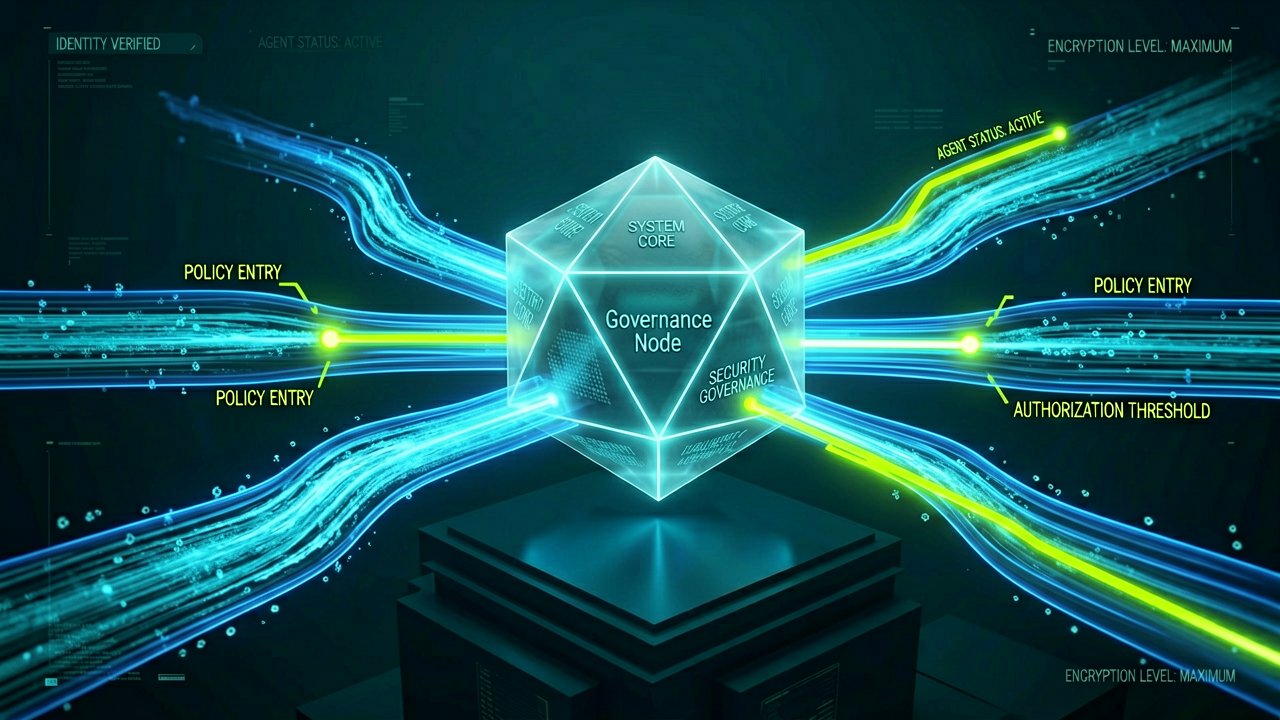
The enterprise tech landscape is undergoing a critical transition as artificial intelligence shifts from a backend optimization tool to an autonomous operational force. At the center of this paradigm shift is Okta, Inc., which has aggressively prioritized AI integration into its identity security pipeline to address the unique vulnerabilities of the "agentic enterprise." By treating autonomous AI agents as distinct digital workloads requiring authentication, the identity and access management (IAM) giant is attempting to pioneer a net-new category in cybersecurity. Early market indicators suggest this pivot is yielding tangible business results; Okta recently reported an 11% year-over-year revenue increase to $765 million for its fiscal first quarter, a metric heavily bolstered by a surge in enterprise demand for advanced threat detection and non-human identity governance, according to financial data tracked by Yahoo Finance.
This product velocity is exemplified by the rollouts of specialized platforms like Okta for AI Agents and Auth0 for AI Agents, alongside the implementation of Cross App Access protocols designed to eliminate unmanaged ad-hoc integrations. According to product documentation hosted on Okta Support , the firm has expanded its core governance frameworks to allow administrators to certify, request, and remediate access to applications linked directly with active AI entities. The strategic objective is clear: embed identity security so deeply into the enterprise AI pipeline that organizations cannot scale automated tasks without Okta serving as the underlying trust broker. Financial analysts have responded with cautious optimism, noting that while AI-driven deals represent the largest-ever pipeline in the company's history, the broader investment community remains divided on whether the surge justifies Okta's premium valuation amidst intensifying market competition.
The Agentic Threat Landscape and Product Differentiation
The core justification for Okta's technological shift rests on a stark architectural reality: traditional identity solutions are ill-equipped to govern non-human, multi-step autonomous workflows. As enterprises deploy AI agents to handle cross-application transactions, these digital workers create an expansive perimeter of shadow AI access. According to the official press release on Okta Investor Relations, the firm's new architectural blueprint establishes policy-based access decisions that replace risky user-consent prompts with centralized governance. By onboarding AI agents into the Okta Integration Network alongside integrations like Google Vertex AI, the company provides a mechanism to map human accountability to autonomous systems. This granular control is proving highly lucrative, as early data indicates that Okta's AI-focused contracts yield deal sizes roughly 40% larger than traditional non-AI contracts, carving out a high-value software niche in a crowded enterprise tech sector.
Investor Skepticism: High Valuations vs. Execution Risks
Despite impressive top-line growth and a notable expansion of its GAAP operating margins to 7%, Okta faces persistent skepticism regarding the long-term execution of this strategy. Skeptics argue that banking heavily on AI identity security could represent an overreach if widespread corporate deployment of agentic workflows takes longer to mature than the market anticipates. Industry reporting by TradingView highlights intense competitive pressure from legacy and cloud-native IAM platforms, particularly SailPoint, which has capitalized on its own adaptive identity security platform to command more than $1.1 billion in annual recurring revenue. Furthermore, because AI-driven identity offerings are not yet the primary driver of realized recurring revenue, some analysts worry that over-allocating research and development resources to this single vector could expose Okta to macro volatility if enterprise software budgets tighten.
Expert Commentary on Market Outcomes
Okta's AI security push is far from a speculative tech-bubble play; it is a calculated defense of its market share against Microsoft Entra ID and specialized cybersecurity peers. By successfully turning AI agent security into a core competitive edge, Okta is executing a vital cost-structure transformation that maintains fixed R&D expenses while scaling its average contract value. The financial consensus indicates that the downside scenario—where AI agent adoption stalls and revenue growth levels out to single digits—is increasingly mitigated by a strong current remaining performance obligation backlog. If Okta continues to successfully cross-sell its AI Identity Governance SKUs into its existing base of over 8,000 integrations, the strategic pivot will likely be remembered as a masterclass in market anticipation rather than an investor overreach.
Deep-Dive: The Governance Paradox of Non-Human Identities
Behind the Corporate Blueprint: The technical friction undergirding Okta’s latest initiative lies in a fundamental architectural disconnect between human authorization and machine-to-machine autonomy. Traditionally, identity governance tools relied on static attributes—such as a user’s department, IP address, or multi-factor authentication token—to grant or deny access. Autonomous AI agents, however, operate via transient, dynamic contexts, executing thousands of automated API calls across multi-cloud environments in seconds. Security architectures are forced to evolve from validating "who" a user is to monitoring "what" an unguided piece of software intends to do. Industry architects note that treating an AI agent like a standard corporate employee frequently breaks traditional access control lists, creating an immediate operational trade-off between strict enterprise security and the fluid agility required for AI productivity.
This challenge is further complicated by the legacy of Okta's high-profile security incidents over the past several years, which remain fresh in the minds of risk-averse Chief Information Security Officers (CISOs). When malicious actors compromised Okta’s support systems in late 2023, the event underscored how vulnerabilities within an identity provider could ripple across thousands of dependent downstream applications. By stepping into the crosshairs of AI authentication, Okta is intentionally expanding its attack surface to secure an entirely unproven layer of infrastructure. Early adopters point out that if an autonomous agent is successfully manipulated via prompt injection or data poisoning, a centralized identity vault like Okta could inadvertently authenticate a compromised machine, granting it legitimate access to sensitive, high-privilege databases without triggering standard perimeter alarms.
From an enterprise engineering perspective, the true battleground is not the creation of proprietary AI models, but the integration depth within existing continuous integration and deployment pipelines. Software developers routinely bypass rigid corporate governance frameworks to experiment with open-source models, giving rise to an ecosystem of shadow AI workloads that run entirely detached from central IT oversight. Okta's counter-strategy relies heavily on its vast partner ecosystem to enforce compliance directly at the developer API layer before an application ever reaches production. For security teams, this approach offers a single pane of glass to audit both human employees and algorithmic entities simultaneously, reducing the administrative fatigue of jumping between disparate, niche security consoles.
Ultimately, the financial viability of this strategy hinges on a complex procurement shift within the Fortune 500. While chief technology officers are eager to fund generative AI projects, cybersecurity budgets are facing unprecedented consolidation as organizations look to trim redundant software vendors. Okta is betting that by bundling non-human identity governance into its core enterprise licenses, it can capture a significant portion of AI infrastructure budgets that would otherwise flow to specialized startups or legacy cloud providers. This consolidation play could insulate the company from short-term market volatility, positioning it as an indispensable layer of the modern corporate technology stack long before autonomous AI agents become completely mainstream.
The Friction of Automation: Balancing Hype Against Enterprise Reality
Reading Between the Lines: The tech sector’s rush to secure the "agentic enterprise" assumes that organizations are ready—and willing—to hand over mission-critical operations to autonomous software agents. In reality, the vast majority of Fortune 500 companies are still struggling to move beyond basic generative AI pilots and rudimentary internal chatbots. By positioning itself as the premier gatekeeper for advanced AI-to-AI transactions, Okta risks over-engineering solutions for a future that remains largely conceptual for the average corporate buyer. This mismatch creates a distinct commercial bottleneck, where the engineering velocity of identity providers outpaces the actual operational maturity and risk tolerance of their primary customer base.
Furthermore, a glaring contradiction exists within the security paradigm Okta is trying to establish. The core value proposition of artificial intelligence is its ability to break free from rigid, hard-coded rules and dynamically adapt to new information. Yet, traditional identity governance is built entirely on deterministic frameworks—explicit policies, strict boundaries, and predictable behaviors. Attempting to force fluid, non-deterministic AI agents into static access management pipelines creates an inherent paradox. If Okta’s governance protocols are too restrictive, they will inevitably stifle the autonomous capabilities that make AI agents valuable; if they are too permissive, they become little more than a compliance rubber stamp that fails to prevent sophisticated lateral movement during a breach.
This dynamic leaves Okta walking a fine monetization tightrope amid shifting enterprise tech budgets. CISOs are facing severe pressure to consolidate their security stacks, often favoring bundled, platform-wide offerings from hyperscalers like Microsoft over best-of-breed point solutions. While Okta pitches its AI security suite as a revolutionary breakthrough, cynical enterprise buyers may view it as an aggressive repackaging of machine-identity and API-access features they already pay for. For Okta to justify its premium valuation and outmaneuver legacy rivals, it must prove that its AI integrations offer a quantifiable reduction in actual data breaches, rather than just adding another layer of complexity to an already saturated security architecture.
"We are effectively rushing to build multi-million-dollar digital security vaults to house autonomous AI agents that, at this stage in their development, are still occasionally defeated by a poorly formatted PDF or a clever math riddle."
Artūras Malašauskas is an AI Systems Integrator with 20+ years of production-grade web engineering experience. He has designed, shipped, and scaled enterprise Python/PHP systems for logistics, SaaS, and public-sector clients. For the past year, he has focused exclusively on AI integrations: deploying open-source LLMs, building generative media pipelines (image, audio, video), and engineering multi-agent workflows for real production environments. His standard: reproducibility, security, cost-efficient inference—no vaporware. He documents and evaluates emerging AI tooling, separating verified capabilities from marketing noise. Technical editor at: muza-ai.eu, ai-verslas.lt, ai-naujinos.lt Connect on LinkedIn
Comments