The Next Dimension of Intelligence: Evaluating SpAItial AI’s Leap into 3D Spatial Experiences
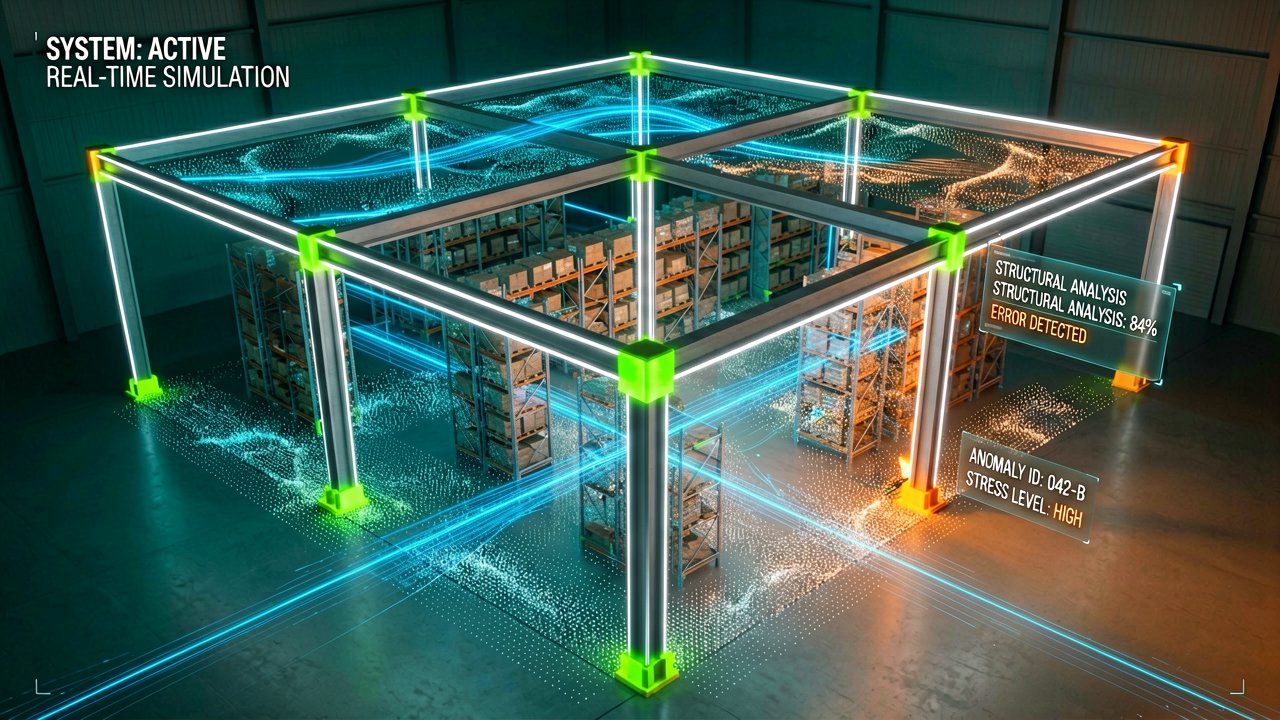
The landscape of generative artificial intelligence is undergoing a critical paradigm shift as computing expands beyond two-dimensional screens into the physical world. While the previous era of AI development focused heavily on understanding flat pixels and text strings, the contemporary frontier demands systems that possess a native, cognitive grounding in physical space. Addressing this technical challenge, the emergence of SpAItial AI marks an essential milestone in the commercialization of Spatial Foundation Models (SFMs). These systems are designed specifically to generate, reason about, and interact with three-dimensional environments by embedding an intrinsic understanding of space, time, and physical geometry.
By moving past traditional computer vision architectures that simply analyze static snapshots, SpAItial AI allows machines to process depth, scale, and object relationships dynamically. Creative and corporate sectors have historically relied on human designers to manually build digital environments, which requires significant time and resource allocation. The integration of intelligent, interactive 3D spatial platforms allows enterprise teams to transform text prompts, 2D images, or 360-degree panoramas into fully explorable digital assets. Industry tracking data compiled by AMHH indicates that spatial AI adoption is expanding rapidly, with forecasts projecting that 30% of enterprise AI systems will incorporate spatial capabilities to optimize automation and physical asset management.
Strategic Implications for the Extended Reality Ecosystem
The structural evolution of spatial computing depends entirely on a synchronized architecture where hardware serves as the senses and artificial intelligence operates as the core brain. Immersive extended reality (XR) headsets or spatial glasses rely on high-fidelity, real-time datasets like point clouds and collision meshes to ensure digital content responds authentically to human interaction. Platforms like SpAItial AI bridge the existing gap between hardware capabilities and software execution by enabling rapid deployment across game engines, robotics frameworks, and augmented reality configurations. This operational agility shifts the focus of digital twinning from static, backward-looking visual models to predictive, responsive virtual environments that can actively simulate real-world physical forces.
Market Barriers and Computational Reality
Despite these technological breakthroughs, the broader industrial implementation of spatial foundation models must navigate meaningful software and hardware limitations. Generating high-fidelity, persistent 3D scenes is exceptionally compute-intensive, requiring immense local or cloud-based graphics processing capabilities to maintain real-time fidelity. Furthermore, AI systems still encounter challenges when attempting to perfect the nuanced physical laws of complex, dynamic outdoor environments, meaning the highest quality results remain concentrated within controlled or indoor spaces. As developers refine specialized 3D vision-language datasets, the industry will continue to transition from simple shortcut-based object labeling to comprehensive structural reasoning that can truly replicate human spatial perception.
Unlocking Cognitive Grounding: The Architecture of Spatial Foundation Models
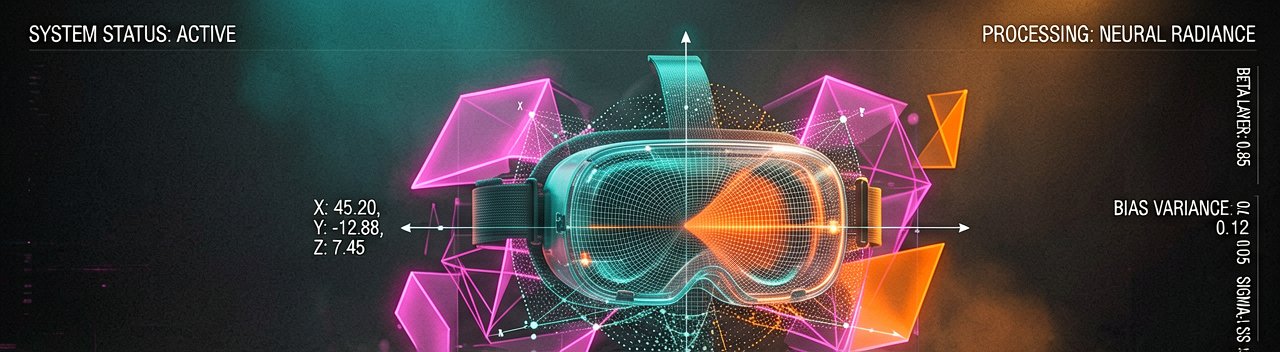
Behind the Engineering Curtain: The transition from passive image classification to active 3D spatial generation represents a fundamental restructuring of artificial neural networks. Traditional generative models operate on pixel grids, learning statistical associations between adjacent colors without any real understanding of physical depth or volume. In contrast, spatial foundation models are trained on rich geometric structures, including neural radiance fields, signed distance functions, and multi-view video feeds. This foundational training teaches the AI to construct persistent, internal 3D world models that remain mathematically stable even when the camera angle or environmental lighting conditions shift radically.
This technical evolution has created intense debate among machine learning researchers regarding the most efficient path forward. One faction argues that scaling up standard video diffusion models will eventually force the AI to infer the laws of physics and 3D geometry through brute-force pattern recognition. The opposing school of thought insists that spatial systems must explicitly embed geometric biases, such as depth maps and point clouds, directly into the model's core architecture. Companies building spatial AI are increasingly choosing the latter approach, recognizing that enterprise applications in industrial automation and simulation require absolute geometric precision rather than visually convincing hallucinations.
For engineering and operations teams, the practical value of these models lies in their ability to solve the long-standing "sim-to-real" dilemma in robotics and digital design. Historically, training a robotic arm or an autonomous warehouse vehicle required months of manual virtual environment construction followed by extensive real-world calibration. By leveraging spatial intelligence, operators can instantly convert real-world industrial spaces into precise, simulation-ready 3D digital twins. The AI can then run millions of physics-based permutations in parallel, training autonomous systems inside a perfectly mirrored virtual world before deploying the finalized software updates into physical machinery.
The broader commercial ecosystem is already adjusting to this architectural shift, with venture capital and hardware partnerships realigning around spatial workflows. Major chipmakers are optimizing next-generation silicon to accelerate transformer architectures specifically tuned for volumetric data and real-time spatial rendering. As these hardware and software components converge, the dependency on manual 3D asset creation will decline sharply, fundamentally transforming the unit economics of game development, architectural visualization, and spatial computing. The long-term competitive landscape will likely be defined by who controls the most diverse, high-fidelity 3D spatial training data needed to refine these evolving physical brains.
The Friction of Physical Reality: Confronting the Spatial Illusion
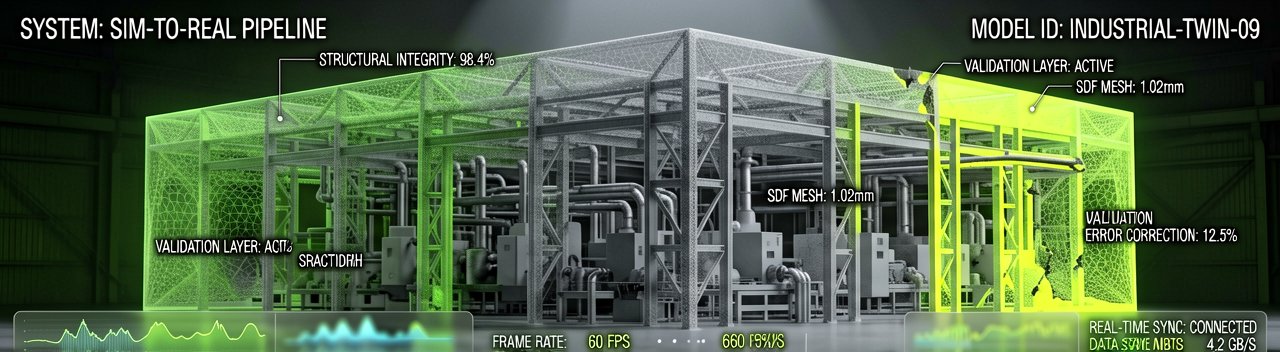
Reading Between the Lines: The current corporate enthusiasm surrounding spatial foundation models relies heavily on the assumption that digital environments can effortlessly replicate the chaos of the real world. While generative AI has proven remarkably adept at synthesizing visually stunning 3D meshes and plausible spatial layouts, a deep divide persists between visual fidelity and physical accuracy. The structural algorithms powering these systems are fundamentally built on probability, not the immutable laws of classical mechanics. Consequently, an AI-generated digital twin might look flawless to a human observer while possessing subtle, catastrophic structural errors that would cause an actual warehouse robot to crash or miscalculate weight distribution.
This technical limitation exposes a major contradiction in how the technology is currently being marketed to enterprise buyers. On one hand, developers promise that spatial AI will eliminate the need for costly human oversight by automating environment creation and predictive simulation. On the other hand, the high frequency of geometric hallucinations means that experienced 3D artists and spatial engineers must spend significant time auditing, clean-checking, and correcting the AI's structural outputs. Instead of fully automating the pipeline, the technology frequently shifts human labor from creative production to tedious forensic validation, a reality that rarely makes it into promotional pitch decks.
Furthermore, the infrastructure bottleneck threatening spatial AI adoption is vastly understated compared to traditional text and image models. Processing dynamic, volumetric 3D environments in real time demands unprecedented edge-computing power or hyper-low-latency cloud rendering pipelines. For industries operating in remote environments or facilities with legacy network setups, the computational overhead makes immediate deployment practically impossible. Until hardware manufacturers can deliver specialized silicon capable of processing complex spatial meshes locally with minimal power consumption, the grand vision of omnipresent, context-aware spatial computing will remain restricted to high-end labs and robust data centers.
Over the long term, the survival of the spatial AI sector will depend on its ability to transition from a novelty design tool to a reliable piece of infrastructure. If developers fail to integrate true physics engines with probabilistic neural networks, enterprise disillusionment will likely trigger a sharp market correction. However, if the industry successfully bridges the gap between looking right and being right, spatial intelligence will permanently reshape how humanity interacts with computers. The ultimate winners will not be the companies that generate the prettiest virtual rooms, but those that master the rigid, unyielding physics of the physical world.
"We have spent decades teaching computers to understand our world, only to realize that teaching them not to walk through virtual walls requires the computational budget of a small nation and the patience of a saint."
Artūras Malašauskas is an AI Systems Integrator with 20+ years of production-grade web engineering experience. He has designed, shipped, and scaled enterprise Python/PHP systems for logistics, SaaS, and public-sector clients. For the past year, he has focused exclusively on AI integrations: deploying open-source LLMs, building generative media pipelines (image, audio, video), and engineering multi-agent workflows for real production environments. His standard: reproducibility, security, cost-efficient inference—no vaporware. He documents and evaluates emerging AI tooling, separating verified capabilities from marketing noise. Technical editor at: muza-ai.eu, ai-verslas.lt, ai-naujinos.lt Connect on LinkedIn
Comments