The Physical AI Pivot: How China’s New World Foundation Model Alters the Global Tech Hegemony
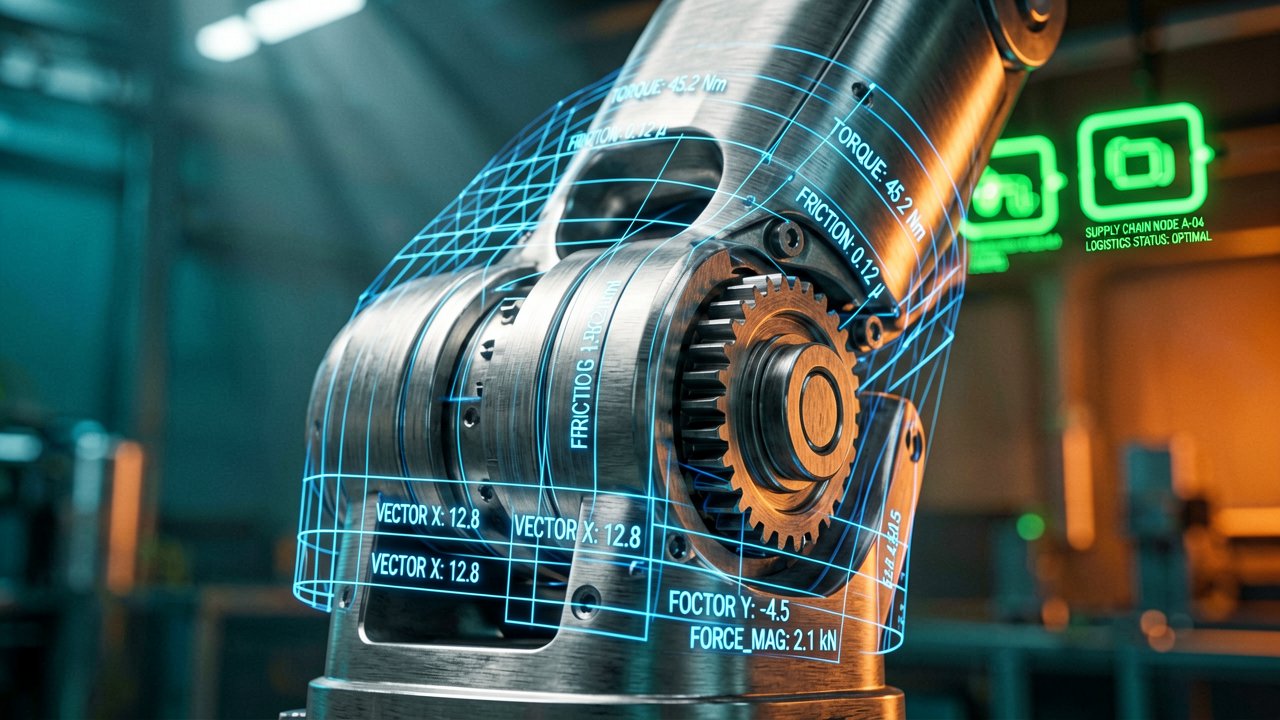
The global artificial intelligence race has officially transcended the digital confines of large language models and entered the physical realm. At the 8th Beijing Academy of AI Conference, the Beijing Academy of Artificial Intelligence unveiled Physis-v0.1, celebrated as the world's first general-purpose world foundation model designed to understand and predict real-world physics, spatial logic, and causal relationships. According to CGTN, this breakthrough addresses a critical bottleneck in robotics: the inability of digital-first systems to instinctively grasp spatial nuances, object fragility, and environmental hazards. By building a comprehensive cognitive framework capable of anticipating physical interactions before they occur, this release signals a massive structural evolution from screen-based chat interfaces to fully embodied, physical AI solutions.
This scientific milestone lands amidst an intense, multi-front engineering war where Chinese ecosystem players are systematically moving past Western counterparts on key physical AI benchmarks. Just days after US semiconductor giant Nvidia introduced its Cosmos platform to fast-track physical AI development, a Hangzhou-based robotics start-up called Spirit AI captured the industry's attention. As reported by The Star, the company's embodied foundation model, Spirit v1.6, secured the top spot on the prestigious RoboArena global leaderboard, edging out Nvidia's Cosmos3-Nano-Policy. This direct disruption of the hardware-to-software validation pipeline proves that domestic Chinese entities are translating conceptual physical AI frameworks into superior operational control systems faster than the West’s leading silicon designers.
Behind these sudden technical leaps lies an aggressively coordinated national strategy backed by comprehensive infrastructure and regulatory scaffolding. The International Federation of Robotics highlighted that Beijing has placed AI-powered robots at the very core of its national economic strategy, matching raw research and development with immediate industrial deployment, as detailed by RoboticsTomorrow. From creating localized component clusters within a two-hour logistics radius in the Yangtze River Delta to passing the world's first comprehensive national standard system covering a humanoid robot's entire lifecycle, China is pioneering the commercialization of embodied systems. For global supply chains, the debut of Physis-v0.1 and dominant leaderboard performances solidify China's position as the primary architect of the next industrial era, shifting its historical identity from the world's assembly floor to the primary engineer of physical intelligence.
Challenging the Digital Paradigm of the West
For the past several years, the Silicon Valley playbook focused heavily on scaling parameter counts for purely digital applications, producing generative systems that process code, text, and imagery but fail to operate in three-dimensional environments. The introduction of general-purpose physical models fundamentally disrupts this trajectory by treating the physical world itself as the primary data medium. Unlike traditional reinforcement learning methods that require millions of trial-and-error iterations in narrow virtual simulators, a standardized physical foundation model allows autonomous systems to conceptualize weight, friction, inertia, and depth out of the box, reducing localized edge-case failures across smart warehouses, advanced assembly plants, and critical logistics operations.

Industrial Integration and the Mass-Production Advantage
The geopolitical significance of physical AI lies in its immediate integration with heavy manufacturing infrastructure. While Western tech firms frequently experience prolonged bottlenecks moving software innovations into ruggedized, cost-efficient physical hardware, Chinese ecosystems capitalize on massive regional supply chain density and low-latency prototyping cycles. As physical models scale, they are immediately deployed into commercial factories where hardware platforms can be manufactured at a fraction of Western costs, effectively creating a feedback loop where physical robots gather real-world telemetry data, continuously refining the core world model and expanding China's structural lead in industrial autonomy.
The Architectural Fracture: Why Text Tokens Fail in a Physical World
Beyond the Silicon Valley Echo Chamber: The fundamental miscalculation of early generative AI lay in the assumption that a system capable of mastering human language could naturally navigate the physical universe. Traditional large language models process the world through tokenized text, predicting the next word based on statistical probability. However, as research laboratories in Beijing and Hangzhou recognized years ago, the physical world does not operate on grammar; it operates on continuous variables like torque, velocity, friction, and structural integrity. A robot guided solely by an LLM might textually describe how to handle a delicate porcelain vase, yet completely shatter it upon contact because its neural network lacks an intrinsic understanding of material resistance and gravity. By building the Physis-v0.1 architecture from the ground up to interpret raw sensory telemetry and spatial physics, Chinese engineers bypassed the linguistic translation layer entirely, creating an artificial instinct tailored for the physical plane.
This architectural pivot solves the long-standing problem of simulated reality gaps that have plagued robotics developers for decades. Historically, engineers relied on specialized digital twins to train autonomous machines, creating meticulously coded virtual environments where a robotic arm could practice a specific task millions of times. Yet, the moment that machine encountered a slight real-world deviation—such as an unexpected glare of sunlight or a layer of dust on a factory floor—the system would catastrophically fail. The debut of a generalized physical world model changes this dynamic by shifting the training methodology from narrow, task-specific simulation to broad, generalized environmental perception. Autonomous systems can now infer the causal outcome of their physical actions in real time, anticipating how objects will slide, fall, or bend before the mechanical actuators even begin to move.
From a geopolitical supply chain perspective, this technological shift directly plays into China's established manufacturing dominance. While Western tech giants remain highly concentrated on high-margin cloud software and digital ad-supported AI applications, the immediate practical utility of physical AI belongs on the factory floor. Chinese industrial planners have spent the last five years aggressively digitizing their manufacturing infrastructure, meaning that when models like Physis-v0.1 and Spirit v1.6 emerge, they are not left idling as conceptual research papers. Instead, they are immediately funneled into the world's most dense ecosystem of automated assembly lines, heavy machinery plants, and deep-water ports, creating an instant feedback loop of industrial telemetry data that Western competitors simply cannot replicate at scale.

Furthermore, the competitive friction between Western silicon designers and domestic Chinese software ecosystems is reshaping global hardware alliances. Nvidia's Cosmos platform was designed to position American hardware as the indispensable foundation for the next wave of physical automation, yet the sudden leaderboard dominance of Spirit AI demonstrates that localized, highly agile software optimization can outpace brute hardware scaling. Industry insiders note that domestic Chinese startups are mastering the art of algorithmic efficiency, running highly complex spatial reasoning models on localized compute clusters without relying on the latest, restricted Western architectures. This resourcefulness highlights a growing independence in the Chinese AI ecosystem, proving that the future of embodied robotics will be decided by spatial intelligence design rather than raw semiconductor access alone.
The Edge-Case Illusion and the Paradox of Ubiquitous Automation
Reading Between the Lines: The triumphant rhetoric surrounding the arrival of general physical world models obscures a fundamental paradox that has long haunted the automation industry. While achieving top billing on global leaderboards proves that these systems excel within structured validation frameworks, the true metric of physical AI is not its peak performance, but its failure rate in the wild. In a digital environment, an AI hallucination results in a flawed block of text or an extra finger on a generated image; in a heavy manufacturing plant or an autonomous transport hub, a physical hallucination results in destroyed hardware, severed supply chains, or human injury. The assumption that a foundation model can naturally scale its way out of unpredictable real-world chaos ignores the infinite complexity of the physical universe, where an unexpected oil slick or an unmapped gust of wind can easily expose the limits of statistical spatial reasoning.
Furthermore, this technological leap highlights a glaring contradiction within China's broader economic strategy. Beijing is aggressively pushing physical AI to mitigate a looming demographic crunch and shrinking labor pool, yet the rapid deployment of self-correcting robotic workforces threatens to outpace the economy's capacity to absorb displaced human workers. Industrial planners praise the efficiency of a model that reduces a factory's reliance on human oversight, but they rarely address the social friction generated when the world’s assembly floor cuts its human headcount. The race to achieve total operational autonomy may yield unprecedented manufacturing metrics, but it simultaneously risks creating a structural mismatch between a highly automated industrial base and a domestic labor market that still relies on traditional employment sectors for stability.
Western observers routinely interpret these Chinese breakthroughs through a lens of existential panic, assuming that dominance in physical AI software translates directly into a geopolitical checkmate. This view oversimplifies the immense difficulty of scaling physical hardware. A flawless foundation model cannot magically bypass global component shortages, mechanical wear-and-tear, or the harsh realities of hardware depreciation. The ultimate bottleneck for next-generation automation is no longer just algorithmic sophistication, but the physical durability of actuators, sensors, and battery systems. Until these mechanical limitations are resolved, even the most advanced world model remains shackled to the material constraints of the hardware it inhabits, transforming the global tech race from a sprint of pure software engineering into a slow, grinding war of metallurgical attrition.
"We have spent billions teaching machines to understand gravity, friction, and the fragile geometry of our world, only to realize that the ultimate reward for building the perfect digital mind is the distinct privilege of watching it get stuck in a routine traffic jam or tripped up by an unmapped stray plastic bag."
Artūras Malašauskas is an AI Systems Integrator with 20+ years of production-grade web engineering experience. He has designed, shipped, and scaled enterprise Python/PHP systems for logistics, SaaS, and public-sector clients. For the past year, he has focused exclusively on AI integrations: deploying open-source LLMs, building generative media pipelines (image, audio, video), and engineering multi-agent workflows for real production environments. His standard: reproducibility, security, cost-efficient inference—no vaporware. He documents and evaluates emerging AI tooling, separating verified capabilities from marketing noise. Technical editor at: muza-ai.eu, ai-verslas.lt, ai-naujinos.lt Connect on LinkedIn
Comments