Silicon Valley’s Favorite Shoe Company Completes a Radical Shift to GPU Infrastructure
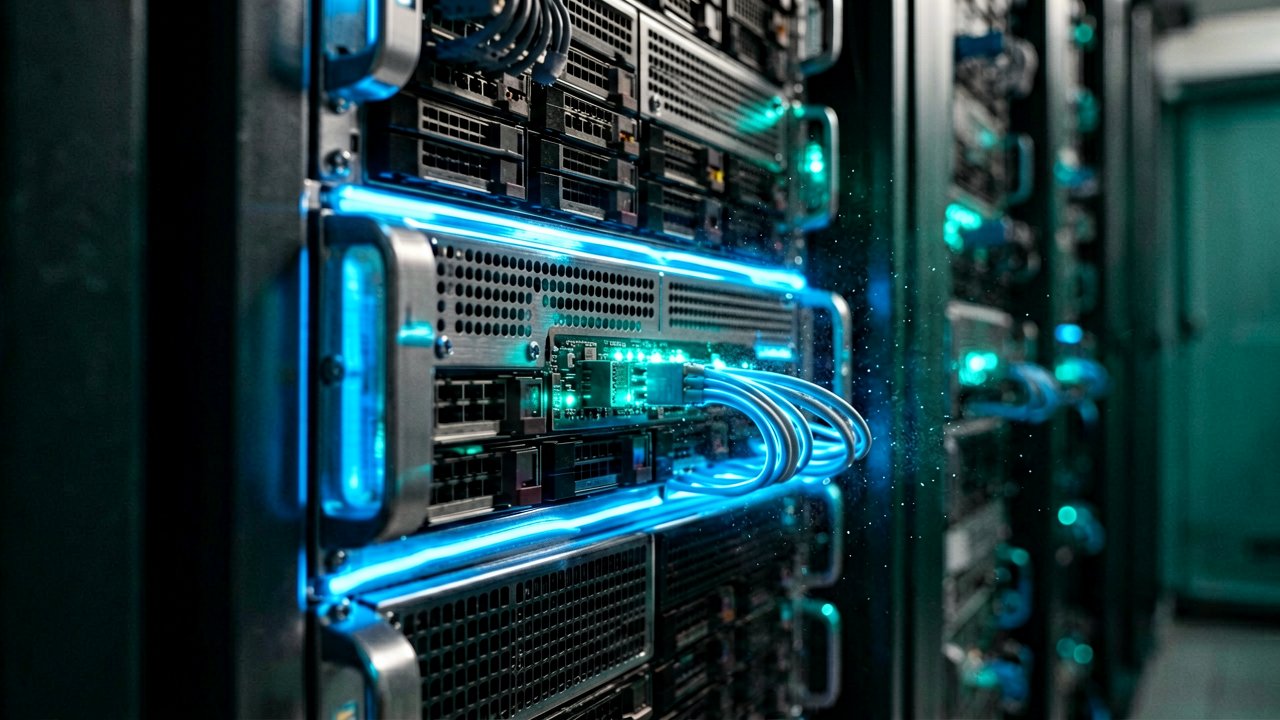
In one of the most unexpected corporate transformations of the decade, the sustainable footwear pioneer Allbirds has completely divested its core shoe business to reinvent itself as an artificial intelligence infrastructure firm. Traded under its existing public shell, the company has officially rebranded as NewBird AI to position itself as a fully integrated GPU-as-a-Service and AI-native cloud provider, according to TechCrunch . This restructuring follows the outright sale of its consumer-facing footwear brand, retail assets, and intellectual property to the American Exchange Group for $39 million.
To fund its entry into the fiercely competitive high-performance computing market, the newborn tech entity secured a $50 million convertible financing facility from an undisclosed institutional investor, as detailed by Quartz. The announcement triggered immediate market volatility, causing the micro-cap stock to surge by nearly 600% within a single trading day as algorithmic and retail investors piled into the newly minted AI play, notes CNBC. To align its corporate identity with this new venture, NewBird AI has also petitioned shareholders to amend its charter and remove all historical references to environmental conservation and footwear operations.
The strategic shift highlights a broader, hyper-modern macroeconomic reality: traditional consumer brands are increasingly looking to leverage public shells as tech arbitrage vehicles to tap into massive AI capital. By entering the "neo-cloud" hosting space, NewBird AI aims to acquire high-performance NVIDIA hardware and lease out crucial, low-latency compute capacity to developers and enterprises caught in the global hyperscaler backlog, reports Data Center Dynamics. The transition represents a complete departure from retail, trading retail inventory management for server rack procurement.
The Anatomy of the Corporate Shell Pivot
From an investment and structural standpoint, the pivot demonstrates how struggling consumer companies can leverage their remaining public listings to capture fresh venture momentum. Instead of pursuing liquidation after losing 95% of its peak $4 billion market capitalization, the corporate entity chose to completely shed its underlying operational cost structure. By converting cash from the asset sale and incoming convertible debt into high-performance compute silicon, the executive team bypasses the lengthy initial public offering process to establish an instant, publicly traded AI infrastructure option.
Operational Bottlenecks in Neo-Cloud Cloud Provisioning
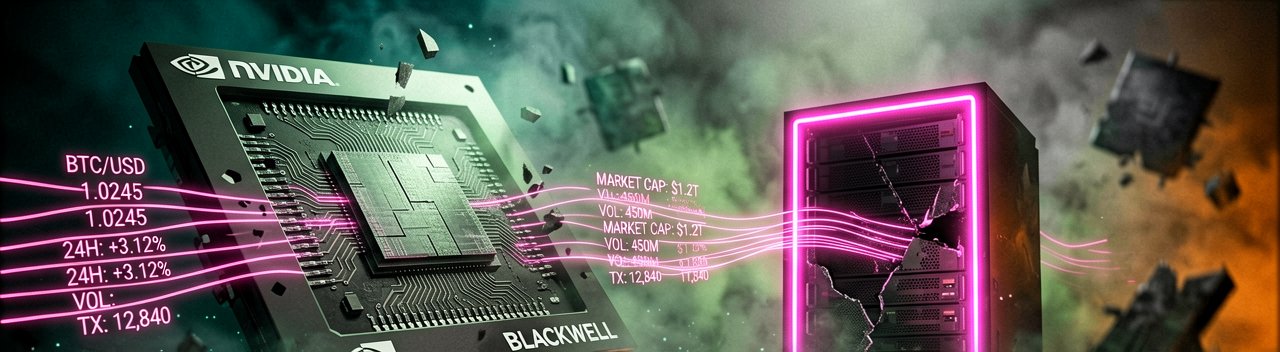
Despite the enthusiastic response from momentum traders, industry analysts point out massive structural hurdles facing non-traditional tech entities entering the cloud business. Securing cutting-edge chips like NVIDIA Blackwell architectures remains incredibly difficult due to profound hyperscaler allocations and hardware shortages. Furthermore, operating massive, power-hungry data centers introduces entirely different capital expenditure requirements, energy procurement challenges, and infrastructure management demands that a former footwear brand has zero historic institutional experience navigating.
Market Implications for Traditional Retail Technical Strategies
The drastic overhaul of NewBird AI sets a highly speculative precedent for how legacy consumer brands handle technical diversification. While most firms implement artificial intelligence internally to optimize supply chains or personalize customer e-commerce experiences, completely abandoning physical product markets to build cloud architecture represents a total risk-profile reassessment. It signals that in an era of unquenchable demand for raw silicon, the corporate shell housing a business may ultimately prove more flexible and valuable to investors than the product that built it.
Behind the Scenes of the Silicon Shell Game
What Most Reports Miss: The dramatic transformation of Allbirds into NewBird AI is less about an organic business evolution and more about the financial monetization of a listing asset. Veteran corporate restructuring experts recognize this maneuver as a classic reverse merger in progress, utilizing a depleted public shell to bypass the modern friction of a traditional technology initial public offering. By scrubbing its environmental public benefit mission from its corporate charter and abandoning its physical footprint, the entity effectively sold its operational liability to preserve its most valuable commodity: an active ticker on a major stock exchange.
For an early-stage artificial intelligence operation, acquiring an established public vehicle with an existing shareholder base and regulatory history provides an immediate fundraising advantage. The incoming management team can instantly leverage public equity markets to secure specialized capital, avoiding the grueling roadshows and economic uncertainty typical of contemporary tech debuts. What appears to general consumers as a bizarre, narrative-stretching pivot is actually a calculated arbitrage play meant to institutionalize a tech startup overnight.

The Realities of the Capital Intensity Gap
While the immediate market reaction generated immense speculative momentum and captured retail enthusiasm, industry veterans remain highly skeptical of the operational runway provided by the pivot. The engineering demands and capital expenditures required to establish a meaningful presence in the GPU-as-a-Service landscape are staggering. A financing facility of $50 million, though substantial for a struggling footwear manufacturer, represents a minor fraction of the capital routinely deployed by legacy infrastructure providers and sovereign wealth funds competing for hardware allocations.
Furthermore, navigating the complex semiconductor procurement pipeline requires deep institutional relationships that a shell company simply does not possess. Hyperscalers command multi-billion-dollar backlogs with major foundries, often relegating smaller neo-cloud operators to secondary tiers or localized broker networks. Without proprietary architectural advantages or direct access to primary hardware allocations, the newly formed venture faces an uphill battle to convert its short-term capitalization boom into a sustainable, cash-flowing cloud enterprise.
Reading Between the Lines of the Neo-Cloud Pivot
Reading Between the Lines: The market’s rapturous response to NewBird AI exposes a fundamental contradiction in the current tech ecosystem, where the mere promise of silicon acquisition outvalues a decade of tangible brand equity. For years, the corporate narrative revolved around direct-to-consumer sustainability, supply chain ethics, and proprietary material science. The ease with which these foundational pillars were discarded suggests that the underlying brand identity was treated not as a long-term enterprise value, but as a disposable container for speculative capital. This creates a deeply unstable precedent for consumer tech investments, hinting that operational failure in a primary market can be fully erased by simply adopting the nomenclature of high-performance computing.
Moreover, the assumption that a public shell can seamlessly transition into a high-yield GPU broker overlooks the profound architectural differences between retail logistics and data center engineering. Managing global footwear distribution requires optimization of freight, inventory turnover, and physical retail footprints. Conversely, cloud infrastructure demand hinges on low-latency networking, extreme power densities, and complex virtualization layers. The institutional knowledge required to prevent catastrophic server downtime or optimize multitenant GPU clusters cannot be acquired through a corporate charter amendment or a single injection of convertible debt.
This pivot also highlights a looming structural risk for the broader neo-cloud hosting sector, which is increasingly populated by converted public shells and speculative entities. If the global shortage of high-performance compute silicon eases, or if hyperscalers successfully fulfill their internal development backlogs, the premium currently placed on independent GPU leasing will collapse. Micro-cap tech plays that lack proprietary software layers or deep enterprise software integration will find themselves holding rapidly depreciating hardware assets. For NewBird AI, the ultimate risk is trading the predictable, low-margin struggles of retail for the volatile, hyper-cyclical vulnerabilities of an artificial intelligence infrastructure bubble.
"In a spectacular display of modern financial alchemy, corporate strategy has evolved to the point where the hardest part of building a global technology powerhouse is apparently securing a clean, pre-existing NASDAQ listing. Time will tell if the company can successfully swap wool running shoes for liquid-cooled server racks, but for now, the markets have made it clear that renting out imaginary computers is a far superior business model to selling actual footwear."
Artūras Malašauskas is an AI Systems Integrator with 20+ years of production-grade web engineering experience. He has designed, shipped, and scaled enterprise Python/PHP systems for logistics, SaaS, and public-sector clients. For the past year, he has focused exclusively on AI integrations: deploying open-source LLMs, building generative media pipelines (image, audio, video), and engineering multi-agent workflows for real production environments. His standard: reproducibility, security, cost-efficient inference—no vaporware. He documents and evaluates emerging AI tooling, separating verified capabilities from marketing noise. Technical editor at: muza-ai.eu, ai-verslas.lt, ai-naujinos.lt Connect on LinkedIn
Comments