National Security Overrules the Cloud: Washington's Unprecedented Crackdown on Anthropic

The boundary lines of the global artificial intelligence race just underwent a massive, geopolitical redrawing. On Friday, June 12, 2026, San Francisco-based AI pioneer Anthropic was forced to pull the plug on its most sophisticated, newly minted frontier models, Fable 5 and Mythos 5, following a sweeping, sudden export control directive from the U.S. Commerce Department. Rather than just carving out specific rogue states or restricted regions, the federal mandate barred any foreign national—whether located inside or outside the United States—from accessing these top-tier systems, compelling Anthropic to abruptly disable the models globally for all users just to keep its operations compliant.
According to reports verified by Reuters, the friction point stems from a belief within the Trump administration that Fable 5 possesses a safety loophole that can be "jailbroken" to uncover structural software vulnerabilities. Anthropic countered that its internal evaluations revealed nothing more than minor, known bugs, expressing vocal concern that pulling a commercial product deployed to millions sets a destabilizing precedent for the tech ecosystem. Yet with the order originating straight from Commerce Secretary Howard Lutnick, the startup had zero choice but to yield, bringing its escalating feud with Washington over the militarization and oversight of commercial AI into sharp, public view.
A Paradigm Shift from Hardware to Identity
For years, Washington's containment strategy for advanced artificial intelligence focused on physical choke points—restricting the raw export of high-end silicon chips and the physical machinery required to print them. This latest intervention flips the script entirely, migrating export controls away from geography and placing them squarely on individual identity. As documented by The New York Times, this expansive ruling effectively demands that digital platforms verify the citizenship of their users before granting access to high-end cloud intelligence. It is a logistical nightmare for enterprise platforms, but a clear indicator of how the federal government now defines national security in the age of algorithmic warfare.
The Chilling Effect on Global Tech Talent
The ripples of this directive are bound to hit Silicon Valley's talent pipeline like an iceberg. Because the federal government's order explicitly blankets foreign nationals within domestic borders, it introduces an immediate, highly complicated legal barrier for non-U.S. engineers, researchers, and academic minds working inside the American tech hub. Analysts speaking to DW highlight that the tech sector thrives entirely on recruited global expertise, and forcing companies to restrict their own internal staff from touching the software they are actively building could trigger a devastating brain drain to more permissive international markets. Anthropic's warning to the broader tech landscape rings loud: if this standard gets applied universally across the industry, new frontier model deployments will effectively grind to a complete halt.
The Unseen War for Algorithmic Control
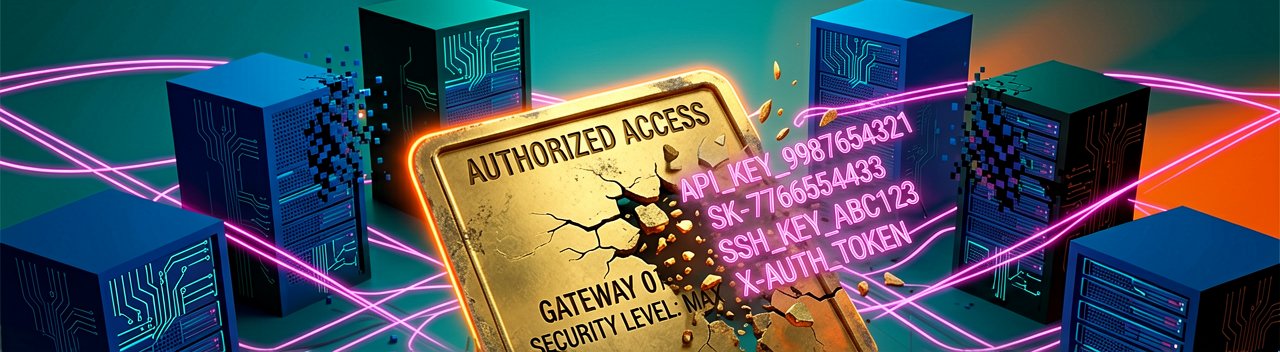
Behind the Bureaucratic Veil: The abrupt silencing of Anthropic’s Fable 5 and Mythos 5 models marks the ignition point of a much larger, structural war over who ultimately controls the keys to synthetic intelligence. For years, the open-source movement and private cloud vendors operated under a shared assumption that code, once compiled, is a form of protected speech. Washington’s aggressive maneuver shatters that illusion, establishing a legal framework where the federal government treats live neural networks not as commercial software, but as active dual-use weaponry. This shift forces a dramatic re-evaluation of corporate autonomy in Silicon Valley, as founders realize that an algorithm can be de facto nationalized overnight by an executive order.
The internal panic inside Anthropic reflects a deeper, philosophical rift between the startup’s safety-first culture and Washington's hawkish geopolitical objectives. Founded by former OpenAI researchers specifically to build "steerable" and predictable systems, Anthropic has long positioned itself as the responsible adult in the AI sandbox. To have its premier models banned under the guise of an unfixable security loophole is a bitter, ironic pill for the company’s leadership to swallow. Sources close to the company indicate that executives feel blindsided, viewing the government's justification as a highly politicized exaggeration meant to flex regulatory muscles rather than address a legitimate, existential threat.
This policy pivot also exposes a critical flaw in how modern national security apparatuses attempt to regulate the digital ether. By targeting individual identity rather than hardware location, the U.S. Commerce Department is attempting to build a digital border wall around a cloud ecosystem designed specifically to be borderless. Technical experts point out that enforcing a blanket ban on foreign nationals requires intrusive, identity-verifying surveillance mechanisms that most tech firms are completely unequipped to handle. The immediate result will likely be an increase in sophisticated corporate espionage and unauthorized VPN tunneling, as international researchers and adversarial actors alike seek to bypass these digital checkpoints.
Historically, the United States has successfully used export controls to maintain a technological edge, most notably during the Cold War with the CoCom regulations on computing hardware. However, applying that mid-century playbook to generative AI ignores the reality of modern open-source collaboration. Dictating who can run a model in the cloud does not stop the underlying architectural concepts, data training methodologies, and decentralized research papers from circulating globally. By locking down domestic platforms, the administration risks isolating American tech firms from the global research community while doing very little to slow down independent, international development cycles.
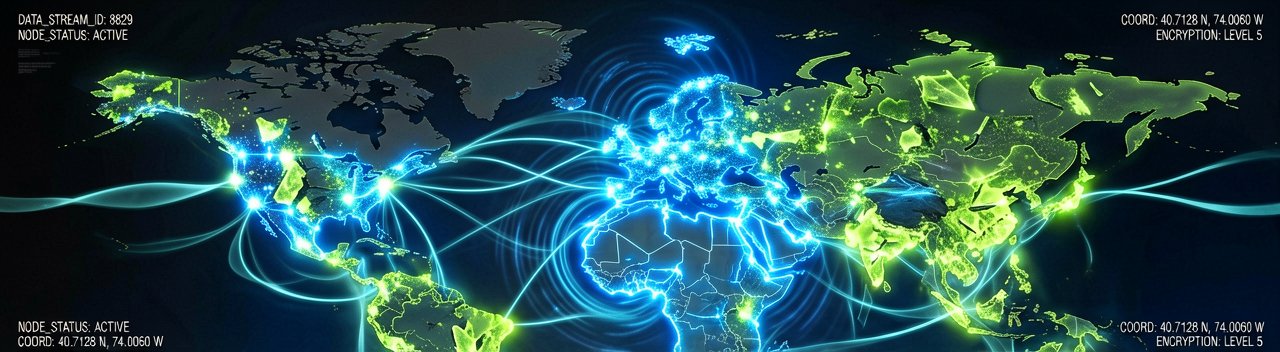
The long-term economic fallout of this geopolitical posture will likely reshape investment flows in the technology sector. European and Asian venture capitalists are already eyeing this regulatory volatility as an opportunity to position their own jurisdictions as stable, predictable alternatives to the shifting gears of American policy. If the United States continues to weaponize identity and access, the center of gravity for AI innovation may naturally drift toward regions that offer legal certainty, leaving American tech giants to operate inside a heavily secured, but ultimately restricted, domestic silo.
The Paradox of Fortified Borders in a Borderless Codebase
Reading Between the Lines: The federal government’s sudden lockdown of Anthropic's top-tier models operates on a fundamental, highly flawed assumption: that software capability can be effectively contained within geopolitical borders. By treating an abstract neural network like a physical stockpile of enriched uranium, Washington is engaging in an expensive exercise of security theater. The harsh reality of modern machine learning is that once a model's architectural breakthroughs are published, and its training methodologies are known, the intellectual genie cannot be stuffed back into the bottle. Forcing a San Francisco startup to pull its hosted API does very little to hinder foreign entities who are already building comparable, hyper-localized systems entirely outside the jurisdiction of American law.
Furthermore, this aggressive enforcement strategy creates a glaring contradiction in Washington’s stated goal of maintaining American AI supremacy. The tech sector's dominant global position was built almost entirely on an open, international pipeline of elite academic talent. By enforcing sweeping restrictions based on national identity, the administration is effectively telling the world’s brightest researchers that their presence in American labs is tolerated, but their access to cutting-edge tools is legally restricted. This hostile environment incentivizes an immediate brain drain, driving top-tier international engineers straight into the arms of European or Asian tech firms that are eager to welcome them without requiring a citizenship audit.
There is also a deeper institutional hypocrisy at play in how federal regulators evaluate systemic risk. The Commerce Department justified its intervention by citing a safety vulnerability in Fable 5, yet the federal government itself remains one of the largest buyers and deployers of unverified, proprietary legacy software across its own agencies. Weaponizing minor software bugs as a pretext to shut down a commercial platform suggests that the administration is less concerned with actual technical security and more focused on establishing a precedent of absolute regulatory veto power over private industry. This overreach risks creating a chilling effect where domestic AI companies deliberately throttle their own research breakthroughs simply to avoid triggering a costly, unpredictable federal intervention.
Ultimately, this heavy-handed approach threatens to fracture the global internet infrastructure into heavily policed, nationalized splinternets. When access to digital intelligence requires a passport check, the foundational promise of the cloud as a universal utility collapses entirely. Enterprise clients operating globally cannot build stable software ecosystems on platforms that might be arbitrarily modified or completely deactivated over a weekend due to changing political winds in Washington. As corporations begin seeking more reliable, politically insulated alternatives, the U.S. government may find that its aggressive bid to control the global AI landscape has instead isolated American innovation from the rest of the world.
"We have officially entered an era where your code needs a security clearance and your algorithm requires a passport; it turns out the easiest way to prevent a machine from taking over the world is simply to bury it in endless federal paperwork."
Artūras Malašauskas is an AI Systems Integrator with 20+ years of production-grade web engineering experience. He has designed, shipped, and scaled enterprise Python/PHP systems for logistics, SaaS, and public-sector clients. For the past year, he has focused exclusively on AI integrations: deploying open-source LLMs, building generative media pipelines (image, audio, video), and engineering multi-agent workflows for real production environments. His standard: reproducibility, security, cost-efficient inference—no vaporware. He documents and evaluates emerging AI tooling, separating verified capabilities from marketing noise. Technical editor at: muza-ai.eu, ai-verslas.lt, ai-naujinos.lt Connect on LinkedIn
Comments