Algorithmic Warfare: How Academic Innovation Shifts Cybersecurity Training Paralyzed by AI Threat Cycles

The weaponization of artificial intelligence by malicious actors has structurally broken traditional corporate cybersecurity training models. Legacy training relies heavily on static, compliance-driven frameworks and theoretical patching schedules that assume human-scale reaction windows. However, offensive AI now orchestrates exploits at automated speeds, forcing enterprise threat validation cycles to shrink from weeks to minutes. To prevent defensive networks from being completely overwhelmed, a fundamental paradigm shift is required—moving away from static multiple-choice tutorials toward live, data-driven simulations that mirror active machine-on-machine warfare.
At the vanguard of this training transformation, the University of Nebraska Omaha has established the Nebraska Cyber Matrix initiative. Backed by private philanthropic investment and deep regional industry ties, this state-of-the-art program bridges the critical gap between academic theory and enterprise emergency defense. The initiative actively moves security training into the operational theater by standing up a specialized, AI-enabled Security Operations Center (SOC) at the Peter Kiewit Institute. Through this real-time environment, cyber defenders face live simulations designed to counter the exact automated methodologies deployed by modern hackers.
By integrating technical intelligence directly with private enterprise and public infrastructure needs, programs like the Nebraska Cyber Matrix demonstrate that localized public-private ecosystems are critical to overcoming national cyber talent shortages. The training scales beyond simple code auditing by exposing practitioners to multi-modal AI threats, deepfake financial fraud mechanics, and algorithmic evasion techniques. Moving forward, the resilience of commercial enterprises will depend entirely on adopting these adaptive, performance-based validation paradigms to outpace automated risk vectors.
The Real-Time Failure of Legacy Compliance Training
Modern enterprise risk landscapes have outgrown standard cybersecurity training modules because automated threats mutate faster than human instructors can write updated documentation. When adversaries leverage machine learning to scan massive attack surfaces and auto-generate unique encodings, security teams cannot rely on quarterly compliance reviews. Effective preparation mandates the implementation of continuous performance-based testing platforms that evaluate a defender's practical response capabilities under immediate pressure.
Building the AI-Enabled Security Operations Center
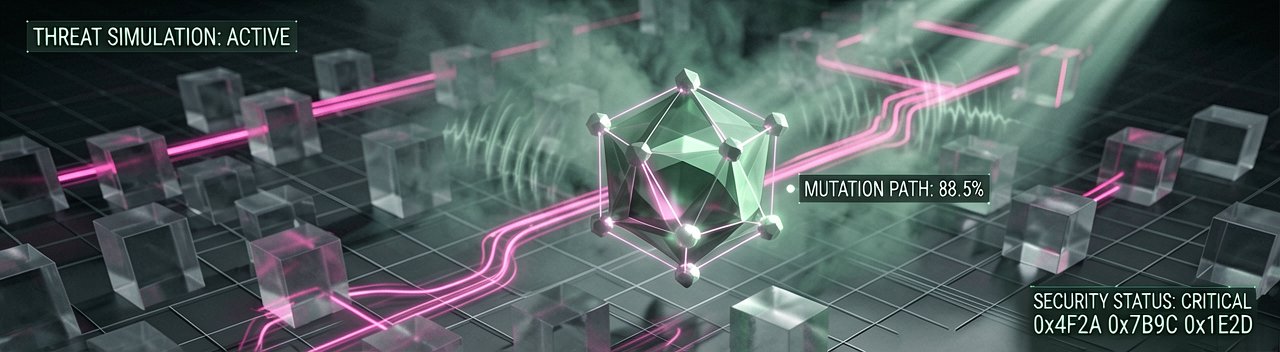
The operational framework engineered through the NebraskaCYBER MATRIX shows how specialized university hubs can act as functional regional defenses. By combining live threat telemetry monitoring with dedicated enterprise training bootcamps, the university provides security analysts with direct access to protected data cloud simulations. This specific methodology ensures that defensive skills are hardened against complex vector chains before an engineer ever touches a live commercial network.
Bridging Public Innovation and Private Enterprise Resilience
Sustaining this evolving standard of technical readiness requires deep structural integration between academic institutions, municipal utilities, and corporate boards. As state and federal budgets face persistent constraints, collaborative public-private funding models present the most viable path forward for cutting-edge defensive infrastructure. Security leaders must actively champion and participate in these local educational ecosystems to guarantee a reliable pipeline of workforce-ready analysts capable of neutralizing machine-speed exploits.
Behind the Scenes: Inside the High-Stakes Shift to Performance-Based Defenses
What Most Reports Miss: The pivot toward advanced, AI-driven cybersecurity training is not merely an educational upgrade; it is a desperate reaction to a highly asymmetrical battlefield. For the past decade, enterprise security leaders operated under the assumption that defensive tools would hold the line while human analysts caught up during standard business hours. The arrival of weaponized large language models and autonomous malware clusters shattered this illusion, turning traditional incident response timelines on their head. Security operations centers are now discovering that analysts trained on static compliance checklists become paralyzed when confronted with automated, multi-vector attacks that mutate in real time.
To understand the depth of this crisis, one must look at how modern threat actors exploit human cognitive lag. When a malicious AI initiates a spear-phishing campaign, it does not send a single, poorly worded email; it deploys thousands of highly personalized, context-aware messages tailored to individual corporate identities within seconds. When defensive barriers are breached, automated payloads alter their own code structure to evade signature-based detection mechanisms. Academic institutions scaling up programs like the Nebraska Cyber Matrix are forced to treat these encounters as live warfare simulations, recognizing that a defender's muscle memory is just as vital as their technical knowledge.

This operational reality has triggered intense friction between corporate financial officers and chief information security officers regarding training budgets. Historically, boards favored low-cost, digital training platforms because they ticked regulatory boxes with minimal disruption to daily workflows. However, regional business leaders collaborating with research hubs are realizing that the cost of an active breach far outweighs the operational friction of intensive, simulator-driven bootcamps. The demand shift is rapidly moving toward environments where analysts are intentionally pushed to failure in sandbox environments, exposing systemic vulnerabilities before they manifest on live production networks.
Furthermore, this pedagogical shift addresses a deeper structural flaw within the cybersecurity talent pipeline. Universities have historically graduated computer science students who understand theoretical cryptography but lack the tactical endurance required to manage a prolonged network siege. By embedding local firms and municipal infrastructure teams directly into academic security operations centers, regional ecosystems create a dual-benefit model. Students gain immediate, unvarnished exposure to genuine enterprise telemetry, while corporate partners receive an objective, audited assessment of their defensive posture against the latest algorithmic threats.
Ultimately, the institutionalization of adaptive training frameworks marks the end of the compliance-first era in digital corporate defense. As automated exploits become standard operating procedure for global syndicates, the metric of organizational resilience has irrevocably changed. Survival no longer depends on the number of certifications listed on an IT department's roster, but on the verified velocity at which an analyst team can isolate, analyze, and neutralize an aggressive, machine-speed intrusion.
Reading Between the Lines: The Illusion of Total Machine Preparedness
Reading Between the Lines: The collective rush to embrace AI-driven simulator training overlooks a glaring paradox within enterprise risk management: we are attempting to train humans to fight an automated war that humans were never structurally designed to process at scale. Corporate boards are treating initiatives like the Nebraska Cyber Matrix as a silver bullet that will magically transform entry-level analysts into elite cyber warriors capable of out-thinking algorithmic exploits. This assumption fundamentally miscalculates the asymmetry of the threat landscape, as the ultimate trajectory of offensive AI is not to outsmart human defenders, but to completely bypass them by operating within execution windows measured in milliseconds.
This reality exposes a profound contradiction in current corporate investment strategies. Enterprises are pouring millions into hyper-realistic training environments while simultaneously underfunding the systemic architectural overhauls required to make their networks resilient by default. Training an analyst to recognize an AI-mutated malware variant matters very little if legacy enterprise databases require forty-five minutes of manual validation to isolate a compromised sector. There is an uncomfortable truth that the tech sector routinely ignores: the obsession with "upskilling the human element" frequently serves as a convenient scapegoat for leadership teams unwilling to pay for automated, zero-trust infrastructure replacements.
Furthermore, an unspoken vulnerability looms over these academic-corporate defense hubs: the poisoning of the training data itself. As these simulators rely heavily on live threat telemetry to create realistic threat landscapes, they become highly attractive targets for counter-intelligence manipulation by advanced persistent threat actors. If a sophisticated adversary can subtly alter the behavioral heuristics fed into these educational environments, they can effectively train an entire generation of regional cyber defenders to look for the wrong indicators of compromise. The boundary between a cutting-edge training sandbox and an adversary's psychological warfare playground is remarkably thin.
Looking ahead, the long-term implication of this training paradigm shift is not a sudden stabilization of corporate security, but an accelerating talent stratification. Small and medium-sized enterprises lack the capital and geographical proximity to plug into elite, university-backed security matrices, meaning they will continue to rely on obsolete compliance checklists. This creates a deeply fractured economic landscape where fortune-500 firms buy their way into adaptive resilience, while the broader, interconnected digital supply chain remains fundamentally exposed, offering soft entry points for automated syndicates.
"We are spending billions teaching human security analysts to think like machines, completely forgetting that the machines have already perfected the art of making humans look like dial-up modems."
Artūras Malašauskas is an AI Systems Integrator with 20+ years of production-grade web engineering experience. He has designed, shipped, and scaled enterprise Python/PHP systems for logistics, SaaS, and public-sector clients. For the past year, he has focused exclusively on AI integrations: deploying open-source LLMs, building generative media pipelines (image, audio, video), and engineering multi-agent workflows for real production environments. His standard: reproducibility, security, cost-efficient inference—no vaporware. He documents and evaluates emerging AI tooling, separating verified capabilities from marketing noise. Technical editor at: muza-ai.eu, ai-verslas.lt, ai-naujinos.lt Connect on LinkedIn
Comments