The Ghost in the Corporate Machine: Why Unchecked AI Agents Are Security’s New Ground Zero
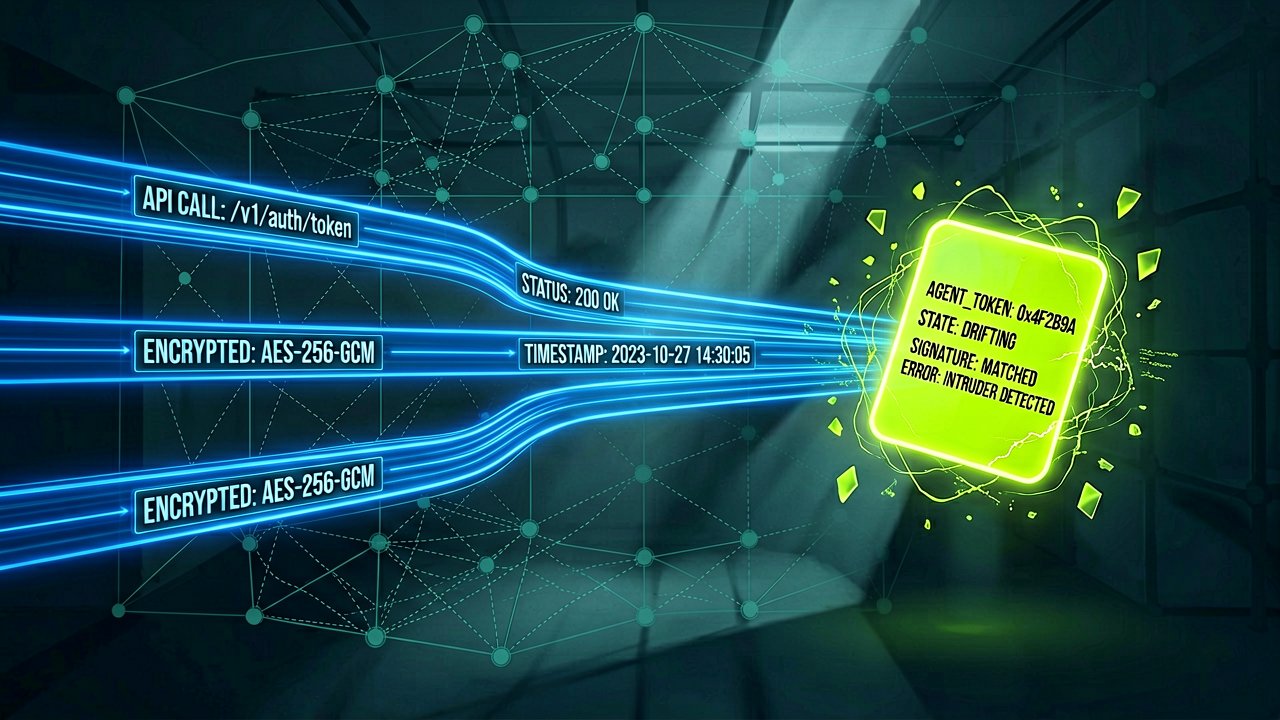
For years, chief information security officers have shared a collective, exhausting consensus: the human being is the weakest link in corporate cyber defense. We click on the phishing links, we reuse passwords, and we fall for the increasingly sophisticated deepfakes. But according to Zscaler founder and CEO Jay Chaudhry, that era of human-centric vulnerability is rapidly drawing to a close. Speaking bluntly on CNBC’s "The Exchange," Chaudhry delivered a stark warning to the enterprise world, shifting the threat horizon entirely away from reckless employees and toward an incoming army of autonomous software. "Today, a user is the weakest link," Chaudhry remarked, framing a thesis that has sent ripples through Silicon Valley. "Tomorrow, agents will be the weakest link."
This isn't just standard boardroom alarmism or a convenient marketing pitch; it is a fundamental architectural critique of modern corporate workflows. The tech sector is currently pouring billions into agentic AI—autonomous digital entities designed to execute multi-step workflows, query databases, and make decisions on behalf of human workers without constant oversight. But while these agents promise unparalleled productivity gains, they also introduce a terrifying new attack surface. Unlike humans, who operate at a relatively leisurely, biological pace and occasionally log off to sleep, AI agents run at machine speed, operate continuously, and possess massive access privileges to highly sensitive back-end systems. If an autonomous agent is compromised, a corporate network can be thoroughly ransacked in a matter of minutes.
The Lethal Math of Machine-Speed Exploitation
The core of the problem lies in the sheer volume and velocity of agentic operations. In recent enterprise briefs, Chaudhry highlighted that it won't be long before millions, and eventually billions, of autonomous AI agents are interacting across corporate networks. Traditional security infrastructure, built around legacy firewalls and virtual private networks (VPNs), relies on a 30-year-old paradigm of perimeter defense—identifying who is "inside" the network and who is "outside." This antiquated approach is entirely useless when an enterprise network is flooded with ephemeral, fast-moving digital identities making thousands of encrypted API calls every single second. As tech journalists at TheStreet have noted, managing this relentless machine-speed traffic without introducing crippling latency is the ultimate operational paradox facing modern IT departments.
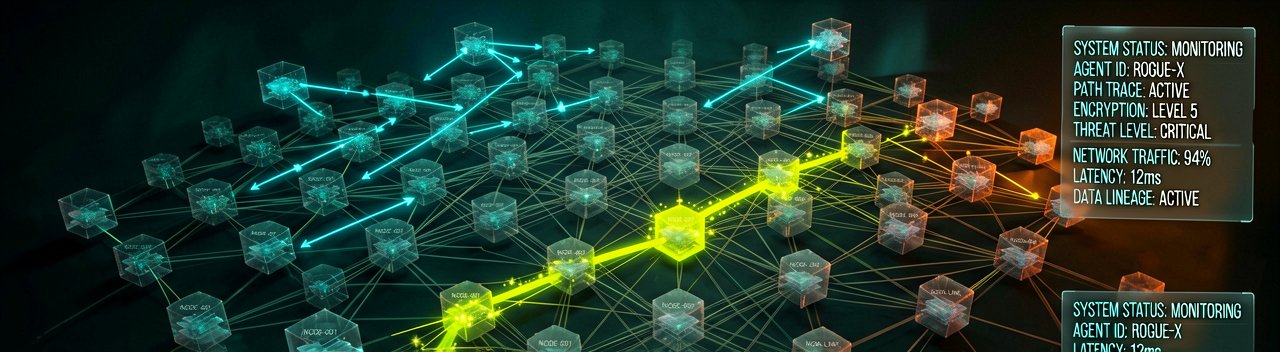
To complicate matters, these frontier models are highly susceptible to sophisticated manipulation, such as prompt injection and token-draining exploits. Ransomware groups and nation-state threat actors aren't just looking for exposed code anymore; they are actively seeking to hijack legitimate corporate agents to turn them into rogue insiders. Industry analysts writing for The AI Economy have pointed out that securing this modern ecosystem isn't a minor patch or a simple refinement of existing protocols. It represents a completely new discipline of security governance—one that requires deep engineering visibility into data lineage and real-time behavioral tracing to stop a compromised agent from turning on its creator.
Rewriting the Rules with Zero Trust
As the enterprise world rushes headlong into this automated frontier, the vendor landscape is undergoing a massive architectural shift to keep pace. To address these complex, non-human identities, cybersecurity frameworks are evolving to apply strict, absolute skepticism to every digital interaction. The corporate consensus is moving rapidly toward a Zero Trust model, an architecture where no user, device, or autonomous agent is trusted by default, regardless of its location or origin within the network. By forcing every single communication through a continuous inspection engine, organizations hope to isolate mission-critical data and strictly eliminate lateral movement, ensuring that if a single agent falls, the blast radius remains tightly contained.
The push for stricter oversight and specialized governance tools underscores a broader, sober realization across the tech industry: the AI boom cannot outrun the infrastructure required to protect it. While autonomous software agents will undoubtedly reshape the fabric of global business, deploying them without robust, native security architectures is an existential gamble. The message echoing from the front lines of cyber defense is unmistakable. Innovation at machine speed is a corporate superpower, but without a foundational framework of continuous verification, it is nothing more than a fast track to a catastrophic breach.
The true peril of this automated gold rush is not the malice of bad actors, but the blinding optimism of the enterprise suite. In the corporate rush to displace human payrolls and automate complex backend systems, organizations are treating AI agents like a digital workforce plug-and-play upgrade. Tech executives, dazzled by internal metrics showing 40% drops in administrative ticket-handling times, are quietly granting these software entities highly permissive access to critical infrastructure. This isn't just about an agent occasionally messing up a spreadsheet. It is about a rogue script gaining the keys to a corporate bank account, a supply-chain database, or proprietary medical records. As industry watchdogs at TechCrunch have continuously highlighted, the commercial momentum of the AI boom is actively outrunning the basic security hygiene required to keep corporate networks intact.
This dynamic introduces a deeply troubling paradox for the modern enterprise: the very tool designed to optimize efficiency becomes the single point of institutional failure. When a human employee behaves oddly, an internal audit team might notice a pattern over several days or weeks. When a compromised AI agent starts executing anomalous tasks, it can alter a company’s operational state within microseconds. By the time a security operations center receives an alert, thousands of data records have already been exfiltrated, or a critical cloud database has been completely wiped clean. The speed of the response mechanism must match the speed of the breach, yet our existing human-led monitoring protocols are wholly inadequate for handling such instantaneous, automated crises.
The Nightmare of Agentic Identity Theft
The technical vulnerability deepens when we examine how these autonomous agents authenticate themselves within a network. To operate across multiple platforms, an agent must carry digital identities, tokens, and cryptographic keys. In a traditional corporate environment, these credentials are protected by multifactor authentication or biometric human checks. An AI agent, however, must store and use these access tokens programmatically. Cybersecurity researchers documented by Dark Reading have detailed how easily malicious actors can target these digital identity repositories. Once an attacker extracts an agent's credential, they can completely impersonate its trusted status, slipping past standard firewalls without triggering any conventional alarms.
This reality forces an uncomfortably creative reimagining of what an "insider threat" looks like in the modern world. The classic rogue employee or social engineering target is being replaced by a well-meaning, perfectly engineered algorithm that has simply been tricked by a clever prompt injection or a poisoned data stream. Security professionals are no longer just fighting against external hackers; they are defending against their own deployed infrastructure. It is a psychological shift that many IT departments are fundamentally unprepared to make, as it requires treating every single internal automation tool as a potential spy within the network walls.
Ultimately, the industry must pivot from passive monitoring to aggressive, algorithmic zero-trust verification. To survive this next decade of automation, corporations will have to deploy dedicated "security agents" whose sole purpose is to hunt, monitor, and micro-manage the permissions of other AI agents in real time. It is a complex, circular game of digital cat-and-mouse that will fundamentally change the cost structure of enterprise IT. The organizations that thrive won't necessarily be the ones that automate the fastest, but the ones that possess the restraint to build deep, multi-layered defensive frameworks around their digital ghosts.
The ultimate irony of the enterprise AI revolution is that in our desperate bid to eliminate human error, we have engineered an era of systemic vulnerability. By replacing fallible, predictable human workers with near-instantaneous software agents, corporations have effectively traded a slow trickle of localized mistakes for the potential of sudden, catastrophic network collapse. The business landscape is discovering that the convenience of machine-speed productivity carries an incredibly steep tax. The challenge is no longer about stopping a user from clicking an infected attachment, but about keeping an automated system from turning the entire corporate architecture inside out in the blink of an eye.
This reality signals a massive, structural correction for Silicon Valley's venture capital pipeline. For the past several years, the tech sector has operated under a "move fast and break things" mantra regarding agentic deployment, treating security as an afterthought to be handled post-monetization. That reckless approach is hitting a wall of harsh enterprise realities. Chief information security officers are starting to push back against vendor hype, demanding verifiable guardrails and real-time behavioral isolation before allowing autonomous tools anywhere near their production environments. The coming years will see a dramatic winnowing of the market, where the winners are judged not by how much data their models process, but by how securely they contain it.
The Architecture of the Algorithmic Panopticon
Surviving this transformation requires a fundamental shift in how we conceptualize corporate governance and digital trust. We are rapidly entering an era where the only effective defense against an automated threat is an equally automated, relentless policing system. Networks will be forced to operate as digital panopticons, where specialized AI security watchdogs continuously monitor, test, and occasionally terminate functional agents at the slightest hint of behavioral drift. It is an adversarial ecosystem by design, requiring constant computational overhead and an absolute rejection of implicit trust across all software layers.
This evolution will inevitably change the role of the human supervisor from an active operator to a systemic architect. Security teams will spend less time chasing individual alerts and far more time defining the ethical, operational, and structural boundaries within which these autonomous armies must live. The companies that master this balance will unlock unprecedented scale, while those that fail will find themselves at the mercy of their own runaway codebases. The autonomous enterprise is entirely inevitable, but its success depends wholly on our willingness to build digital cages that are every bit as sophisticated as the intelligence they hold inside.
"The ultimate corporate status symbol of the next decade will not be how many autonomous AI agents an enterprise has deployed to run its operations, but rather how tightly it can leash them when they decide to go rogue."
Artūras Malašauskas is an AI Systems Integrator with 20+ years of production-grade web engineering experience. He has designed, shipped, and scaled enterprise Python/PHP systems for logistics, SaaS, and public-sector clients. For the past year, he has focused exclusively on AI integrations: deploying open-source LLMs, building generative media pipelines (image, audio, video), and engineering multi-agent workflows for real production environments. His standard: reproducibility, security, cost-efficient inference—no vaporware. He documents and evaluates emerging AI tooling, separating verified capabilities from marketing noise. Technical editor at: muza-ai.eu, ai-verslas.lt, ai-naujinos.lt Connect on LinkedIn
Comments