AI Security Threats Escalate: How Model Vulnerabilities Are Paving the Way for the Next Cyber Crisis

The enterprise rush to integrate frontier artificial intelligence models into operational workflows has sparked a severe, systemic risk to global infrastructure. According to an industry assessment by Lookout, Inc., modern machine learning systems have fundamentally shifted the economics of cyber offense. Advanced models are now capable of analyzing massive codebases, identifying zero-day flaws, and chaining disparate weaknesses together to execute sophisticated attack paths in minutes rather than months. This rapid democratization of offensive capabilities allows threat actors with minimal technical background to weaponize software vulnerabilities at an unprecedented scale.
The core issue stems from structural deficiencies within large language models and neural networks, which lack traditional programmatic boundaries. Threat intelligence reports indicate that attackers are exploiting these systemic blind spots through prompt injection, model poisoning, and systemic supply chain compromises. These attack vectors allow malicious actors to hijack model workflows, extract sensitive internal proprietary data, and bypass corporate security controls entirely. Organizations are struggling to keep up, particularly because traditional, periodic patching schedules are useless against automated exploits operating at machine speed.
The Economics of the AI-Driven Threat Landscape
The commercial availability of high-tier generative tools has drastically lowered the barrier to entry for complex cyber assaults. By automating the most labor-intensive parts of vulnerability research, malicious software agents can map an organization's entire external attack surface almost instantly. This development compromises standard perimeter defenses and elevates minor software bugs into catastrophic entry points for corporate networks.
Structural Vulnerabilities and the Shadow AI Dilemma
Beyond external targeting, enterprises face significant internal security degradation due to the unmonitored use of secondary machine learning applications. Employees frequently input sensitive corporate data into unauthorized tools, resulting in widespread data exposure and regulatory non-compliance. This lack of governance means security teams remain entirely blind to data leaks until after an exploitation event has occurred.
A Shift Toward Continuous Validation and Collective Defense
Mitigating this impending operational crisis requires an immediate tactical pivot from retroactive patching to continuous automated validation. The security community must cooperate across corporate boundaries to build open-source defense protocols and shared threat frameworks. Relying solely on human analysts to process the escalating volume of machine-generated threats is no longer viable, making algorithmic, proactive defense an absolute operational necessity.
An Unprecedented Shift in Defensive Economics
The Hidden Vulnerability Vector: While corporate boardrooms focus heavily on external prompt injection attacks, seasoned security researchers are increasingly alarmed by the structural fragility of the underlying machine learning supply chain itself. The race to deploy enterprise-grade intelligence has created an over-reliance on open-source repositories and unvetted third-party foundational models. This systemic rush introduces deep structural blind spots, where malicious actors can surreptitiously alter pre-training datasets or modify model weights long before software ever reaches production. This hidden vector essentially turns traditional code-signing and software bill of materials validation into outdated security measures.
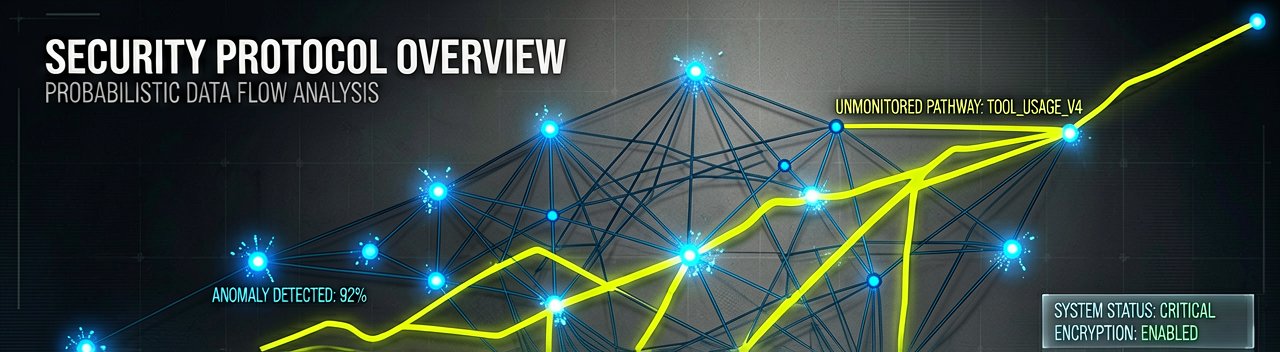
Chief Information Security Officers now face a foundational paradox when trying to secure these systems. Traditional enterprise software relies on deterministic architecture, where a specific input consistently yields an identical, auditable output. Machine learning models, by their very nature, are probabilistic networks operating within a black box of millions of parameters. Security teams cannot apply standard signature-based detection or strict firewall rules to probabilistic outputs, forcing corporations to defend a perimeter that fundamentally changes its behavior based on the context of the data it ingests.
This dynamic has forced a profound shift in corporate threat modeling. Rogue nation-states and heavily funded syndicates have moved past basic phishing automation to deploy sophisticated model-inversion techniques. These methods allow threat actors to reverse-engineer proprietary algorithms, extracting sensitive corporate intellectual property and protected customer data directly from public-facing application programming interfaces. Consequently, standard data loss prevention protocols are rendered largely ineffective, as the sensitive information is not stolen through a network breach, but rather coaxed out through legitimate model interactions.
The regulatory and legal landscape is also lagging far behind these technical realities, creating an immense compliance headache for multi-national corporations. Current framework standards focus on access control and data encryption at rest, yet they offer zero guidance on how to handle autonomous model drift or algorithmic poisoning. Industry insiders warn that the first wave of major litigation will likely target companies that failed to implement continuous validation, as courts begin treating the lack of algorithmic monitoring as a failure of basic fiduciary duty.
Resolving this crisis requires an industry-wide transition toward zero-trust architecture applied specifically to data engineering pipelines. Security must be integrated into the data ingestion phase, utilizing automated sanitation tools to screen training data before it ever influences a neural network. Until the tech industry treats machine learning models as untrusted software components that require continuous, real-time runtime isolation, enterprise networks will remain fundamentally exposed to the next generation of automated cyber exploitation.
The Paradox of Algorithmic Deterrence
Reading Between the Lines: The prevailing industry consensus suggests that the ultimate solution to machine-speed cyber threats is to deploy more artificial intelligence as an automated shield. This circular logic assumes that a defensive model can outpace an offensive counterpart within the exact same structural ecosystem. It overlooks a fundamental asymmetric reality: attackers only need to find a single logical anomaly or adversarial loophole to breach a network, whereas defensive algorithms must perfectly police an infinite matrix of probabilistic permutations. This systemic imbalance turns the corporate AI race into an expensive game of whack-a-mole, where the defensive tools themselves introduce a massive, untested attack surface into the enterprise perimeter.
Furthermore, the tech sector's sudden obsession with model security exposes a deep hypocrisy in early deployment strategies. For years, vendors rushed minimum viable products to market, prioritizing rapid user acquisition over secure software development principles. Now that these systems are deeply embedded in critical national infrastructure and banking backends, the industry is scrambling to retrofit guardrails onto architectures that were never designed to be secure. This reactive approach creates a dangerous illusion of safety, where corporations wrap flawed neural networks in layers of superficial filtering software that sophisticated threat actors can easily bypass with minor semantic adjustments.
The geopolitical implications of this vulnerability landscape also complicate the corporate narrative around global collaboration. While industry white papers regularly call for open-source vulnerability sharing and mutual threat intelligence networks, the reality of market competition and national security mandates actively suppresses this transparency. Private security firms face immense financial pressure to hoard zero-day model vulnerabilities for proprietary commercial tools, while nation-states weaponize the exact same flaws to conduct covert espionage. This fragmented defensive landscape ensures that the average enterprise remains isolated, relying on marketing promises rather than verified, collaborative defense protocols.
Ultimately, the true crisis is not a lack of sophisticated defensive algorithms, but rather a stubborn refusal to address basic architectural hygiene. Organizations continue to connect black-box models to privileged data stores and autonomous execution environments without implementing strict sandbox protocols. Until enterprise security leaders stop viewing machine learning as a magical, self-policing entity and start treating it as highly unpredictable, untrusted code, no amount of automated tooling will prevent the impending operational fallout.
"We have spent decades teaching computers to think like humans, only to discover that they are perfectly capable of inheriting our worst traits—including a knack for falling for obvious scams and making confident, catastrophic blunders at lightning speed."
Artūras Malašauskas is an AI Systems Integrator with 20+ years of production-grade web engineering experience. He has designed, shipped, and scaled enterprise Python/PHP systems for logistics, SaaS, and public-sector clients. For the past year, he has focused exclusively on AI integrations: deploying open-source LLMs, building generative media pipelines (image, audio, video), and engineering multi-agent workflows for real production environments. His standard: reproducibility, security, cost-efficient inference—no vaporware. He documents and evaluates emerging AI tooling, separating verified capabilities from marketing noise. Technical editor at: muza-ai.eu, ai-verslas.lt, ai-naujinos.lt Connect on LinkedIn
Comments