The Neocloud Revolution: How Upstart AI Cloud Providers Are Unbundling the Hyperscale Empire
The enterprise cloud infrastructure market is experiencing a profound architectural shift, driven by an unbundling of traditional computing resources. For nearly two decades, legacy hyperscalers like Amazon Web Services (AWS) and Google Cloud operated as all-in-one digital supermarkets, packaging raw compute alongside databases, networking, and developer tools. However, the unique, compute-heavy requirements of generative AI training and inference have exposed inefficiencies in this broad-spectrum model, paving the way for specialized, AI-first infrastructure providers.
Two prominent upstarts, CoreWeave and Lambda Labs, have emerged as specialized alternatives to legacy tech giants. By concentrating exclusively on graphics processing units (GPUs) and high-density cluster networking, these "neoclouds" eliminate the overhead costs and operational complexities native to general-purpose environments. This deliberate narrow focus allows enterprise engineering teams to achieve significant cost efficiencies while bypassing the restrictive allocation quotas imposed by traditional hyperscalers.
Stripping Down the Stack for Raw Performance
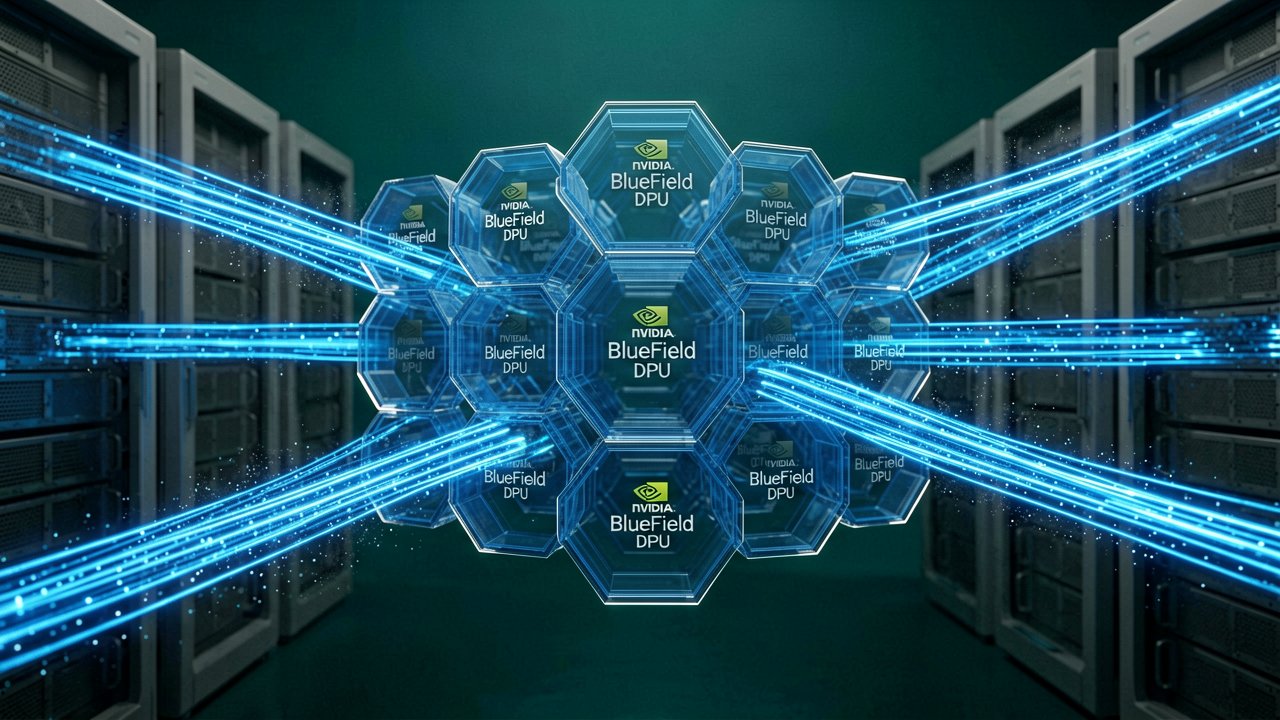
The primary advantage of these upstart providers lies in their purpose-built infrastructure layout. While traditional cloud giants route workloads through layers of virtualization software, specialized AI clouds prioritize raw speed. For instance, CoreWeave provides containerized capacity directly integrated with advanced hardware, enabling companies to interact with infrastructure via Kubernetes native tools. This framework, combined with specialized networking hardware like NVIDIA BlueField data processing units (DPUs), allows developers to run model architectures at near bare-metal performance levels.
Capital Expansion and the Infrastructure Backlog
To sustain their rapid growth and secure necessary hardware, these emerging providers have adopted aggressive capital strategies. According to data tracked by Sacra, CoreWeave's revenue backlog reached nearly $100 billion in early 2026, supported by major contract commitments from enterprise clients like Meta and Anthropic. To meet this immense demand, the company projected a 2026 capital expenditure budget of $30 billion to $35 billion, relying on specialized GPU-backed debt facilities and corporate credit markets to fund large-scale data center expansions.
Concurrently, Lambda Labs has pursued an aggressive growth trajectory to expand its footprint across frontier labs and enterprise data centers. Following a $480 million Series D funding round reported by CRN, Lambda Labs has focused on expanding its dedicated GPU cloud instances and software tools. By eliminating standard data ingress and egress fees, the provider has positioned itself as an optimal partner for multi-cloud strategies, allowing developers to move large training datasets freely without incurring the financial penalties typical of major hyperscalers.
Navigating Multi-Cloud and Execution Risks
As specialized cloud platforms become mainstream, the enterprise landscape is evolving into a hybrid ecosystem. Rather than abandoning legacy clouds completely, forward-looking engineering teams deploy a multi-cloud topology: hosting databases and standard web applications on AWS or Google Cloud, while offloading intense model training and inference pipelines to specialized GPU environments. This strategic separation helps mitigate long-term vendor lock-in and optimizes cost-per-token metrics.
Despite their momentum, these upstart providers face significant operational and financial tests. Their capital-intensive business models require continuous, flawless execution of data center builds amidst global power grid constraints and supply chain backlogs. However, by demonstrating that specialized infrastructure can deliver superior performance-per-watt and simpler scalability, these nimble contenders have fundamentally altered the competitive playbook of enterprise cloud computing.
What Most Industry Reports Miss: The Power Grid and Private Equity War
While mainstream analysis focuses entirely on chip allocations and software layers, the real battlefield between neoclouds and legacy hyperscalers has shifted to local utility grids and alternative financing structures. Generative AI clusters require up to five times the power density of traditional enterprise server racks, turning raw electrical capacity into the ultimate tech commodity. Upstart providers are outmaneuvering traditional tech giants not just through agility, but by pioneering unconventional infrastructure partnerships with independent power producers and industrial real estate trusts to lock down gigawatt-level energy pipelines before competitors can clear corporate bureaucratic hurdles.
This race for physical infrastructure has fundamentally changed the venture capital playbook. Because traditional equity financing cannot scale fast enough to fund tens of billions of dollars in data center construction, upstarts have turned to massive asset-backed debt facilities. By using prized hardware like NVIDIA Blackwell and Rubin platforms as collateral, these companies have unlocked institutional debt from major Wall Street private equity firms. This financial financial engineering allows them to build out global infrastructure footprints at a pace historically reserved only for trillion-dollar tech conglomerates, completely altering the barrier to entry for the cloud market.
From the perspective of enterprise engineering executives, the decision to migrate to specialized providers is driven by a desire to escape the hidden tax of legacy ecosystems. Traditional hyperscalers have long relied on high data egress fees to build artificial walls around their customer data. By offering free data transfers and flat-rate pricing models, specialized providers are enabling genuine multi-cloud architectures. Software engineering teams can now train foundational models within a lean, bare-metal GPU environment, then seamlessly stream the weights back to legacy platforms to run standard consumer-facing applications, shifting the balance of power back to enterprise buyers.
However, this rapid decentralization introduces a new layer of execution risk that seasoned infrastructure architects are watching closely. Legacy cloud giants possess decades of experience in global supply chain logistics, cooling systems engineering, and hardware redundancy. As specialized providers scale from niche clusters to massive hyperscale facilities, they must prove they can maintain high availability SLA targets amid global cooling fluid shortages and power grid instability. The long-term survival of these upstarts depends on their ability to transition from raw hardware brokers into resilient, enterprise-grade utility platforms capable of weathering operational turbulence.
Reading Between the Lines: The Illusion of Compute Democratization
The prevailing narrative frames the rise of specialized AI clouds as a democratization of compute, a triumphant breaking of the hyperscaler oligopoly. Yet a closer look at the underlying supply chain reveals a stark contradiction: enterprise buyers are merely trading one form of vendor lock-in for another. While these upstarts free clients from the software ecosystems of legacy tech giants, their entire business models are fundamentally dependent on a single hardware manufacturer. This extreme concentration creates an architectural monoculture where any delay in a single hardware roadmap immediately cascades across the entire neocloud sector, stalling enterprise development pipelines.
Furthermore, the long-term economic sustainability of the specialized cloud model remains unproven under traditional market conditions. The current profitability of these providers relies heavily on a persistent global shortage of advanced computing capacity and artificial premium pricing. As manufacturing capacities scale and massive hardware clusters come online globally, raw compute will inevitably commoditize. When profit margins compress, specialized providers will face the difficult task of funding their massive debt obligations without the high-margin software-as-a-service portfolios that allow legacy tech giants to subsidize their own infrastructure investments during market downturns.
This economic reality will likely force a strategic convergence between the two competing models over the next few years. To protect their market share, specialized providers are already rushing to build upstream software tools, developer platforms, and proprietary model registries—the exact type of ecosystem complexity they initially promised to eliminate. At the same time, traditional hyperscalers are restructuring their data centers to match the lean efficiency of their nimble challengers. Ultimately, the enterprise market may not witness the death of the legacy cloud, but rather a corporate evolution where upstarts either mature into the very conglomerates they sought to disrupt or are absorbed into them.
"We set out to liberate the tech world from the rigid, all-consuming ecosystems of the legacy cloud giants, only to discover that the ultimate prize for building the perfect, lean AI infrastructure is the privilege of spending the next decade quietly transforming into IBM."
Artūras Malašauskas is an AI Systems Integrator with 20+ years of production-grade web engineering experience. He has designed, shipped, and scaled enterprise Python/PHP systems for logistics, SaaS, and public-sector clients. For the past year, he has focused exclusively on AI integrations: deploying open-source LLMs, building generative media pipelines (image, audio, video), and engineering multi-agent workflows for real production environments. His standard: reproducibility, security, cost-efficient inference—no vaporware. He documents and evaluates emerging AI tooling, separating verified capabilities from marketing noise. Technical editor at: muza-ai.eu, ai-verslas.lt, ai-naujinos.lt Connect on LinkedIn
Comments