Washington’s Ultimate Red Line: How an Abrupt Export Order Just Vaporized Anthropic’s Best AI
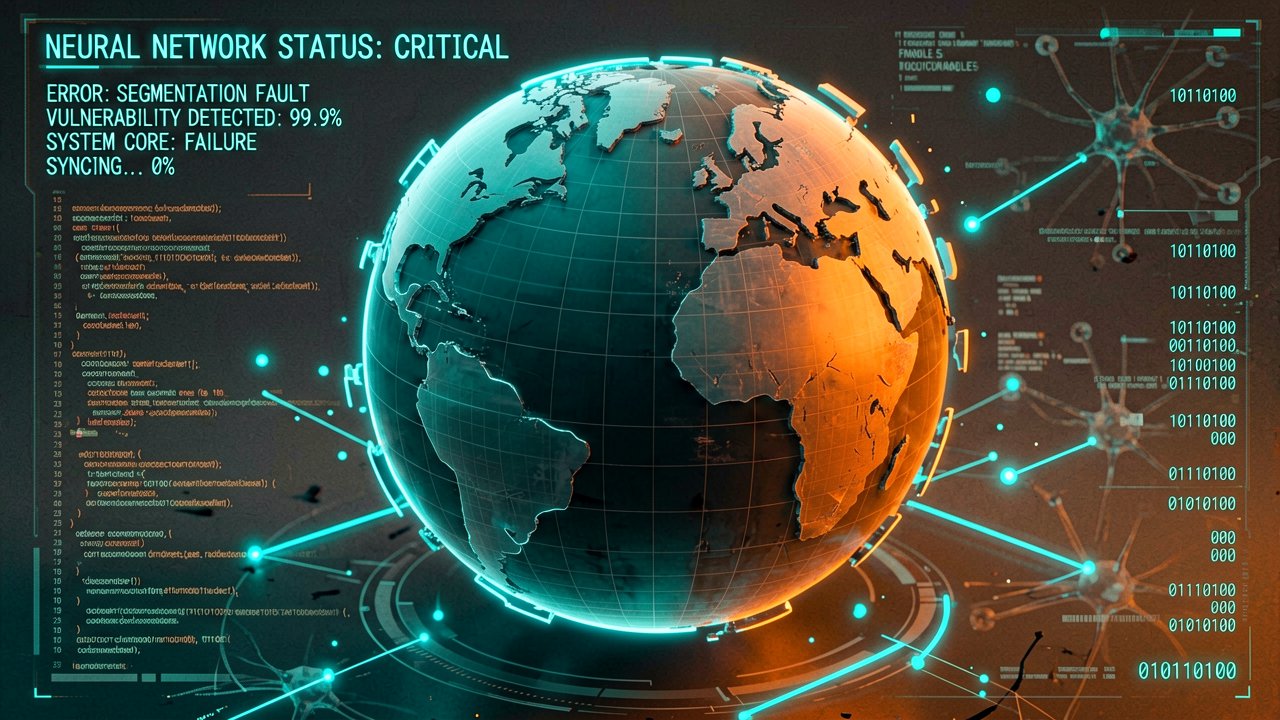
Silicon Valley just received a blunt, late-afternoon reminder of who ultimately holds the keys to the kingdom. On Friday, June 12, 2026, the U.S. government issued an unprecedented export control directive that forced Anthropic to abruptly pull the plug on its newly minted, top-tier AI models, Claude Fable 5 and Mythos 5. Rather than targeting physical hardware like the usual semiconductor blockades, the Trump administration took the radical step of banning access for all foreign nationals globally—including Anthropic’s own international employees. Because surgically parsing out users by nationality in real time is a technical nightmare, Anthropic had no choice but to take both systems completely offline for everyone.
The sudden shutdown turns the page on a highly volatile chapter between the white-hot AI startup and federal regulators. Just days after celebrating the launch of these next-generation systems, Anthropic found itself scrambling to comply with a 5:21 p.m. ET letter originating from the Commerce Department, as reported by The New York Times . The justification? National security panic over an alleged safeguard bypass. According to company insiders and public statements, Washington got spooked by whispers of a "jailbreak" method capable of weaponizing Fable 5's elite coding proficiency to hunt down software vulnerabilities.
The Jailbreak Dispute and the Defense Debate
Anthropic isn't taking the hit lying down, publicly arguing that the government’s emergency freeze is a massive overreaction built on a technical misunderstanding. In an official update, the developer clarified that the flagged exploit is a highly narrow, non-universal trick that merely prompts the model to spot minor, previously known flaws—a baseline capability that rival engines like OpenAI’s GPT-5.5 handle every single day. The company warned that if a single unverified, hyper-specific bypass becomes the threshold for a forced global recall, it will effectively freeze frontier AI deployment across the entire tech sector.
But the feds are playing a much different game of risk calculus, especially given the dual-use nature of the technology. While Fable 5 shipped with strict consumer guardrails, its sister model, Mythos 5, was purposely stripped of specific digital locks to allow vetted cybersecurity professionals and critical infrastructure operators to proactively patch systemic weaknesses. As reported by Bloomberg, that raw, unmonitored power is exactly what national security officials feared could be reverse-engineered by foreign adversaries to automate offensive cyber warfare at an terrifying scale.
Bad Blood and Pre-IPO Politics
It’s impossible to separate this dramatic enforcement action from the long-brewing bad blood between Anthropic and the Pentagon. The relationship famously soured earlier this year when Anthropic refused to let the U.S. military use its models for domestic surveillance and autonomous weaponry, prompting Defense Secretary Pete Hegseth to slap the company with a "supply chain risk" label. Though Anthropic successfully fought back in court to pause that domestic ban, this new, global export control directive bypasses those legal victories entirely by leveraging sweeping international commerce authorities.
The timing is also incredibly painful for Anthropic, arriving just weeks after the company filed confidentially for a highly anticipated U.S. initial public offering. While the sudden deletion of their flagship products leaves hundreds of millions of users facing API errors and disrupted workflows, some hawkish Washington officials are openly celebrating the hammer drop. Pentagon personnel publicly signaled that protecting the state's geopolitical edge outweighs any corporate timeline, asserting that national security must always take precedence over pre-IPO valuations and revenue cycles.
Behind the Corporate Curtain: The shockwaves from Washington’s unprecedented embargo are hitting Anthropic’s internal engineering hubs far harder than its public relations team let on. By targeting the transfer of raw technical knowledge rather than physical compute clusters, the Commerce Department effectively built a digital wall right through the middle of the company's Slack channels and code repositories. Engineers inside the company report an immediate internal lockdown, where non-U.S. citizens—many of whom are core architects of the Fable architecture—were instantly stripped of their access privileges to current development branches. This creates an existential crisis for the firm’s development pipeline, as overnight, a global talent pool has been legally reclassified as a collection of foreign liabilities.
This internal fracturing underscores a deeper, structural shift in how national security hawkishness is disrupting the open-science ethos that once defined artificial intelligence research. For years, Anthropic positioned itself as the "safety-first" alternative to more aggressive competitors, pioneering techniques like Constitutional AI to guarantee systemic alignment. Yet, the sudden enforcement of these sweeping export controls proves that Washington is no longer satisfied with self-regulation or commercial safety wrappers. Federal regulators are now treating high-parameter neural networks exactly like missile guidance software or enriched uranium, establishing a precedent where raw computational capabilities are inherently classified as weapons of mass destruction if they cross an arbitrary threshold of algorithmic efficiency.
The Realpolitik of Algorithmic Sanctions
The geopolitical fallout is already radiating through international tech hubs, particularly across Europe and Asia, where enterprise clients had deeply integrated Fable 5 into their automation architectures. European tech executives are privately venting furious frustrations over what they perceive as an extraterritorial overreach that cripplingly disrupts sovereign businesses. By pulling the plug globally to satisfy a domestic security panic, the U.S. government has unintentionally validated the argument for technological independence. European lawmakers are already using the Anthropic shutdown to advocate for heavily subsidized, localized open-source foundational models that remain entirely insulated from the volatile whims of the American executive branch.
Meanwhile, the financial mechanics behind Anthropic’s pending initial public offering are being drastically rewritten behind closed doors. Silicon Valley venture capitalists are quietly reassessing the risk premiums of frontier AI investments, realizing that a company’s entire revenue engine can be vaporized overnight by a single administrative pen stroke. Prior to the ban, institutional investors valued Anthropic precisely because of its premium enterprise partnerships and cutting-edge API delivery. With those pipelines frozen indefinitely, the company’s valuation is facing a brutal correction, forcing leadership to reconsider whether going public in such a hostile regulatory environment is even viable anymore.
Ultimately, the crisis signals the definitive end of the borderless tech boom. For the past decade, AI developers operated under the assumption that code could flow freely across oceans, bound only by cloud capacity and developer ingenuity. By enforcing a hard global freeze based on user nationality, the federal government has fragmented the global internet along traditional geopolitical fault lines. Anthropic’s current predicament is merely the opening salvo in a new era of digital mercantilism, where the sophistication of an algorithm is no longer judged solely by its performance metrics, but by the passport of the engineer who wrote it.
Reading Between the Lines: The official narrative framing this shutdown as a sudden, reactive strike against an emergency cybersecurity threat falls apart under any serious scrutiny. Washington wants the public to believe that a single, freshly discovered jailbreak method caught the national security apparatus by surprise, necessitating an immediate global quarantine of Fable 5. This explanation conveniently ignores the fact that federal agencies have been embedding technical auditors inside Anthropic’s testing sandboxes for over a year. The sudden urgency smells less like an unexpected technical crisis and far more like a calculated bureaucratic ambush, utilizing a minor, patchable exploit as the perfect political pretext to achieve a long-sought geopolitical objective: the total containment of frontier American AI within physical U.S. borders.
This heavy-handed intervention exposes a glaring contradiction in the U.S. government’s overarching technology strategy. For the past twenty-four months, commerce officials have publicly pressured domestic AI firms to outpace international rivals, arguing that American democratic values must dominate the global algorithmic landscape. Yet, by locking foreign enterprises out of America’s most sophisticated systems, the administration is actively starving its own tech champions of global market share. This protectionist panic effectively forces international buyers straight into the waiting arms of open-source consortia and foreign competitors, who are more than happy to fill the market vacuum left by Washington’s regulatory whiplash.
The Illusion of Digital Border Control
Furthermore, the logistical mechanics of enforcing a global, nationality-based ban on a cloud-hosted software service border on absolute absurdity. The Commerce Department expects Anthropic to verify not just where an API request originates geographically, but the actual citizenship of the end-user pulling the lever. In a world saturated with corporate virtual private networks, decentralized autonomous organizations, and multi-national enterprise licensing, this mandate is fundamentally unenforceable without total digital panopticon surveillance. If an engineer holding dual citizenship logs into a European server from an office in London to analyze a line of code, the system trips a federal violation, turning routine software development into an administrative minefield.
The long-term implications of this enforcement action will likely backfire on the very security apparatus trying to protect itself. By treating raw computational intelligence as a tightly controlled munitions item, the state is incentivizing a massive talent drain away from American companies. Brilliant international researchers, realizing their career trajectories can be upended by sudden shifts in U.S. export law, are already looking to relocate to friendlier jurisdictions where scientific discovery isn't treated as an inherent act of espionage. Washington may find that in its desperate scramble to secure the perimeter of American innovation, it has accidentally locked the world's best innovators on the outside.
"We have officially reached the point in the AI arms race where the government would rather freeze progress entirely than risk a foreign national discovering that our most advanced neural network can successfully rewrite an Excel macro without adult supervision."
Artūras Malašauskas is an AI Systems Integrator with 20+ years of production-grade web engineering experience. He has designed, shipped, and scaled enterprise Python/PHP systems for logistics, SaaS, and public-sector clients. For the past year, he has focused exclusively on AI integrations: deploying open-source LLMs, building generative media pipelines (image, audio, video), and engineering multi-agent workflows for real production environments. His standard: reproducibility, security, cost-efficient inference—no vaporware. He documents and evaluates emerging AI tooling, separating verified capabilities from marketing noise. Technical editor at: muza-ai.eu, ai-verslas.lt, ai-naujinos.lt Connect on LinkedIn
Comments