Landmark Video Game Labor Deal: Setting Precedents for Ethical AI and Performer Rights
The definitive ratification of the SAG-AFTRA 2025 Interactive Media Agreement marks a critical turning point in the commercial entertainment ecosystem. Securing an overwhelming 95.04% approval from union members, the pact officially resolved an arduous 11-month strike against industrial video game giants, including Activision Productions, Electronic Arts, and Insomniac Games. Beyond delivering an immediate 15.17% compounded wage increase alongside structured annual escalations through 2027, the contract’s true legacy rests upon its introduction of robust legal guardrails governing generative artificial intelligence.
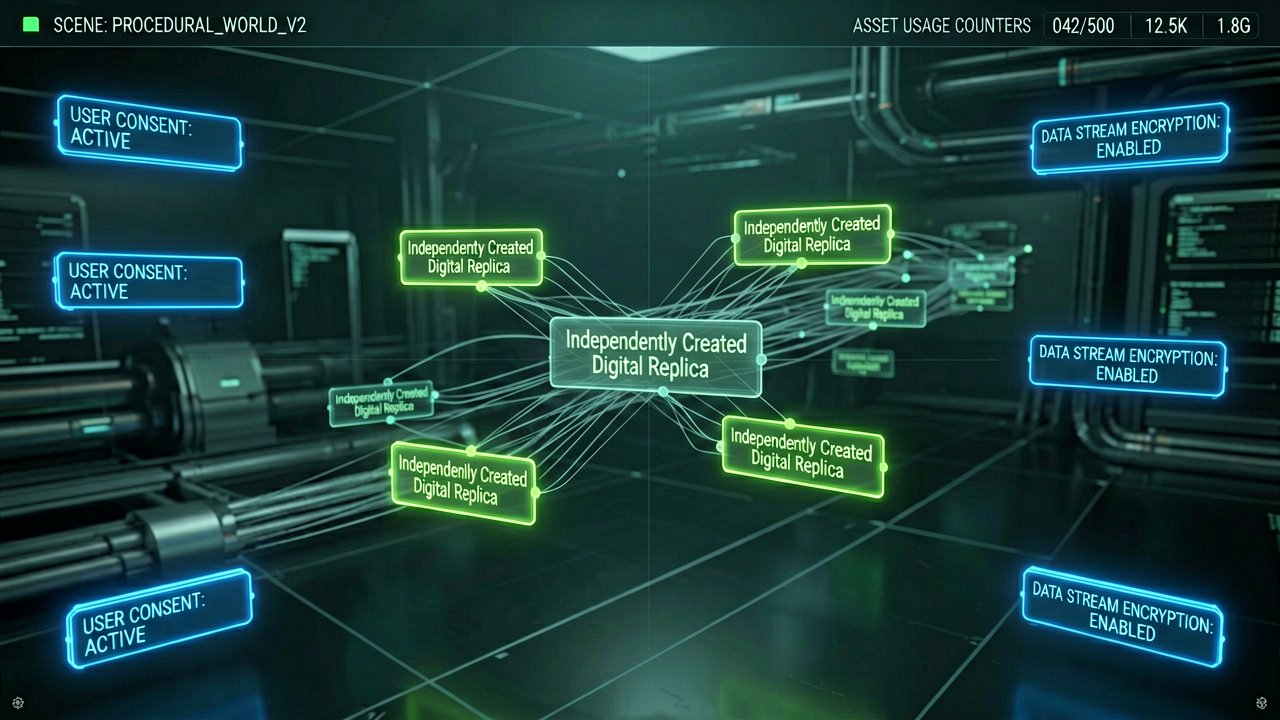
By establishing strict contractual rules for "Independently Created Digital Replicas," the agreement addresses the acute vulnerabilities of voice and motion capture performers whose likenesses are integrated into modern gaming engines. This framework institutes mandatory informed consent, clear disclosure practices, and a financial structure requiring studios to compensate actors at standard performance rates for any time spent generating synthetic media models. Consequently, the deal creates a scalable blueprint for intellectual property management, demonstrating that labor unions can protect creative assets without totally stifling technological deployment.
Strategic Shifts in Interactive Production
The operational realities of modern game development, which routinely utilize advanced motion capture, spatial scanning, and deep vocal datasets, have forced a reassessment of standard employment contracts. Under the new agreement, video game publishers can no longer treat human biometric data as an unregulated corporate resource. Performers now retain explicit, lifelong rights over their digital doubles, including the crucial leverage to suspend AI consent during active labor disputes. This transformation shifts the commercial balance of power, compelling production studios to factor long-term residual liabilities and licensing fees into their specialized talent procurement strategies.
Market Stabilization and Creative Continuity
This comprehensive labor resolution stabilizes an industry that was facing escalating friction between human performance and automated workflows. Major game developers can now advance multi-million-dollar production timelines with a clearer understanding of compliance costs, eliminating the threat of sudden voice actor walkouts or costly re-casting delays. Furthermore, the consensus achieved in this deal establishes an influential precedent for upcoming creative technology negotiations. It proves that clear legal guardrails can successfully balance studio efficiency with human labor protections in the age of generative automation.

Deep-Dive: The Biometric Frontier and the Realities of Digital Asset Ownership
Behind the Digital Double: The technical mechanics of the 2025 Interactive Media Agreement go far beyond basic voice recordings, fundamentally reshaping how video game studios handle human data. Modern AAA game development relies on a complex pipeline of facial scanning, spatial motion capture, and vocal modulation to build lifelike digital characters. Previously, actors frequently signed broad contract clauses that inadvertently granted studios the right to use their physical and vocal data for future, unspecified projects. The new contractual framework closes these loopholes by categorizing generative AI models into distinct, legally protected tiers. This shift forces video game publishers to treat a performer's physical movement data with the same strict copyright and licensing discipline historically reserved for high-profile intellectual property.
This structural change introduces serious operational adjustments for major game developers, who must now build comprehensive data-tracking systems into their asset management pipelines. Under the new rules, whenever a studio uses an "Independently Created Digital Replica" to generate new dialogue or animations, they must prove they have the performer's explicit, informed consent for that specific instance. Additionally, studios must maintain transparent logs detailing exactly how long a digital double is utilized in production. This level of oversight adds a new layer of administrative work to game development, driving up back-end software management costs for large publishers while establishing a clear paper trail to prevent unauthorized AI exploitation.
The business impact of these rules is causing mixed reactions across the video game industry. While prominent voice actors and motion capture professionals view the contract as a vital victory for human labor, some independent developers express concern over the growing regulatory burden. Smaller studios, operating on tight venture capital or indie budgets, worry that the legal overhead and mandatory minimum compensation rates for digital replicas could price them out of using advanced performance capture technologies altogether. Conversely, industry analysts suggest these clear boundaries will ultimately stabilize the market by removing the threat of costly copyright lawsuits and public relation crises over unethical AI practices.
Looking at the broader entertainment landscape, this video game labor agreement sets an important precedent for upcoming union negotiations worldwide. By successfully defining the legal boundaries of a performer's digital likeness, SAG-AFTRA has created a practical model that other creative sectors, such as localization houses, animation studios, and commercial broadcasters, are already looking to adopt. The contract proves that human talent and automated systems can coexist under a structured legal framework. This shifts the industry conversation away from fears of total job replacement and toward a more organized, regulated marketplace for AI-driven media production.

The Hidden Cost of Automated Performance
Reading Between the Lines: The overwhelming approval of the 2025 contract is being celebrated as a definitive victory for human creators, yet a closer examination reveals significant economic loopholes that could inadvertently accelerate the exact automation it aims to regulate. While the agreement establishes rigorous defenses for established performers, it simultaneously creates a stark financial divide within the industry. By forcing studios to pay premium licensing rates for human biometric data, the contract inadvertently incentivizes publishers to bypass human talent entirely for background roles, non-playable characters, and minor dialogue assets. Instead of hiring a diverse roster of entry-level actors, studios are highly motivated to invest heavily in purely synthetic, fully procedural AI characters that are completely unattached to any human origin, thereby avoiding the union's jurisdiction altogether.
This dynamic exposes a fundamental contradiction in the entertainment industry's approach to labor defense: protecting existing workers often closes the door for the next generation. Aspiring voice and motion capture actors traditionally build their portfolios through small, repetitive gig work, such as background grunts, localized crowd chatter, and generic combat vocalizations. Because these routine assets are now the prime targets for total procedural automation, the entry points into the professional gaming industry are rapidly disappearing. The industry risks evolving into a hyper-polarized landscape where a small elite tier of highly paid, heavily protected celebrity talent occupies the spotlight, while the foundational ecosystem that trains and sustains emerging human performers is systematically replaced by proprietary corporate algorithms.
Furthermore, enforcing these complex consent and compensation mandates poses a massive technical challenge that current industry infrastructure is ill-equipped to handle. In a sprawling AAA production involving hundreds of developers across multiple global outsourcing studios, tracking the precise origin, modification, and deployment of a single vocal dataset is a logistical nightmare. The industry lacks standardized, cryptographic tracing tools to guarantee that a piece of data scanned in 2025 isn't subtly repurposed by a subsidiary studio years later under a different asset name. Without foolproof, transparent auditing mechanisms, the union's hard-won legal protections remain largely reactive, leaving performers to rely on expensive, retroactive lawsuits to police violations that occur deep within proprietary game engines.
"We have successfully codified the principle that a human being owns their digital soul, which is a magnificent philosophical triumph—right up until the accountants realize that buying a completely synthetic soul from a software vendor is vastly cheaper and never calls in sick."
Artūras Malašauskas is an AI Systems Integrator with 20+ years of production-grade web engineering experience. He has designed, shipped, and scaled enterprise Python/PHP systems for logistics, SaaS, and public-sector clients. For the past year, he has focused exclusively on AI integrations: deploying open-source LLMs, building generative media pipelines (image, audio, video), and engineering multi-agent workflows for real production environments. His standard: reproducibility, security, cost-efficient inference—no vaporware. He documents and evaluates emerging AI tooling, separating verified capabilities from marketing noise. Technical editor at: muza-ai.eu, ai-verslas.lt, ai-naujinos.lt Connect on LinkedIn
Comments