When Anime Meets AI: Clair Obscur’s Fire Force Audio Revolutionizes Gaming Soundtracks
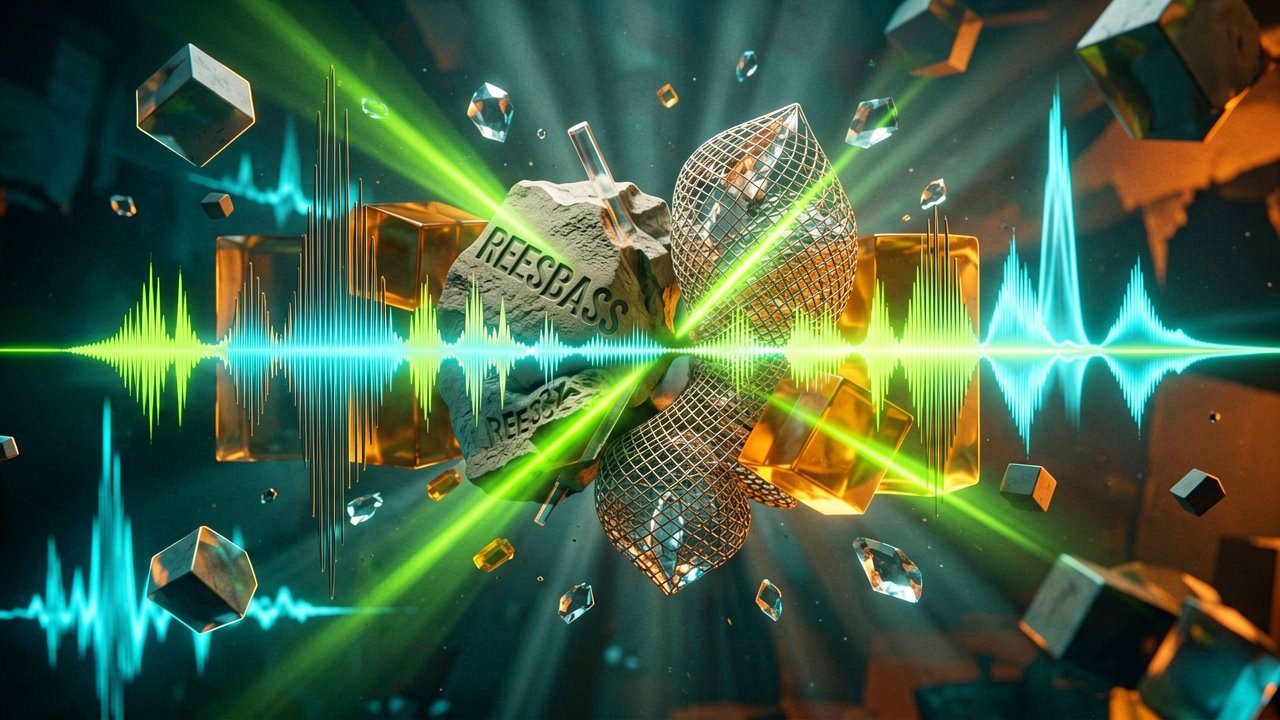
There is a specific, bone-rattling frequency that anime fans know all too well—the signature, pressure-cooked explosion sound from David Production’s adaptation of Fire Force. It is a sonic signature where the bass drops completely out of the world before detonating back into your skull with a violent, synthetic crackle. For years, this masterclass in sound design lived comfortably within the boundaries of late-night television. Now, it has officially breached the gaming world, permanently altering the way we experience turn-based combat dynamics.
As documented in a breakdown by games.gg, the development team behind Clair Obscur: Expedition 33 took the stage at a Game Developers Conference (GDC) post-mortem panel to peel back the curtain on one of the RPG's most spectacular features. Sandfall Interactive’s audio department confirmed what audiophiles had long suspected: their thunderous, bass-heavy, and deeply physical combat audio was directly inspired by the acoustic wizardry of the Fire Force anime. Instead of relying on traditional, orchestral fantasy swells, the studio opted for a high-impact, modern aesthetic that turns every single parry and spellcast into an absolute acoustic event.
The Anatomy of the Bass Drop
Traditional RPG design dictates that magic sounds magical—tinkling wind chimes, ethereal synth pads, and sweeping violins. Sandfall Interactive threw that playbook out the window. By embracing the hyper-compressed, punch-in-the-gut audio philosophy of modern Japanese animation, the developers managed to bridge the gap between passive viewing and interactive playing. When you execute a command in Expedition 33, the soundscape reacts with a violent kinetic energy, mimicking the rapid decompression of air that made the firefights of Tokyo's Special Fire Force Company 8 so profoundly memorable.
This approach transforms the rhythmic pacing of turn-based battles from a sterile menu-clicking exercise into a visceral, heavy-metal dance. Every successful block doesn't just register a numerical mitigation on screen; it hits with a concussive shockwave that justifies the title’s status as a masterclass in modern game design. The studio's willingness to look outside the echo chamber of western game development to find inspiration in Japanese animation showcases a deep, cross-media literacy that is sorely needed in today's mainstream landscape.

A New Standard for Interactive Audio
What makes this integration truly revolutionary is how it interacts with the game's broader mechanical systems. The sound design acts as an instantaneous feedback loop for the player, where the density of the bass and the clarity of the treble directly communicate the precision of your inputs. It forces you to listen to the battle rather than just watching health bars dwindle.
By blending the cinematic flair of anime sound design with the interactive demands of an RPG, Sandfall Interactive has set an entirely new benchmark for the industry. It proves that audio should never be a secondary thought or a passive accompaniment to pretty graphics. Instead, sound can be the very soul of the experience, carrying the momentum of the narrative and the weight of the gameplay in every single frame.
This sonic evolution signals a profound shift in how developers approach player immersion. The traditional boundaries separating linear animation from interactive media are dissolving entirely. In the past, video games sought to emulate Hollywood’s cinematic orchestral sweeps, chasing a classic blockbusting grandeur that often felt disconnected from the rhythmic pressing of buttons. By turning instead to the stylized, exaggerated dynamics of modern anime soundscapes, studios are tapping into a vocabulary that is inherently more suited to the twitch reflexes and high-velocity feedback loops of contemporary gaming.
The genius of adapting this hyper-stylized audio lies in its manipulation of silence. Just as the creators of Fire Force utilized the abrupt absence of sound to make the subsequent explosions feel exponentially heavier, the sound team behind Expedition 33 understands that a continuous wall of noise eventually dulls the senses. They carve out micro-seconds of complete dead air right before a major spell lands or a parry connects. This brief vacuum pulls the player forward, creating a psychological tension that shatters spectacularly when the bass finally drops, anchoring the player to the screen far more effectively than any visual effect could hope to achieve.

The Architecture of Virtual Weight
Giving weight to virtual actions remains one of the hardest challenges in game development. When an avatar swings a sword made of pixels against an enemy made of polygons, there is no real-world physics engine to provide resistance to the player's hands. Audio bridges this physical disconnect. The hyper-compressed, mechanical crunch utilized in this new wave of sound design creates a tactile illusion of mass and momentum. It tricks the brain into feeling the resistance of the armor, the heat of the flame, and the sheer inertia of the impact, elevating the entire experience from a simple simulation into something deeply physical.
This cross-pollination of mediums hints at a future where sound design is treated as a core pillar of game design from day one, rather than a polish pass applied in the final months of production. When audio is woven directly into the mechanical identity of a title, it dictates the pacing of combat, guides the player's focus, and provides a sense of satisfying finality to every victory. The success of this anime-inspired experiment will undoubtedly inspire other creators to look toward non-traditional sources, breaking the cycle of safe, predictable soundscapes and ushering in an era of unapologetically loud, creative audio experimentation.
The ultimate legacy of this audio revolution will be measured by how quickly the rest of the industry plays catch-up. For too long, gaming soundscapes have suffered from a crisis of caution, relying on safe, homogenized mixes that blur into the background of our collective memory. By treating sound as a weapon of pure kinetic impact rather than a passive ambient backdrop, pioneering studios are forcing a massive industry-wide realization. Sound design is not merely a tool for world-building; it is a critical mechanic that actively dictates how a game feels to play, transforming abstract button prompts into deeply satisfying, physical sensations.
This paradigm shift also challenges the long-held industry assumption that realism should always be the ultimate goal of technical design. Hyper-realism often leads to sterile acoustic environments that fail to match the grandiose, impossible feats occurring on our screens. Embracing the exaggerated, expressionistic auditory language of anime proves that emotional truth and mechanical satisfaction matter far more than strictly mimicking real-world physics. It liberates developers to experiment with texture, contrast, and structural silence, paving the way for a more adventurous and artistic approach to the interactive soundscapes of tomorrow.
Sounding Out the Future
As hardware capabilities expand and spatial audio technologies become standard across consumer devices, the potential for this high-impact philosophy will only grow. The studios that thrive in this new ecosystem will be those willing to break out of creative silos and draw inspiration from unexpected, stylized mediums. When developers stop trying to make games look and sound like traditional cinema, they unlock the true, unique strengths of interactive entertainment, creating worlds that are as unforgettable to listen to as they are thrilling to navigate.
Ultimately, the marriage of anime's sonic fearlessness with cutting-edge gaming engineering marks the end of the invisible soundtrack era. We are moving toward a future where a game's acoustic identity is just as recognizable and iconic as its visual art style or its box art. The bar has been permanently raised, and players will no longer settle for muted, forgettable audio mixes when they know their speakers are capable of delivering thunderous, world-shaking art.
In a medium defined by what we see, the smartest creators have figured out that the fastest way to a player's heart is actually through their eardrums—preferably with a bass drop that rattles their teeth.
Artūras Malašauskas is an AI Systems Integrator with 20+ years of production-grade web engineering experience. He has designed, shipped, and scaled enterprise Python/PHP systems for logistics, SaaS, and public-sector clients. For the past year, he has focused exclusively on AI integrations: deploying open-source LLMs, building generative media pipelines (image, audio, video), and engineering multi-agent workflows for real production environments. His standard: reproducibility, security, cost-efficient inference—no vaporware. He documents and evaluates emerging AI tooling, separating verified capabilities from marketing noise. Technical editor at: muza-ai.eu, ai-verslas.lt, ai-naujinos.lt Connect on LinkedIn
Comments