The Nostalgia Paradox: Why SEGA’s Crazy Taxi Reboot Captures a Market That Won’t Play It
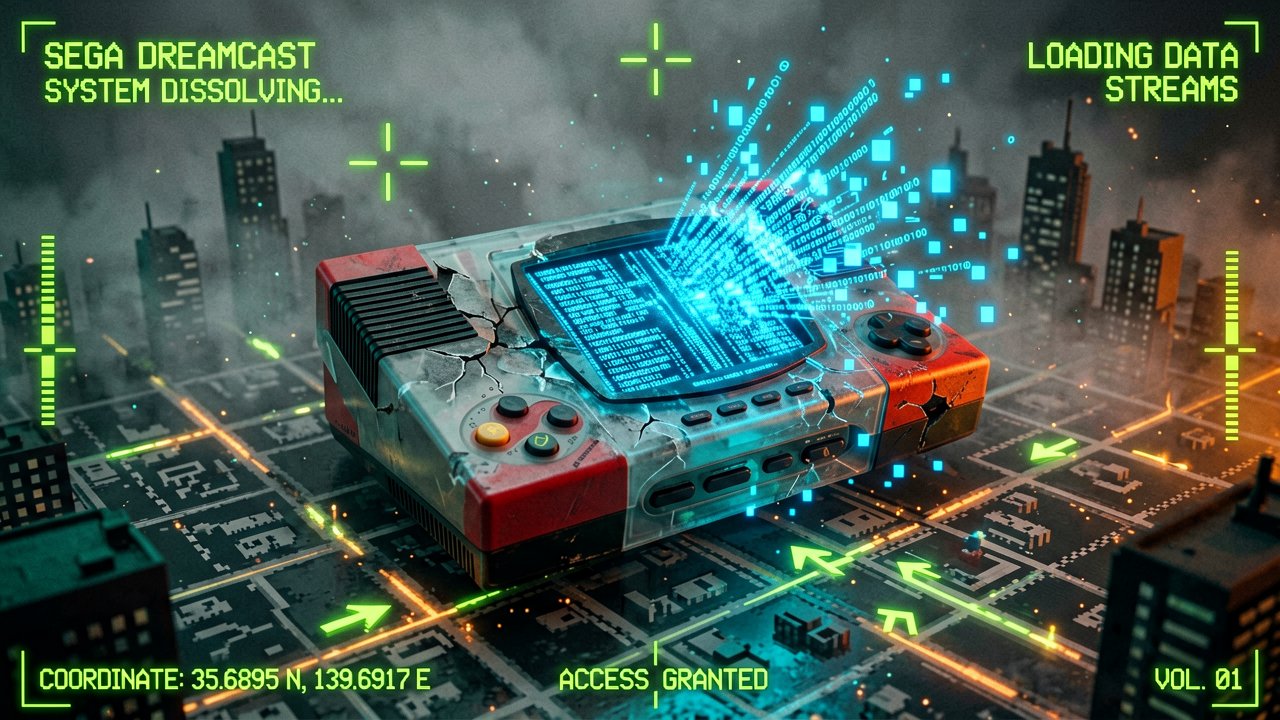
The official unveiling of Crazy Taxi: World Tour at the Xbox Games Showcase sparked an immediate wave of industry-wide nostalgia. Developed by VGC via SEGA's Sapporo Studio, the 2027 title signals a massive structural return to Dreamcast-era intellectual properties. Boasting original series creator Kenji Kanno and punk anthems from The Offspring, the announcement targets the emotional core of aging gamers. However, this explosive reception underscores a persistent paradox within the modern gaming landscape: intense audience celebration for legacy revivals that rarely translates into sustainable active player metrics.
SEGA’s contemporary strategy relies heavily on converting historic brand equity into modern ecosystem anchors. As detailed by IGN, Crazy Taxi: World Tour pivots from its traditional single-player arcade format into a large-scale, open-world multiplayer AAA game spanning five global cities. This structural shift highlights the demands of the current market, where high-budget projects require ongoing monetization and long-term player engagement to justify production costs. By embedding multiplayer modes and a story-driven campaign, SEGA attempts to stretch a format originally designed for three-minute arcade loops into an expansive, modern live-service ecosystem.
The core friction within this business model rests on the divergence between passive nostalgia and active gaming habits. While veteran players express immense joy seeing classic franchises revitalized, their current lifestyle constraints and preference for curated, narrative-driven experiences or established multiplayer giants often prevent actual long-term engagement. This creates a volatile market dynamic where critical mindshare and social media metrics misrepresent actual commercial viability, leaving publishers to navigate the delicate line between satisfying legacy expectations and building mechanics that attract a younger, monetization-friendly demographic.
The AAA Pivot and Scale Dilemma
Transforming a legacy arcade title into a triple-A release introduces severe mechanical friction. The original appeal of the franchise relied on instant mechanical feedback, bright aesthetics, and uncomplicated objectives. Elevating this framework into a multi-platform launch across PlayStation 5, Xbox Series X/S, PC, and Nintendo's successor console requires massive developmental bloat. Adding open-world progression, vehicle customization, and multiplayer lobbies risks diluting the hyper-focused loop that established the brand identity in 1999.

Generative AI and Cost Management Backlash
The commercial pressure of maintaining AAA standards for a revived niche genre has already forced controversial strategic compromises. Following the game's reveal, storefront disclosures confirmed that SEGA utilized generative AI support tools to build background assets, as reported by Eurogamer. Though the publisher clarified that all AI-assisted elements remained under strict human oversight, the ensuing community backlash highlights a sharp divide. Studios must balancing aggressive cost-reduction techniques against the hyper-critical ethical standards of the very core fans they are trying to attract.
Ecosystem Viability Across Legacy Portfolios
Crazy Taxi: World Tour does not exist in isolation, but serves as a spearhead for a broader corporate initiative. SEGA's roadmap includes major revivals for Jet Set Radio, Streets of Rage, Golden Axe, and Shinobi to establish a diversified pipeline of legacy IPs. The market success of this initiative hinges on whether these franchises can transcend their role as nostalgia-bait. They must secure a stable foothold among younger demographics who hold zero sentimental attachment to the original hardware eras.
The Mechanical Friction of Modernizing the Arcade Loop
What Most Reports Miss: The fundamental conflict of the Crazy Taxi revival does not lie in licensing punk rock soundtracks or rendering realistic cityscapes, but in the irreconcilable geometry of arcade game design versus modern live-service retention. Arcade games of the late 1990s were explicitly engineered for rapid friction, high difficulty, and brief three-minute loops designed to extract quarters. Translating that frantic, short-burst Dopamine hit into an expansive open-world multiplayer environment requires systemic changes that threaten to break the core gameplay loop. When a game mechanics engine is stretched to support progression systems, daily challenges, and battle passes, the purity of the original kinetic handling often suffocates under the weight of required corporate engagement metrics.
Historical precedent reveals that nostalgia is a highly volatile economic driver when decoupled from modern social ecosystems. Publishers frequently misinterpret viral social media enthusiasm for genuine market demand, overlooking the reality that the demographic driving the online conversation has transitioned into a life stage with highly restricted free time. These veteran players champion the return of Dreamcast-era aesthetics as a form of cultural preservation, yet their actual software consumption habits favor passive media consumption or isolated, short-session indie titles over demanding AAA multiplayer environments. Consequently, SEGA is building an expensive ecosystem for an audience that desires the memory of the product far more than the product itself.

This demographic divergence forces a severe identity crisis onto the development teams at Sapporo Studio. To recoup the massive capital expenditure required for a modern multi-platform release, the title must inevitably appeal to Generation Z and Alpha demographics, who possess zero emotional attachment to the original Naomi arcade hardware or the counterculture motifs of 1999. To these younger consumer groups, a game predicated entirely on driving fares from point A to point B risks looking like anachronistic design unless layered with complex extraction mechanics, competitive leaderboards, or collaborative open-world events. Striking a balance between the purist expectations of the vocal minority and the monetization habits of the silent majority remains an incredibly narrow tightrope.
Furthermore, the internal corporate pressure within SEGA to establish a unified "Super Game" framework introduces structural vulnerabilities. By bundling Crazy Taxi alongside legacy revivals like Jet Set Radio and Shinobi, the company is attempting to create a interconnected web of nostalgic intellectual properties that can share backend architecture and live-service tools. This centralized production strategy reduces overhead costs but exposes the entire portfolio to systemic brand fatigue if the initial flagship titles fail to find a sustainable audience. If the mechanical transition to open-world multiplayer alienates the core fanbase while failing to capture the modern competitive market, it could inadvertently stall SEGA’s broader long-term strategy for its legacy vault.
Ultimately, the true test for the industry will be whether modern development tools can successfully capture the raw, unpolished energy of the turn of the millennium without stripping away its identity. The reliance on generative AI for background assets highlights the tension between creative execution and fiscal reality in an era where asset creation costs are spiraling out of control. For a franchise that originally built its reputation on subverting corporate clean-cut sensibilities, utilizing automated corporate efficiency tools creates a poignant irony. The success of this experiment will determine if nostalgia can serve as a foundation for genuine mechanical innovation, or if it remains merely a marketing shield used to justify the homogenization of classic gaming history.
The Financial Illusions of Legacy Valuation
Reading Between the Lines: The gaming industry's current obsession with mining legacy intellectual properties exposes a deeper, structural desperation regarding original creative risk. Publishers treat established brands as bulletproof financial insurance policies, operating under the assumption that a recognized name inherently reduces customer acquisition costs in an oversaturated market. Yet, this strategy overlooks a stark financial reality: the cost of engineering a modern AAA multiplayer infrastructure effectively erases the historical cost-benefit advantage of utilizing pre-existing IP. By inflating a lean, arcade-perfect concept into a bloated live-service monolith, SEGA is compounding its financial risk rather than mitigating it, forcing a niche counter-culture relic to perform like a mainstream industry juggernaut.
This aggressive scaling creates an inevitable collision course with player monetization expectations. For a franchise traditionally built around the simple, unmonetized joy of driving erratically through virtual traffic, the introduction of modern monetization frameworks feels fundamentally invasive. To sustain an ongoing live-service model across multiple global cities, developers must introduce artificial progression barriers, seasonal cosmetic storefronts, and premium tier battle passes. This creates an irreconcilable contradiction where the game design must actively frustrate the player to incentivize spending, entirely destroying the frictionless, instant-gratification loop that defined the original Dreamcast experience.
The strategic reliance on automated asset generation tools further betrays the limits of this nostalgia-driven gold rush. While marketing campaigns rely heavily on the human, counter-culture authenticity of the original creators and licensed punk rock bands, the underlying production pipeline quietly pivots toward sterile, algorithmic efficiency to manage ballooning development timelines. This mechanical compromise exposes the ultimate irony of the modern industry revival trend. Publishers are selling an idealized, rebellious past to consumers while utilizing highly corporate, automated present-day methodologies, resulting in a product that risks feeling hollowed out at the exact moment it attempts to celebrate its heritage.
Optimism in the modern gaming market means loudly celebrating the return of your favorite childhood game on social media, while quietly praying someone else actually plays it enough to keep the servers running past launch week.
Artūras Malašauskas is an AI Systems Integrator with 20+ years of production-grade web engineering experience. He has designed, shipped, and scaled enterprise Python/PHP systems for logistics, SaaS, and public-sector clients. For the past year, he has focused exclusively on AI integrations: deploying open-source LLMs, building generative media pipelines (image, audio, video), and engineering multi-agent workflows for real production environments. His standard: reproducibility, security, cost-efficient inference—no vaporware. He documents and evaluates emerging AI tooling, separating verified capabilities from marketing noise. Technical editor at: muza-ai.eu, ai-verslas.lt, ai-naujinos.lt Connect on LinkedIn
Comments