ESA Warns 'No Fakes Act' Threatens Gaming Innovation by Blurring Deepfake Lines

The trade body representing the U.S. video game industry, the Entertainment Software Association (ESA), has formally expressed grave concerns regarding the current draft of the Nurture Originals, Foster Art, and Keep Entertainment Safe (NO FAKES) Act. In a critical letter dispatched to the U.S. Senate Judiciary Committee ahead of its scheduled markup, ESA President and CEO Stanley Pierre-Louis argued that the proposed legislation introduces a severe level of legal uncertainty that poses a direct threat to existing titles and the broader future of game development. The core of the trade association's warning focuses on the bill's inability to differentiate between malicious, unauthorized AI deepfakes and the standard, legitimate digital replicas that studios naturally integrate into interactive entertainment environments.
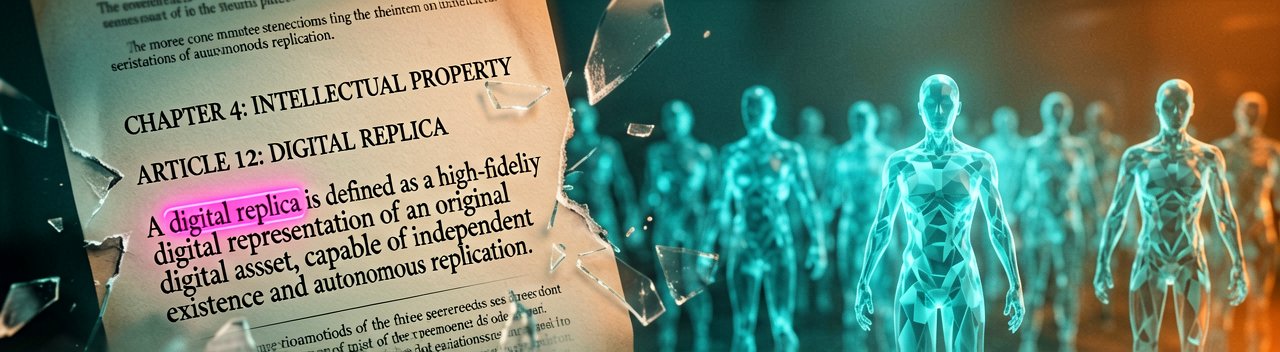
By establishing a broad federal intellectual property right over an individual’s voice and visual likeness, the NO FAKES Act aims to curb malicious synthetic media, but its sweeping definitions risk sweeping up benign creative practices. According to industry analysis published by GamesIndustry.biz, the ESA fears that the current legal language could inadvertently trigger a wave of frivolous lawsuits from individuals claiming a casual or coincidental resemblance to one of the thousands of background or non-player characters (NPCs) that populate modern, expansive game worlds. While large publishers would likely prevail in court, the looming threat of costly litigation could create a chilling effect across the domestic market, which contributes billions annually to national economic growth.
This pushback highlights a growing strategic divide between the gaming industry and other entertainment sectors, such as music and film, which have heavily lobbied for the bill's passage to protect talent from non-consensual simulation. As reported by GamesBeat, the video game sector relies uniquely on technical systems like voice synthesis, performance capture, and AI-driven procedural generation to build immersive experiences. Imposing an expansive, state-preempting federal identity right without clear exclusions for standard interactive entertainment pipelines could severely disrupt technical design workflows and penalize experimental systems before they have an opportunity to mature.
Chilling Effects on Procedural AI and Character Design
Modern video game production increasingly leverages advanced generative models and algorithmic pipelines to design photorealistic environments and diverse character rosters. If the law fails to precisely exclude simulated human attributes utilized within fictional contexts, developers face significant liability risks for simply using standard design tools. This ambiguity could force studios to scale back on highly complex, AI-driven background generation, flattening the visual diversity and systemic scale that players expect from next-generation software architectures.
Disruption of the Modding Ecosystem and Community Content
Beyond commercial development, the broad reach of the proposed statutory framework threatens the vital PC gaming modding culture. Independent creators frequently utilize voice synthesis tools to expand dialogue options or craft total conversion mods for older titles, essentially keeping legacy software alive through community participation. Subjecting community-driven platforms and individual hobbyists to a rigorous intellectual property framework could effectively dismantle grass-roots innovation, starving the wider industry of a historically essential talent pipeline.
The Imperative for Tailored Statutory Carve-Outs
To preserve domestic technological leadership, legislative bodies must introduce clear, robust exemptions that explicitly shield interactive expressive works from identity infringement claims, provided the depictions do not intend to deceive the public regarding real-world figures. Striking a functional balance requires crafting targeted protections against actual malicious misrepresentation without establishing a regulatory bottleneck. Without these necessary refinements, federal efforts to secure digital safety risk inadvertently anchoring the technical architecture of the interactive entertainment sector.
The Hidden Fault Lines of Digital Identity Rights
Beyond the Regulatory Horizon: The tension over the NO FAKES Act exposes a structural mismatch between traditional entertainment copyright law and the fluid mechanics of interactive software development. Hollywood studios and record labels generally operate on a linear model where an actor or musician’s likeness is captured for a singular, discrete performance with predefined commercial bounds. In contrast, modern game production regularly uncouples a performer’s physical and vocal identity from the final asset, breaking it down into raw telemetry and parametric data. This technical reality means a single motion-capture session can yield procedural physics data that populates hundreds of distinct virtual entities, complicating ownership claims and expanding legal vulnerabilities in ways existing federal frameworks are ill-equipped to handle.
This ambiguity places independent developers and mid-tier studios in a particularly hazardous position compared to industry giants. While major publishers maintain sophisticated compliance teams and extensive legal budgets to secure ironclad, long-term rights clearances from SAG-AFTRA performers, smaller teams rely heavily on flexible, modular asset pipelines. If the legal definition of a digital replica remains overly broad, indie studios could face catastrophic copyright notices or civil complaints over procedurally synthesized crowd noises or automated background meshes that superficially mirror real-world individuals. The mere threat of an injunction could stall independent distribution pipelines, chilling the exact segment of the market historically responsible for the industry's most disruptive aesthetic breakthroughs.

Historically, the video game sector has fiercely defended its status as a uniquely protected form of expressive media under the First Amendment, most notably established in the landmark 2011 Supreme Court ruling Brown v. Entertainment Merchants Association. Industry legal strategists argue that overreaching federal identity rights risk rolling back these hard-won protections by treating purely fictional, interactive depictions as commercial misrepresentations. If a studio can be penalized because an AI-generated non-player character accidentally adopts a cadence or facial geometry that resembles a real-world figure, the boundary between creative expression and statutory infringement completely dissolves, threatening to subject character design to an unsustainable regime of pre-clearance censorship.
Furthermore, this legislative friction threatens to disrupt the delicate ecosystem of user-generated content and Machinima creators who drive long-term player engagement on platforms like Twitch and YouTube. Game modifications that introduce custom voice lines or altered character appearances frequently sit in a legal gray area, tolerated by publishers because they extend the lifecycle of commercial software. Under a strict interpretation of the proposed federal right, platforms hosting these community-made mods could face aggressive automated takedown demands from third-party protection agencies. This would effectively choke off grass-roots technical communities and destroy a critical sandbox where emerging software engineers and digital artists hone their technical capabilities before transitioning into professional development roles.
The Paradox of Preemptive Protection
Reading Between the Lines: The legislative rush to codify federal identity rights overlooks a profound irony embedded within the entertainment ecosystem itself. While the ESA loudly warns that the NO FAKES Act will stifle the development of cutting-edge virtual worlds, the industry's own largest players have spent the last decade building systems designed to commodify human likeness on an unprecedented scale. Major publishers routinely lock talent into restrictive voice and performance contracts that surrender digital rights in perpetuity, effectively creating the exact corporate-controlled monopolies over digital personas that independent creators fear. The trade association's sudden positioning as a defender of organic innovation conveniently obscures a broader corporate desire to ensure that when human likeness is replicated or synthesized, it happens under the terms of a publisher's balance sheet rather than a federal regulatory body.
Furthermore, the argument that sweeping identity legislation will uniquely paralyze smaller indie studios ignores how tech monopolies already weaponize existing intellectual property frameworks. Digital distribution platforms utilize aggressive automated scanning algorithms to proactively remove content at the first hint of a copyright dispute, regardless of the underlying legal merits. Adding an amorphous, state-preempting right over vocal and visual resonance to this mix will likely result in thousands of legitimate, highly creative indie games being flagged by overzealous automated enforcement bots. The systemic failure of current digital storefronts to protect fair use suggests that adding a vague new category of infringement will simply formalize a corporate veto over experimental software design.
The skepticism directed toward Washington’s regulatory capability is not unfounded, given the legislative track record of applying analog-era legal concepts to fluid, decentralized digital ecosystems. Attempting to draft a law that neatly separates a malicious deepfake used in political disinformation from an AI-enhanced background character in a historical simulation assumes a level of technological literacy that federal statutes rarely possess. If the final legislation relies on subjective standards of intent or aesthetic similarity, the resulting judicial chaos will benefit only the elite class of entertainment litigators. By prioritizing a blunt, all-encompassing solution to a highly nuanced technical challenge, lawmakers risk anchoring the architecture of interactive entertainment to a rigid set of 20th-century legal definitions that the code itself has already outgrown.
"Ultimately, we are attempting to draft a permanent legal fortress around human identity using definitions that change every time an open-source model gets a new patch. In the end, the only certain outcome of trying to outlaw accidental virtual lookalikes is that video game protagonists will soon become aggressively generic, leaving us with a future populated entirely by legally unassailable, featureless grey boxes."
Artūras Malašauskas is an AI Systems Integrator with 20+ years of production-grade web engineering experience. He has designed, shipped, and scaled enterprise Python/PHP systems for logistics, SaaS, and public-sector clients. For the past year, he has focused exclusively on AI integrations: deploying open-source LLMs, building generative media pipelines (image, audio, video), and engineering multi-agent workflows for real production environments. His standard: reproducibility, security, cost-efficient inference—no vaporware. He documents and evaluates emerging AI tooling, separating verified capabilities from marketing noise. Technical editor at: muza-ai.eu, ai-verslas.lt, ai-naujinos.lt Connect on LinkedIn
Comments