OpenAI's Sora Shutdown Signals Shifting Winds in AI-Entertainment Partnerships

The abrupt discontinuation of OpenAI’s generative video platform, Sora, has sent shockwaves through both Silicon Valley and Hollywood, fundamentally rewriting the playbook for artificial intelligence integrations in mainstream media. By dismantling the standalone application and API infrastructure, OpenAI effectively voided a blockbuster three-year licensing agreement and a planned $1 billion equity stake from The Walt Disney Company. The historic deal, which was poised to let users legally generate short-form social videos utilizing over 200 iconic characters from franchises like Marvel, Pixar, and Star Wars, collapsed before ever reaching full commercial deployment.
According to reports from industry insiders, the operational realities behind generative video simply could not withstand the pressure of unsustainable unit economics. Independent market assessments indicated that Sora was losing an estimated $1 million per day due to staggering compute overhead, with a brief 10-second clip demanding roughly 40 minutes of GPU processing time across multiple Nvidia H100 chips, as detailed by Digital Applied. Confronted by soaring infrastructure expenses and minimal user retention after the initial novelty faded, OpenAI leadership chose to aggressively mitigate losses rather than subsidize a structurally unprofitable consumer ecosystem.
This dramatic course correction underscores a broader strategic pivot within the AI sector away from capital-intensive consumer "side quests" and toward predictable B2B enterprise capabilities. Reports published by the Wall Street Journal note that OpenAI is redirecting its massive hardware clusters to compete directly against agile rivals like Anthropic, focusing tightly on agentic capabilities, advanced logic, corporate data analysis, and autonomous coding tools. Meanwhile, Hollywood is left to digest a stark lesson regarding the volatile life cycles of cutting-edge tech platforms, signaling a new era where entertainment giants will likely demand rigorous pilot phases, strict cost-sharing metrics, and ironclad operational guarantees before tethering their multi-billion-dollar intellectual properties to unproven computing models.
The Reality of High-Inference Multi-Modal Compute
The core vulnerability that doomed Sora was the exponential cost curve inherent to processing temporal multi-modal data. Unlike text-based LLMs or static image generators, text-to-video architectures require a sustained and massive allocation of specialized hardware per rendering request. When demand escalated beyond expectations, the compute tax cannibalized resources required for OpenAI's core foundational models. Faced with the choice between powering speculative creative tools or stabilizing the infrastructure required for lucrative enterprise clients, corporate leadership opted to secure their foundational monetization pipelines.

Escalating Regulatory Risks and Trust Challenges
Beyond the structural financial deficits, the consumer-facing nature of the Sora application introduced severe legal vulnerabilities that modern tech enterprises are increasingly desperate to avoid. The platform faced intense, continuous pushback regarding moderation difficulties, particularly the ease with which bad actors could bypass guardrails to synthesize deepfakes and non-consensual imagery. With global regulatory bodies threatening severe financial penalties for platform-facilitated misinformation, the liability profile of maintaining an open video generator outweighed the projected consumer revenue.
Hollywood Rethinks the AI Gold Rush
For legacy media conglomerates, the collapse of this landmark venture marks a return to cautious pragmatism. The initial rush to partner with prominent AI developers was driven by a fear of missing out on the next digital distribution frontier and a desire to control how copyrighted assets were utilized in machine learning loops. Moving forward, major studios are pivoting toward localized, private cloud solutions and proprietary VFX automation tools. Rather than handing over valuable intellectual property vaults to third-party consumer platforms, the entertainment industry is shifting its focus to incremental, backend technological adoptions that protect brand equity and preserve traditional creative workflows.
Anatomy of a Failed Integration
Behind the Corporate Veil: The breakdown of the OpenAI-Disney alliance highlights a fundamental clash between the fast-moving experimentation of Silicon Valley and the risk-averse legal frameworks of Hollywood. While tech engineers prioritized rapid iteration and scaling user engagement, studio executives were increasingly alarmed by the platform's unpredictable output. Early testing revealed that the model frequently struggled with spatial consistency and physics, occasionally morphing or distorting copyrighted character models in ways that violated strict brand guidelines. For a company like Disney, which meticulously manages the public presentation of its intellectual property, these erratic rendering anomalies represented an unacceptable risk to multi-billion-dollar franchises.
Compounding these creative friction points was a simmering conflict over data governance and intellectual property provenance. Entertainment attorneys grew deeply uncomfortable with the lack of transparency regarding the foundational training data used to build the video model. As class-action lawsuits from artists and authors progressed through federal courts, media executives realized that deploying a co-branded platform could inadvertently expose their own companies to massive secondary copyright liability. The partnership ultimately dissolved not just because the technology was expensive, but because the legal frameworks governing AI training models remained too volatile for corporate boardrooms to absorb.
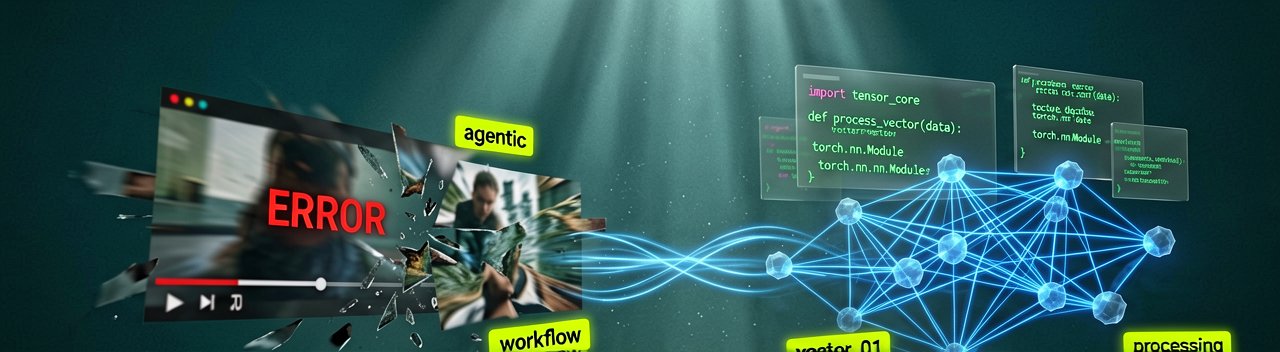
The financial architecture of the deal also created structural tension between the partners as market conditions shifted. The initial $1 billion valuation was heavily tied to the assumption that consumer monetization would scale rapidly enough to offset the astronomical inference costs. However, inside sources indicate that early user conversion rates from free tiers to premium subscriptions fell catastrophies below internal projections. As venture capital funding across the wider tech landscape began demanding clear paths to profitability rather than vague user growth metrics, OpenAI could no longer justify burning massive amounts of capital to subsidize a consumer entertainment experiment.
This operational collapse has triggered a significant reassessment among media conglomerates that once viewed generative AI as an immediate cost-cutting panacea. Production executives are shifting their focus away from open-ended, text-to-video platforms that attempt to generate entire scenes from scratch. Instead, investment is flowing toward specialized, pipeline-specific AI tools—such as automated rotoscoping, localized lighting adjustment, and predictive rendering-farm management—which offer measurable efficiency gains without threatening the traditional creative control of directors and animators.
The Mirage of Democratized Production
Reading Between the Lines: The consensus narrative framing the Sora shutdown as a mere casualty of high compute costs overlooks a more uncomfortable truth about the current state of generative video. For over a year, tech evangelists championed text-to-video platforms as the ultimate democratization of filmmaking, predicting a near-future where individual creators could bypass major studios entirely. The collapse of this landmark partnership exposes this vision as a fundamental misunderstanding of the entertainment ecosystem. Hollywood was never actually looking to democratize production; it was looking to automate its own expensive pipelines while maintaining absolute control over distribution, a goal that general-use public platforms are structurally unsuited to achieve.
This reality exposes a glaring contradiction in how tech companies pitch multi-modal AI to traditional media. OpenAI attempted to sell a tool that requires infinite flexibility, yet major studios demand rigid consistency. A creative director cannot build a franchise around a model that produces a slightly different character variation with every single prompt rewrite. By attempting to bridge the gap between a consumer plaything and an enterprise-grade production tool, the platform pleased neither segment. The shutdown demonstrates that building a generalized, omnivorous video generator is a strategic dead end for B2B monetization, forcing a retreat toward narrow, hyper-specialized machine learning utilities.
Furthermore, the collapse reveals the fragility of Silicon Valley’s "move fast and break things" ethos when applied to legacy intellectual property. Tech firms routinely treat copyright law as a hurdle to be cleared via retrofitted licensing agreements, assuming that sheer computational capability will eventually force legal compliance. However, entertainment giants have spent a century perfecting the art of litigious self-defense. By pulling the plug before facing an inevitable deluge of trademark disputes and creative union pushback, OpenAI effectively admitted that the legal liabilities of unconstrained AI generation currently outpace its commercial value.
The broader implication for the AI sector is a looming winter for high-concept multi-modal applications. As venture capital shifts away from subsidizing unprofitable rendering engines, other generative video startups will likely face identical financial reckonings. The industry is being forced to accept that video generation is not just a larger version of text generation; it is an entirely different class of logistical and financial burden. The future of AI in media belongs not to the platforms that promise to replace the director’s chair, but to the invisible backend software that makes the editing bay slightly more efficient.
"It turns out that teaching a machine the laws of physics and the nuances of copyright law simultaneously is an incredibly expensive way to discover that Hollywood still prefers its blockbusters made by humans—or at least by computers that don't crash the corporate budget before the first frame is even rendered."
Artūras Malašauskas is an AI Systems Integrator with 20+ years of production-grade web engineering experience. He has designed, shipped, and scaled enterprise Python/PHP systems for logistics, SaaS, and public-sector clients. For the past year, he has focused exclusively on AI integrations: deploying open-source LLMs, building generative media pipelines (image, audio, video), and engineering multi-agent workflows for real production environments. His standard: reproducibility, security, cost-efficient inference—no vaporware. He documents and evaluates emerging AI tooling, separating verified capabilities from marketing noise. Technical editor at: muza-ai.eu, ai-verslas.lt, ai-naujinos.lt Connect on LinkedIn
Comments