Apple’s AI Overhaul: A Strategic Reboot to Challenge Tech Giants in Consumer AI
Apple has officially enacted its most critical strategic pivot in over a decade by unveiling Siri AI alongside the next generation of Apple Intelligence at the Worldwide Developers Conference (WWDC 2026). This extensive overhaul effectively dismantles the rigid, command-based framework of Apple's legacy digital assistant, replacing it with a context-aware system capable of on-screen awareness, personal semantic understanding, and deep systemwide execution. Faced with years of development delays and mounting pressure from advanced generative ecosystems, Apple's late-stage intervention aims to rapidly close the gap with market pioneers and leverage its massive hardware distribution footprint.
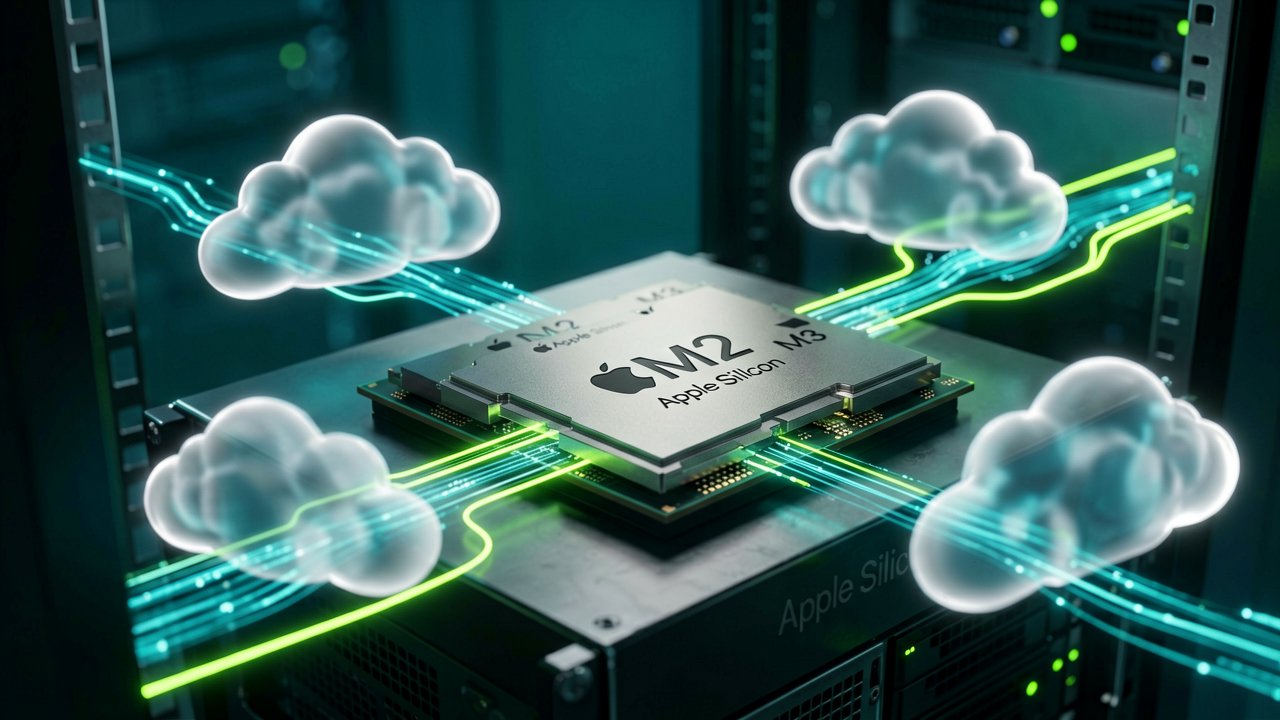
The strategic reboot represents a stark departure from Cupertino's traditional insular engineering philosophy. In a notable architectural compromise to secure immediate competitive footing, Apple has structurally bound its on-device foundation models with cloud infrastructure. This hybrid approach utilizes a custom variation of Google’s Gemini language models via high-priority data center agreements to process complex, broad-world queries. By anchoring this collaborative infrastructure within its proprietary Private Cloud Compute architecture, Apple attempts to preserve its core branding pillar of absolute user privacy while outsourcing the raw conversational intelligence required to rival hyper-scalers.
The Monetization Flywheel and Hardware Constraints
Unlike competitors who offer AI as isolated software applications, Apple is embedding Siri AI directly into the operating system layers of iOS 27, iPadOS 27, and macOS. According to an industry analysis by Investing.com , this deeper operating level allows Apple to establish a new monetization paradigm by tying advanced AI feature capacities, such as unrestricted image generation, directly to premium iCloud+ subscription tiers. Furthermore, because these advanced foundation models require heavy computational overhead, the features are strictly limited to premium hardware families like the iPhone 15 Pro, iPhone 16, and newer devices, creating an intense, manufactured supercycle for hardware upgrades.
Geopolitical Fragmentation and Market Headwinds
Despite the technological leaps showcased during the keynote, Wall Street responded with immediate pragmatic skepticism, causing Apple's stock to slip nearly two percent post-announcement. The primary market friction stems from an indefinite rollout timeline and steep regulatory barriers overseas. Per an official product announcement from Apple Newsroom, Siri AI will launch initially as a restricted developer beta before expanding to a broader public beta later in the year, leaving investors without an immediate commercial release date. More critically, ongoing compliance conflicts with the Digital Markets Act (DMA) in Europe and unresolved regulatory frameworks in China have locked Siri AI entirely out of two of Apple’s most vital geographic segments, severely curtailing the addressable user base at launch.
Architectural Validation and Developer Integration
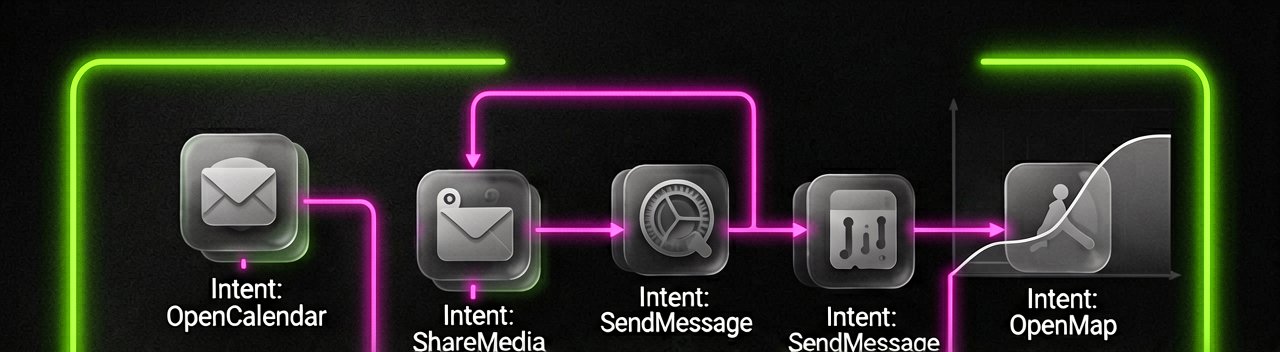
The technical architecture underpinning Siri AI establishes a highly sophisticated orchestration layer known as the App Intents framework. This framework gives the rewritten assistant the unprecedented ability to track context across successive prompts and execute multi-step voice actions within both native and third-party applications without requiring manual touch input. To maximize developer adoption, Apple has introduced updated intelligence frameworks designed to let ecosystem engineers plug external apps directly into Siri’s contextual engine. This move effectively positions Apple Intelligence not as an isolated conversational chatbot, but as an indispensable infrastructure layer tying consumer hardware to the broader digital services economy.
The Hidden Architecture of Apple's Cloud Compromise
What Most Reports Miss: The true friction in Apple’s AI transition lies not in the elegance of its on-screen software, but in the radical, invisible restructuring of its server supply chain. For a company that built its empire on local, sandboxed device security, the realization that on-device silicon could not independently process frontier-class generative models triggered an internal philosophical crisis. To maintain its privacy-first marketing narrative while deploying cloud-reliant features, Apple was forced to design Private Cloud Compute (PCC) from scratch. This custom server architecture utilizes Apple Silicon chips stacked in secure data centers, effectively extending the iPhone's Secure Enclave into the cloud. However, scaling this custom infrastructure globally has introduced massive logistical bottlenecks, forcing Cupertino to lean on third-party hyperscalers for raw computing power far more than executives publicly admit.
This reliance on external infrastructure has fundamentally altered Apple's leverage in partnership negotiations. While tech giants like Microsoft and Google have spent years absorbing the multi-billion-dollar capital expenditures required to build specialized AI data centers, Apple is playing catch-up in real-time server deployment. Industry insiders note that Apple’s agreements with partners to handle broad-world queries are less about mutual synergy and more about tactical necessity. Apple needs premium conversational capabilities immediately to prevent a mass user exodus to native AI hardware competitors, while its partners view the deal as an unprecedented customer acquisition pipeline, gaining direct access to the most affluent consumer base in the world through the iOS interface.
The internal cultural shift within Cupertino is equally jarring for long-time observers of the company's development pipeline. Historically, Apple has favored absolute secrecy and vertical integration, keeping software development entirely insulated until a product is flawless. The fast-moving nature of generative AI has shattered this methodology, forcing Apple to adopt the broader tech industry's "ship now, patch later" ethos. Deploying Siri AI as an extended beta with staggered geographic rollouts is a calculated risk that contradicts the perfectionism of the Steve Jobs and early Tim Cook eras. It reveals an organization acutely aware that in the current market, an imperfect but evolving AI ecosystem is infinitely better than a polished but obsolete product line.

Furthermore, developers are facing steep learning curves as they attempt to integrate their software with the new App Intents framework. While Apple promises seamless systemwide execution, third-party engineers report that making legacy applications fully readable and actionable by Siri’s contextual engine requires extensive code refactoring. Smaller development studios express concern that the high computational demands of Apple Intelligence will inadvertently favor massive tech conglomerates who have the resources to optimize their apps for Apple's local silicon constraints. If only elite apps can successfully leverage Siri's multi-step execution capabilities, Apple risks fracturing its App Store ecosystem into a two-tier market of AI-optimized giants and left-behind independent creators.
The Paradox of Privacy and Pragmatic Skepticism
Reading Between the Lines: Apple’s strategic pivot reveals a profound internal contradiction between its foundational marketing ethos and the inescapable realities of modern machine learning. For nearly a decade, Cupertino used data privacy as a competitive weapon, running advertisements that implicitly condemned rivals for harvesting user data in the cloud. By building Apple Intelligence around a hybrid model that offloads complex processing to external servers, Apple has fundamentally altered its stance. The company now asks consumers to trust a technical abstraction—Private Cloud Compute—to ensure that data leaving the device remains unreadable. This shift exposes an uncomfortable truth: in the generative AI era, absolute on-device isolation is no longer a viable engineering strategy if a company wishes to remain globally competitive.
This structural shift introduces significant vulnerability into Apple's closely guarded ecosystem security narrative. While the company promises that its outsourced cloud queries are completely anonymized and processed on customized silicon, the involvement of third-party infrastructure inevitably broadens the attack surface. Security researchers point out that maintaining zero-knowledge data integrity across complex, multi-hop cloud environments is notoriously difficult. If a major data leak or structural vulnerability occurs within Apple's cloud partnerships, the reputational fallout will hit Apple disproportionately. Consumers who purchased premium iPhones specifically for their ironclad privacy assurances may find the company's new architectural compromises difficult to reconcile with past promises.
Financially, Wall Street's long-term optimism rests on the assumption that Siri AI will spark an unprecedented hardware replacement cycle, yet this logic overlooks shifting consumer psychology. The restriction of advanced AI features to the latest premium chipsets is a transparent attempt to force upgrades among users holding onto older devices. However, early consumer sentiment suggests that a smarter digital assistant and on-screen text summarizing tools may not be disruptive enough to justify a thousand-dollar hardware investment. Unlike the transition from 3G to 4G, or the introduction of larger screen sizes, generative software improvements feel incremental to the average consumer. If the public perceives these updates as mere software luxuries rather than essential utilities, the anticipated supercycle could easily flatten into a standard, prolonged upgrade curve.
Ultimately, Apple's late entry into the consumer AI race positions it not as an innovator, but as an aggressive consolidator. By allowing competitors to absorb the immense initial capital expenditures, legal liabilities, and public relations blunders of early LLM deployments, Apple successfully minimized its upfront risk. Now, it seeks to commoditize their raw intelligence models by wrapping them in a polished, system-level user interface. This strategy has worked for Apple in the past with MP3 players, smartwatches, and tablets. However, because generative AI relies on continuous data velocity and massive cloud scale rather than elegant industrial design, Apple may find that dominating this new landscape requires a continuous submission to external technologies that it can neither fully control nor entirely own.
"In the end, Apple has achieved the ultimate tech magic trick: convincing the world that outsourcing its most complex artificial intelligence to competitors is actually a groundbreaking victory for hardware sales and user privacy."
Artūras Malašauskas is an AI Systems Integrator with 20+ years of production-grade web engineering experience. He has designed, shipped, and scaled enterprise Python/PHP systems for logistics, SaaS, and public-sector clients. For the past year, he has focused exclusively on AI integrations: deploying open-source LLMs, building generative media pipelines (image, audio, video), and engineering multi-agent workflows for real production environments. His standard: reproducibility, security, cost-efficient inference—no vaporware. He documents and evaluates emerging AI tooling, separating verified capabilities from marketing noise. Technical editor at: muza-ai.eu, ai-verslas.lt, ai-naujinos.lt Connect on LinkedIn
Comments