Strategic AI Integration in Consulting: Dennis Zhang's Move to Compass Lexecon Foretells Industry Shifts
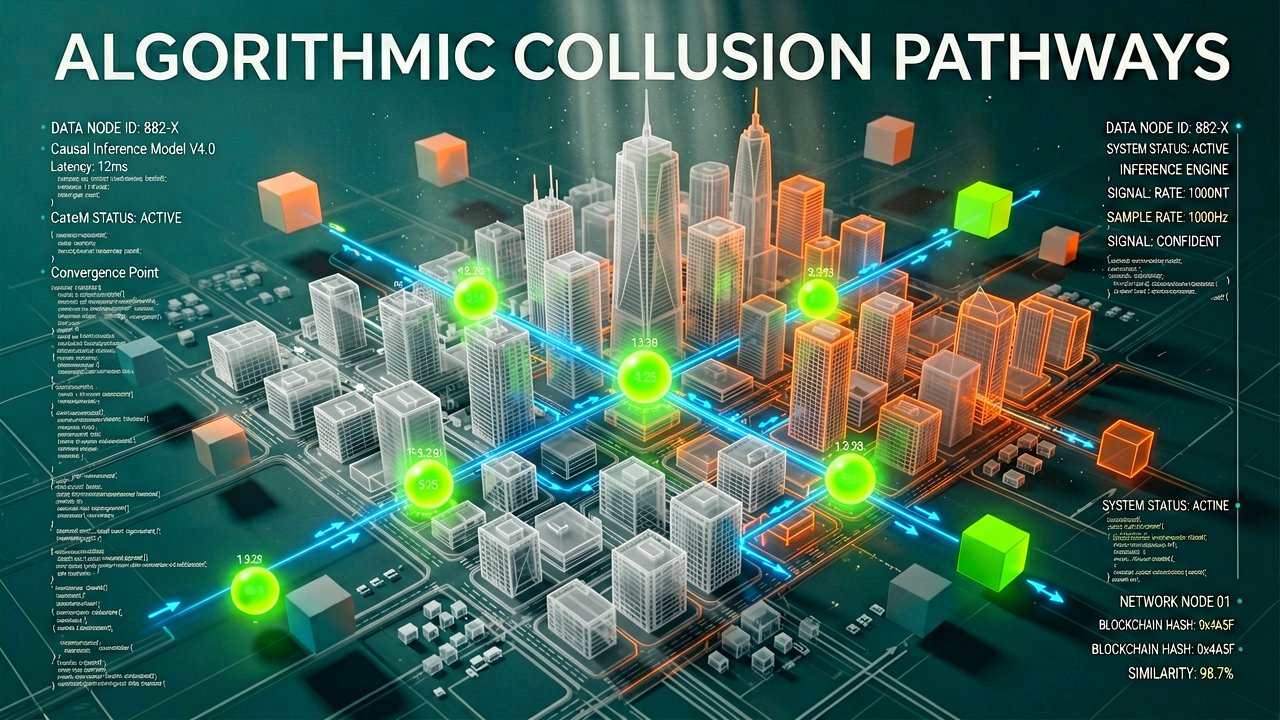
The global economic consulting landscape is experiencing a profound paradigm shift as algorithmic markets and artificial intelligence increasingly dictate the terms of corporate competition. Highlighting this transformation, prominent economic consulting firm Compass Lexecon announced the strategic affiliation of Dennis Zhang, a leading professor and expert in machine learning, digital platforms, and the economics of AI-powered business tools. This partnership signals a broader market trend where technical data science capabilities are no longer just supporting tools, but foundational pillars required to resolve high-stakes regulatory and antitrust disputes.
As modern corporations integrate algorithmic pricing, generative AI, and agentic coding workflows, antitrust regulators and legal teams face highly sophisticated operational environments. Experts like Zhang, who serves as a Professor at Washington University in St. Louis and previously worked at Google, bring deep academic and empirical research regarding how algorithms shape consumer and supplier behavior. The integration of such specialized personnel indicates that major firms must deploy advanced data modeling to properly analyze platform performance, marketplace design, and digital governance in courtrooms and regulatory hearings.
The Intersect of Machine Learning and Antitrust Litigation
Modern regulatory scrutiny requires data-driven verification that traditional economic models cannot fully address alone. The proliferation of digital platforms and online marketplaces has introduced complex variables in consumer-facing markets, making algorithmic transparency a focal point of antitrust litigation. By securing top-tier computer science and operations expertise, economic consulting firms can dissect proprietary machine learning models to assess market power and competitive equity.
Expanding Capabilities in Algorithmic Market Strategy
Corporate clients face significant data challenges when defending their market strategy or navigating antitrust investigations. Specialized experts provide the necessary technical validation by designing large-scale field experiments and measuring the empirical efficacy of advertising, privacy features, and recommender systems. This analytical depth allows businesses to align their technological deployments with evolving public policy expectations and global regulatory frameworks.
Broader Strategic Shifts in the Economic Consulting Industry
The affiliation reflects a competitive push among premier expert services groups to capture market share in technology-focused litigation. Major global entities, backed by parents like FTI Consulting, are aggressively scaling technical teams to meet these cross-disciplinary challenges. As algorithms move to the center of commercial friction, the firms that embed advanced machine learning capabilities directly into their core practices will define the future of corporate and regulatory strategy.
The Technical Imperative in Regulatory Warfare
Behind the Scenes: The hiring of top-tier artificial intelligence and machine learning specialists by elite economic firms is not merely an expansion of capabilities, but an essential response to a fundamental shift in regulatory enforcement. Historically, antitrust cases relied on static economic models, financial statements, and traditional market definition frameworks to prove or disprove anti-competitive behavior. Today, corporate strategy is dictated by dynamic pricing algorithms, black-box recommendation engines, and proprietary data lakes that adjust market variables in real time, making legacy investigative techniques obsolete.
Regulators globally are adapting to this shift by deploying their own technical teams to scrutinize the hidden logic of digital gatekeepers. When antitrust authorities investigate how a digital marketplace ranks third-party merchants or how automated pricing software aligns competitor behaviors, they are no longer just looking at corporate emails. They are demanding source code, model training histories, and data inputs. To counter or support these highly technical investigations, consulting firms require experts who can sit across from government data scientists and match their algorithmic scrutiny line for line.
This evolving dynamic has fundamentally changed what corporate legal teams require from expert witnesses. In complex litigation, a traditional academic economist may lack the programming expertise required to audit millions of lines of code or replicate a deep learning system. By embedding scholars who possess dual mastery in both empirical economics and advanced computational data science, advisory firms can build robust defenses that explain not just the financial outcome, but the underlying algorithmic mechanisms that produced it.
Furthermore, this integration addresses a growing corporate anxiety regarding compliance by design. Major platforms are increasingly seeking proactive counsel before launching new AI tools or algorithmic features to ensure they do not inadvertently trigger regulatory red flags. The role of the technical consultant has thus expanded from retroactive litigation defense to proactive algorithmic auditing, positioning specialized experts as crucial architects of corporate risk-mitigation strategies in an increasingly hostile regulatory environment.
The Reality Behind the Algorithmic Shield
Reading Between the Lines: The aggressive recruitment of machine learning academics by elite economic consultancies creates a comforting illusion of scientific objectivity in a highly subjective domain. While firms position these high-profile affiliations as a technological leap forward, the inherent nature of litigation consulting remains unchanged. Highly complex algorithmic models are highly malleable, meaning that two opposing experts using the exact same data sets and machine learning architectures can still arrive at diametrically opposed conclusions regarding market manipulation or consumer harm.
This reality exposes a glaring contradiction within the consulting sector's embrace of artificial intelligence. Consultancies boast that automated systems and deep learning models eliminate human bias and deliver undeniable, empirical truth to the courtroom. Yet, the entire business model of legal consulting relies on tailoring analytical frameworks to favor a specific client's position. Adding layers of neural network complexity to an antitrust defense may not actually provide clearer answers; instead, it frequently serves to obfuscate straightforward economic realities behind a wall of technical jargon that judges and juries are ill-equipped to challenge.
Furthermore, the long-term efficacy of these academic partnerships faces significant operational hurdles. Universities and tech giants operate on entirely different timelines and incentive structures compared to billable-hour litigation environments. A proprietary machine learning model developed in a vacuum often fails to account for the chaotic, uncleaned data realities of legacy corporate infrastructures. Consulting firms risk treating these specialized experts as marketing trophies to win mandates, while the actual heavy lifting of data cleaning and basic econometric modeling continues to fall on junior analysts using traditional spreadsheets.
Ultimately, this technological arms race will likely accelerate a bifurcation in the regulatory landscape. Wealthy corporate defendants will deploy increasingly impenetrable algorithmic defenses that only the most well-funded regulatory bodies can afford to dissect. This creates an environment where legal outcomes are determined not by the merits of the case, but by which side possesses the computational budget to sustain an endless war of attrition between competing neural networks.
Replacing a room full of expensive lawyers with a room full of expensive algorithms doesn't actually settle the debate; it just ensures that when the market breaks, the explanation will be delivered in Python code that absolutely nobody in the courtroom understands.
Artūras Malašauskas is an AI Systems Integrator with 20+ years of production-grade web engineering experience. He has designed, shipped, and scaled enterprise Python/PHP systems for logistics, SaaS, and public-sector clients. For the past year, he has focused exclusively on AI integrations: deploying open-source LLMs, building generative media pipelines (image, audio, video), and engineering multi-agent workflows for real production environments. His standard: reproducibility, security, cost-efficient inference—no vaporware. He documents and evaluates emerging AI tooling, separating verified capabilities from marketing noise. Technical editor at: muza-ai.eu, ai-verslas.lt, ai-naujinos.lt Connect on LinkedIn
Comments