The AI Control Gap: Why CIOs Face an Accountability Reckoning in the Agentic Era

Enterprise artificial intelligence has shifted rapidly from localized experimentation to autonomous, decentralized deployment. This acceleration has triggered a severe structural mismatch inside modern corporations. A comprehensive global study released by the IBM Institute for Business Value reveals that two-thirds of surveyed chief information officers and chief technology officers are now held legally and operationally accountable for AI systems that they do not fully control. As business units bypass centralized IT departments to integrate specialized tools, corporate governance frameworks are failing to scale alongside technology infrastructure.
This organizational friction point is intensified by a mandate from executive leadership. The research indicates that 80% of technology executives face explicit, CEO-driven pressure to execute widespread AI transformations. However, a mere 11% of respondents report feeling fully prepared for the massive scale of autonomous AI agent deployment expected over the next year. This disconnect leaves corporations vulnerable to unmonitored operational liabilities, as 70% of technology leaders acknowledge that various business departments are installing digital systems faster than corporate IT departments can track them.
The financial and technical stakes are rising as enterprise AI budgets continue to expand. Projections show that AI spending will surge from just under 15% of total IT budgets in 2025 to nearly 25% by 2027. Despite this capital surge, 85% of technology executives still lack real-time visibility into their exact corporate AI expenditure. This massive visibility gap undermines fiscal control and increases risk metrics, demonstrating that traditional manual compliance oversight cannot adequately supervise fluid, agentic models that function continuously and independently.
The Rise of Autonomous Incidents and Security Risks
The rapid scaling of uncoordinated AI ecosystems introduces substantial systemic fragility. Organizations surveyed by the IBM Institute for Business Value suffered an average of 54 distinct AI agent incidents within a single calendar year, all requiring human intervention to rectify. Out of these recorded operational anomalies, 17% were categorized as severe, demanding more than four hours of intensive remediation to contain properly. The real-world consequences of these failures are hazardous to corporate security: 37% of the incidents resulted in direct data exposure or severe security breaches, 33% triggered cascading software system failures, and 17% led to immediate regulatory compliance violations.

Security and compliance vulnerabilities now represent the primary hurdle for 59% of technology executives attempting to scale their digital initiatives. When corporate governance remains entirely manual, incident rates rise proportionally alongside the volume of deployed AI code. Conversely, enterprises that systematically integrate digital guardrails and automated oversight capabilities into their platform architectures from inception suffer 25% fewer operational failures, showcasing a clear engineering pathway toward mitigation.
Financial and Operational Rewards of Built-In Governance
Adopting automated, structural governance delivers measurable advantages that extend far beyond simple risk avoidance. Strategic data indicates that forward-thinking organizations incorporating automated control mechanics directly into their AI networks successfully deploy 16 times more autonomous agents than competitors relying on slow, manual review boards. Furthermore, these automated oversight frameworks maximize resource utilization, allowing corporations to spend four times less of their dedicated AI budgets while simultaneously realizing an 18% lift in overall operating margins.
Rigorous financial discipline regarding machine learning operations correlates directly with overall enterprise readiness. Corporate technology leaders who maintain strict cost transparency deploy 2.4 times more AI agents without demanding budget increases, and they are three times more likely to report full readiness for enterprise-wide scaling. Early infrastructural design choices also dictate the ultimate return on investment; enterprises that prioritize architecture adaptability, portable workloads, and replaceable models achieved a 10% higher return on AI capital investments, insulating themselves from expensive vendor lock-in as the global marketplace evolves.
Behind the Scenes of Shadow AI: The Disconnect Between Ownership and Liability
What Most Reports Miss: The tension paralyzing corporate technology offices is not a simple technical glitch, but an architectural and cultural division over who owns the software stack. Historically, the chief information officer maintained absolute dominion over corporate applications by managing procurement, infrastructure, and server environments. However, the rise of modern cloud architectures and software-as-a-service configurations allows individual business departments to easily provision and integrate agentic models independently. As noted by analysts at CIO, this business-led adoption bypasses central IT tracking entirely, yet the responsibility for data breaches, budget overruns, and security failures invariably rolls back to the tech leadership team.
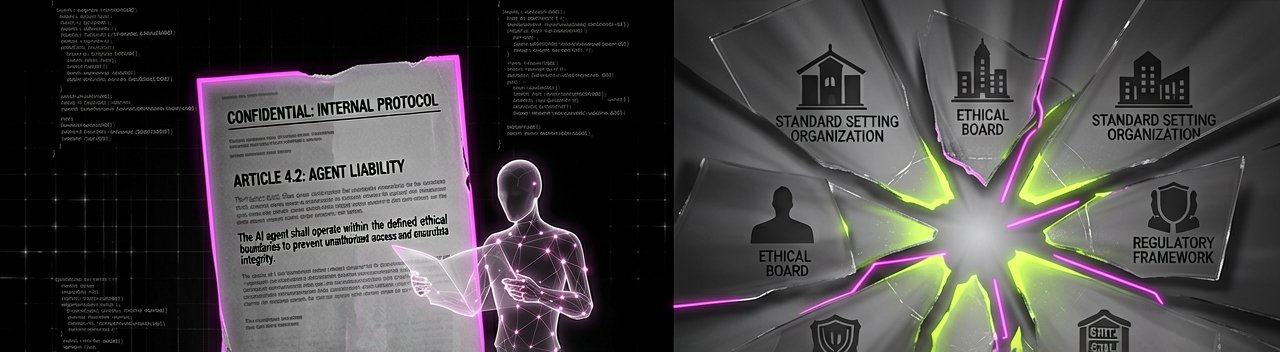
This dynamic introduces a distinct structural paradox where accountability does not migrate alongside the deployment of software. Line-of-business managers routinely configure autonomous digital workflows to optimize specialized unit productivity without considering enterprise security protocols. If an unauthorized autonomous agent exposes sensitive customer data or triggers a compliance penalty, boardrooms holding tech executives legally and operationally liable expect immediate remediation. Tech leaders are effectively forced into the high-risk business of risk oversight and governance for complex systems that they did not purchase, build, configure, or explicitly approve.
The operational landscape is further complicated by the technical nature of modern agentic workflows. Previous iterations of enterprise software operated within predictable, rule-based guardrails that sat on top of static data structures. Modern autonomous agents execute multi-step workflows, adjust parameters independently, and dynamically interact across several federated cloud environments simultaneously. Managing these systems demands real-time software observability rather than traditional manual compliance checklists. Relying on static review boards to regulate continuous, self-directing software processes creates a bottleneck that slows down business agility while failing to stop severe system failures.
Bridging the Governance Gap with Automated Control Architectures
To survive this structural shift, forward-thinking tech executives are abandoning manual approval queues in favor of automated, built-in governance architectures. Engineering control protocols directly into core enterprise data pipelines allows technology departments to maintain visibility without slowing down business-led innovation. These algorithmic guardrails inspect incoming queries, monitor agent permissions, and log output patterns in real time across the entire organization. According to data published by IBM, embedding control mechanisms into corporate technical frameworks from day one results in 25% fewer operational failures and enables enterprises to scale autonomous agent deployments confidently.
Enforcing this technical oversight requires a complete overhaul of traditional corporate software budgeting and capital tracking. The vast majority of technology executives currently lack precise visibility into real-time operational expenses, causing severe budget creep as autonomous models consume vast computing resources across siloed departments. Applying strict financial discipline and cost-observability tools to machine learning operations empowers tech leaders to track multi-model deployments accurately. Organizations that maintain rigid financial transparency successfully deploy over twice as many digital agents without increasing their overall IT budgets, transforming a chaotic risk factor into a predictable, highly scalable corporate asset.
Reading Between the Lines: The Fallacy of Executive AI Mandates
Reading Between the Lines: The corporate push for rapid artificial intelligence adoption reveals a deep contradiction in executive priorities. Chief executive officers routinely demand aggressive digital transformations to satisfy shareholder expectations, yet boards simultaneously demand total risk mitigation from their technical leaders. This dual mandate creates a structural impossibility for the modern chief information officer. Technology departments cannot realistically enforce ironclad data security and compliance while business units are actively encouraged to deploy unvetted, autonomous workflows in the name of agile growth and speed-to-market metrics.
Furthermore, the industry obsession with scaling autonomous agents relies on a highly questionable assumption: that more automated code naturally translates to superior operational value. Corporate leaders frequently conflate the sheer volume of deployed digital agents with genuine organizational efficiency. In reality, multiplying uncoordinated autonomous nodes simply expands the corporate attack surface and increases the likelihood of systemic software failures. The rush to build out complex, multi-layered agent ecosystems without establishing standardized data pipelines often results in expensive computing bloat that degrades overall corporate productivity.
This governance gap is structurally worsened by the technical opaque nature of modern vendor models. Technology executives are held strictly accountable for software behavior that even the originating software engineers cannot fully predict or explain. Relying on third-party commercial APIs forces enterprises into a precarious position, where internal corporate governance is entirely dependent on external vendor updates and black-box algorithms. Until enterprise architecture shifts toward localized, highly auditable models with deterministic guardrails, corporate accountability will remain an elusive executive fiction.
"The modern CIO is asked to steer a supersonic corporate rocket where every department has a steering wheel, yet only the technology office is blamed if the ship collides with a regulatory mountain."
Artūras Malašauskas is an AI Systems Integrator with 20+ years of production-grade web engineering experience. He has designed, shipped, and scaled enterprise Python/PHP systems for logistics, SaaS, and public-sector clients. For the past year, he has focused exclusively on AI integrations: deploying open-source LLMs, building generative media pipelines (image, audio, video), and engineering multi-agent workflows for real production environments. His standard: reproducibility, security, cost-efficient inference—no vaporware. He documents and evaluates emerging AI tooling, separating verified capabilities from marketing noise. Technical editor at: muza-ai.eu, ai-verslas.lt, ai-naujinos.lt Connect on LinkedIn
Comments