Gemma 4's On-Device AI Redefines Laptop Computing and Local Agent Potential

Google DeepMind has fundamentally disrupted the personal computing landscape with the launch of its Gemma 4 open-weight model family, specifically engineering a new tier of on-device intelligence optimized for everyday hardware. By introducing specialized models like the Gemma 4 12B, Google is shifting the industry away from strict cloud dependency and proving that advanced reasoning no longer requires a remote data center. As detailed on the Google Developers Blog, this mid-sized model is optimized to run seamlessly on consumer laptops equipped with 16GB of unified memory or VRAM, bringing elite, zero-latency computational capabilities directly to the local edge.
The strategic release of Gemma 4 represents a massive pivot toward hyper-private, cost-effective, and fully offline enterprise workflows. Moving beyond traditional chatbots, this generation introduces robust agentic capabilities under an Apache 2.0 license, allowing developers to execute complex multi-step tasks locally without token fees or remote API quotas. According to an industry analysis by VentureBeat, this shift eliminates the risk of corporate data leakage and enables autonomous workflows—such as local document parsing and retail inventory monitoring—without requiring persistent cloud connectivity.
Architectural Efficiency: Cracking the Laptop Bottleneck
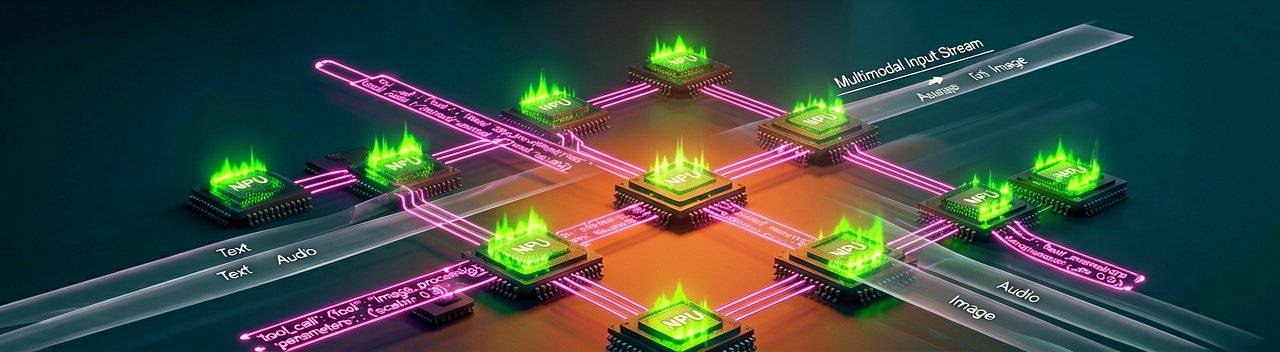
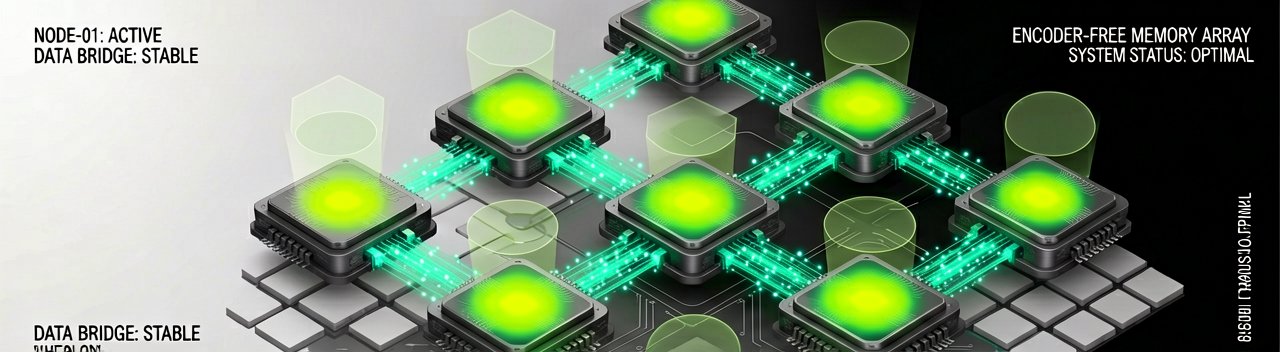
The core achievement of the Gemma 4 12B model lies in its unified, encoder-free architecture. Traditional multimodal frameworks require isolated, computationally heavy encoders to process distinct inputs like vision and audio before feeding them into the main language model backbone. Google DeepMind bypassed this multi-stage system entirely by channeling multimodal data straight into the primary LLM via direct linear projections, dramatically slashing operational latency and memory consumption.
This streamlined architecture allows standard laptops to act as powerful localized developer environments. The Gemma 4 12B model can natively ingest text, images, and audio inputs on standard consumer machines. To maximize local execution speeds, Google has additionally deployed a dedicated multi-token prediction model, ensuring that the responsiveness of on-device agents mimics the immediacy of native software applications.
The Local Agent Revolution: Native Tools Over Prompt Hacks
Gemma 4 fundamentally changes how autonomous software agents operate locally on consumer hardware. Previous open-source models required fragile prompt-engineering configurations and grammar constraints to interact reliably with external applications. Gemma 4 overcomes this hurdle via native function calling, allowing it to output structured JSON tool-use calls out of the box to seamlessly navigate software ecosystems.
As documented by the Android Developers Blog, this deep integration is already transforming localized development environments like Android Studio. Operating in full Agent Mode, the model can autonomously handle multi-file refactoring, script generation, and iterative bug resolution entirely offline. Furthermore, with an integrated "Extended Thinking" mode, local agents can map out multi-step logic paths and review internal reasoning traces before executing code, vastly reducing deployment errors.
Market Impact: Collapsing Cloud Economics
The broader consumer and enterprise implications of the Gemma 4 rollout indicate a rapid commoditization of frontier-grade AI capabilities. By putting server-grade intelligence onto local machines, the competitive moat for costly, closed-source subscription models is narrowing. Enterprise developers can now build and test highly secure, localized applications through expanded developer toolkits like LiteRT-LM, which can turn a laptop terminal into a localized LLM server via a simple command line.
Furthermore, Google’s release of dedicated macOS desktop applications—such as the AI Edge Gallery and the voice-driven Eloquent dictation app—proves that on-device multimodal interaction is transitioning from an experimental developer niche into a standard consumer expectation. By offering local bounding-box coordinate generation alongside native audio translation, Gemma 4 establishes a blueprint for a future where personal computers don't just run apps, but autonomously orchestrate them on behalf of the user.
An Deep-Dive Analysis of the Local Intelligence Shift
Beneath the Silicon Layer: The arrival of Gemma 4 marks a decisive turning point in the silent war between cloud-first monotheism and decentralized edge computing. For the past half-decade, hyperscalers conditioned the enterprise market to accept a paradigm where every byte of intelligence had to be rented via a cloud API, creating predictable, recurring revenue streams but forcing companies into a permanent cycle of data-transit liabilities and latency penalties. The architecture of Gemma 4 shatters this reliance by establishing that consumer-tier silicon is no longer a mere terminal for remote servers, but a fully autonomous execution engine capable of sophisticated multimodal reasoning.
From a hardware stakeholder perspective, this model family arrives exactly as silicon manufacturers are aggressively prioritizing Neural Processing Units (NPUs) in laptop architectures. Chipmakers like Qualcomm, Intel, and AMD have spent recent development cycles shipping silicon with dedicated AI accelerators that largely sat idle due to a lack of optimized, locally-viable models. Gemma 4 fills this software vacuum, vindicating massive capital investments in unified memory architectures and turning the "AI PC" marketing buzzword into a concrete developer reality. This alignment between Google’s open-weight software strategy and hardware-level optimizations creates an economic forcing function that lowers the total cost of ownership for AI deployment to near zero after the initial hardware purchase.
Historically, the primary barrier to robust local agent execution was not raw compute power, but the structural fragility of small models when tasked with tool usage. Early on-device models frequently suffered from "context drift" or catastrophic forgetting when forced to balance a user's prompt alongside complex API documentation. Google DeepMind addressed this historical bottleneck by tuning Gemma 4 specifically for structured JSON generation and strict function-calling hygiene. This architectural focus means a local agent can reliably monitor a user's file system, analyze incoming local audio or video feeds, and write clean code to automate desktop workflows without throwing unhandled exceptions or hallucinating API parameters.
The enterprise compliance implications of this architectural shift are profound, particularly within highly regulated sectors like healthcare, defense, and corporate law. Under traditional cloud-based LLM frameworks, legal teams spent months reviewing data-processing agreements to ensure proprietary source code or sensitive patient transcripts did not violate regional privacy laws during API transmission. By containing the entire computational loop—from multimodal data ingestion to reasoning and final tool execution—within the physical confines of an enterprise laptop, Gemma 4 bypasses these bureaucratic hurdles entirely, enabling immediate, compliant deployment across strict local environments.
The Friction Between Marketing and On-Device Reality
Reading Between the Lines: The industry enthusiasm surrounding Gemma 4 relies heavily on an idealized vision of laptop computing that glosses over substantial thermal and battery constraints. While running a multimodal 12-billion-parameter model on a standard corporate machine is a triumphant feat of engineering, doing so continuously forces hardware to its absolute limit. In practical desktop scenarios, sustaining local agent activities—such as continuous local audio monitoring or real-time codebase refactoring—transforms ultra-thin laptops into high-heat, high-drain environments, severely compromising the mobility that defines modern personal computing.
A glaring contradiction also emerges within Google's dual identity as both a champion of open-source local computing and a dominant vendor of cloud infrastructure. By equipping local hardware with advanced autonomous capabilities under an Apache 2.0 license, Google risks cannibalizing its own high-margin cloud consumption models. This friction suggests that the open-weights initiative is less about altruistic decentralization and more about a strategic play to erode OpenAI's closed-source market dominance, relying on the assumption that enterprise developers will eventually scale up to Google Cloud Platform once local agent networks outgrow individual machines.
Furthermore, the promise of total data privacy via local execution introduces a complex new frontier for corporate security teams. Moving intelligence to the edge eliminates external data transit risks, but it simultaneously expands the local attack surface exponentially. Corporate laptops, which are notoriously vulnerable to physical theft and endpoint malware, will now house highly sophisticated models interacting natively with local file structures and internal APIs, turning every employee's laptop into a potential gateway for localized, automated exploit execution.
"The ultimate promise of on-device AI is a laptop that does all your work locally without leaking secrets or running up a cloud bill. The current reality is a laptop that does your work locally while doubling as a space heater and demanding to be plugged into a wall outlet every forty-five minutes."
Artūras Malašauskas is an AI Systems Integrator with 20+ years of production-grade web engineering experience. He has designed, shipped, and scaled enterprise Python/PHP systems for logistics, SaaS, and public-sector clients. For the past year, he has focused exclusively on AI integrations: deploying open-source LLMs, building generative media pipelines (image, audio, video), and engineering multi-agent workflows for real production environments. His standard: reproducibility, security, cost-efficient inference—no vaporware. He documents and evaluates emerging AI tooling, separating verified capabilities from marketing noise. Technical editor at: muza-ai.eu, ai-verslas.lt, ai-naujinos.lt Connect on LinkedIn
Comments