Realme’s New P4 Series 5G Lands in the Philippines, Spearheaded by a Ridiculous 10,001mAh Battery Monster
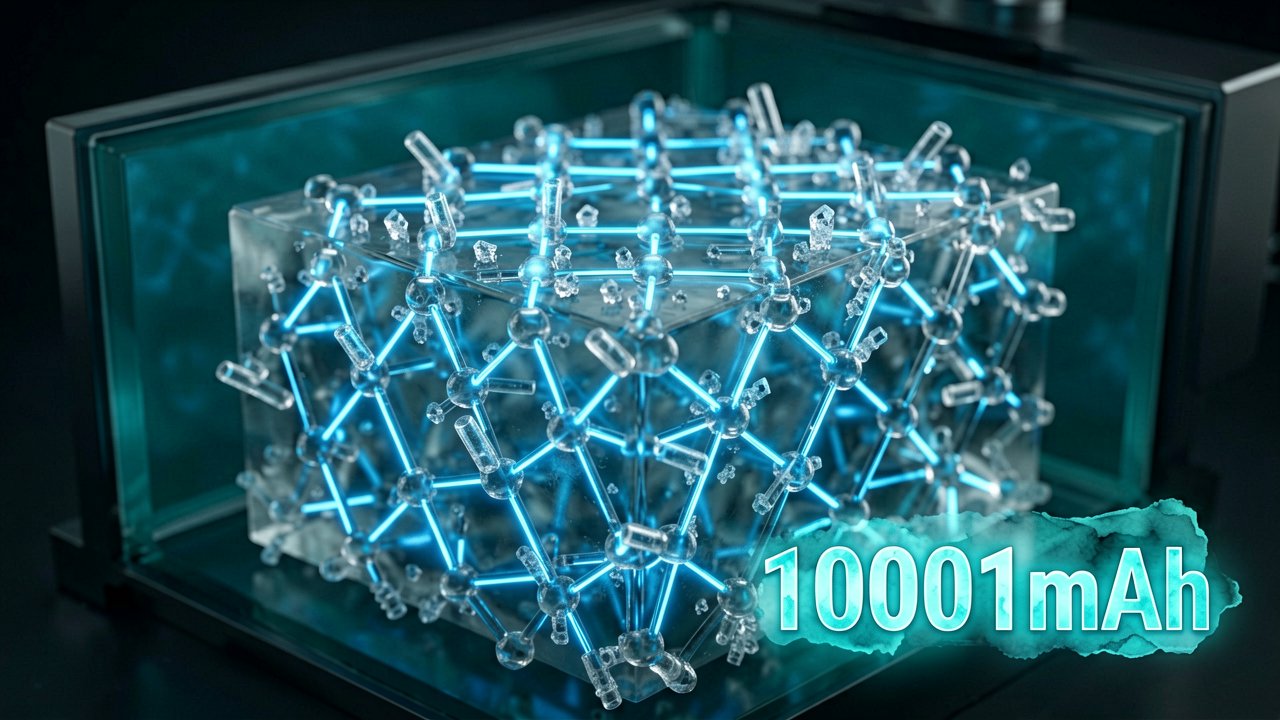
Smartphone brands love to toss around the word "innovation" when they shave half a millimeter off a chassis or add a flashy AI trick, but realme just dropped a heavy-hitting hardware flex that is hard to ignore. The company has officially launched its new mid-range realme P4 Series 5G in the Philippines, expanding its local footprint beyond the usual C, numbered, and GT lineups. This rollout introduces Filipino consumers to a trio of devices engineered strictly around extreme endurance, addressing the perpetual anxiety of the dead-battery notification without forcing users to carry a literal brick in their pockets.
The undisputed headliner of this June arrival is the realme P4 Power 5G, a device that claims the title of the first mainstream smartphone in the country to pack a colossal 10,001mAh Titan Battery. Usually, when a battery capacity climbs into five-digit territory, you are looking at a rugged, industrial handset designed for construction sites. However, realme utilized an advanced silicon-carbon anode architecture to squeeze this gargantuan cell into a surprisingly sleek 9.08mm frame that tips the scales at a manageable 219 grams, which means it feels remarkably like a standard phone despite holding double the juice of its competitors. According to details shared by GadgetMatch, the device is sharing the local stage with its sibling models, the realme P4x and the realme P4 Lite, creating a robust, multi-tier assault on the mid-range market.
The P4 Power 5G Blueprint
A battery this massive would turn into a multi-hour hostage situation at the charging outlet without the right tech, so realme paired the monster cell with 80W Ultra Charging. The company’s internal lab testing indicates you can jump from zero to 50% capacity in about 36 minutes, which is an impressive feat for a 10,001mAh reservoir. To make the device earn its keep in a user's everyday carry, it also supports 27W wired reverse charging, effectively allowing it to pull double duty as a fast-charging power bank for accessories or a friend's depleted device.
The rest of the spec sheet shows that realme didn't completely compromise the phone's identity just to break a battery record. The P4 Power 5G runs on MediaTek’s 4nm Dimensity 7400 Ultra processor and boasts a 144Hz 1.5K HyperGlow 4D Curve+ AMOLED display. For mobile photography, it leans on a 50MP Sony IMX882 main camera equipped with optical image stabilization, while an intense triple IP rating array—covering IP66, IP68, and IP69—ensures it can survive high-pressure water jets and deep submersions alike.
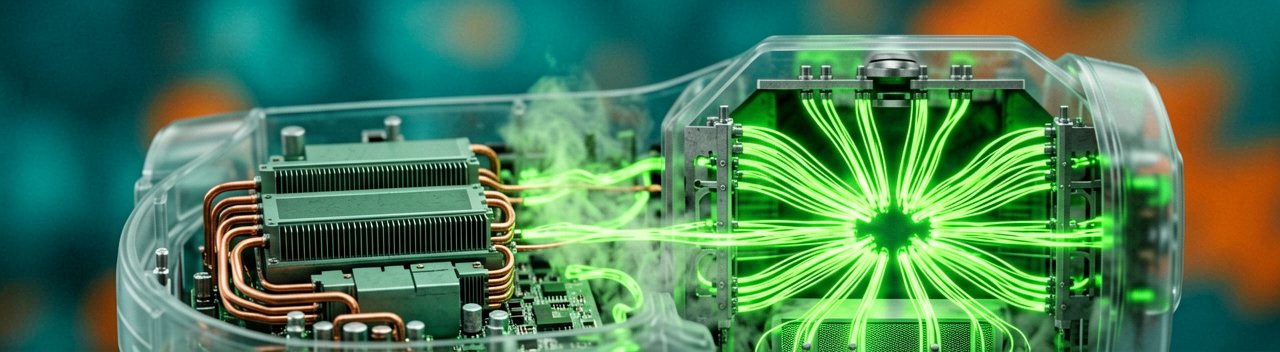
Behind the Engineering Breakthrough: Squeezing a five-digit milliampere-hour rating into a standard pocketable form factor marks a significant departure from traditional lithium-ion limitations. For years, the smartphone industry chased razor-thin aesthetics, effectively capping battery capacities between 4,500mAh and 5,500mAh. When consumers demanded more juice, brands traditionally responded with faster charging bricks rather than larger cells, simply because traditional graphite anodes physically swell too much when density is increased. By migrating to silicon-carbon chemistry for the P4 Power 5G, realme has bypassed this physical bottleneck, packing roughly double the energy density into a footprint that would have been physically impossible just a couple of seasons ago.
This strategic pivot directly addresses a growing pain point in emerging 5G markets like the Philippines, where network architecture is still maturing. Local telecom analysts frequently point out that searching for and maintaining a stable 5G signal in sub-optimal coverage zones acts as a massive drain on mobile hardware. By dropping a 10,001mAh reservoir into a mid-range device, realme isn't just catering to power users or mobile gamers; they are actively insulated everyday commuters and regional users from the disproportionate power consumption associated with transitional network infrastructure.
The Real-World Operational Trade-offs
While the hardware achievement is undeniably impressive, seasoned industry observers are closely watching how this extreme capacity holds up under long-term thermal stress. Charging a massive silicon-carbon cell at 80W generates a substantial thermal footprint, requiring an incredibly robust internal cooling system to prevent premature degradation of the battery health matrix. Realme has counterbalanced this with multi-layer vapor chambers and intelligent charging algorithms, but the true test will be how these devices fare after twelve to eighteen months of daily thermal cycles in the humid, tropical climate of Southeast Asia.
Furthermore, the introduction of the P4 Series subtly shifts the competitive dynamics for rival manufacturers who have historically prioritized ultra-wide cameras or premium chassis materials in the mid-range bracket. By establishing extreme battery life as a primary selling feature rather than an afterthought, realme forces competitors to re-evaluate their component budgets. It moves the conversation away from iterative megapixel wars and redirects industry focus toward fundamental hardware utility, proving that substantial, tangible endurance still moves the needle for the average consumer far more than incremental software gimmicks.
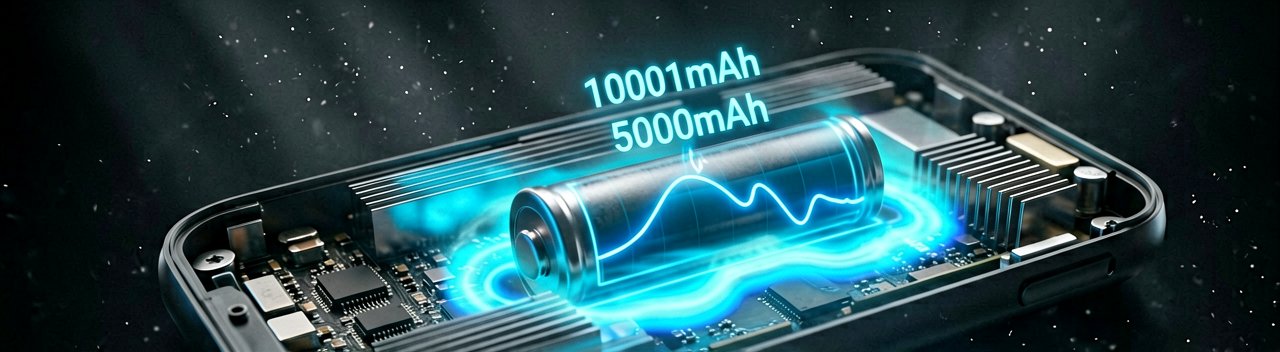
Reading Between the Lines: The sheer shock value of a five-digit milliampere-hour rating is undeniable, but it also glosses over a subtle industry contradiction. While realme heavily promotes the 10,001mAh capacity as a liberating feature for the consumer, it simultaneously highlights the staggering inefficiencies of modern mobile computing. We have entered an era where processors are supposedly built on hyper-efficient 4nm nodes and displays feature dynamic, power-saving refresh rates, yet hardware manufacturers still feel compelled to throw a miniature car battery into a chassis just to guarantee peace of mind. It raises a legitimate concern that software optimization is taking a backseat to brute-force hardware scaling.
There is also a palpable irony in pairing an endurance-focused monster with a blazing 144Hz 1.5K display and a high-performance MediaTek Dimensity processor. A user buying a phone specifically for multi-day battery life is often looking for reliability, not demanding mobile gaming specs that aggressively drain the very tank they paid a premium for. By building a device that tries to be both a rugged power bank and a high-end multimedia machine, realme runs the risk of sending mixed signals to a market that often prefers simple, hyper-focused utility over contradictory feature mashups.
The Extended Lifespan Paradigm
Looking at the broader economic picture, a battery this large inevitably alters the typical smartphone replacement cycle in developing markets. If a standard 5,000mAh phone retains 80% of its health after two years, it effectively drops to a frustrating 4,000mAh reservoir, sparking an upgrade cycle. However, when a 10,001mAh cell degrades by the same 20%, the user is still left with an enormous 8,000mAh capacity—more than enough to power through a full day of heavy usage. This endurance cushion could inadvertently cause a stagnation in upgrade rates, a scenario that might please budget-conscious consumers but will undoubtedly test the patience of realme’s regional sales targets.
Ultimately, we have reached a point where your smartphone can easily outlast your wireless earbuds, your smartwatch, and quite possibly your own stamina during a long weekend trip. It is a comforting thought, provided you do not mind the subtle psychological irony of carrying around a device that holds enough raw energy to jumpstart a scooter just so you can scroll through short-form videos for a few extra hours without plugging in.
Artūras Malašauskas is an AI Systems Integrator with 20+ years of production-grade web engineering experience. He has designed, shipped, and scaled enterprise Python/PHP systems for logistics, SaaS, and public-sector clients. For the past year, he has focused exclusively on AI integrations: deploying open-source LLMs, building generative media pipelines (image, audio, video), and engineering multi-agent workflows for real production environments. His standard: reproducibility, security, cost-efficient inference—no vaporware. He documents and evaluates emerging AI tooling, separating verified capabilities from marketing noise. Technical editor at: muza-ai.eu, ai-verslas.lt, ai-naujinos.lt Connect on LinkedIn
Comments