VEVOR's Houston Launch Signals Strategic Push into Home Creator Market
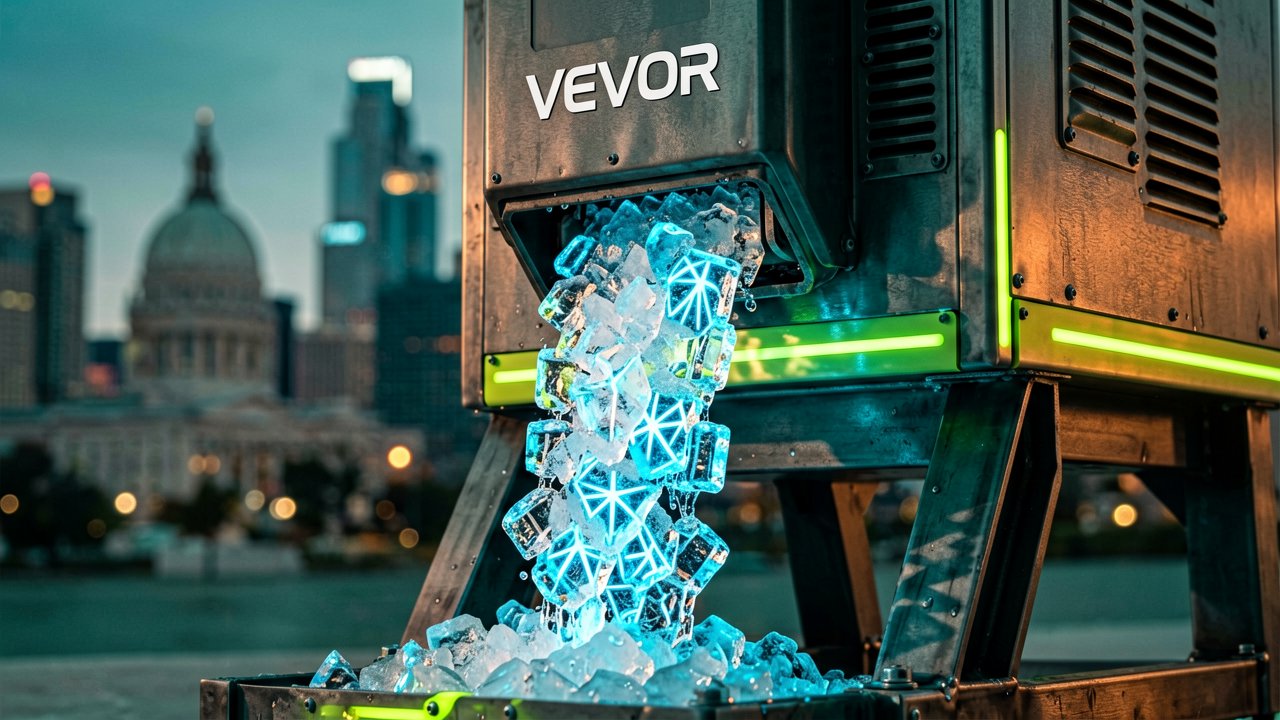
The global home improvement brand VEVOR has initiated a major strategic shift into physical retail, culminating in a dedicated summer rollout at its flagship store in Houston, Texas. On June 2, 2026, the company hosted its "Upgrade Firsthand — Summer Outdoors" launch event, introducing five highly specialized, seasonal products built directly around local consumer feedback. This move leverages VEVOR's extensive catalog to bridge the gap between online convenience and physical validation, allowing domestic DIY enthusiasts to interact with commercial-grade machinery before purchasing.
This localized product expansion is anchored by the brand's overarching "Upgrade Firsthand" and "Upgrade. The Home Creator Way" frameworks. The targeted summer lineup features a Commercial Ice Maker capable of producing up to 120 pounds of ice daily without dedicated plumbing, a Stand Airless Paint Sprayer optimized for beginner fence and wall projects, a Pro Press Crimping Tool featuring 360-degree rotation, a high-efficiency FlashPure Sand Filter Pump for pools, and a fuel-free mechanical Lawn Sweeper. By placing these complex tools in a physical, 32,000-square-foot experimental environment, VEVOR addresses the traditional friction points of technical DIY projects, offering professional utility without premium contractor fees.
Simultaneously, the corporate expansion signals a deliberate transition from an e-commerce-only operation into an community-embedded omnichannel retail force. To reinforce this regional connection, VEVOR introduced "Upgrade Next Door," a localized partnership with Houston-based neighborhood revitalization non-profit The Restoration Team (TRT). Through this program, VEVOR supplies professional-grade gear directly to local community projects starting in June 2026. This tactical integration combines corporate social responsibility with grassroots brand exposure, providing a highly scalable blueprint for future brick-and-mortar rollouts across major metropolitan areas in the United States.
Disrupting Traditional Big-Box Supply Chains
From an industry perspective, VEVOR's expansion models a direct threat to legacy home improvement giants. By utilizing proprietary, vertically integrated supply chains, the company eliminates external distributors and middlemen. According to local retail executives, this structure allows the brand to price its prosumer equipment 30 to 40 percent lower than established box-store competitors while maintaining equal or superior manufacturing tolerances.

The Rise of the Omnichannel Prosumer Experience
Modern consumers increasingly require physical reassurance and functional validation for complex technical purchases. The massive footprint of the Houston Flagship Store serves primarily as an interactive workshop rather than a passive showroom. By employing trained technicians to actively demonstrate tolerances, assembly mechanics, and safety procedures on-site, VEVOR successfully builds consumer confidence in high-risk categories like plumbing, electrical, and specialized industrial tools.
Strategic Community Alignment as a Growth Vector
Tying seasonal commercial rollouts to regional philanthropic networks represents a sophisticated customer acquisition strategy. The collaboration with local advocacy groups establishes immediate localized credibility and offers real-world validation loops for VEVOR's product catalog. As the brand transitions its massive online footprint into regional physical hubs, community-centric engagement helps mitigate the high customer acquisition costs traditionally associated with launching brick-and-mortar networks in highly saturated consumer markets.
The Prosumer Paradox and Retail Convergence
What Most Reports Miss: VEVOR’s transition into high-footprint physical retail represents a calculated gamble to capture the rapidly growing "prosumer" segment—semi-professional makers who demand industrial durability but reject the premium pricing models of enterprise suppliers. Historically, this market has been underserved, leaving buyers trapped between flimsy consumer-grade plastic tools from standard big-box stores and prohibitively expensive machinery hidden behind commercial distributor accounts. By establishing a physical footprint where users can test motor torque and material thickness firsthand, the brand addresses the inherent skepticism surrounding digital-first tool companies.
The strategic selection of Houston as the launchpad for this global brick-and-mortar expansion highlights a deep understanding of regional demographics and macroeconomic factors. Houston features a high concentration of suburban homeowners, an active contractor ecosystem, and a geographic vulnerability to extreme weather, which consistently drives demand for self-reliant home maintenance equipment. Industry data indicates that heavy machinery and high-voltage tools suffer from steep cart-abandonment rates online due to freight shipping anxieties and warranty concerns. A physical flagship allows the company to absorb logistics friction, offering immediate local returns and technical support to stabilize high-ticket consumer confidence.

Furthermore, the integration of community-level partnerships with local revitalization groups serves an operational purpose far beyond conventional corporate philanthropy. In the home improvement sector, tools gain market share through visible, real-world proof of durability and utility. By placing their commercial ice makers, airless paint sprayers, and pro press tools directly into the hands of disaster-recovery volunteers, VEVOR secures an active, local testing ground. The rigorous, daily use cases provided by these community initiatives yield immediate product-performance feedback while organically generating word-of-mouth endorsements among regional trade networks and neighborhood DIY circles.
This operational pivot signals a broader structural shift within global manufacturing logistics, transitioning from pure dropshipping frameworks toward hyper-localized fulfillment models. Legacy hardware brands are watching this rollout closely as it challenges the traditional multi-tier distribution network that has dominated the American retail landscape for decades. If VEVOR can successfully replicate this factory-to-consumer physical retail hybrid across other major metropolitan regions, it will force a significant reassessment of how specialized, heavy tool machinery is marketed, distributed, and serviced across the entire home improvement industry.
The Hidden Cost of Scaling a Factory-to-Consumer Model
Reading Between the Lines: While VEVOR’s aggressive push into physical retail is framed as a triumph of democratic access to industrial tools, it introduces a volatile operational contradiction that could test the company's core financial model. The entire value proposition of a factory-to-consumer digital brand relies on near-zero real estate overhead and highly optimized, centralized logistics. Transitioning to massive 32,000-square-foot brick-and-mortar storefronts fundamentally shifts the cost structure, introducing high commercial rent, property taxes, specialized on-site labor, and localized inventory stagnation risk. Competing directly on the physical turf of legacy big-box hardware giants means VEVOR must now absorb the exact operational overhead it originally bypassed to achieve its low-cost market disruption.
This retail convergence also exposes a profound cultural friction point within the DIY community regarding product liability and technical mastery. Selling commercial-grade equipment—such as 360-degree rotation pro press crimping tools or high-pressure paint sprayers—to uncertified weekend warriors bypasses the traditional training hoops of the professional trades. While the "Upgrade Firsthand" initiative seeks to demystify complex projects, the real-world consequence is a sharp closing of the safety margin between a licensed contractor and an ambitious homeowner. Providing an on-site demonstration space goes some way to mitigate this, but it cannot entirely bridge the skill gap required to safely operate industrial machinery without professional oversight.
Moreover, the long-term viability of relying on localized non-profit partnerships like "Upgrade Next Door" to anchor corporate credibility remains highly vulnerable to diminishing returns. Community engagement serves as an excellent grassroots marketing amplifier during a high-profile flagship launch, but maintaining these networks requires sustained financial and logistical capital that rarely scales uniformly. As the company eyes expansion into other major metropolitan hubs, replicating this hyper-local, high-touch philanthropic integration across dozens of cities could easily devolve into a bureaucratic box-checking exercise, diluting the authentic neighborhood connection that made the initial Houston experiment noteworthy.
Ultimately, VEVOR’s strategic gamble forces a crucial reckoning over whether a brand can truly democratize industrial utility without sacrificing its margin advantages. If the Houston flagship proves that hands-on validation dramatically drives high-ticket tool sales, the company will have successfully rewritten the playbook for global e-commerce brands attempting to breach the physical world. However, if the escalating overhead of running physical workshops begins to erode their aggressive 30 to 40 percent pricing discount, the company may find that the physical retail landscape is far less forgiving than the digital marketplace that birthed it.
"Democratizing industrial-grade tools is a noble pursuit right up until the moment an over-caffeinated suburban homeowner realizes that owning a professional-grade paint sprayer and actually possessing the talent to paint a straight line are two entirely separate, non-transferable commodities."
Artūras Malašauskas is an AI Systems Integrator with 20+ years of production-grade web engineering experience. He has designed, shipped, and scaled enterprise Python/PHP systems for logistics, SaaS, and public-sector clients. For the past year, he has focused exclusively on AI integrations: deploying open-source LLMs, building generative media pipelines (image, audio, video), and engineering multi-agent workflows for real production environments. His standard: reproducibility, security, cost-efficient inference—no vaporware. He documents and evaluates emerging AI tooling, separating verified capabilities from marketing noise. Technical editor at: muza-ai.eu, ai-verslas.lt, ai-naujinos.lt Connect on LinkedIn
Comments