Realme’s 10,001mAh Battery Gambit: A New Benchmark for Smartphone Endurance
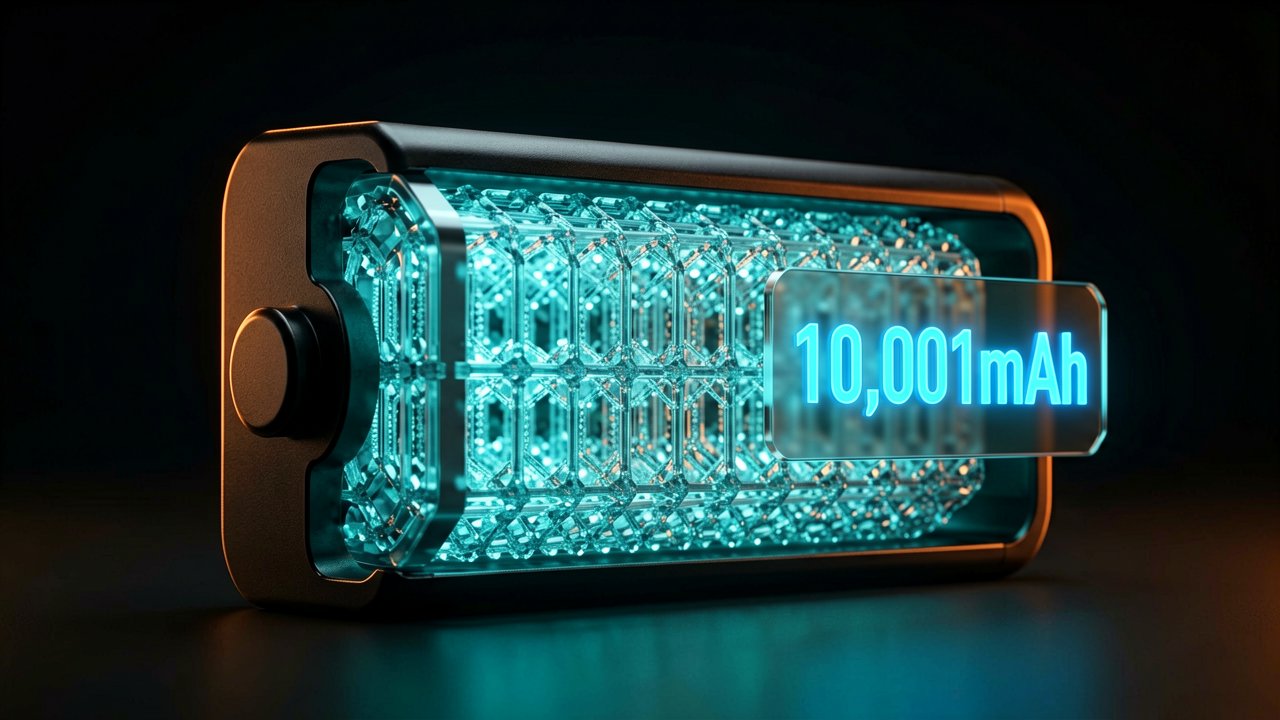
The global smartphone landscape is witnessing a profound paradigm shift as manufacturers pivot from chasing incremental megapixel counts toward solving the industry's oldest pain point: battery life. Leading this hardware recalibration is Realme, which officially introduced its P4 Series 5G to the Southeast Asian market, headlined by the regional debut of the GadgetMatch covered Realme P4 Power 5G in the Philippines. Featuring an industry-first mass-produced 10,001mAh "Titan Battery," this deployment moves ultra-high-capacity power configurations out of the niche "ruggedized phone" category and directly into the highly competitive mainstream mid-range market segment.
By opting to target a regular consumer demographic with a five-figure milliampere-hour rating, Realme is signaling that conventional battery limits of 5,000mAh to 6,000mAh are no longer the absolute ceiling for sleek form factors. For years, the integration of large capacity cells meant compromising ergonomics, resulting in heavy, brick-like devices that repelled the mass market. According to official technical specifications outlined by Realme, the P4 Power 5G bypasses this limitation through a localized silicon-carbon anode architecture and an advanced internal stacking structure. This enables the device to retain a reasonable 9.1mm profile and a 219-gram chassis weight, roughly mirroring the physical footprint of an standard flagship smartphone while offering up to double the total power capacity.
The introduction of the P4 Series 5G fundamentally targets regional consumer needs in emerging markets like the Philippines, where long commutes, frequent power instabilities, and heavy reliance on mobile data amplify the demand for absolute device endurance. From a broader strategic perspective, this launch showcases a calculated land grab for mid-range market dominance by bundling premium features with unprecedented battery capacity. At a promotional price of PHP 19,999, Realme has managed to assemble an aggressive hardware combination that forces its immediate competitors to reconsider their product roadmaps for the upcoming fiscal years.
Silicon-Carbon Anodes and the Engineering of High Density
The primary catalyst behind this sudden leap to 10,001mAh is the rapid commercialization of third-generation silicon-carbon (Si/C) anode material. Traditional lithium-ion batteries rely on graphite anodes, which are physically bounded by a low theoretical capacity and density threshold. Replacing graphite with silicon allows for vastly greater energy storage per cubic centimeter. Realme’s internal architectural optimizations effectively achieved a notable reduction in overall component thickness compared to traditional external power banks of identical capacity, enabling a mainstream, hand-friendly design.
Mid-Range Disruption via Flagship Feature Bundling
Rather than relying solely on battery capacity as a single selling point, the device maintains a robust mid-range spec sheet that avoids typical cost-cutting compromises. The device relies on a MediaTek Dimensity 7400 Ultra 5G processor, ensuring that the heavy power reserves feed an efficient, modern 4nm processing unit capable of sustaining long gaming sessions and demanding workloads. The visual experience is anchored by a high-end 6.8-inch, 144Hz HyperGlow 4D Curve+ AMOLED display. By combining this high-refresh-rate display with a massive cell, Realme tackles the historical battery anxiety associated with smooth screens, empowering power users to activate maximum performance settings without worrying about mid-day depletion.
Fast-Charging and Thermal Management Infrastructure
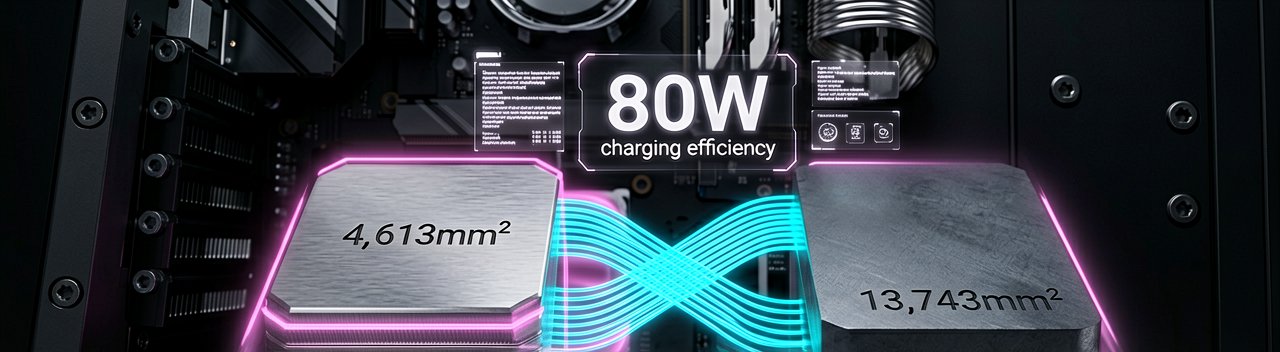
Deploying a 10,001mAh cell introduces a major logistical hurdle regarding charging times, a bottleneck that Realme mitigates through its 80W Ultra Charging standard. According to data reported by GSMArena, the device can recover 50% of its battery capacity in approximately 36 minutes, drastically lowering down-time. Furthermore, the inclusion of a 27W wired reverse charging protocol essentially transforms the smartphone into a functional high-speed power bank for peripheral accessories, establishing it as a central power hub within a consumer's mobile ecosystem. To manage the thermal stress of rapid charging and heavy endurance cycles, the chassis incorporates a 4,613mm² vapor chamber coupled with an expansive 13,743mm² graphite cooling sheet to maintain component longevity and safety under extreme environmental conditions.
Market Outlook and Competitive Realities
Realme's focus on extreme battery capabilities presents a clear challenge to established mid-range competitors who have traditionally favored incremental updates in camera resolution or aesthetic materials. The launch structure in the Philippines—complemented by auxiliary variants like the 8,000mAh P4x and the 7,000mAh P4 Lite—creates a tiered ecosystem centered entirely around structural endurance. As consumers increasingly prioritize multi-day lifespans for mobile gaming, live streaming, and remote productivity, this calculated power play sets a demanding standard that will likely accelerate the adoption of silicon-carbon battery technology across the global smartphone sector.
The Hidden Engineering Trade-offs of a Five-Figure Capacity
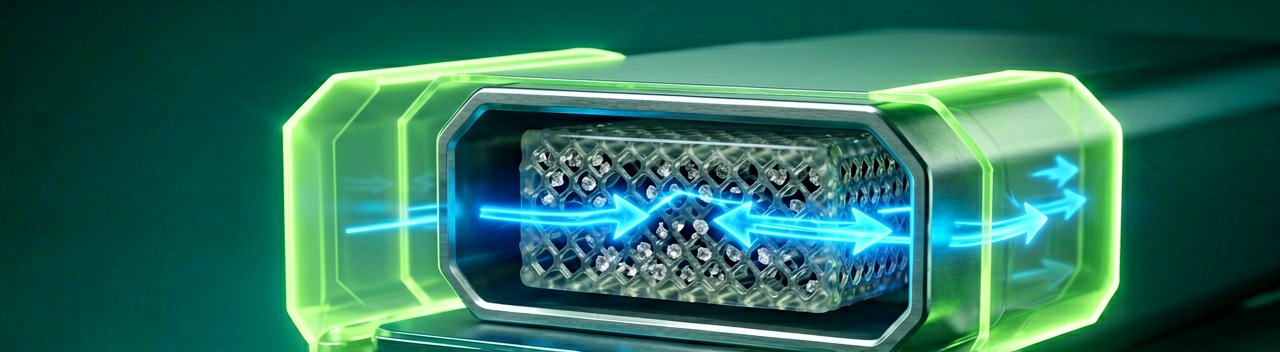
Behind the Engineering Curtain: Packing a 10,001mAh reservoir into a mainstream form factor requires a sophisticated calculation of mechanical stress and thermodynamic limits. While silicon-carbon anodes allow for much higher energy density, they present a fundamental physical challenge: volumetric expansion. During charging cycles, silicon can expand by up to 300 percent, creating immense internal pressure that can degrade the battery structure and warp the phone's chassis over time. Realme addresses this by utilizing a porous silicon structure mixed with a highly resilient polymer binder, allowing the anode material to expand internally into microscopic voids rather than swelling outward against the phone's frame.
From an ecosystem perspective, this engineering feat forces a critical conversation around the standard definition of device safety. A battery of this scale behaves less like a standard smartphone component and more like a miniature electric vehicle cell, demanding redundant failsafes to prevent thermal runaway. Industry analysts point out that the P4 Series incorporates a specialized Battery Management System (BMS) featuring physical isolation barriers and real-time algorithmic tracking. This software monitors voltage down to the millivolt level and adjusts current dynamically based on ambient room temperature, preventing localized hot spots during intensive use or high-speed charging sessions.
The strategic deployment of these ultra-dense cells also highlights a shift in supply chain politics across Southeast Asian tech hubs. Historically, high-capacity ruggedized phones relied on generic, low-cost lithium-polymer chemistry, which resulted in thick, unrefined devices. By securing high-density silicon-carbon supplies for a mid-range lineup, Realme is effectively leveraging its massive manufacturing footprint to squeeze the profit margins of niche utility-phone vendors. This move forces premium battery tech down the pricing ladder, establishing a high barrier to entry for regional competitors who lack the scale to negotiate volume discounts on advanced anode materials.
Ultimately, the long-term success of this battery gamble hinges on software optimization and user habits over the traditional twenty-four-month upgrade cycle. A 10,001mAh capacity creates unique challenges for Android’s native resource management, which is typically optimized to aggressively kill background tasks on 5,000mAh architectures to preserve power. With an excess of available energy, Realme's customized operating system can afford to allow longer background processing windows for AI tasks and continuous connectivity. This shifts the device from a passive tool that users must constantly manage into an always-on localized computational hub that operates without power restrictions.
The Diminishing Returns of Extreme Endurance
Reading Between the Lines: While a five-figure milliampere-hour rating serves as a masterclass in aggressive marketing, it introduces a profound paradox regarding the actual utility of mobile hardware. The smartphone industry has long operated under the assumption that more capacity equals a strictly better user experience, yet this philosophy ignores the law of diminishing returns. A typical user requires a device that comfortably lasts through a rigorous workday, a metric easily met by modern 5,000mAh to 6,000mAh silicon-carbon configurations. By doubling this reservoir, Realme is effectively asking consumers to carry around dead weight for forty-eight out of every seventy-two hours, carting a localized power station in their pockets just to stave off an anxiety that software optimization could have mitigated more efficiently.
This hardware overkill highlights an underlying contradiction in Realme's mid-range product strategy. The inclusion of a power-hungry 144Hz AMOLED display and a performance-oriented MediaTek processor implies a device built for demanding, continuous operations like high-frame-rate mobile gaming. However, sustained peak performance inevitably generates significant internal heat, which accelerates the degradation of even the most advanced silicon-carbon anodes. If a user utilizes the 27W reverse wired charging to power their peripherals, the constant cycling of the main cell will likely degrade its nominal capacity much faster than that of a standard single-purpose smartphone, potentially reducing this massive 10,001mAh asset to the performance of a conventional battery within a couple of years.
Furthermore, the reliance on an 80W charging standard introduces its own set of structural ironies. While recovering half a battery's capacity in thirty-six minutes sounds impressive on a promotional spec sheet, filling the remaining half of a 10,001mAh cell takes exponentially longer due to the aggressive thermal throttling required to prevent the phone from overheating. Consumers accustomed to the near-instantaneous top-ups of low-capacity flagships may find themselves tethered to a wall outlet for well over an hour to achieve a full charge. This reality shifts the device from a symbol of wireless liberation into a heavy anchor, proving that in the race for extreme numbers, engineering compromises are merely shifted from the chassis depth to the charging cradle.
"We have finally achieved the dream of a smartphone that can outlast a weekend camping trip, assuming your wrists can survive the weight of holding it up for that long."
Artūras Malašauskas is an AI Systems Integrator with 20+ years of production-grade web engineering experience. He has designed, shipped, and scaled enterprise Python/PHP systems for logistics, SaaS, and public-sector clients. For the past year, he has focused exclusively on AI integrations: deploying open-source LLMs, building generative media pipelines (image, audio, video), and engineering multi-agent workflows for real production environments. His standard: reproducibility, security, cost-efficient inference—no vaporware. He documents and evaluates emerging AI tooling, separating verified capabilities from marketing noise. Technical editor at: muza-ai.eu, ai-verslas.lt, ai-naujinos.lt Connect on LinkedIn
Comments