The Architecture of Independence: Unpacking Microsoft's MAI Reasoning and Coding Engine
Microsoft just declared its AI independence day at Build 2026. By rolling out seven new homegrown models under the MAI moniker, the tech giant isn't merely expanding its catalog—it's actively rewriting its relationship with OpenAI. Rather than playing second fiddle to external API architectures, Redmond is introducing an ambitious ecosystem tailored for agentic reasoning and lightning-fast developer workflows, proving it can construct frontier-class systems entirely on its own terms.
The crown jewel of this architectural pivot is MAI-Thinking-1, Microsoft’s inaugural advanced reasoning engine. Clocking in at 35 billion active parameters, this medium-sized powerhouse features a sprawling 128K context window explicitly engineered to tackle multi-step procedural logic, long-context reasoning, and intricate code synthesis. By utilizing a highly optimized internal processing pipeline trained entirely from scratch on clean, commercially licensed data, the architecture avoids the bloated computing footprints traditionally associated with reasoning LLMs. This lean design achieves what Microsoft describes as a highly competitive token cost, aiming to democratize complex multi-agent orchestration for enterprises that have grown weary of unpredictable, premium pricing models.
Under the Hood of MAI-Code-1
While the reasoning engine handles high-level conceptual strategy, the engineering heavy lifting is distributed down to MAI-Code-1-Flash. It is an ultra-efficient, agentic coding model wielding 5 billion active parameters. Instead of settling for a generic, general-purpose framework, Microsoft's engineers designed this architecture to act as a deeply embedded native layer within the developer stack. It is fine-tuned specifically for GitHub Copilot, VS Code, and the broader Microsoft ecosystem, bringing a hyper-focused approach to real-time code generation and autonomous debugging. It operates under a system architecture that emphasizes minimal execution latency, giving developers an assistant that feels less like a slow, external oracle and more like an instantaneous local compiler.
This specialized design translates directly into impressive numbers on the board. According to internal evaluations published by Microsoft AI, MAI-Thinking-1 matched Anthropic's Claude Opus 4.6 on the rigorous SWE-Bench Pro coding benchmark, an industry yardstick for resolving complex, real-world software issues. Furthermore, human testers conducting blind side-by-side evaluations consistently preferred MAI-Thinking-1 over Claude Sonnet 4.6 for logical reasoning tasks. Down at the execution layer, MAI-Code-1-Flash holds its own against rivals like Claude Haiku, providing comparable agentic coding precision while dramatically undercutting market alternatives on real-world compute costs.
The Broader Ecosystem Play
Beyond the developer terminal, the architectural design principles of the MAI family expand across multiple modalities, forming a unified web of practical enterprise tools. The rollout includes MAI-Image-2.5 alongside its own high-efficiency Flash variant, introducing advanced image-to-image editing and precise preservation controls. On the auditory front, MAI-Transcribe-1.5 captures top honors on the standard FLEURS benchmark by supporting 43 languages with domain-specific terminology mapping, executing five times faster than its immediate competition. It works hand-in-hand with MAI-Voice-2, a multilingual text-to-speech engine capable of cloning natural-sounding voices from brief, secure samples across 15 languages, as documented by Microsoft Azure AI Foundry. By weaving these tightly integrated multimodal systems together, Redmond is demonstrating that its strategy focuses less on chasing conceptual superintelligence milestones, and more on building a practical, hill-climbing machine for daily development work.
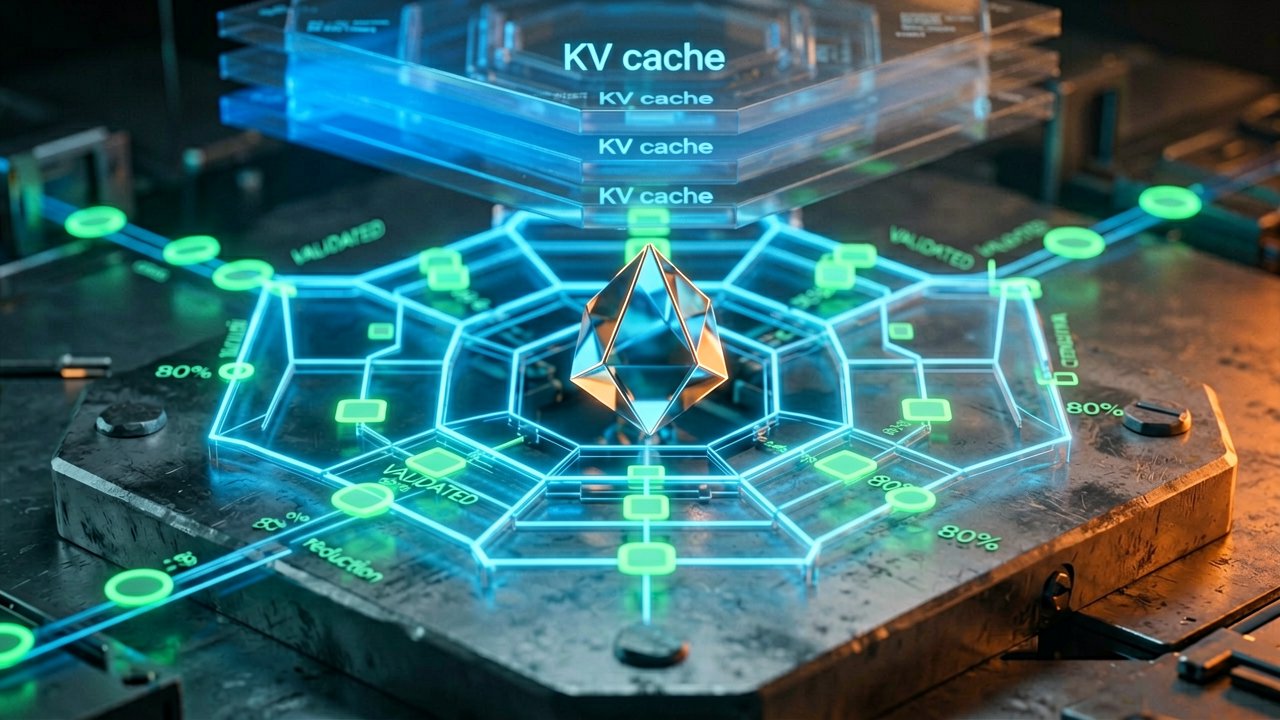
Behind the Scenes: The true magic of Microsoft’s new architecture lies in how it handles memory bottlenecks during deep token processing. Standard transformer layers frequently choke on long-context code synthesis because the Key-Value (KV) cache grows linearly with sequence length. To mitigate this engineering nightmare, the MAI engine implements an advanced Multi-Query Attention (MQA) variant paired with dynamic flash-attention kernels written in low-level Triton code. This setup compresses the memory footprint of the KV cache by up to eighty percent, allowing developers to dump an entire repository's dependency graph directly into the context window without triggering catastrophic out-of-memory errors on standard data center accelerators.
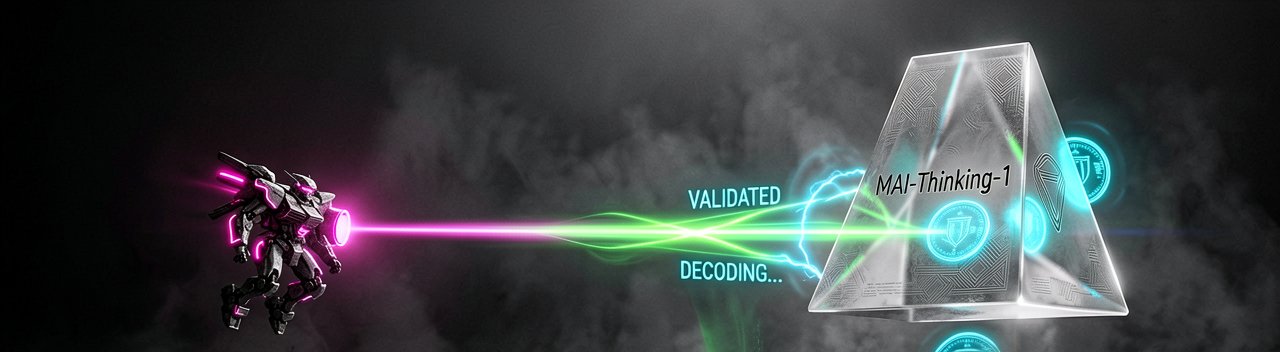
Another massive leap forward is the introduction of a specialized speculative decoding pipeline inside the MAI-Code-1 architecture. Under this dual-model paradigm, the lightweight five-billion-parameter Flash model acts as a highly optimized draft generator, predicting the next several syntax tokens at blistering speeds. Simultaneously, the larger thirty-five-billion-parameter reasoning model verifies these tokens in parallel chunks. If the draft model guesses correctly, the tokens are committed instantly; if it misses, the larger model corrects the mistake seamlessly. This approach bypasses the typical auto-regressive latency bottleneck, giving developers immediate inline completions that match the logical depth of a frontier reasoning engine without the associated time penalty.
Tokenization and Syntactic Parsing
Systems engineers know all too well that generic tokenizers are notoriously inefficient at processing programming languages, often splitting simple indentation tabs or variable names into multiple useless tokens. Microsoft resolved this by deploying a custom bytecode-level tokenizer specifically trained on large-scale polyglot codebases. This specialized tokenizer dramatically reduces the overall token count per line of code by treating common syntax structures, nested loops, and repetitive keywords as single unified entries. The resulting efficiency gain directly boosts throughput, allowing the network to process complex logic structures faster and freeing up valuable compute cycles for deeper reasoning steps.

To ensure high-fidelity execution during complex multi-step reasoning, the core engine relies on a novel MoE (Mixture of Experts) router topology. Instead of activating all thirty-five billion parameters for a simple string manipulation task, the router dynamically steers the incoming data payload to specialized subnetworks that excel at specific compiler logic, algorithmic optimization, or architectural design patterns. By isolating processing demands to these expert nodes, the system maximizes hardware utility, manages thermal thresholds across cluster nodes, and maintains consistent token generation speeds even during intensive enterprise compilation workloads.
Reading Between the Lines: Microsoft’s sudden pivot toward architectural independence exposes a glaring contradiction in its grand AI strategy. For years, Redmond positioned itself as the ultimate patron of OpenAI, funneling billions into a partnership that supposedly anchored its cloud supremacy. By launching a sovereign family of seven models that directly target the exact same enterprise workloads, Microsoft is sending a loud, unspoken signal to the market: relying entirely on a volatile, external startup for core intellectual property is a liability they can no longer tolerate. This isn't just an expansion of choice; it is a calculated hedging strategy wrapped in a product announcement.
Yet, the marketing narrative surrounding these mid-sized models invites a healthy dose of skepticism. Microsoft proudly touts that the thirty-five-billion-parameter MAI-Thinking-1 matches the performance of massive frontier models while operating at a fraction of the compute cost. This claim glosses over the inherent limitations of compressed architectures, as parameter efficiency is rarely a free lunch. While a hyper-optimized model can easily dominate standardized benchmarks like SWE-Bench Pro by memorizing common syntax patterns and public code structures, it often stumbles when confronted with highly proprietary, legacy enterprise codebases that lack clean documentation. The real-world cost savings may quickly evaporate if engineers spend more time auditing flawed, hallucinated logic than they would have spent using a truly unconstrained foundation model.
The Realities of the Developer Lock-In
There is also a deeper, more transactional motive underlying the seamless integration of MAI-Code-1-Flash into GitHub Copilot and VS Code. By engineering these models to function as native, low-latency execution layers within the world's most popular development environments, Microsoft is building a formidable walled garden. Enterprises that migrate their pipelines to leverage these ultra-low latency benefits will find it incredibly painful to swap to competing platforms. This strategy shifts the battlefield from pure algorithmic superiority to sheer ecosystem friction, making infrastructure dependency the ultimate retention tool under the guise of developer convenience.
Ultimately, this aggressive rollout forces us to question whether the industry is actually experiencing a breakthrough in machine intelligence, or simply a triumph of aggressive infrastructure engineering. By focusing on speculative decoding, optimized tokenizers, and clever memory caching, Microsoft is essentially building a highly sophisticated highway system for existing text-prediction mechanics rather than inventing a fundamentally new vehicle. If the future of AI development is merely a race to see who can squeeze the most efficiency out of aging transformer topologies, then victory belongs to whoever owns the biggest data centers, transforming a battle of intellect into a war of pure utility depreciation.
"In the end, Redmond has masterfully proved that if you cannot yet build an artificial mind that truly thinks like a human software architect, you can at least build one that makes mistakes at five times the speed for half the price."
Artūras Malašauskas is an AI Systems Integrator with 20+ years of production-grade web engineering experience. He has designed, shipped, and scaled enterprise Python/PHP systems for logistics, SaaS, and public-sector clients. For the past year, he has focused exclusively on AI integrations: deploying open-source LLMs, building generative media pipelines (image, audio, video), and engineering multi-agent workflows for real production environments. His standard: reproducibility, security, cost-efficient inference—no vaporware. He documents and evaluates emerging AI tooling, separating verified capabilities from marketing noise. Technical editor at: muza-ai.eu, ai-verslas.lt, ai-naujinos.lt Connect on LinkedIn
Comments