Slicing Through the Architecture: The Physics of Adamantium and Mortality in Insomniac’s Wolverine Engine
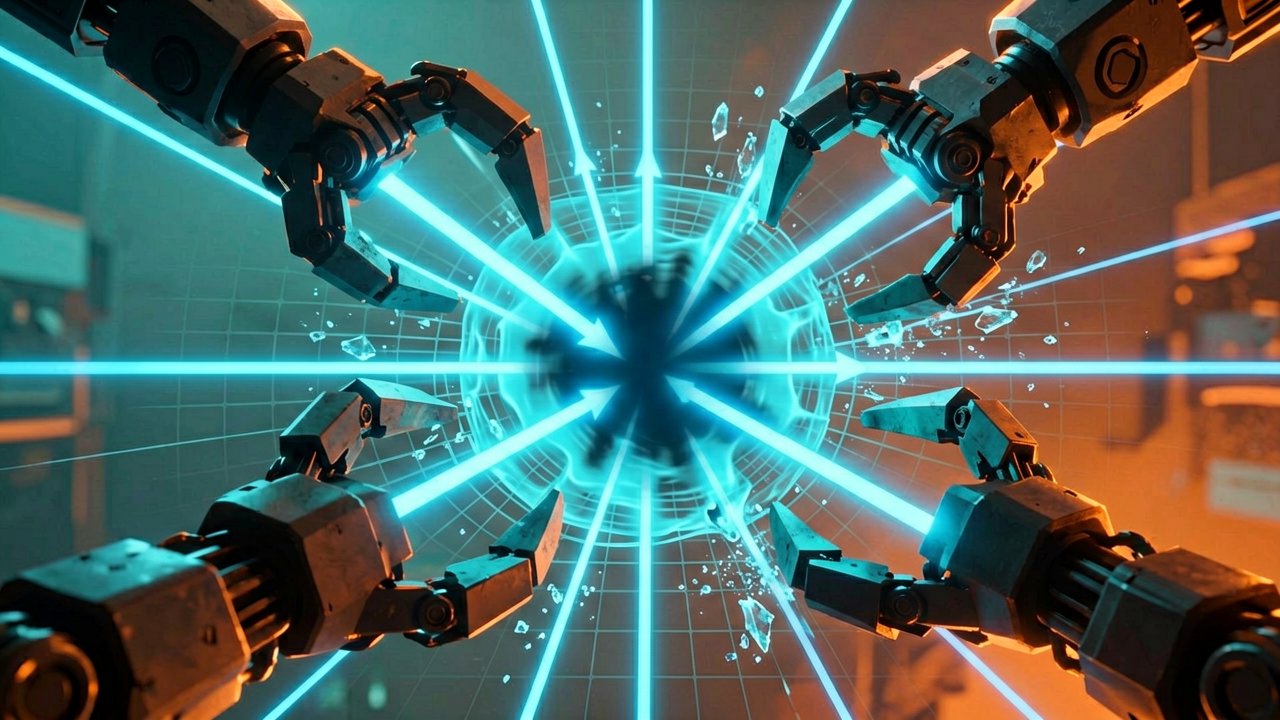
When you give a character a pair of razor-sharp, unbreakable claws, your physics engine faces an immediate structural crisis. In a technical deep dive provided by the development team at Insomniac Games, the studio laid bare the underlying engineering that drives their highly anticipated title, Variety reported. The engine architecture handles localized point-of-impact calculations that translate Logan's raw strength into dynamic environmental and enemy destruction, treating claw combat not as canned animations but as active physical interactions. Traversing through the gritty alleys of Madripoor, Logan's heavy mechanical weight smoothly transitions from high-momentum traversal to stealth, culminating in a combat pipeline designed to feel incredibly up-close and visceral.
To keep this technical brutality from alienating a broader audience, Insomniac engineered a customizable modular violence pipeline, according to Eurogamer . Instead of simply turning off particle effects, the game's customizable 'low-gore' options act as a dynamic toggle over the engine’s skeletal dismemberment matrix. When enabled, the software redirects hit-registration algorithms away from permanent mesh deformation and instead shifts to traditional impact metrics. This balance ensures that whether a player opts for high-intensity gore or a sanitized narrative experience complete with X-Men cameos, the frame-time consistency remains completely uncompromised.
The Real-Time Anatomy of Player Mortality
Logan’s infamous healing factor introduced a massive engineering hurdle for the player mortality systems. In traditional action game loops, health bars act as simple numerical values, but Insomniac's engine treats player mortality as a complex state-machine tracking cellular-level structural damage. The systems calculate wound depth, blood loss, and localized skeletal trauma in real time, forcing the hardware to manage constant background math while sustaining target performance metrics on the PlayStation 5. If Logan takes sustained, catastrophic punishment that outpaces his native regeneration code, the engine triggers explicit systemic failures, redefining how a virtually immortal superhero faces a true mechanical game over.
Behind the Scenes: The Low-Level Architecture of Logan's Regeneration Loop
Behind the Scenes: Optimizing a real-time cellular regeneration loop under heavy asset streaming demands require a radical departure from standard memory-allocation strategies. Insomniac’s engineers hit this head-on by moving away from standard heap-allocated object updates for dynamic flesh deformation, opting instead for a highly parallelized data-oriented design. The system groups every wound, laceration, and structural fracture into contiguous arrays processed within the PlayStation 5’s asynchronous compute pipelines. By utilizing strict Data-Oriented Technology Stack (DOTS) principles, the engine avoids costly cache misses, executing localized texture blending and mesh manipulation parallel to the primary rendering pass without stalling the main game thread.
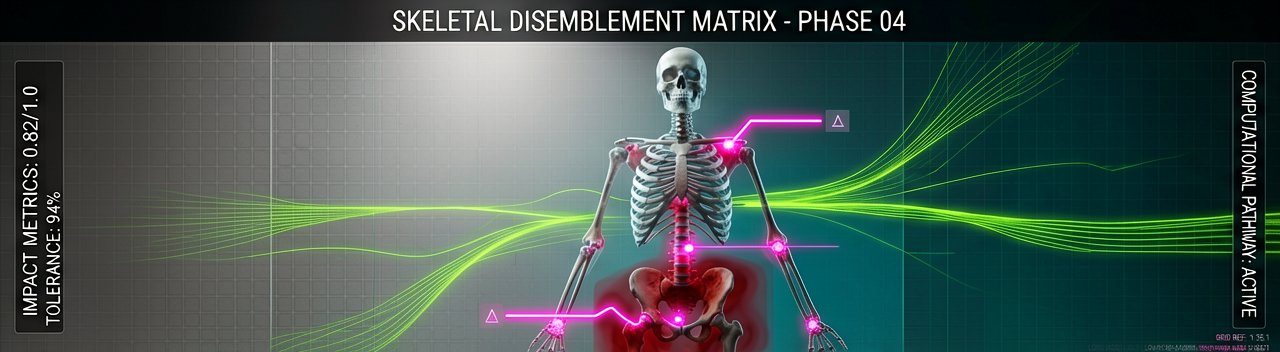
This localized damage tracking relies on a persistent vertex-deformation pipeline that maps weapon trajectories directly onto enemy and player skin weights. When Logan takes a hit, a dedicated compute shader projects the impact vector onto a low-overhead coordinate map, calculating depth and surface area in a fraction of a millisecond. The engine then utilizes dynamic blend shapes to pull back the surface mesh layers, revealing underlying structural models without needing to swap out the entire character rig. It is a highly optimized system that treats character models not as static hollow shells, but as multi-layered volumes capable of reacting dynamically to precise, physics-driven forces.
To reconcile this real-time geometric mutation with target performance metrics, the runtime environment relies on strict thread prioritization and aggressive memory recycling. The regeneration code runs within a decoupled update loop, decoupling visual tissue restoration from the immediate framework of frame-by-frame physics loops. This ensures that while Logan's aesthetic model heals smoothly across several seconds, the actual gameplay metrics like collision detection and input registration react instantly to changes. The engine effectively processes visual recovery as a low-priority background task, utilizing execution gaps in the GPU’s hardware schedule to execute complex texture morphing without dipping below the mandatory frame-time budget.
When users activate the low-gore filter, the engine’s processing logic undergoes an elegant runtime optimization. Rather than executing the compute shaders for mesh tearing and managing secondary blood-splatter particle systems, the engine flags these pipelines for early termination inside the visibility evaluation pass. The incoming hit data bypasses the deformation matrix entirely, routing instead into a traditional impact-absorption script that merely updates basic skin textures and directional hit-markers. This conditional branch logic entirely strips out the processing overhead associated with complex geometric manipulation, giving the hardware a substantial performance buffer during chaotic, multi-enemy engagements.
Ultimately, this architectural flexibility proves that accessibility features do not have to exist as a performance afterthought. By building the violence customization options directly into the core low-level physics and rendering pathways, the system maintains identical frame-pacing regardless of how much blood is spilled on screen. It stands as a masterclass in modern systems engineering, proving that a rendering engine can scale its aesthetic output on the fly without sacrificing the tight, responsive simulation loop expected of modern interactive experiences.

Reading Between the Lines: The Structural Paradox of Safe Savagery
Reading Between the Lines: Studios face a distinct engineering and marketing paradox when trying to sanitize a character whose entire identity is defined by unrestrained visceral violence. Insomniac’s proud announcement of a modular low-gore system sounds like a triumph for broad-market accessibility, yet it fundamentally conflicts with the core design ethos of their bespoke physics architecture. If an engine is built from the bedrock up to compute localized point-of-impact destruction and track precise adamanitum-slice vectors, bypassing these pipelines for a sanitized experience risks rendering the underlying tech entirely redundant. It raises serious design questions about whether a player utilizing the low-gore toggle is actually experiencing the game as intended, or merely playing a visually hollowed-out imitation of a much tighter simulation loop.
This technical compromise exposes an inherent friction between an engine's hardware-driven capabilities and corporate risk aversion. By building an intricate state-machine capable of tracking deep cellular-level trauma in real time, the developer pushes the console's compute pipelines to their absolute limits. Yet, by implementing a runtime switch that flatly deactivates these complex mesh-deformation and compute shaders, they are essentially carrying dead weight in the codebase for a segment of the audience. The engineering resources poured into optimizing the asynchronous compute passes for dynamic tissue tearing do absolutely nothing to improve the game when those features are flagged for early termination, representing a curious allocation of high-level optimization budgets.
Furthermore, balancing an near-immortal protagonist’s healing factor within an authentic player mortality framework requires a delicate narrative tightrope walk. If the engine’s health tracking loop is forgiving enough to mimic Logan's comic-book invincibility, the systemic stakes of combat risk falling completely flat, reducing complex encounter design to mindless button-mashing. Conversely, if the system triggers artificial game-over failures too aggressively to preserve traditional gameplay tension, it completely breaks the player's power fantasy and exposes the mechanical limits of the simulation. For all the high-level talk of dynamic structural calculations, the final build will inevitably have to rely on conventional game-design smoke and mirrors to keep the experience feeling genuinely dangerous.
Ultimately, this architectural compromise might just set a fascinating precedent for how modern game development addresses explicit content in AAA blockbusters. Forcing a high-density physics pipeline to scale fluidly from a hard R-rating down to a sanitized presentation without bottlenecking frame times is an impressive feat of sheer software engineering. However, it remains to be seen whether this flexible approach satisfies both camps, or if it simply results in a compromised middle ground that dilutes the raw, uncompromising impact that made Wolverine a compelling character in the first place.
Designing a technical masterpiece to perfectly simulate the horrific physics of adamantium claws, only to write a highly optimized script that politely hides all the hard work at the flip of a menu switch, is the ultimate testament to modern corporate game development.
Artūras Malašauskas is an AI Systems Integrator with 20+ years of production-grade web engineering experience. He has designed, shipped, and scaled enterprise Python/PHP systems for logistics, SaaS, and public-sector clients. For the past year, he has focused exclusively on AI integrations: deploying open-source LLMs, building generative media pipelines (image, audio, video), and engineering multi-agent workflows for real production environments. His standard: reproducibility, security, cost-efficient inference—no vaporware. He documents and evaluates emerging AI tooling, separating verified capabilities from marketing noise. Technical editor at: muza-ai.eu, ai-verslas.lt, ai-naujinos.lt Connect on LinkedIn
Comments