Meta Pivots to Corporate Automation, Launching Subscription AI Agents That Send Shares Into Orbit
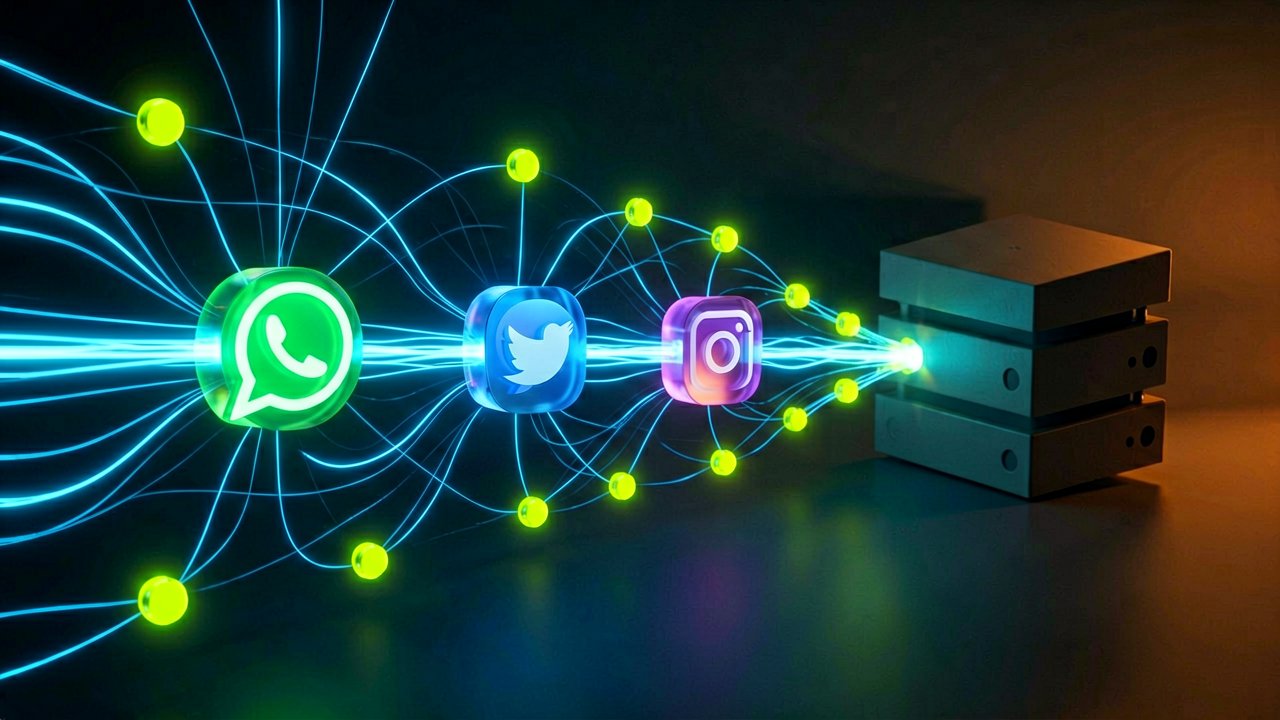
For over two decades, Meta Platforms has fundamentally operated as a consumer-facing digital advertising empire. That reality shifted decisively on Wednesday when the company unveiled "Meta Business Agent," an autonomous artificial intelligence tool tailored specifically for enterprise operations across its messaging heavyweights: WhatsApp, Messenger, and Instagram. Unveiled globally during the company's messaging-focused Conversations conference in London, this new software goes well beyond standard chatbots by executing complex transactional actions on behalf of a company, such as qualifying incoming leads, making tailored catalog recommendations, scheduling appointments, and directly closing sales in local languages.
Wall Street immediately cheered the aggressive foray into business automation, sending Meta's stock climbing by roughly 4% as investors welcomed a brand-new monetization avenue designed to offset its capital-intensive AI infrastructure spending. While corporate clients can initially activate these tools for free, the tech giant confirmed that access will soon transition into structured, paid subscription tiers under its newly introduced Meta One branding. According to reporting from Reuters, the software can pull data straight from a firm’s existing product catalogs, FAQs, and website histories, effectively acting as an omnipresent, 24/7 sales concierge that escalates only the most complex inquiries to human personnel.
Challenging the Enterprise Guard
By transforming its consumer messaging threads into fully autonomous business engines, Meta is positioning itself to go toe-to-toe with enterprise AI incumbents like OpenAI, Anthropic, and Google. The company is leaning heavily into its unmatched distribution advantage, noting that over one billion active consumer-to-business message threads already occur daily across its family of apps. To solidify this ecosystem, the rollout includes the Meta Business Agent Platform, allowing seamless back-end integration with established enterprise software providers like Shopify, Zendesk, and Shopee. This ensures the digital agents aren't just generating text, but are deeply wired into existing inventory and CRM infrastructures to run day-to-day operations seamlessly.
The Hidden Architecture of Meta’s Enterprise Gambit
Behind the Corporate Veil: This transition into recurring enterprise software licensing represents one of the most calculated structural pivots in Meta’s history, moving the tech giant far beyond its comfort zone of targeted digital advertising. For years, the company's reliance on ad revenue left it vulnerable to macroeconomic shifts and platform privacy changes, most notably Apple's tracking restrictions. By locking enterprise clients into a predictable subscription model tied directly to customer support and sales infrastructure, Mark Zuckerberg is quietly constructing a financial shield that makes Meta look less like a social media network and more like an indispensable enterprise utility company.

The engineering underlying these new agents highlights a significant shift in how open-source artificial intelligence is being commercialized. Instead of relying on a centralized cloud system that generic enterprise tools utilize, Meta has optimized its Llama architecture to run highly tailored, containerized versions of the model specifically optimized for localized corporate databases. This architecture addresses a major corporate roadblock: data privacy. Enterprise early adopters had previously resisted deploying consumer-facing AI agents over fears that proprietary customer data or sensitive catalog details would leak into a shared public pool, a security flaw that Meta claims to have resolved by siloing each business agent’s memory structure entirely within the client's private server environment.
Inside the tech sector, this deployment is being viewed as a direct, aggressive challenge to Salesforce and Zendesk, companies that have long monopolized digital customer relationship management. Analysts note that Meta possesses an unfair distribution advantage because billions of consumers already live inside WhatsApp and Messenger every day, eliminating the friction of forcing users to visit an external website or download a separate application to interact with a brand. By offering a native, end-to-end transaction funnel where a consumer can discover an item, chat with an autonomous agent, and complete a secure checkout within a single chat thread, Meta is effectively cutting out the middleman and keeping the entire economic lifecycle within its own application walls.
However, the shift into automation introduces intense scrutiny from global labor and digital rights advocates, particularly in emerging markets where messaging-based commerce dominates. In regions like Southeast Asia and Latin America, massive customer support and call center industries serve as vital economic engines. By deploying autonomous agents capable of managing hundreds of simultaneous customer interactions in multiple languages for a fixed subscription fee, Meta is accelerating an automation wave that could fundamentally displace entry-level corporate and support jobs. How regional regulators balance the economic efficiency gained by local businesses against the potential disruption to the labor market will likely dictate the speed of Meta's global enterprise adoption over the coming years.
The Fine Print on Meta’s Automation Utopia
Reading Between the Lines: Wall Street’s immediate infatuation with Meta’s new enterprise subscription model overlooks a fundamental contradiction in the company’s dual identity. For over a decade, Meta's primary financial incentive has been to maximize user engagement—keeping eyeballs glued to screens to serve as many programmatic ads as possible. By introducing autonomous agents designed to streamline, automate, and ultimately shorten consumer interactions, Meta is suddenly engineering a platform optimized for speed and departure. The structural tension between a core business that profits from user loitering and a new enterprise arm that profits from swift task resolution will inevitably force a reckoning in how the company prioritizes platform traffic.

Furthermore, the assumption that corporate clients will blindly hand over their customer relationships to automated agents ignores the historical volatility of Meta’s developer ecosystem. Businesses still carry the scars of past platform shifts, notably the mid-2010s "pivot to video" and the sudden algorithmic downgrades that decimated organic reach for publishers overnight. For an enterprise, migrating core customer support and CRM infrastructure into WhatsApp and Messenger means surrendering operational control to an absolute monopoly. If Meta decides to arbitrarily alter its subscription pricing tiers or modify its data access policies, locked-in corporate clients will have virtually no leverage and nowhere else to migrate their conversational histories.
There is also a profound technical skepticism regarding the actual readiness of autonomous agents to handle the chaotic nuances of real-world commerce without human supervision. While Meta promises flawless automated catalog recommendations and transactional execution, current-generation large language models remain notoriously susceptible to hallucination under edge cases. A business agent misquoting a price by a factor of ten or erroneously promising a refund policy can trigger immediate legal liabilities and public relations nightmares for a brand. Until Meta can definitively prove its agents can resist deliberate prompt-injection attacks from malicious users seeking to exploit corporate workflows, the rollout may find itself limited to low-stakes scheduling rather than high-value enterprise transactions.
"Silicon Valley has spent years trying to convince us that the future of technology is an immersive, trillion-dollar virtual reality metaverse, only to realize that what corporations actually wanted was just a remarkably efficient, uncomplaining digital receptionist that never asks for a raise or takes a lunch break."
Artūras Malašauskas is an AI Systems Integrator with 20+ years of production-grade web engineering experience. He has designed, shipped, and scaled enterprise Python/PHP systems for logistics, SaaS, and public-sector clients. For the past year, he has focused exclusively on AI integrations: deploying open-source LLMs, building generative media pipelines (image, audio, video), and engineering multi-agent workflows for real production environments. His standard: reproducibility, security, cost-efficient inference—no vaporware. He documents and evaluates emerging AI tooling, separating verified capabilities from marketing noise. Technical editor at: muza-ai.eu, ai-verslas.lt, ai-naujinos.lt Connect on LinkedIn
Comments