Siri's Next-Gen AI Engine Under the Hood: iOS 27's Hardware Demands and Software Innovations
Apple’s upcoming iOS 27 update is positioning itself as a watershed moment for consumer artificial intelligence, fundamentally rewriting how Siri interacts with the digital world. By fully pivoting to a large language model architecture, Apple is leaving behind the hybrid, rigid command structures of yesteryear. The goal is an assistant that feels genuinely conversational, capable of maintaining context across multi-step tasks, and possessing onscreen awareness to act on what you are looking at in real time. But this bold leap forward means the division between modern hardware and legacy devices has never been wider.
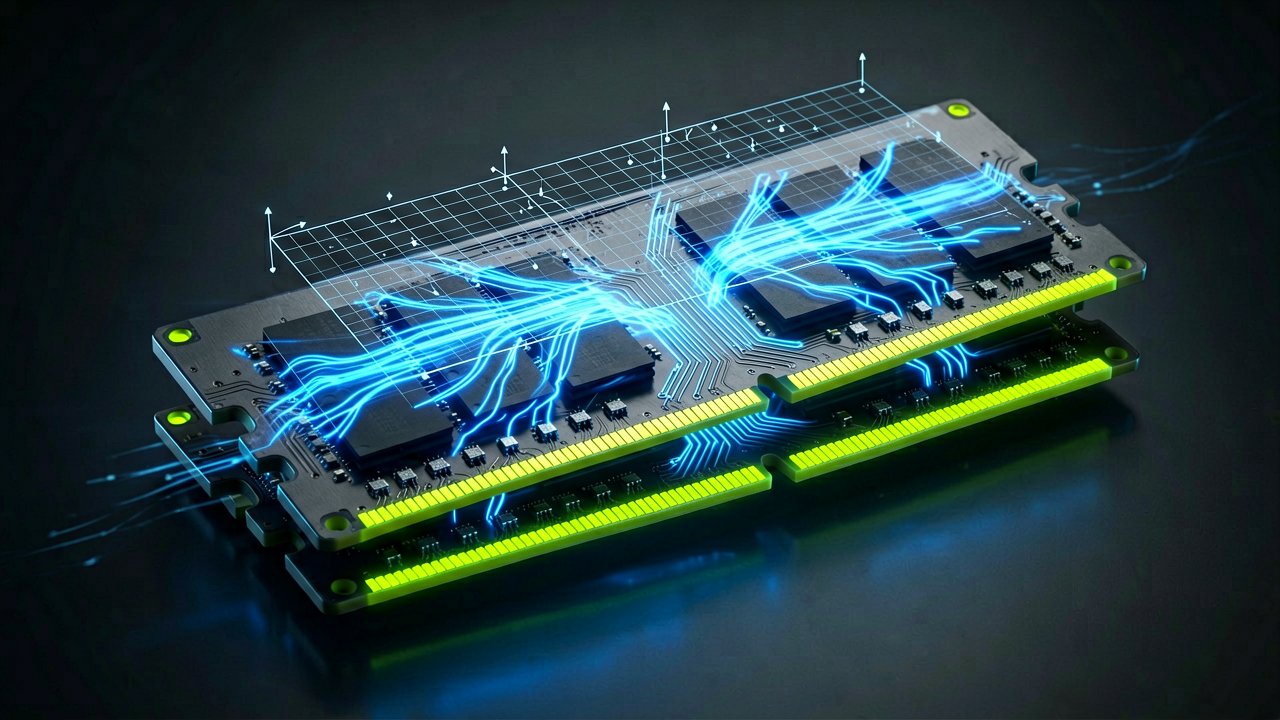
Architecturally, the software relies on a delicate orchestration between on-device processing and scalable cloud systems. Apple uses highly optimized foundational models structured with grouped-query attention and shared input-output vocabulary embedding tables to minimize memory overhead. According to Apple Machine Learning Research , the on-device model operates with a vocabulary size of 49K and leverages low-bit palletization. By incorporating a mixed 2-bit and 4-bit configuration strategy via LoRA adapters, the system achieves an average of 3.7 bits per weight, mirroring the accuracy of uncompressed models while fitting snugly into tight hardware constraints.
This aggressive compression is a necessity because the local processing demands are staggering. Rumors and technical data indicate that next-generation chips like the A19 Pro are integrating neural accelerators directly inside the GPU cores to enable dense matrix math, supplementing the standalone Neural Engine. This hardware synergy delivers the intense computational throughput needed to execute local transformer inference seamlessly. However, devices lacking this hardware baseline are being left in the dust. While iOS 27 is expected to support older hardware like the iPhone 12 for basic operational tasks, reports highlighted by Memeburn confirm that full Apple Intelligence features will strictly require at least an iPhone 15 Pro or newer.
The Realities of Memory and Rollout
The true bottleneck for these next-gen capabilities isn't just raw processing cycles; it is system memory. Every iPhone capable of running the advanced AI suite must possess at least 8 GB of RAM to keep the compressed models resident in memory without crushing background applications. For users clinging to base models older than the iPhone 16 series, this creates an unyielding hardware gate. If your device doesn't have the silicon or the memory footprint, the local execution of contextual, private AI tasks simply won't happen.

Even for users with compliant hardware, the rollout remains a staggered affair. History shows that Apple’s ambitious AI features trickle out in waves, often delayed by regional localization, language matching, and regulatory compliance. The initial software drop typically lays the stabilization groundwork, while the most complex features—such as full cross-app orchestration and standalone conversational nodes—mature over subsequent point releases throughout the lifecycle of the operating system.
Behind the Scenes: The execution of these next-generation models requires a massive overhaul of the operating system's virtual memory subsystem. Standard iOS process management typically terminates applications that exceed their strict memory allocations, but the local AI engine operates on a shared, dynamic footprint. Engineers implemented a specialized unified memory architecture that allows the Neural Engine to directly reference the GPU's memory space without duplicating data buffers. This eliminates the standard overhead associated with cross-component memory copying, freeing up precious clock cycles during real-time speech processing.
To keep the model resident in RAM without crippling background multitasking, iOS 27 utilizes advanced activation-aware weight quantization. Instead of compressing all layers uniformly, the system dynamically prioritizes critical attention heads and routing layers with higher precision bit-depths while aggressively compressing redundant feed-forward networks down to 2 bits. When a user invokes Siri, the system maps these quantized weights directly into the processor cache using custom low-level metal shaders optimized specifically for parallel matrix multiplication. This localized execution strategy ensures that the time-to-first-token metric remains below the threshold required for natural human conversation.
Flash Attention and Context Windows
Managing a continuous, cross-app context window introduces severe computational scaling challenges. Standard transformer architectures suffer from quadratic complexity relative to the length of the conversation history, which quickly exhausts local memory resources. To combat this, the underlying engine integrates a hardware-accelerated variant of FlashAttention designed specifically for Apple Silicon. By computing attention matrix blocks locally within the processor's high-speed SRAM rather than constantly writing to the slower system LPDDR5X RAM, memory bandwidth bottlenecks are drastically reduced, keeping thermal throttling at bay during extended interactions.
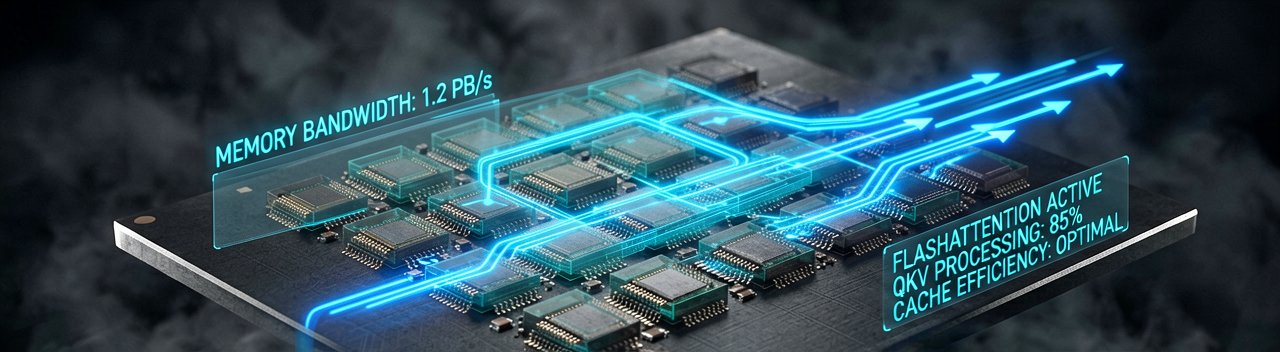
Furthermore, the runtime environment relies on speculative decoding to maximize throughput on power-constrained mobile hardware. A much smaller, highly efficient draft model predicts the next several tokens in parallel, which the larger, authoritative foundational model then verifies in a single execution step. If the prediction is accurate, multiple tokens are generated simultaneously, resulting in a massive boost to generation speeds. This cooperative processing pipeline ensures the user experiences zero lag, even when Siri is simultaneously parsing on-screen content and pulling semantic data from local databases.
Reading Between the Lines: The industry’s fascination with on-device artificial intelligence has created an uncomfortable paradox for a company that prides itself on environmental sustainability and product longevity. Apple’s narrative frames the local execution of large language models as a triumph of user privacy and engineering efficiency, yet it simultaneously establishes a harsh regime of planned obsolescence. The operational reality is that perfectly functional smartphones, packed with highly capable multi-core silicon, are being relegated to second-tier status not because their processing units are broken, but because they lack the specific memory configurations required to cache static AI model weights.
This technical dividing line exposes a fundamental shift in how consumer hardware is valued. For over a decade, microprocessor advancements yielded diminishing returns for daily tasks like messaging, web browsing, and video streaming, pushing consumers toward longer upgrade cycles. By tethering the evolutionary future of the operating system to massive local parameter architectures, the baseline requirement for a premium user experience has shifted from chip speed to raw memory bandwidth and storage capacity. The contradiction is glaring: an ecosystem celebrated for supporting devices for up to seven years is now creating a tiered experience where older but otherwise pristine hardware is functionally frozen out of the platform's defining innovations.
The Privacy Paradox and Technical Reality
There is also a deep engineering compromise hidden beneath the marketing promises of absolute on-device privacy. While local processing prevents personal data from traversing external networks, a mobile-optimized, highly quantized model will inevitably hit an intelligence ceiling when compared to datacenter-scale clusters. To bridge this capability gap without violating its strict privacy mandates, the architecture must rely on sophisticated cryptographic routing to cloud servers for complex analytical queries. This hybrid approach undercuts the purist argument for on-device AI, revealing that local hardware is ultimately acting as an advanced gatekeeper and pre-processing unit rather than an entirely self-sufficient intelligence engine.
Ultimately, the aggressive push into mobile-optimized transformers may be a high-stakes gamble on user behavior. Silicon engineers are dedicating massive amounts of physical die area to neural accelerators and specialized SRAM cache, sacrificing space that could otherwise enhance graphical fidelity or battery efficiency. If the average user continues to utilize voice assistants primarily for setting timers, checking the weather, and sending basic dictated text messages, this monumental architectural pivot will stand as a brilliant solution to a problem consumers weren't actually desperate to solve.
Silicon Valley has successfully convinced us that our smartphones aren't truly smart unless they can rewrite our emails and analyze our photo libraries locally, even if it means upgrading our hardware just to discover that we still prefer typing out our own grocery lists.
Artūras Malašauskas is an AI Systems Integrator with 20+ years of production-grade web engineering experience. He has designed, shipped, and scaled enterprise Python/PHP systems for logistics, SaaS, and public-sector clients. For the past year, he has focused exclusively on AI integrations: deploying open-source LLMs, building generative media pipelines (image, audio, video), and engineering multi-agent workflows for real production environments. His standard: reproducibility, security, cost-efficient inference—no vaporware. He documents and evaluates emerging AI tooling, separating verified capabilities from marketing noise. Technical editor at: muza-ai.eu, ai-verslas.lt, ai-naujinos.lt Connect on LinkedIn
Comments