The Two-Tier iPhone Era: How iOS 27’s Conversational Siri Risks Leaving Older Hardware Behind
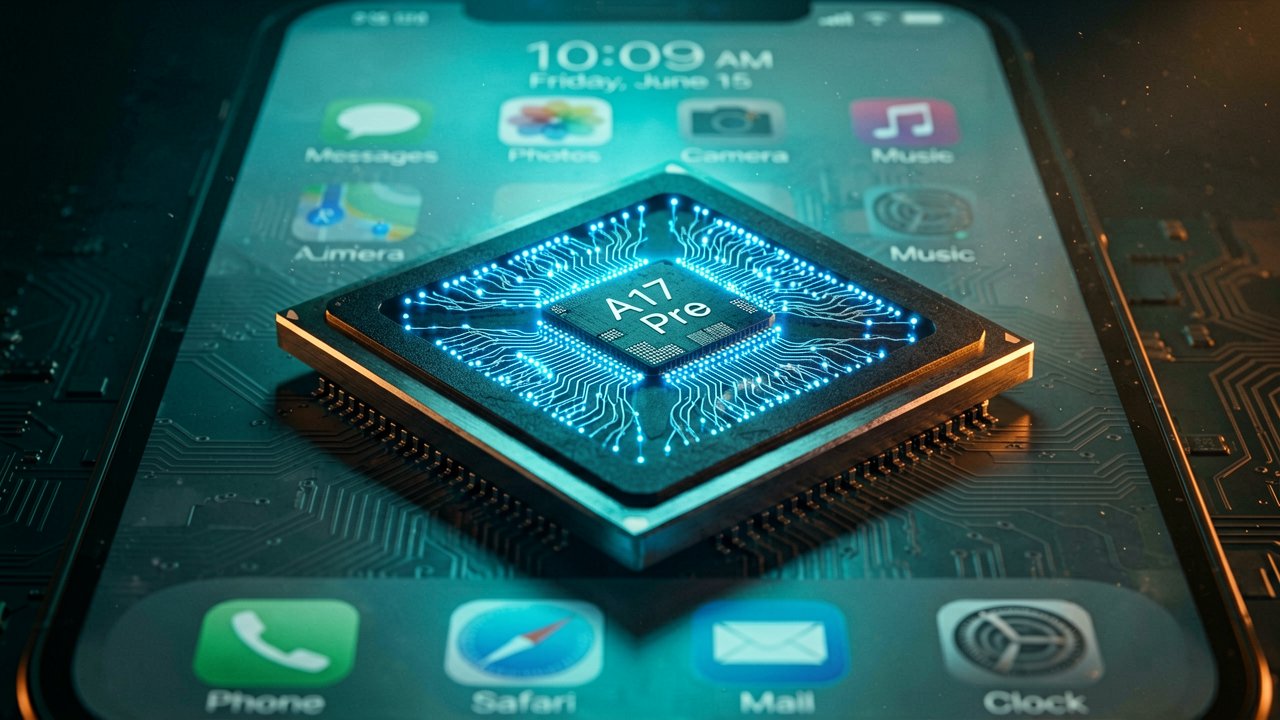
The impending arrival of iOS 27 signals a decisive moment in mobile computing as Apple embeds next-generation Apple Intelligence directly into the core operating system. Reported by tech outlets like , this major overhaul focuses on transforming Siri from a rigid voice-command assistant into a highly context-aware, multimodal AI partner. By introducing on-screen awareness, native chat structures within the Dynamic Island, and cross-app action tools, Apple aims to narrow the competitive gap against standalone AI engines and rival ecosystem frameworks.
However, this paradigm shift highlights an intensifying hardware and software stratification within Apple’s customer base. The technical foundation of these new features demands localized execution of Large Language Models (LLMs), which requires substantial computational overhead and specific memory criteria. Consequently, while Apple continues its long-term strategy of delivering system-wide automation, a stark boundary is forming between legacy devices and the high-performance silicon required to process these local AI requests.
Advanced Capabilities and Strategic Ecosystem Shifts
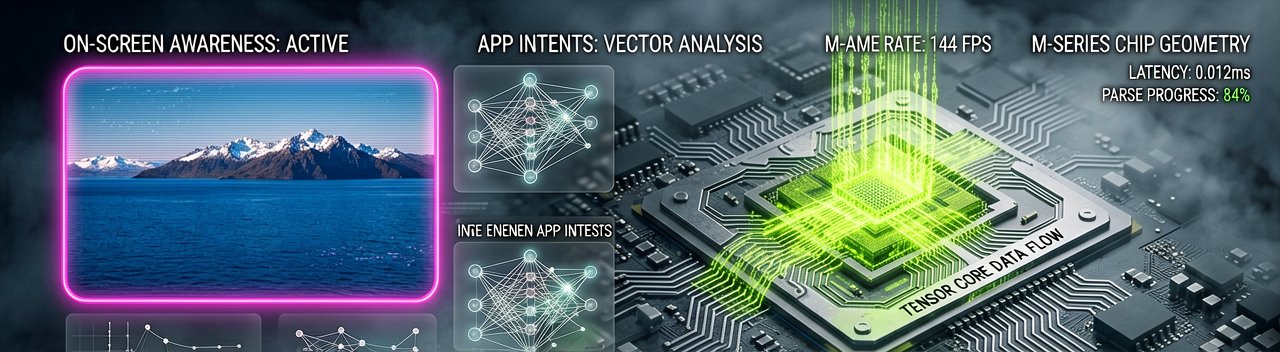
The core of the iOS 27 update centers on giving Siri true personal context. As outlined by , the upgraded assistant will parse files, emails, messages, and photos to construct a secure, on-device user profile without compromising consumer privacy. Furthermore, new on-screen awareness capabilities allow Siri to interpret visual details currently open in an active application window, fulfilling tasks based on real-time data feeds.
This structural change also reshapes the app ecosystem. Developers can leverage updated Apple Intelligence App Intents to integrate their software offline and without per-request fees. To broaden consumer utility, Apple is opening up external integrations, allowing users to invoke an "Ask" feature that routes complex queries to third-party tools like Google Gemini or OpenAI's ChatGPT, ensuring the iPhone remains a centralized hub for consumer AI.
The Hardware Bottleneck and Device Compatibility
The primary barrier to accessing these next-generation capabilities remains device memory and processor architecture. According to documentation hosted on Apple Support, localized Apple Intelligence models demand at least an A17 Pro or M-series chip alongside a minimum of 8 GB of RAM to function correctly. This restriction means that older legacy devices lack the unified memory architecture needed to host and run these multi-billion-parameter local models efficiently.
While standard iOS 27 compatibility maps are expected to drop support entirely for older models like the iPhone 11 series, as tracked by , a wider group of active devices face partial obsolescence. Devices such as the base iPhone 15, iPhone 14 Pro Max, and earlier models will likely run the basic components of the operating system while remaining completely locked out of Siri's advanced conversational, visual intelligence, and cross-app action tools. This creates a distinct two-tier upgrade dynamic across the global iPhone installment base.
The Hidden Architecture of Apple’s AI Stratification Strategy
Behind the Silicon Divide: The stark boundary forming between AI-capable iPhones and legacy devices is not merely an accidental byproduct of generational hardware evolution. Instead, it represents a deliberate and necessary architectural pivot. For over a decade, smartphone performance was judged primarily on single-core CPU speeds and GPU frame rates tailored for mobile gaming. The integration of localized large language models flips this paradigm entirely, shifting the performance bottleneck to memory bandwidth and dedicated tensor processing units. By restricting advanced Siri features to hardware utilizing high-speed unified memory architectures, Apple is addressing the strict realities of running multi-billion parameter neural networks within a tight smartphone thermal envelope without draining the battery in minutes.
This technical transition is forcing a massive shift in how third-party developers build for the iOS ecosystem. In previous years, writing an application for the App Store meant targeting a relatively uniform baseline of hardware capacity, with older chips simply rendering graphics at a lower resolution or loading assets slightly slower. With the arrival of advanced app intents that rely on Siri parsing on-screen data and executing cross-app commands, developers now face a fragmented user base. Engineering teams must build two distinct experiences: an AI-driven, intent-mapped workflow for modern devices, and a traditional, menu-driven interface for older phones. This dual-track development model adds significant overhead for independent creators and enterprise software vendors alike.

From a consumer rights and longevity perspective, this hardware gating challenges Apple's historical reputation for long-term device support. Historically, purchasing a premium iPhone guaranteed up to five or six years of parity regarding core system features, even if the older battery degraded over time. The structural realities of Apple Intelligence break this unspoken social contract with consumers, as devices that are less than two years old are excluded from the flagship software experiences. While security patches and basic interface updates will continue to flow to older hardware, the psychological obsolescence of a device that cannot participate in the conversational ecosystem is accelerating upgrade cycles in a way that traditional hardware redesigns failed to achieve.
Wall Street analysts view this forced segmentation as a critical lever for driving hardware replacement cycles in a saturated global market. With smartphone replacement cycles stretching past three years in major economic regions, Apple requires a compelling catalyst to convince consumers to abandon perfectly functional older devices. By linking the most transformative software evolution in the company's recent history exclusively to its latest silicon, the company creates an organic incentive to upgrade. The long-term success of this strategy relies heavily on whether consumers perceive the upgraded, context-aware Siri as an indispensable daily utility or merely a collection of minor conveniences that do not justify the premium cost of new hardware.
The Privacy Paradox and the Limits of On-Device Pragmatism
Reading Between the Lines: The corporate narrative positioning on-device AI as the ultimate triumph of user privacy obscures a fundamental tension in Apple's architectural strategy. While processing personal data locally on the secure enclave of an A-series chip prevents user profiles from leaking into centralized data centers, it simultaneously creates a severe capability ceiling. The multi-billion parameter models that can comfortably sit within an iPhone's 8 GB or 12 GB of RAM are inherently limited in their reasoning capacity compared to the trillion-parameter behemoths running on cloud infrastructure. By prioritizing privacy through localized processing, Apple risks delivering a Siri that is remarkably secure but noticeably less intelligent than cloud-native competitors that update their models server-side every week.
This technical limitation exposes a glaring contradiction in Apple’s sudden embrace of third-party cloud integrations like ChatGPT and Google Gemini. When a user reaches the boundaries of Siri's localized intelligence and invokes the external "Ask" feature, the carefully constructed illusion of total on-device privacy effectively dissolves. At that moment, user data is packaged and sent to external cloud servers operated by companies whose business models have historically relied on data aggregation. This hybrid approach creates an uncomfortable operational duality, where Apple simultaneously scolds the tech industry for invasive data harvesting while relying on those exact cloud ecosystems to handle the heavy analytical lifting that its own localized silicon cannot manage.
Furthermore, the long-term sustainability of this hardware-tethered software model remains highly questionable in an era of rapid AI model optimization. While Apple asserts that older hardware lacks the physical memory to run next-generation Siri, the open-source software community consistently demonstrates that quantization and algorithmic refinement can drastically shrink the hardware footprint of sophisticated language models. Smaller, heavily optimized models are regularly modified to run efficiently on legacy chips across competitive operating systems. This suggests that the strict hardware gating applied to iOS devices may be as much a product of economic design—protecting hardware margins and forcing device turnover—as it is a strict consequence of engineering limitations.
"The modern smartphone lifecycle has officially evolved into a game of computational musical chairs. We are being asked to buy a premium device today so that a local chatbot can quietly read our emails tomorrow, all while knowing that next year's model will make our current silicon look like a pocket calculator that simply lacks the manners to ask for permission before sending our data elsewhere."
Artūras Malašauskas is an AI Systems Integrator with 20+ years of production-grade web engineering experience. He has designed, shipped, and scaled enterprise Python/PHP systems for logistics, SaaS, and public-sector clients. For the past year, he has focused exclusively on AI integrations: deploying open-source LLMs, building generative media pipelines (image, audio, video), and engineering multi-agent workflows for real production environments. His standard: reproducibility, security, cost-efficient inference—no vaporware. He documents and evaluates emerging AI tooling, separating verified capabilities from marketing noise. Technical editor at: muza-ai.eu, ai-verslas.lt, ai-naujinos.lt Connect on LinkedIn
Comments