Robots to the Rescue? How AI is Both Hiring and Firing in the Same Breath
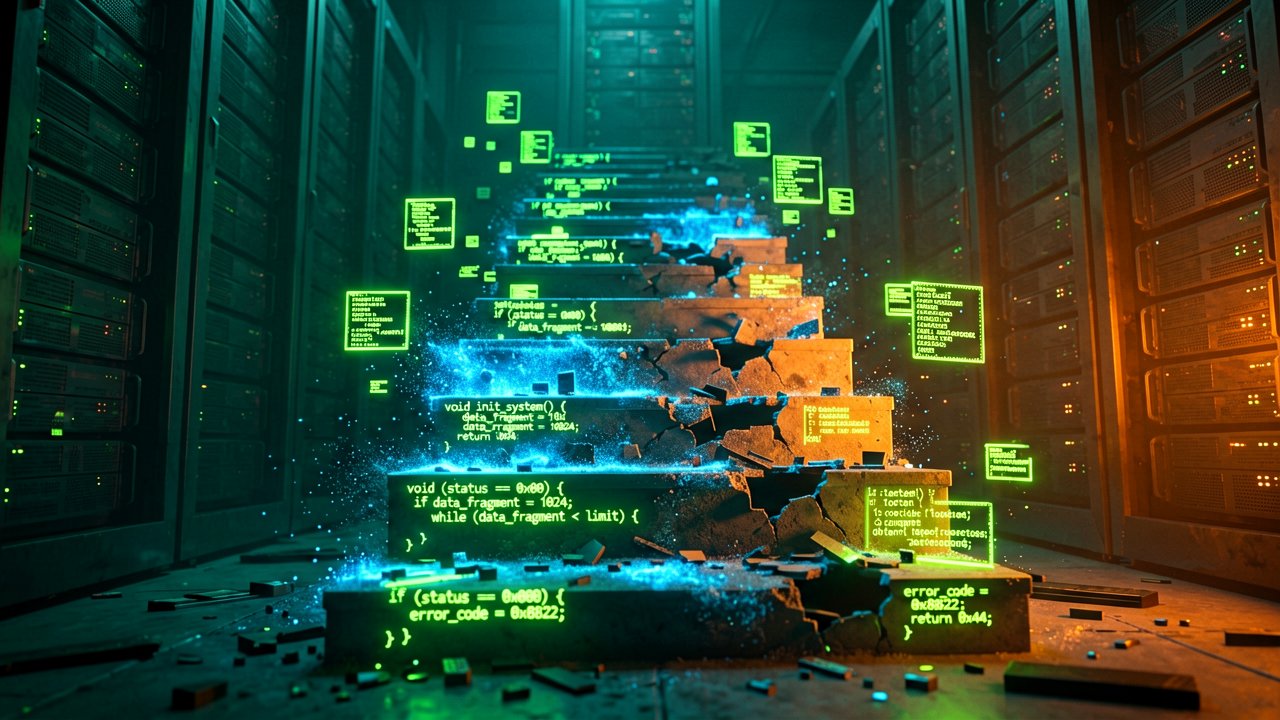
The global technology sector is experiencing a profound structural realignment as artificial intelligence matures from an experimental novelty into a core driver of corporate infrastructure. Enterprise leaders are aggressively auditing operational workflows, resulting in a dual-force labor market that simultaneously eliminates legacy positions while creating intense demand for highly specialized machine learning talent. This strategic pivot has triggered widespread industry consolidation, altering traditional career ladders and forcing a rapid redistribution of corporate capital.
Data from recent workforce assessments highlights the scale of this operational overhaul. According to a market analysis tracked by CFO Dive, technology companies announced tens of thousands of job cuts in the first half of 2026, with artificial intelligence cited as a primary driver for workforce reductions. However, these cuts do not indicate a shrinking sector; instead, they represent a aggressive reallocation of budgets. Executive leadership teams are shrinking non-technical and repetitive business units to free up the liquid capital required to fund multi-million dollar AI infrastructure investments and command top-tier data science engineering salaries.
This structural evolution is fundamentally changing the entry-level corporate ecosystem. As organizations lean heavily into autonomous business technologies, routine data administration and junior software development tasks are being absorbed by automated frameworks. The resulting market dynamic places a heavy premium on professionals who possess systemic orchestration and prompt architecture skills, leaving a shrinking footprint for generalized tech roles. The industry is rapidly moving toward a lean, highly specialized operating model where human capital is strictly reserved for high-level oversight, compliance, and strategic engineering.
The Disconnection Between Cost-Cutting and Financial Returns
Corporate boards frequently leverage automation layoffs to signal agility and technical progressiveness to public markets. Despite the immediate budget relief achieved by reducing headcount, macroeconomic indicators suggest that premature workforce reductions tied to unoptimized AI implementations often fail to generate immediate profitability. Enterprise performance data reveals that the true value of artificial intelligence is unlocked through operational augmentation rather than simple human substitution, requiring organizations to balance localized automation with comprehensive internal upskilling initiatives.

The Disappearing Bottom Rung of Tech Talent Pipelines
The contraction of junior and support roles presents a long-term talent pipeline challenge for the technology sector. Historically, entry-level positions served as the foundational training ground where recent graduates developed specialized domain expertise and internal institutional knowledge. By automating these baseline responsibilities, enterprises risk disrupting the traditional career progression ladder, creating an industry-wide scarcity of mid-level managers and advanced system architects in the decade to come.
What Most Reports Miss: The Invisible Upheaval of Corporate DNA
Behind the corporate press releases announcing algorithmic efficiency lies a fundamental restructuring of organizational knowledge. When an enterprise replaces an entire tier of mid-level analysts or technical support staff with automated infrastructure, it does not just reduce its immediate payroll expenses. It inadvertently purges decades of unwritten operational history, institutional context, and specialized problem-solving methodologies that data models cannot replicate. Seasoned technology executives are beginning to realize that while software can replicate predictable workflows at a fraction of the cost, it lacks the intuitive domain expertise required to navigate unprecedented systemic crises.
This knowledge drain is triggering a silent crisis within human resources departments, which are now tasked with hiring for roles that did not exist twenty-four months ago. Recruiters are no longer looking for standard engineering profiles; instead, they are hunting for "AI orchestrators" and "algorithmic auditors" who can bridge the gap between legacy corporate goals and autonomous systems. This shift has created an unsustainable talent bottleneck, forcing companies to engage in aggressive bidding wars for a microscopic pool of elite specialists while simultaneously managing the low morale of remaining staff who feel increasingly precarious in their positions.
From a historical perspective, this transformation mirrors the automation waves that reshaped heavy manufacturing in the late twentieth century, yet it is moving at an unprecedented velocity. Unlike the decades-long transition of the automotive assembly line, the cognitive automation of the white-collar workforce is unfolding in a matter of quarters. This hyper-accelerated timeline leaves labor advocacy groups, educational institutions, and regulatory bodies entirely unable to adapt, creating a widening socio-economic chasm between traditional tech workers and the specialized elite controlling the automated frameworks.

The strategic risk for enterprises extends far beyond internal cultural disruption to encompass long-term systemic stability. Over-reliance on uniform AI platforms introduces a dangerous monoculture into corporate decision-making, where competing enterprises utilize identical models trained on identical datasets to solve identical market problems. As human oversight becomes increasingly detached from baseline data processing, organizations expose themselves to collective blind spots and systemic vulnerabilities, proving that the rush to automate may ultimately trade resilient human adaptability for fragile algorithmic uniformity.
Reading Between the Lines: The Illusion of Immediate Algorithmic Yields
The prevailing boardroom narrative positions the automated workforce as an instant remedy for compressed margins and operational friction, yet this view relies on a flawed financial premise. Corporate leadership often treats human capital as an elastic expense to be trimmed at will, while viewing artificial intelligence investments as static capital expenditures. In reality, deploying enterprise-grade machine learning models introduces volatile, unpredictable operational overhead, including skyrocketing cloud computational costs, continuous dataset curation, and perpetual model maintenance fees. The assumed cost savings frequently evaporate when organizations realize they have traded predictable salary lines for highly unpredictable infrastructure invoices.
Furthermore, a profound contradiction lies at the heart of the current hiring frenzy for premium AI talent. Enterprises are aggressively shedding mid-level staff to fund the astronomical salaries of machine learning specialists, under the assumption that these architects can build a fully autonomous corporate engine. However, this creates a dangerous structural dependency on a microscopic group of individuals who hold the keys to proprietary algorithmic pipelines. By replacing a broad, resilient base of human institutional knowledge with a hyper-concentrated dependency on a few elite engineers, corporations are not eliminating human risk; they are amplifying it and concentrating it into a single point of failure.
Looking ahead, the long-term macroeconomic implications suggest an impending plateau in corporate efficiency rather than an exponential curve of growth. As competing enterprises adopt the same standardized third-party models and cloud architectures, the technological advantage quickly homogenizes across entire sectors. When every company utilizes the exact same algorithmic suites to optimize their logistics, marketing, and human resources, the technological edge disappears entirely. Organizations will eventually discover that complete automation strips away the unique, human-driven operational nuances that previously formed their core competitive advantage in the marketplace.
Ultimately, the current corporate rush to automate represents a short-sighted prioritization of structural symmetry over systemic resilience. The organizations that survive the upcoming market correction will not be those that successfully purged their human staff, but those that maintained a messy, adaptable balance between human intuition and algorithmic precision. Silicon Valley's promise of a frictionless, self-running enterprise remains a theoretical ideal, ignoring the reality that market anomalies and black swan events inherently require the very human adaptability that boards are currently working so hard to eliminate.
"The modern boardroom seems entirely convinced that the ultimate enterprise is one completely devoid of human error, seemingly forgetting that a company without humans is also entirely devoid of customers to buy the product, or executives to collect the bonuses."
Artūras Malašauskas is an AI Systems Integrator with 20+ years of production-grade web engineering experience. He has designed, shipped, and scaled enterprise Python/PHP systems for logistics, SaaS, and public-sector clients. For the past year, he has focused exclusively on AI integrations: deploying open-source LLMs, building generative media pipelines (image, audio, video), and engineering multi-agent workflows for real production environments. His standard: reproducibility, security, cost-efficient inference—no vaporware. He documents and evaluates emerging AI tooling, separating verified capabilities from marketing noise. Technical editor at: muza-ai.eu, ai-verslas.lt, ai-naujinos.lt Connect on LinkedIn
Comments